Sort by:
79 of 1790 products
79 of 1790 products

Rebecca Solnit offers a thrilling account of the sheer breadth and scale of social, political, scientific, and cultural change over the past three quarters of a century.
In this sequel to her enduring bestseller Hope in the Dark, Solnit surveys a world that has changed dramatically since the year 1960. Despite the forces seeking to turn back the clock on history, change is not a possibility; it is an inevitability.
The changes amount to nothing less than dismantling an old civilization and building a new one, whose newness is often the return of the old ways and wisdoms. In this rising worldview, interconnection is a core idea and value. But because the transformation is obscured within a longer arc of history, its scale is seldom recognized.
While the white nationalist and authoritarian backlash drives individualism and isolation, this new world embraces antiracism, feminism, a more expansive understanding of gender, environmental thinking, scientific breakthroughs, and Indigenous and non-Western ideas, pointing toward a more interconnected, relational world.

A collection of poetry that delves into the mind of someone who has survived domestic violence: how they felt during and how they moved forward afterwards in their life and current relationships.

A complete collection―over 300 poems―from one of this country's most influential poets.
"These are poems which blaze and pulse on the page."―Adrienne Rich "The first declaration of a black, lesbian feminist identity took place in these poems, and set the terms―beautifully, forcefully―for contemporary multicultural and pluralist debate."―Publishers Weekly "This is an amazing collection of poetry by . . . one of our best contemporary poets. . . . Her poems are powerful, often political, always lyrical and profoundly moving."―Chuckanut Reader Magazine "What a deep pleasure to encounter Audre Lorde's most potent genius . . . you will welcome the sheer accessibility and the force and beauty of this volume."―Out Magazine

Rescuing biblical language from misuse by those who would persecute queerness and subjugate the natural world, The Drag Gospel of Queer Jesus contemporizes and enlivens Biblical mysteries, exploring queer/trans identities and Florida ecologies through poetic forms (both received and invented) as often as through free verse. Simultaneously playful and serious, like the best drag performances, these poems nod equally and as often to the work of RuPaul or Marsha P. Johnson as to William Shakespeare or the author(s) of Genesis. Meanwhile, as the poems point to the artificial constructions of gender, they also embrace the (queer) natural world.

The New York Times bestseller, these groundbreaking essays and poems about race—collected by National Book Award winner Jesmyn Ward and written by the most important voices of her generation—are “thoughtful, searing, and at times, hopeful. The Fire This Time is vivid proof that words are important, because of their power to both cleanse and to clarify” (USA TODAY).
In this bestselling, widely lauded collection, Jesmyn Ward gathers our most original thinkers and writers to speak on contemporary racism and race, including Carol Anderson, Jericho Brown, Edwidge Danticat, Kevin Young, Claudia Rankine, and Honoree Jeffers. “An absolutely indispensable anthology” (Booklist, starred review), The Fire This Time shines a light on the darkest corners of our history, wrestles with our current predicament, and imagines a better future.
Envisioned as a response to The Fire Next Time, James Baldwin’s groundbreaking 1963 essay collection, these contemporary writers reflect on the past, present, and future of race in America. We’ve made significant progress in the fifty-odd years since Baldwin’s essays were published, but America is a long and painful distance away from a “post-racial society”—a truth we must confront if we are to continue to work towards change. Baldwin’s “fire next time” is now upon us, and it needs to be talked about; The Fire This Time “seeks to place the shock of our own times into historical context and, most importantly, to move these times forward” (Vogue).
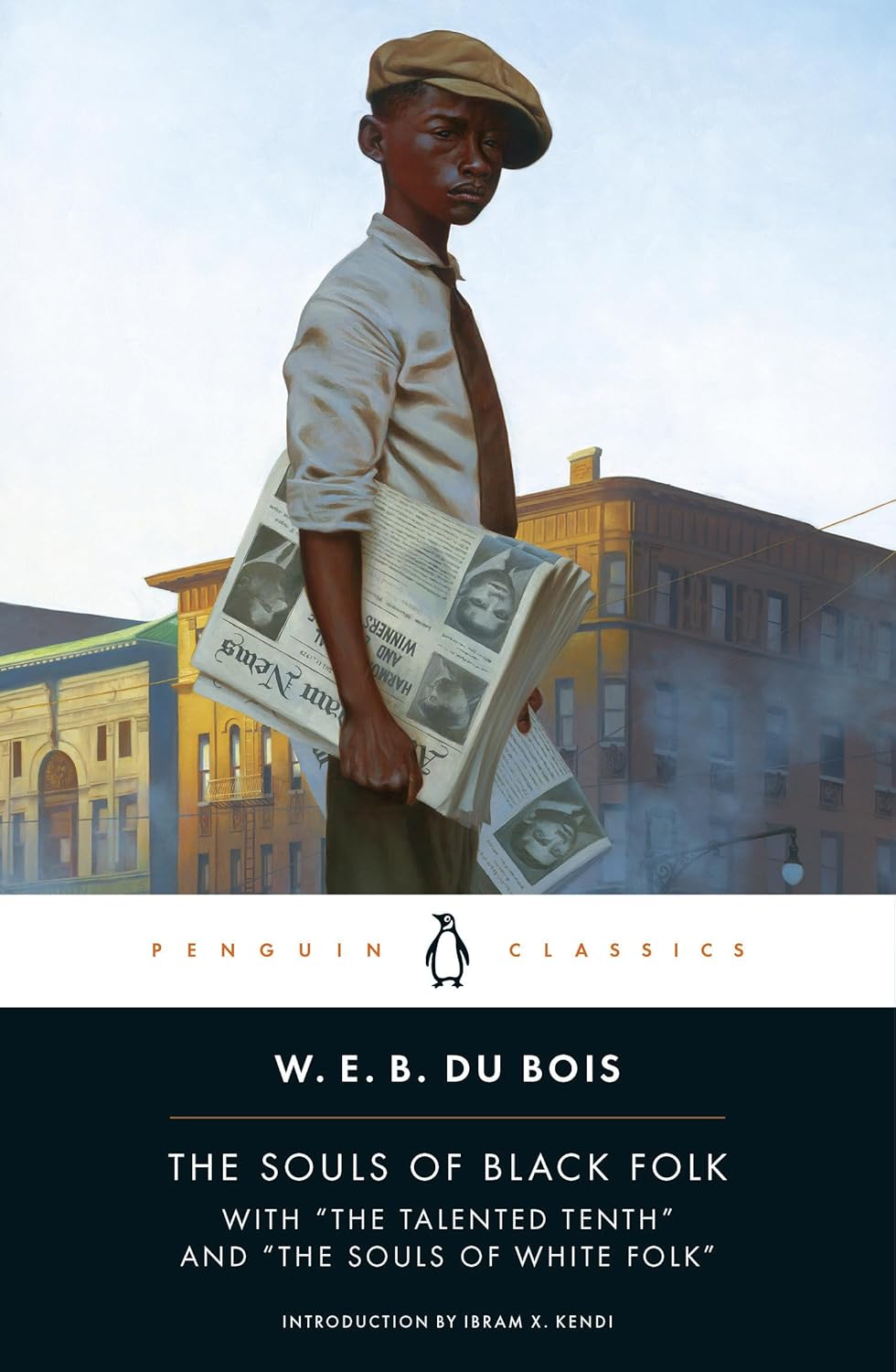
The Souls of Black Folk: With "The Talented Tenth" and "The Souls of White Folk"
$14.00
Unit price perThe Souls of Black Folk: With "The Talented Tenth" and "The Souls of White Folk"
$14.00
Unit price perBy: W. E. B. Du Bois (Author), 1996, Paperback
The landmark book about being black in America, now in an expanded edition commemorating the 150th anniversary of W. E. B. Du Bois’s birth and featuring a new introduction by Ibram X. Kendi, the #1 New York Times bestselling author of How to Be an Antiracist, and cover art by Kadir Nelson
“The problem of the Twentieth Century is the problem of the color-line.”
When The Souls of Black Folk was first published in 1903, it had a galvanizing effect on the conversation about race in America—and it remains both a touchstone in the literature of African America and a beacon in the fight for civil rights. Believing that one can know the “soul” of a race by knowing the souls of individuals, W. E. B. Du Bois combines history and stirring autobiography to reflect on the magnitude of American racism and to chart a path forward against oppression, and introduces the now-famous concepts of the color line, the veil, and double-consciousness.
This edition of Du Bois’s visionary masterpiece includes two additional essays that have become essential reading: “The Souls of White Folk,” from his 1920 book Darkwater, and “The Talented Tenth.”
For more than seventy years, Penguin has been the leading publisher of classic literature in the English-speaking world. With more than 1,800 titles, Penguin Classics represents a global bookshelf of the best works throughout history and across genres and disciplines. Readers trust the series to provide authoritative texts enhanced by introductions and notes by distinguished scholars and contemporary authors, as well as up-to-date translations by award-winning translators.

The Tale of the Panther and the Dove is a one of a kind compilation of Assata Shakur and Leila Khaled's most important and echoing statements, quotes and axioms. Two of the greatest revolutionaries in the history of the world are both featured here in easily digestible words and writings.

In Arab culture, tradition often dictates an individual's role in a family, with personal desires subsumed in favour of unity. So, what happens when Queer Arabs challenge and re-imagine these expectations?
This Queer Arab Family celebrates the beauty of chosen kin and the everyday acts of care and survival that bind Queer Arabs to each other. Here, ten LGBTQ+ writers from across the Arab world and diaspora redefine what family looks like. From raising children with mum and mum, to becoming an OnlyFans star and building a non-binary belly dancing robot, these writers illuminate, through their own lived experiences, how queer joy and community can be found in the most unexpected places.
Fierce, vibrant and unapologetic, This Queer Arab Family honours the spirit of those who, despite challenges, build community and family on their own terms.

"Blending beautiful family history with her own personal memories, LaPointe's writing is a ballad against amnesia, and a call to action for healing, for decolonization, for hope." --Elle
The author of the award-winning memoir Red Paint returns with a razor-sharp, clear-eyed collection of essays on what it means to be a proudly queer indigenous woman in the United States today
Drawing on a rich family archive as well as the anthropological work of her late great-grandmother, Sasha taqʷšəblu LaPointe explores themes ranging from indigenous identity and stereotypes to cultural displacement and environmental degradation to understand what our experiences teach us about the power of community, commitment, and conscientious honesty.
Unapologetically punk, the essays in Thunder Song segue from the miraculous to the mundane, from the spiritual to the physical, as they examine the role of art--in particular music--and community in helping a new generation of indigenous people claim the strength of their heritage while defining their own path in the contemporary world.

To be trans and disabled means to have experienced harassment, discrimination, loneliness, often poverty, to have struggled with feeling unworthy of love.
To be trans and disabled means experiencing ableism within our trans communities and transphobia within our disabled communities.
To be trans and disabled means to love our fellow trans and disabled people harder than we could ever love ourselves.
This anthology brings together vulnerable stories, poems, plays, drawings, and personal essays. They explore how we make sense of ourselves, our intersections of identities and experiences, of how we are treated, and how much love we are capable of, sometimes even for ourselves.

We Will be Shelter stands as a powerful anthology of contemporary poems that unflinchingly confront issues of social justice. What sets this collection apart is its unwavering commitment to inspiring positive transformation through the art of poetry. Within its pages, beautifully crafted verses take center stage, captivating readers with their evocative power. This anthology serves as both a call to awareness and an invitation to introspection, urging readers to examine their role in shaping a just and equitable world. Through the eloquence of these poems, readers are compelled to take meaningful action, transforming empathy into activism and propelling society toward a brighter future.

Physiologically, when you’re at your happiest, most relaxed, you often fart. It’s why people fart when they sleep, why people fart on the massage table, why author and book lover Marla Taviano farts in bookstores.
So, when Marla asks people what they’re passionate about, and they say “I don’t know,” she says, “Well, what makes you fart?”
One big key to finding your life’s passion is to remember what you loved as a kid—before the responsibilities of growing up squeezed all the creativity and imagination out of you.
Marla’s dream is for every person to love something deeply—and have the time, energy, and resources to happily explore it.
This book is full of practical tips, funny quips, and inspiring anecdotes to help you discover what makes you fart—then do that thing with all your heart.

Feminist icon bell hooks reminds us of the full spectrum of feeling we spend in love through her inspiring collection of love poetry, with a new introduction by Cole Arthur Riley, author of Black Liturgies.
Written from the heart, When Angels Speak of Love is a book of fifty love poems by bell hooks, one our most beloved public intellectuals, and author of over twenty books, including the bestselling All About Love. Poem after poem, hooks challenges our views and experiences with love—tracing the links between seduction and surrender, the intensity of desire, and the anguish of death. “Love must clean house, choose memories to keep, and memories to let go,” she writes. These verses are expansive yet accessible—encompassing romantic love, to love of family, friends, or oneself. In any iteration, these poems remind us of both the beauty and possibility of love.
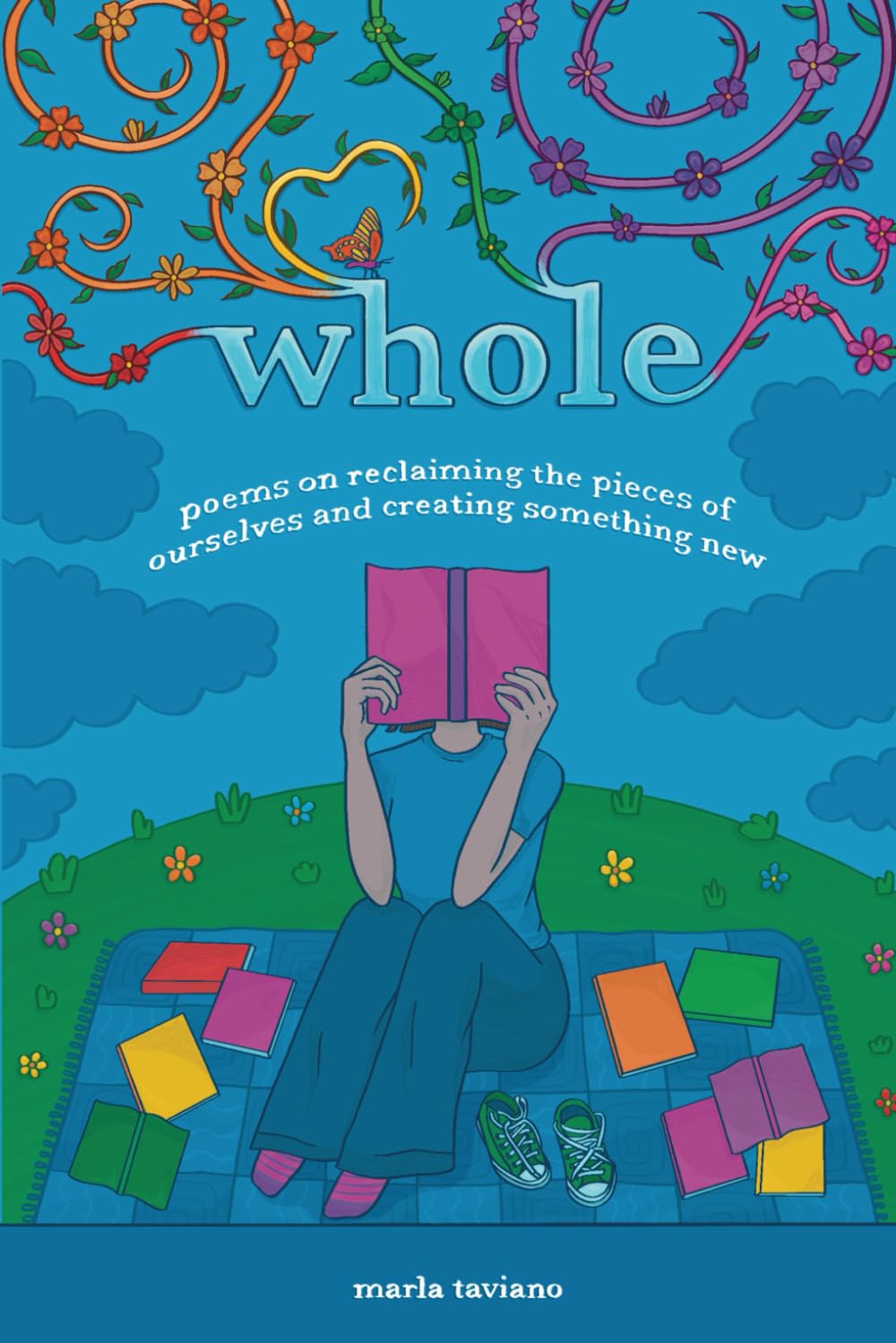
By: Marla Taviono, 2024, Paperback
What makes this such a stellar read is not only is Marla aware of who she is, but she's finally got to the point where she's unabashedly ready to tell us as well!" —Tyler Merritt, author of I Take My Coffee Black and Creator of The Tyler Merritt Project
When you've spent your entire life defined by your faith, who are you when that faith shatters, leaving you to pick up broken pieces, wondering if anything can be saved? Marla Taviano—author, single mom, and former Christian—set out on a journey to find out.
What she uncovered was that, after deconstructing a toxic belief system and working to dismantle systems of injustice, some things hadn't changed. She still loved people and wanted them to be free and whole—and she wanted that for herself too. It just looked different now. So whole: poems on reclaiming the pieces of ourselves and creating something new talks about looking back to move forward, new thoughts on god, our inner lives, embodied living, and books, books, books.
If you long for the freedom to be your true self, if you ache for healing and wholeness for yourself and a broken world, if you need some lighthearted fun amid all the hard, Marla's got you. This book is a collection of mini-love letter poems to herself and all of us.

Included in LitHub’s Most Anticipated Poetry of 2026
The poems in with snow pouring southward past the window turn with and for relatives and beloveds across seas and oceans, continents and nations, languages and histories. In this collection, public and personal archives work with literary translations across several dialects of the Inupiaq language, and re-complexify Arctics at a time when empires once again seem interested in flattening and erasing millennia of Indigenous inhabitation, care, and situatedness. It was written between Massachusetts, Inuit Nunaat, Sápmi, the “Old World” and through waves of overlapping pandemics, political and social exigencies, and solidarities.