Sort by:
59 of 1952 products
59 of 1952 products

A Genocide Foretold: Reporting on Survival and Resistance in Occupied Palestine
$18.95
Unit price perA Genocide Foretold: Reporting on Survival and Resistance in Occupied Palestine
$18.95
Unit price perWith intimate and harrowing portraits of the human consequences of oppression, occupation, and violence experienced in Palestine today, Pulitzer-prize-winning journalist Chris Hedges issues a call to action urging us to bear witness and engage with the ongoing humanitarian crisis.
Hedges wrote the first section of the book when he was in Ramallah in July 2024, and he draws from his experience doing extensive reporting from the Middle East, including Gaza, for the New York Times.
A Genocide Foretold confronts the stark realities of life under siege in Gaza and the heroic effort ordinary Palestinians are waging to resist and survive. Weaving together personal stories, historical context, and unflinching journalism, Chris Hedges provides an intimate portrait of systemic oppression, occupation, and violence. The book includes chapters on:
* What life is like in Gaza City and Ramallah in the midst of approaching bombs and gunfire.
* The history of the dispossession of Palestinians of their land in relation to the ideology of Zionism.
* A portrait of Amr, a 17-year-old highschool student who is forced to evacuate his village with his family.
* Psychoanalysis of the state of permanent war that has led to the destruction of hospitals, telecommunications centers, governmental buildings, roads, homes universities, schools, and libraries and archaeological and heritage sites in Gaza.
* The ways in which the collective retribution against innocents is a familiar tactic employed by colonial rulers.
* A heartbreaking final chapter called “Letter to the Children of Gaza.”
Hedges, the Pulitzer Prize–winning former Middle East Bureau Chief for The New York Times, is an Arabic speaker who spent seven years covering the conflict. He wrote the first section of the book when he was in Ramallah in July 2024. A Pulitzer-Prize winning journalist, he is also the author of two bestselling books, War is a Force that Gives us Meaning and The Greatest Evil is War. In A Genocide Foretold he writes with an emotional depth that can only be achieved from spending many years on the ground in Gaza and the West Bank. A Genocide Foretold is a call to action, urging us to bear witness and engage with the ongoing humanitarian crisis.

Exploring 500 years of protest and resistance in US history—and what the unsung heroes of social movements past can teach us about navigating our chaotic world
In this timely new book in Beacon’s successful ReVisioning History series, professor Gloria Browne-Marshall delves into the history of protest movements and rebellion in the United States. Beginning with Indigenous peoples’ resistance to European colonization and continuing through to today’s climate change demonstrations, Browne-Marshall expands how to think about protest through sharing select historical moments and revealing the role of key players involved in those efforts.
Drawing upon legal documents, archival material, government documents and secondary sources, A Protest History of the United States gives voice to those who pushed back against the mistreatment of others, themselves, and in some instances planet Earth. Browne-Marshall highlights stories of individuals from all walks of life, backgrounds, and time periods who helped bring strong attention to their causes. Those examples of protest include those of Wahunsenacock, more commonly known to history as Chief Powhatan, who took on English invaders in pre-colonial America in 1607; legendary boxer Muhammad Ali's refusal to fight in Vietnam and appealed all the way to the US Supreme Court; and David Buckel, LGBTQ+ rights lawyer and environmental activist who protested against fossil fuels by committing self-immolation in 2018.
Regardless of whether these protests accomplished their end goals, Browne-Marshall reminds us that not only is dissent meaningful and impactful but is an essential tool for eliciting long lasting change.

Revisit the Salem Witch Trials, the Underground Railroad, and other resistance movements of American history to get a bold new understanding of how resistance shaped our past—and how its principles can change our future.
The United States was shaped by resistance—but not in the way we’ve been taught. The Revolution did not secure liberty; it opened the door to either liberty or oppression, where only white men enjoyed all of the benefits and protections of citizenship.
In A Resistance History of the United States, public historian Tad Stoermer shows how from the very beginning, that tension—between the ideals of resistance and the realities of power—has defined America more than the Enlightenment ideals enshrined in the Declaration of Independence and the Constitution.
Utililizing powerful storytelling to focus on key—and often lesser-known—moments in American history, this book reveals the truth of how resistance movements from Colonial times have opposed the powers that be. Stoermer covers an impressive roster of pivotal movements, with each chapter identifying a key resistance movement and principle meant to inspire contemporary readers, including:
* Bacon’s Rebellion/Metacomet’s War (1676)
* Salem Witch Trials (1692)
* The Black Loyalists (1783)
* The Underground Railroad (1850)
Through these and many more examples, Stoermer dismantles the mythologies that pass for American history—exposing the curated nostalgia, moral evasions, and institutional silences that have long protected abusive power. What emerges is an essential look at how we can take lessons from the past to understand, and effectively respond to, the injustices we face today.

An indispensable guide to understanding the Israel–Palestine conflict, and how we might yet still find a way out of it.
'Ilan Pappe is the most original, radical and hard-hitting of Israel’s "new historians".' Avi Shlaim, author of Three Worlds
The devastation of 7 October 2023 and the horrors that followed astounded the world. But the Israel–Palestine conflict didn’t start on 7 October. It didn’t start in 1967 either, when Israel occupied the West Bank, or in 1948 when the state of Israel was declared. It started in 1882, when the first Zionist settlers arrived in what was then Ottoman Palestine. Ilan Pappe untangles the history of two peoples, now sharing one land. Going back to the founding fathers of Zionism, Pappe expertly takes us through the twists and turns of international policy towards Israel–Palestine, Palestinian resistance to occupation, and the changes taking place in Israel itself.

Abolitionist Intimacies: Queer and Trans Migrants against the Deportation State
$26.95
Unit price perAbolitionist Intimacies: Queer and Trans Migrants against the Deportation State
$26.95
Unit price perIn Abolitionist Intimacies, Eithne Luibhéid examines writings by and about queer- and trans-identified migrants and allies who contest pervasive US immigration practices and work toward a future without detention, deportation, and border controls. Luibhéid shows how these migrants and activists confront such controls by mobilizing intimacies—forging close connections in order to survive in the present. From forms of kinship beyond the heterosexual nuclear family to networks of solidarity, intimacies allow queer and trans migrants and allies to challenge the infrastructures that support the deportation state: proposed pathways to citizenship for undocumented migrants; marriage as a means for legalization; traffic interactions as a pipeline to deportation; and queer and trans migrant detention. In the process, activists and theorists have advanced new visions and configurations of possible intimacies that not only challenge deportation but also rework what immigration control and citizenship could mean. By focusing on these abolitionist efforts as well as the publicly available records on queer and trans deportees, Luibhéid highlights the new understandings that emerge when the experiences of queer and trans people are centered.

From bestselling authors and journalistic titans Ezra Klein and Derek Thompson, Abundance is a once-in-a-generation, paradigm-shifting call to renew a politics of plenty, face up to the failures of liberal governance, and abandon the chosen scarcities that have deformed American life.
To trace the history of the twenty-first century so far is to trace a history of unaffordability and shortage. After years of refusing to build sufficient housing, America has a national housing crisis. After years of limiting immigration, we don’t have enough workers. Despite decades of being warned about the consequences of climate change, we haven’t built anything close to the clean-energy infrastructure we need. Ambitious public projects are finished late and over budget—if they are ever finished at all. The crisis that’s clicking into focus now has been building for decades—because we haven’t been building enough.
Abundance explains that our problems today are not the results of yesteryear’s villains. Rather, one generation’s solutions have become the next generation’s problems. Rules and regulations designed to solve the problems of the 1970s often prevent urban-density and green-energy projects that would help solve the problems of the 2020s. Laws meant to ensure that government considers the consequences of its actions have made it too difficult for government to act consequentially. In the last few decades, our capacity to see problems has sharpened while our ability to solve them has diminished.
Progress requires facing up to the institutions in life that are not working as they need to. It means, for liberals, recognizing when the government is failing. It means, for conservatives, recognizing when the government is needed. In a book exploring how we can move from a liberalism that not only protects and preserves but also builds, Klein and Thompson trace the political, economic, and cultural barriers to progress and propose a path toward a politics of abundance. At a time when movements of scarcity are gaining power in country after country, this is an answer that meets the challenges of the moment while grappling honestly with the fury so many rightfully feel.

A powerful manifesto for a world without borders from two immigration policy experts and activists
Borders harm all of us: they must be abolished.
Borders divide workers and families, fuel racial division, and reinforce global disparities. They encourage the expansion of technologies of surveillance and control, which impact migrants and citizens both.
Bradley and de Noronha tell what should by now be a simple truth: borders are not only at the edges of national territory, in airports, or at border walls. Borders are everyday and everywhere; they follow people around and get between us, and disrupt our collective safety, freedom and flourishing.
Against Borders is a passionate manifesto for border abolition, arguing that we must transform society and our relationships to one another, and build a world in which everyone has the freedom to move and to stay.

NATIONAL BESTSELLER
From the #1 New York Times–bestselling author of So You Want to Talk About Race and Mediocre, an eye-opening and galvanizing look at the current state of anti-racist activism across America.
In the #1 New York Times bestseller So You Want To Talk About Race, Ijeoma Oluo offered a vital guide for how to talk about important issues of race and racism in society. In Mediocre: The Dangerous Legacy of White Male America, she discussed the ways in which white male supremacy has had an impact on our systems, our culture, and our lives throughout American history. But now that we better understand these systems of oppression, the question is this: What can we do about them?
With Be A Revolution: How Everyday People are Fighting Oppression and Changing the World—and How You Can, Too, Oluo aims to show how people across America are working to create real positive change in our structures. Looking at many of our most powerful systems—like education, media, labor, health, housing, policing, and more—she highlights what people are doing to create change for intersectional racial equity. She also illustrates various ways in which the reader can find entryways into change in these same areas, or can bring some of this important work being done elsewhere to where they live.
This book aims to not only be educational, but to inspire action and change. Oluo wishes to take our conversations on race and racism out of a place of pure pain and trauma, and into a place of loving action. Be A Revolution is both an urgent chronicle of this important moment in history, as well as an inspiring and restorative call for action.

"Be Better Broken: In Service to Liberation" is a vital essay collection and guide for everyone resisting fascism. It recognizes and honors those on the front lines as traumatized people doing work that further traumatizes us as we yearn for transformation. This book is call to claim responsibility for our lives and our roles in building a collectively liberated world. By providing practical steps and deep insight it transforms our shared pain into a foundation for action.

Be Gay, Do Crime: Everyday Acts of Queer Resistance and Rebellion (Everyday Acts, 1)
$24.95
Unit price perBe Gay, Do Crime: Everyday Acts of Queer Resistance and Rebellion (Everyday Acts, 1)
$24.95
Unit price perSometimes it pays to be gay and do crime.
As communities are boldly rising to challenge capitalism, white supremacy, and authoritarianism, Be Gay, Do Crime: Everyday Acts of Queer Resistance and Rebellion is your ultimate guide to LGBTQ+ resilience and rebellion. Packed with daily snapshots of radical queer history, this book celebrates the bold, the brave, and the beautifully defiant moments that have shaped the fight for justice.
Ever wonder why the Stonewall protests became an uprising or what the earliest acts of queer resistance looked like? How about the ways queer communities have organized against oppression across the globe? Be Gay, Do Crime dives into these stories and so many more—from fierce acts of resistance to joyful victories—bringing to life the rich, diverse history of LGBTQ+ liberation.
By situating readers within a larger pattern of struggle, these everyday acts counter the erasure of queer people from history and serve as a reminder that our struggles are part of a broader fight against systemic violence and dehumanization.
But, this isn’t just a history book; it’s a rallying cry. Flip to any page, soak up some inspiration, and join the legacy of resistance.
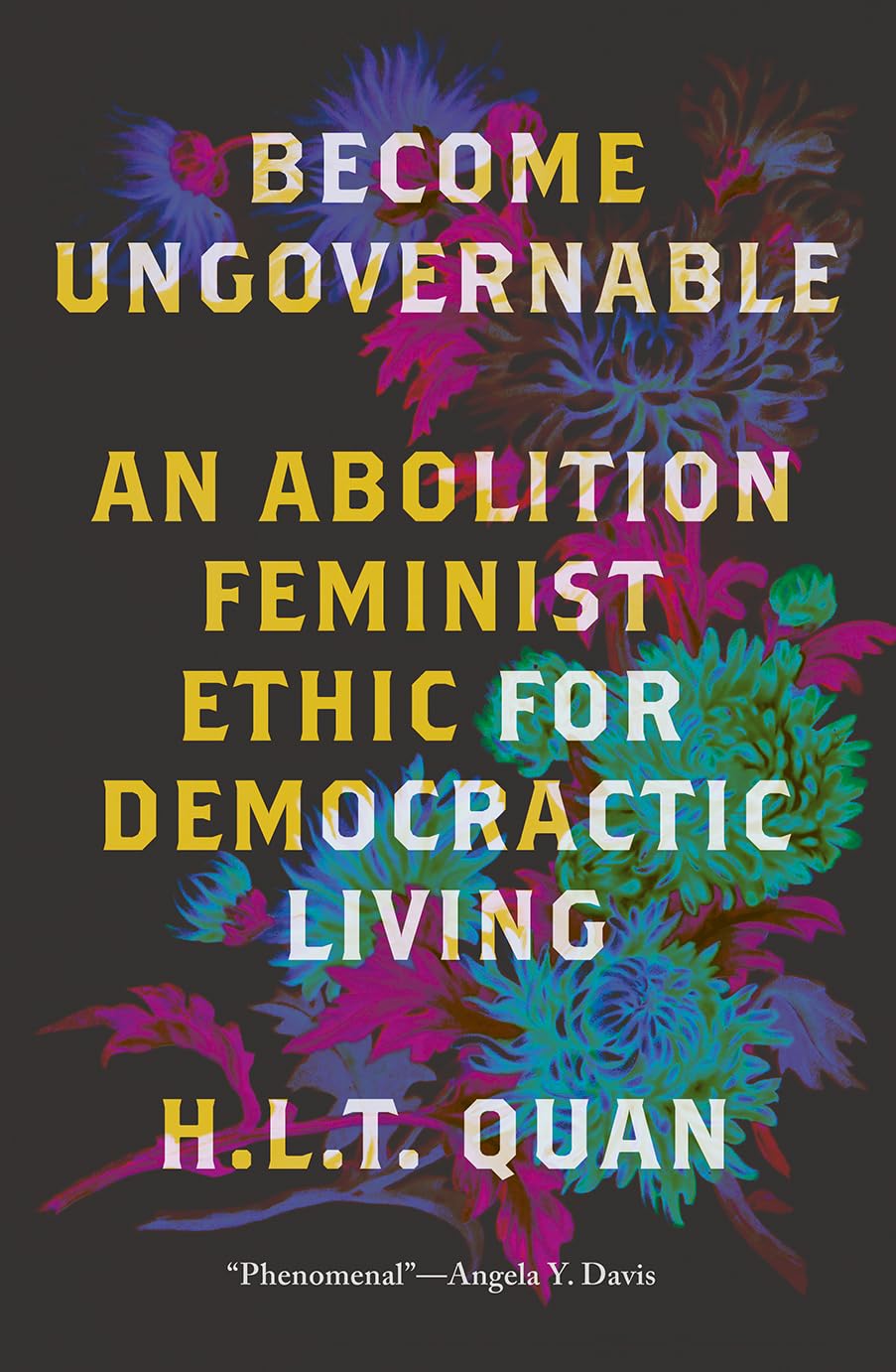
Become Ungovernable: An Abolition Feminist Ethic for Democratic Living (Black Critique)
$26.95
Unit price perBecome Ungovernable: An Abolition Feminist Ethic for Democratic Living (Black Critique)
$26.95
Unit price per'Phenomenal ... Offers us possibilities for rescuing the concept of democracy from its fatal entanglement with racial, heteropatriarchal capitalism'—Angela Y. Davis
'Embraces the unruliness of collective struggle, and recognizes freedom not as a destination but practice—an abolitionist, feminist, anticapitalist, antiracist, radically inclusive practice'—Robin D.G. Kelley, author of Freedom Dreams
'A compelling and inspiring book that belongs in our movements and our classrooms'—Chandra Talpade Mohanty, author of Feminism Without Borders
'An elegantly written masterpiece'—Barbara Ransby, author of Making All Black Lives Matter
Become Ungovernable is a provocative new work of political thought setting out to reclaim “freedom”, “justice”, and “democracy”, revolutionary ideas that are all too often warped in the interests of capital and the state. Revealing the mirage of mainstream democratic thought and the false promises of liberal political ideologies, H.L.T. Quan offers an alternative approach: an abolition feminism drawing on a kaleidoscope of refusal praxes, and on a deep engagement with the Black Radical Tradition and queer analytics.
With each chapter anchored by episodes from the long history of resistance and rebellions against tyranny, Quan calls for us to take up a feminist ethic of living rooted in the principles of radical inclusion, mutuality and friendship as part of the larger toolkit for confronting fascism, white supremacy, and the neoliberal labor regime.
H.L.T. Quan is a political theorist, award-winning filmmaker and Associate Professor of Justice and Social Inquiry in the School of Social Transformation at Arizona State University. Quan is the author of Growth Against Democracy and editor of Cedric J. Robinson.

Beyond Survival: Strategies and Stories from the Transformative Justice Movement
$18.00
Unit price perBeyond Survival: Strategies and Stories from the Transformative Justice Movement
$18.00
Unit price perTransformative justice seeks to solve the problem of violence at the grassroots level, without relying on punishment, incarceration, or policing. Community-based approaches to preventing crime and repairing its damage have existed for centuries. However, in the punative atmosphere of contemporary criminal justice systems, they are often marginalized and operate under the radar. Beyond Survival puts these strategies front and center as real alternatives to today’s failed models of confinement and “correction.”
In this collection, a diverse group of authors focuses on concrete and practical forms of redress and accountability, assessing existing practices and marking paths forward. They use a variety of forms—from toolkits to personal essays—to delve deeply into the “how to” of transformative justice, providing alternatives to calling the police, ways to support people having mental health crises, stories of community-based murder investigations, and much more. At the same time, they document the history of this radical movement, creating space for long-time organizers to reflect on victories, struggles, mistakes, and transformations.

An urgent and accessible handbook for peaceful protesters, activists, and community organizers—anyone trying to defend their rights, hold their government accountable, or change the world
Blueprint for Revolution will teach you how to
• make oppression backfire by playing your opponents’ strongest card against them
• identify the “almighty pillars of power” in order to shift the balance of control
• dream big, but start small: learn how to pick battles you can win
• listen to what people actually care about in order to incorporate their needs into your revolutionary vision
• master the art of compromise to bring together even the most disparate groups
• recognize your allies and view your enemies as potential partners
• use humor to make yourself heard, defuse potentially violent situations, and “laugh your way to victory”
Praise for Blueprint for Revolution
“The title is no exaggeration. Otpor’s methods . . . have been adopted by democracy movements around the world. The Egyptian opposition used them to topple Hosni Mubarak. In Lebanon, the Serbs helped the Cedar Revolution extricate the country from Syrian control. In Maldives, their methods were the key to overthrowing a dictator who had held power for thirty years. In many other countries, people have used what Canvas teaches to accomplish other political goals, such as fighting corruption or protecting the environment.”—The New York Times
“A clear, well-constructed, and easily applicable set of principles for any David facing any Goliath (sans slingshot, of course) . . . By the end of Blueprint, the idea that a punch is no match for a punch line feels like anything but a joke.”—The Boston Globe
“An entertaining primer on the theory and practice of peaceful protest.”—The Guardian
“With this wonderful book, Srdja Popovic is inspiring ordinary people facing injustice and oppression to use this tool kit to challenge their oppressors and create something much better. When I was growing up, we dreamed that young people could bring down those who misused their power and create a more just and democratic society. For Srdja Popovic, living in Belgrade in 1998, this same dream was potentially a much more dangerous idea. But with an extraordinarily courageous group of students that formed Otpor!, Srdja used imagination, invention, cunning, and lots of humor to create a movement that not only succeeded in toppling the brutal dictator Slobodan Milošević but has become a blueprint for nonviolent revolution around the world. Srdja rules!”—Peter Gabriel
“Blueprint for Revolution is not only a spirited guide to changing the world but a breakthrough in the annals of advice for those who seek justice and democracy. It asks (and not heavy-handedly): As long as you want to change the world, why not do it joyfully? It’s not just funny. It’s seriously funny. No joke.”—Todd Gitlin, author of The Sixties and Occupy Nation

"A must-read, an antidote to powerlessness, a literary companion for the ages."
–Michelle Tea, author of Against Memoir
"Editors' Choice"
–New York Times Book Review
A comprehensive collection of feminist manifestos, chronicling rage and dreams from the nineteenth century to the present day
A landmark collection spanning two centuries and four waves of feminist activism and writing, Burn It Down! is a testament to what is possible when women are driven to the edge. The manifesto—raging, demanding, quarreling and provocative—has always been central to feminism, and it’s the angry, brash feminism we need now.
Collecting over seventy-five manifestos from around the world, Burn It Down! is a rallying cry and a call to action. Among this confrontational sisterhood, you’ll find the Dyke Manifesto by the Lesbian Avengers, The Ax Tampax Poem Feministo by the Bloodsisters Project, The Manifesto of Apocalyptic Witchcraft by Peter Grey, Simone de Beauvoir’s pro-abortion Manifesto of the 343, Double Jeopardy: To Be Black and Female by Frances M. Beal, and many more.
Feminist academic and writer Breanne Fahs argues that we need manifestos in all their urgent rawness, for it is at the bleeding edge of rage and defiance that new ideas are born.
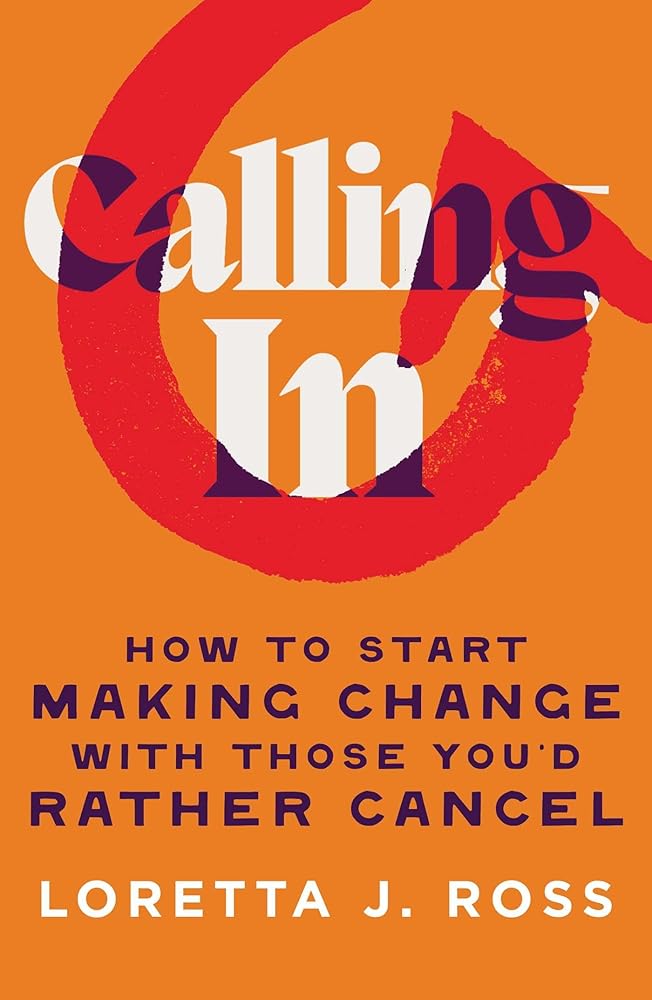
From a pioneering Black feminist and MacArthur “Genius” Fellow, an urgent and exhilarating memoir-manifesto-handbook about how to rein in the excesses of cancel culture so we can truly communicate and solve problems together.
In 1979, Loretta Ross was a single mother who’d had to drop out of Howard University. She was working at Washington, DC’s Rape Crisis Center when she got a letter from a man in prison saying he wanted to learn how to not be a rapist anymore. At first, she was furious. As a survivor of sexual violence, she wanted to write back pouring out her rage. But instead, she made a different choice, a choice to reject the response her trauma was pushing her towards, a choice that set her on the path towards developing a philosophy that would come to guide her whole career: rather than calling people out, try to call even your unlikeliest allies in. Hold them accountable—but do so with love.
Calling In is at once a handbook, a manifesto, and a memoir—because the power of Loretta Ross’s message comes from who she is and what she’s lived through. She’s a Black woman who’s deprogrammed white supremacists, a survivor who’s taught convicted rapists the principles of feminism. With stories from her five remarkable decades in activism, she vividly illustrates why calling people in—inviting them into conversation instead of conflict by focusing on your shared values over a desire for punishment—is the more strategic choice if you want to make real change. And she shows you how to do so, whether in the workplace, on a college campus, or in your living room.
Courageous, awe-inspiring, and blisteringly authentic, Calling In is a practical new solution from one of our country’s most extraordinary change-makers—one anyone can learn to use to transform frustrating and divisive conflicts that stand in the way of real connection with the people in your life.