Sort by:
59 of 1952 products
59 of 1952 products

From a star of the climate justice movement, a fresh, radical perspective for real climate action and “an indispensable toolkit for a new generation of activists” (Naomi Klein).
For too long, representations of climate action in the mainstream media have been white-washed, green-washed and diluted to be made compatible with capitalism. In It’s Not That Radical, Loach addresses head-on the issues at the root of the climate crisis.
As Loach shows, we are living in an economic system which pursues profit above all else; harmful, oppressive systems that heavily contribute to the climate crisis, and environmental consequences that have been toned down to the masses. Tackling the climate crisis requires us to visit the roots of poverty, capitalist exploitation, police brutality, and legal injustice. Climate justice offers the real possibility of huge leaps towards racial equality and collective liberation as it aims to dismantle the very foundations of these issues.
Written with candor and hope, It's Not That Radical will galvanize readers to take action, offering a practical and transformative appraisal of our circumstances to help mobilize a majority for the future of our planet.

“A gift to future generations.”—Cecile Richards, author of Make Trouble
“Our storytellers meet the moment with powerful insight and testimonials.”—Congresswoman Ayanna Pressley
A galvanizing history of abortion recentering people of color to put forth a timely argument that we must liberate abortion for all.
People of color have been having abortions since the dawn of time, yet our access is continuously under attack. In Liberating Abortion, award-winning abortion activist Renee Bracey Sherman and journalist Regina Mahone illustrate the long racist history that brought us to this moment, uncover the hidden figures who set the foundation that activists and storytellers are building on today, and explain how abortion has been and remains essential to the health of our communities.
Liberating Abortion will take you back to the basics of sex education, detailing the traditions of abortion over centuries while examining how society makes us feel about our experiences. You’ll find rigorous research, never-before-heard stories, and eye-opening interviews with more than fifty people of color who’ve had abortions, including activists, actresses, television writers, politicians, and two Black members of Jane, the Chicago feminist service that provided abortions before Roe.
With poignant storytelling and precise analysis, Liberating Abortion will change how you think about abortion forever.

In an era in which "resistance" has become tokenized, popular Indigenous author Kaitlin B. Curtice reclaims it as a basic human calling. Resistance is for every human who longs to see their neighbors' holistic flourishing. We each have a role to play in the world right where we are, and our everyday acts of resistance hold us all together.
Curtice shows that we can learn to practice embodied ways of belonging and connection to ourselves and one another through everyday practices, such as getting more in touch with our bodies, resting, and remembering our ancestors. She explores four "realms of resistance"--the personal, the communal, the ancestral, and the integral--and shows how these realms overlap and why all are needed for our liberation. Readers will be empowered to seek wholeness in the various spheres of influence they inhabit. Now in paperback.
"Readers will find abundant wisdom in this accessible guide."--Publishers Weekly


A pioneering treatise on embracing cooperation and reciprocity to usher in a greener and more inclusive world, from the major anarchist thinker
A Penguin Classic
Welcome to the anarchist history of the world. In this lively, provocative work, Peter Kropotkin argues that "mutual aid" is a natural instinct in all of us, animal and human. Cooperation, reciprocity, support: these, for Kropotkin, are the overlooked foundations of our history. From the earliest days of evolution through to artisanal guilds, indigenous nomads, and even the Royal National Lifeboat Association, it is a pragmatic, mutually beneficial bond to our fellow humans that has allowed us to survive. In this, Kropotkin challenges all the major orthodoxies of his age, from individualism and social Darwinism to Marxist theories of the savior state. Instead, these essays insist that a better life for all of us--and our planet--begins when we reject competition, and embrace the local, the mutual, and the collective.

Mutual Aid is a radical handbook for anyone who grasps the severity of the global poly-crisis and wants a community-based means to fight back. Dean Spade - lawyer, academic, writer, and activist - highlights the bold and innovative ways ordinary people have developed to share resources and care for those in crisis. Mutual aid isn't charity. It is a form of organizing integral to all influential and successful social movements. Spade offers practical tools and advice to help with the challenges of working in groups, forming a decision-making process, and preventing and addressing conflict.

An assembly of refusals portraying the radical power of “no” by the renowned scholar and author of The Feminist Killjoy Handbook, Sara Ahmed.
To be heard as complaining is not to be heard, writes Sara Ahmed. In her sweeping exploration of complaint as a means of resistance, Ahmed attunes her “feminist ear” to those who seek to challenge powerful institutions. She shows how complaints can unbury past complaints, getting them out of filing cabinets or from behind closed doors, allowing us to see institutions more clearly—how they work, and for whom they work.
Where complaints live, how complaints are made, who receives them, who buries them and where—Ahmed’s accessible, attentive writing brings to life the lessons learned from people knocking at closed doors, teaching us how to collectively resist the glacial weight of institutional power. This book inspires all of us to persist, to say “No!” and to build new collectivities that break down brick walls together.

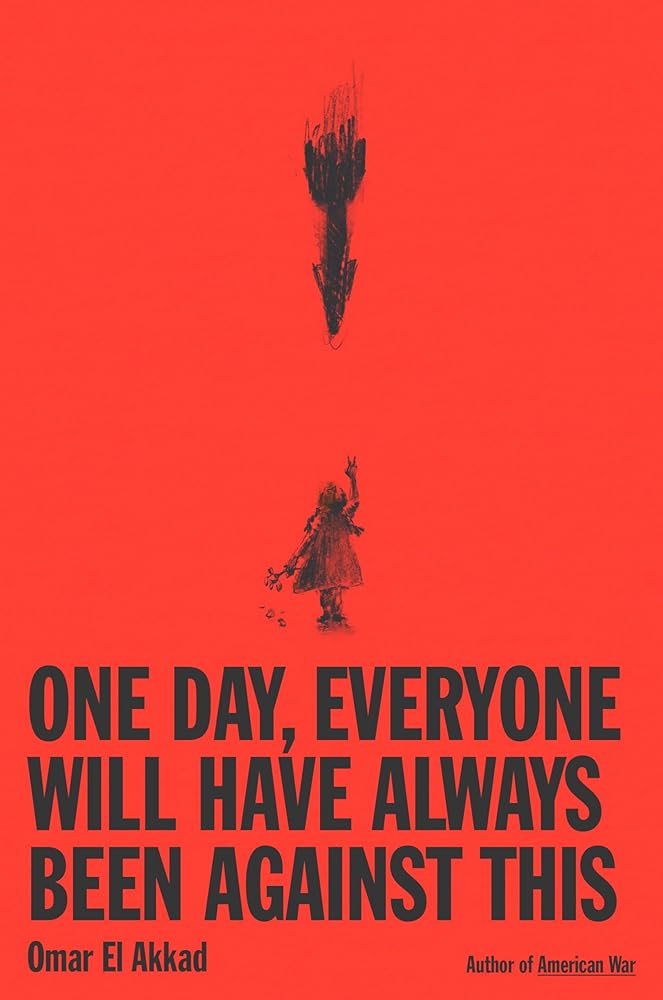
NEW YORK TIMES BESTSELLER • LONGLISTED FOR THE NATIONAL BOOK AWARD • SHORTLISTED FOR THE 2025 PALESTINE BOOK AWARDS • From award-winning novelist and journalist Omar El Akkad comes a powerful reckoning with what it means to live in a West that betrays its fundamental values.
"[A] bracing memoir and manifesto." —The New York Times
"I can’t think of a more important piece of writing to read right now. I found hope here, and help, to face what the world is now, all that it isn’t anymore. Please read this. I promise you won’t regret it." —Tommy Orange, bestselling author of Wandering Stars and There There
On October 25, 2023, after just three weeks of the bombardment of Gaza, Omar El Akkad put out a tweet: “One day, when it’s safe, when there’s no personal downside to calling a thing what it is, when it’s too late to hold anyone accountable, everyone will have always been against this.” This tweet has been viewed more than 10 million times.
As an immigrant who came to the West, El Akkad believed that it promised freedom. A place of justice for all. But in the past twenty years, reporting on the War on Terror, Ferguson, climate change, Black Lives Matter protests, and more, and watching the unmitigated slaughter in Gaza, El Akkad has come to the conclusion that much of what the West promises is a lie. That there will always be entire groups of human beings it has never intended to treat as fully human—not just Arabs or Muslims or immigrants, but whoever falls outside the boundaries of privilege. One Day, Everyone Will Have Always Been Against This is a chronicle of that painful realization, a moral grappling with what it means, as a citizen of the U.S., as a father, to carve out some sense of possibility in a time of carnage.
This is El Akkad’s nonfiction debut, his most raw and vulnerable work to date, a heartsick breakup letter with the West. It is a brilliant articulation of the same breakup we are watching all over the United States, in family rooms, on college campuses, on city streets; the consequences of this rupture are just beginning. This book is for all the people who want something better than what the West has served up. This is the book for our time.

***This item will ship on or after the release date of April 14, 2026***
NEW YORK TIMES BESTSELLER • “A fascinating and eye-opening look at how American schools have helped build and reinforce an infrastructure of racial inequality . . . a must-read for every American parent and educator.”—Esquire
“Though the argument of this book is bleak, it illuminates a path for a more just future that is nothing short of dazzling.”—Oprah Daily
“This book will transform the way you see this country.”—Michelle Alexander, author of The New Jim Crow
A BEST BOOK OF THE YEAR: The New Yorker, Esquire, Elle, Chicago Public Library • LONGLISTED FOR THE ANDREW CARNEGIE MEDAL
If all children could just get an education, the logic goes, they would have the same opportunities later in life. But this historical tour de force makes it clear that the opposite is true: The U.S. school system has played an instrumental role in creating and upholding racial hierarchies, preparing children to expect unequal treatment throughout their lives.
In Original Sins, Ewing demonstrates that our schools were designed to propagate the idea of white intellectual superiority, to “civilize” Native students and to prepare Black students for menial labor. Education was not an afterthought for the Founding Fathers; it was envisioned by Thomas Jefferson as an institution that would fortify the country’s racial hierarchy. Ewing argues that these dynamics persist in a curriculum that continues to minimize the horrors of American history. The most insidious aspects of this system fall below the radar in the forms of standardized testing, academic tracking, disciplinary policies, and uneven access to resources.
By demonstrating that it’s in the DNA of American schools to serve as an effective and underacknowledged mechanism maintaining inequality in this country today, Ewing makes the case that we need a profound reevaluation of what schools are supposed to do, and for whom. This book will change the way people understand the place we send our children for eight hours a day.

You may not realise it, but you are probably already practicing anarchism in your daily life. From relationships to school, work, art, even the way you organise your time, anarchism can help you find fulfilment, empathy and liberation in the everyday.
From the small questions such as 'Why should I steal?' to the big ones like 'how do I love?', Shuli Branson shows that anarchism isn’t only something we do when we react to the news, protest or even riot. With practical examples enriched by history and theory, these tips will empower you to break free from the consumerist trappings of our world.
Anarchism is not just for white men, but for everyone. In reading this book, you can detach from patriarchal masculinity, norms of family, gender, sexuality, racialisation, individual responsibility and the destruction of our planet, and replace them with ideas of sustainable living, with ties of mutual aid, and the horizon of collective liberation.

Practicing New Worlds: Abolition and Emergent Strategies (Emergent Strategy, 9)
$22.00
Unit price perPracticing New Worlds: Abolition and Emergent Strategies (Emergent Strategy, 9)
$22.00
Unit price perAn exploration of how emergent strategies can help us meet this moment, survive what is to come, and shape safer and more just futures.
Practicing New Worlds explores how principles of emergence, adaptation, iteration, resilience, transformation, interdependence, decentralization and fractalization can shape organizing toward a world without the violence of surveillance, police, prisons, jails, or cages of any kind, in which we collectively have everything we need to survive and thrive.
Drawing on decades of experience as an abolitionist organizer, policy advocate, and litigator in movements for racial, gender, economic, and environmental justice and the principles articulated by adrienne maree brown in Emergent Strategy: Shaping Change, Changing Worlds, Ritchie invites us to think beyond traditional legislative and policy change to create more possibilities for survival and resistance in the midst of the ongoing catastrophes of racial capitalism—and the cataclysms to come. Rooted in analysis of current abolitionist practices and interviews with on-the-ground organizers resisting state violence, building networks to support people in need of abortion care, and nurturing organizations and convergences that can grow transformative cities and movements, Practicing New Worlds takes readers on a journey of learning, unlearning, experimentation, and imagination to dream the worlds we long for into being.

#1 NEW YORK TIMES BESTSELLER • Rachel Maddow traces the fight to preserve American democracy back to World War II, when a handful of committed public servants and brave private citizens thwarted far-right plotters trying to steer our nation toward an alliance with the Nazis.
“A ripping read—well rendered, fast-paced and delivered with the same punch and assurance that she brings to a broadcast. . . . The parallels to the present day are strong, even startling.”—The New York Times (Editors’ Choice)
Inspired by her research for the hit podcast Ultra, Rachel Maddow charts the rise of a wild American strain of authoritarianism that has been alive on the far-right edge of our politics for the better part of a century. Before and even after our troops had begun fighting abroad in World War II, a clandestine network flooded the country with disinformation aimed at sapping the strength of the U.S. war effort and persuading Americans that our natural alliance was with the Axis, not against it. It was a sophisticated and shockingly well-funded campaign to undermine democratic institutions, promote antisemitism, and destroy citizens’ confidence in their elected leaders, with the ultimate goal of overthrowing the U.S. government and installing authoritarian rule.
That effort worked—tongue and groove—alongside an ultra-right paramilitary movement that stockpiled bombs and weapons and trained for mass murder and violent insurrection.
At the same time, a handful of extraordinary activists and journalists were tracking the scheme, exposing it even as it was unfolding. In 1941 the U.S. Department of Justice finally made a frontal attack, identifying the key plotters, finding their backers, and prosecuting dozens in federal court.
None of it went as planned.
While the scheme has been remembered in history—if at all—as the work of fringe players, in reality it involved a large number of some of the country’s most influential elected officials. Their interference in law enforcement efforts against the plot is a dark story of the rule of law bending and then breaking under the weight of political intimidation.
That failure of the legal system had consequences. The tentacles of that unslain beast have reached forward into our history for decades. But the heroic efforts of the activists, journalists, prosecutors, and regular citizens who sought to expose the insurrectionists also make for a deeply resonant, deeply relevant tale in our own disquieting times.

Both deeply personal and global in scope, Pride and Prejudices presents the life story of international human rights lawyer Keio Yoshida alongside an urgent, engaging overview of the state of LGBTQ+ rights worldwide.
Keio Yoshida came of age in socially conservative Ireland, where homosexuality was criminalized until 1993. Experiencing discrimination and stigma, Yoshida lived a closeted existence, pressured by their loved ones and by larger society to self-censor and hide their true desires and gender expression until they left the country after college.
Intimate and engaging, Pride and Prejudices pairs Yoshida’s story―from coming out as a lesbian, becoming a trailblazing human rights advocate, to later becoming a nonbinary transmasculine rainbow parent―with a treatise on the ongoing struggle for LGBTQ+ rights around the globe. Fascinating examples of landmark case law are covered from the US, Sri Lanka, the UK, India, and more―from Oscar Wilde’s trial in 1895 to Obergefell v Hodges, from “Don’t Say Gay” to Bostock v Clayton County, from Rosanna Flamer Caldera v Sri Lanka to the “gay cake” case.
By weaving together personal history and legal analysis, Yoshida illustrates the devastating consequences of discrimination and criminalization on queer and trans lives, and the importance of stronger legal protections.
Today, as we see increased hostility toward queer and trans communities in the US, Pride and Prejudices offers a hopeful vision of the future―one filled with queer joy and love and liberation―where each of us has the freedom to live our lives authentically, on our own terms.
This brighter and more just world is possible, Yoshida argues, but we must keep fighting for it.

***This book will ship on or after the release date of April 14, 2026***
An urgent declaration that advances an internationalism from below focused on people and movements as agents of our collective liberation
We belong to a single transnational struggle―and we stand against an internationally organized elite. We know that if we remain isolated, we will achieve nothing. We have begun to weave a network of planetary connections from front lines to popular assemblies, from feminist strikes to resistance committees, from occupied roundabouts to occupied forests, and have discovered a common sensibility.
Revolutions of Our Times draws on the experience of uprisings taking place across the globe over the past two decades and sets out a vision for revolutionary internationalism.
“Although everything has been done to belittle the power of people in revolt, its impact has proved contagious …. Hope, courage, and insurrection have crossed bodies, territories, and all borders.”―from the introduction