
Sort by:
59 of 1952 products
59 of 1952 products

Harm reduction is one of the most important movements of the 20th century, and yet a compilation of its critical stories and voices was, until now, seemingly nowhere to be found. Saving Our Own Lives, an anthology of essays from long-time organizer Shira Hassan, fills this gap by telling the stories of how sex workers, people of color, queer folks, and trans, gender non-conforming, and two-spirit people are building systems of change and support outside the societal frameworks of oppression and exploitation. This is a collective story of Bad Date sheets passed between sex workers in Portland, leading to the identification of a serial killer. It is the story of clean syringes, “liberated” from empathetic doctors offices and passed between punks in squats in the East Village by women of color, and the early AIDS activists who made sure that everyone knew how to use them. It is the story of transwomen of color, street-based sex workers, who created shared housing to ensure that young people had safe places to sleep. It is the story of Black Panthers creating a free breakfast program to feed a revolution and the Young Lords taking over Lincoln Park Hospital in the Bronx to demand and ultimately create community-accessible drug treatment programs.
At a political moment when Liberatory Harm Reduction and mutual aid are more important than ever, this book serves as an inspiration and a catalyst for radical transformation of our world.

A vision of the first decade of socialism in the United States. The diverse multinational working class has achieved political supremacy and is actively eliminating bigotry, racism, and national oppression as it expands economic, social, and political democracy.
“This courageous and visionary book provides a realistic and realizable socialist alternative to our decaying predatory capitalist civilization! It grounds a grand socialist reconstruction of the present US regime in our present sufferings and struggles, especially in the crucial role of an awakening of working peoples! Genuine hope trumps despair in this prophetic text!”
—DR. CORNEL WEST
"Every project that is fed up with the failed capitalist system must develop a vision for socialism that builds the confidence of people that such a post-capitalist world is possible. Sharp clarity of thought based on experiments by people around the world defines this crucial book, a roadmap for our work."
—VIJAY PRASHAD
"This book is a great political and pedagogical tool for everyone who dares to imagine the end of capitalism and oppressive structures in the United States. It comes at a crucial time and should be utilized by organizers as a conversation starter within every community in the US to explore the concrete ways in which socialism can and must be constructed as a real social, economic and political project."
—CLAUDIA DE LA CRUZ

A plan for transitioning to a more sustainable world--while keeping the economy afloat
Ulrike Hermann is an economics correspondent whose books on social and economic policy issues are bestsellers in Germany. Here--translated by journalist and international broadcaster David Shaw--Ulrike explores how we might manage to transition to a more sustainable world without the collapse of the economy.
The End of Capitalism tells the story of Capitalism--from its beginnings in 1760 England, where textiles manufacturers had the idea to replace human workers with machines--and what it really means for the world when individual profits overshadow communal and environmental needs.
Hermann makes an argument for a "circular economy," an economy where only what can be recycled is consumed. We know by now the ruinous effects of Capitalism on the climate and environment. While we hear that "green growth" is meant to be the savior, Ulrike argues that we need "green shrinkage" instead.
Her example for a solution is the British war economy of the 1940s. This is not a utopian scenario (it would involve personal restrictions and government planning) but a comprehensive example of how resources can be diverted.
An interesting and important read for serious thinkers who hope to upend Capitalism, The End of Capitalism offers a realistic alternative from an expert in the field. Readers of Rebecca Solnit, Naomi Klein and Rutgar Bregman; progressive-minded readers; and anyone interested in a different future should read this.
The translation of this book was supported by a grant from the Goethe-Institut.

“Being the killjoy is often a joy unto itself, and Ahmed shows us how to embrace it in all its liberatory glory” (Ms. magazine)
Do you refuse to laugh at offensive jokes? Have you ever been accused of ruining dinner by pointing out your companion’s sexist comment? Are you often told to stop being so “woke”? If so, you might be a feminist killjoy—and this handbook is for you. In this book, feminist theorist Sara Ahmed shows how killing joy can be a radical world-making project.
Presenting sharp analysis of literature, film, and influential feminist works, and drawing on her own experiences as a queer feminist scholar-activist of color, Ahmed reveals the invaluable lessons of the feminist killjoy, from the importance of asking questions to the power of the eye roll. The Feminist Killjoy Handbook offers an outstretched hand to feminist killjoys everywhere and an essential intellectual guide to the transformative power of getting in the way.
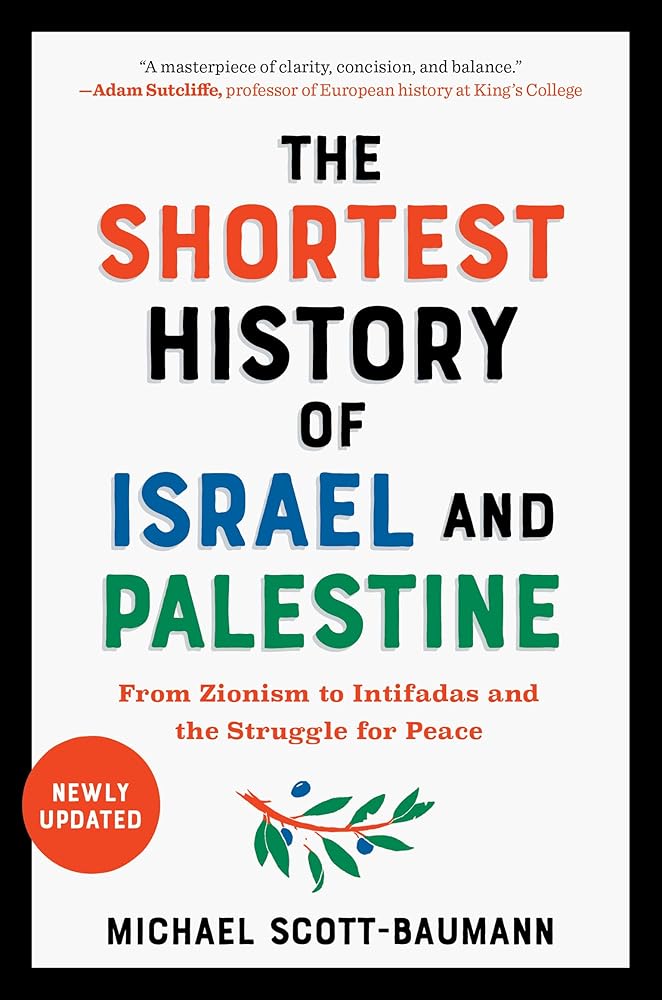
An accessible chronicle of how the Israel-Palestine conflict originated and developed over the past century. The Shortest History books deliver thousands of years of history in one riveting, fast-paced read.
The ongoing struggle between Israel and Palestine is one of the most bitter conflicts in history, with profound global consequences. In this book, Middle East expert Michael Scott-Baumann succinctly describes its origins and charts its evolution from civil war to the present day. Each chapter offers a lucid explanation of the politics and ends with personal testimony from Palestinians and Israelis whose lives have been impacted by the dispute.
While presenting competing interpretations, Scott-Baumann examines the key flash points, including the early role of the British, the establishment of the state of Israel in 1948, the Six-Day War of 1967, and the Trump administration’s peace plan, pitched as “the deal of the century,” in 2020. He delineates both the nature of Israeli control over the Palestinian territories and Palestinian resistance―going to the heart of the clashes in recent decades. The result is an indispensable history, including a time line, glossary, and analysis of why efforts to restore peace have continually failed and what it will take to succeed. 45 B&W maps and images

“Those who build walls are their own prisoners. I am going to go fulfill my proper function in the social organism. I’m going to go unbuild walls.”
―Ursula K. Le Guin, The Dispossessed
Drawing from over twenty years of activism on local and national levels, this striking book offers an organizer’s perspective on the intersections of immigrant rights, racial justice, and prison abolition.
In the wake of post-9/11 xenophobia, Obama’s record-level deportations, Trump’s immigration policies, and the 2020 uprisings for racial justice, the US remains entrenched in a circular discourse regarding migrant justice. As organizer Silky Shah argues in Unbuild Walls, we must move beyond building nicer cages or advocating for comprehensive immigration reform. Our only hope for creating a liberated society for all, she insists, is abolition.
Unbuild Walls dives into US immigration policy and its relationship to mass incarceration, from the last forty years up to the present, showing how the prison-industrial complex and immigration enforcement are intertwined systems of repression. Incorporating historical and legal analyses, Shah’s personal experience as an organizer, as well as stories of people, campaigns, organizations, and localities that have resisted detention and deportation, Shah assesses the movement’s strategies, challenges, successes, and shortcomings. Featuring a foreword by Amna A. Akbar, Unbuild Walls is an expansive and radical intervention, bridging the gaps between movements for immigrant rights, racial justice, and prison abolition.


Richard D. Wolff masterfully explains why Karl Marx’s analysis of class struggle is fundamental to a proper understanding of capitalism and explores how to build a more sustainable democratic society.
Class struggle is everywhere, and it influences everything and everyone in our society. Marx is the person who first explained this struggle systematically. For Marx, capitalism signified not the end of history, but rather the latest phase of human development that leads ordinary people to rid themselves of “all the muck of ages and become fitted to found society anew."
Marx’s theories are deeply prescient and relevant in our efforts to understand and cope with the crises of our time. Every day, we see more evidence that the capitalist system is both undermining itself and those whose labor it depends on, as Marx predicted.
Understanding Marxism is an essential resource for looking at the power and usefulness of Marx’s criticism of the capitalist economic system―and how we can move beyond it to a truly sustainable and democratic society based on workers’ self-management.

Socialism is a yearning for justice, community, and the greater realization of human potential. Cornel West calls it “the best accessible and reliable treatment we have of what socialism is, was, and should be.”
Understanding Socialism is a plainspoken text that disarms false narratives, confronts past failures, and offers a path to a fresh and modern understanding of socialism, by outlining what democracy in the workplace could look like.
Wolff not only explains what socialism is and has meant to its various proponents, he also looks at the transition from feudalism to capitalism as a model to help us visualize an evolution from our current socioeconomic state.
Understanding Socialism explores how socialist theory was used and applied to help shape the histories of countries such as Russia and China, and beyond. Wolff also analyzes the successes and defeats of those countries, the world's reactions to them, and how they offer important lessons for the building of a democratic, worker-controlled 21st-century socialism.

"We Are Not Numbers is not just a book—it's my life, their life, and our shared story ... This is Gaza as it truly is, written by those who live it every day" —MOTAZ AZIZA
"This book is a jailbreak and a miracle" —NAOMI KLEIN
"Essential ... A project that insists on liberation" —TA-NEHISI COATES
"Impossible to put down or forget" —RIZ AHMED
A teenage girl stares at her roof, hoping it won’t collapse over her head. A young student searches the Internet for photos of libraries around the world, hoping he’ll be able to visit them one day. Another walks around the city, taking notes of all the buildings she dreams of repairing.
These are the stories of young people from Gaza, born under Israeli occupation and blockade. They are people who have endured unspeakable struggles and losses, who keep fighting to be recognized not as numbers, but as human beings with hopes, dreams, and lives worth living.
We Are Not Numbers was founded in 2014 to give voice to the youth of Gaza. In this collection—vital, urgent and full of heart, spanning over ten years to the present moment—we gain an unparalleled insight into the past, as well as the current and next generation of Palestinian leaders, artists, scientists and scholars and imagine where we might go from here.
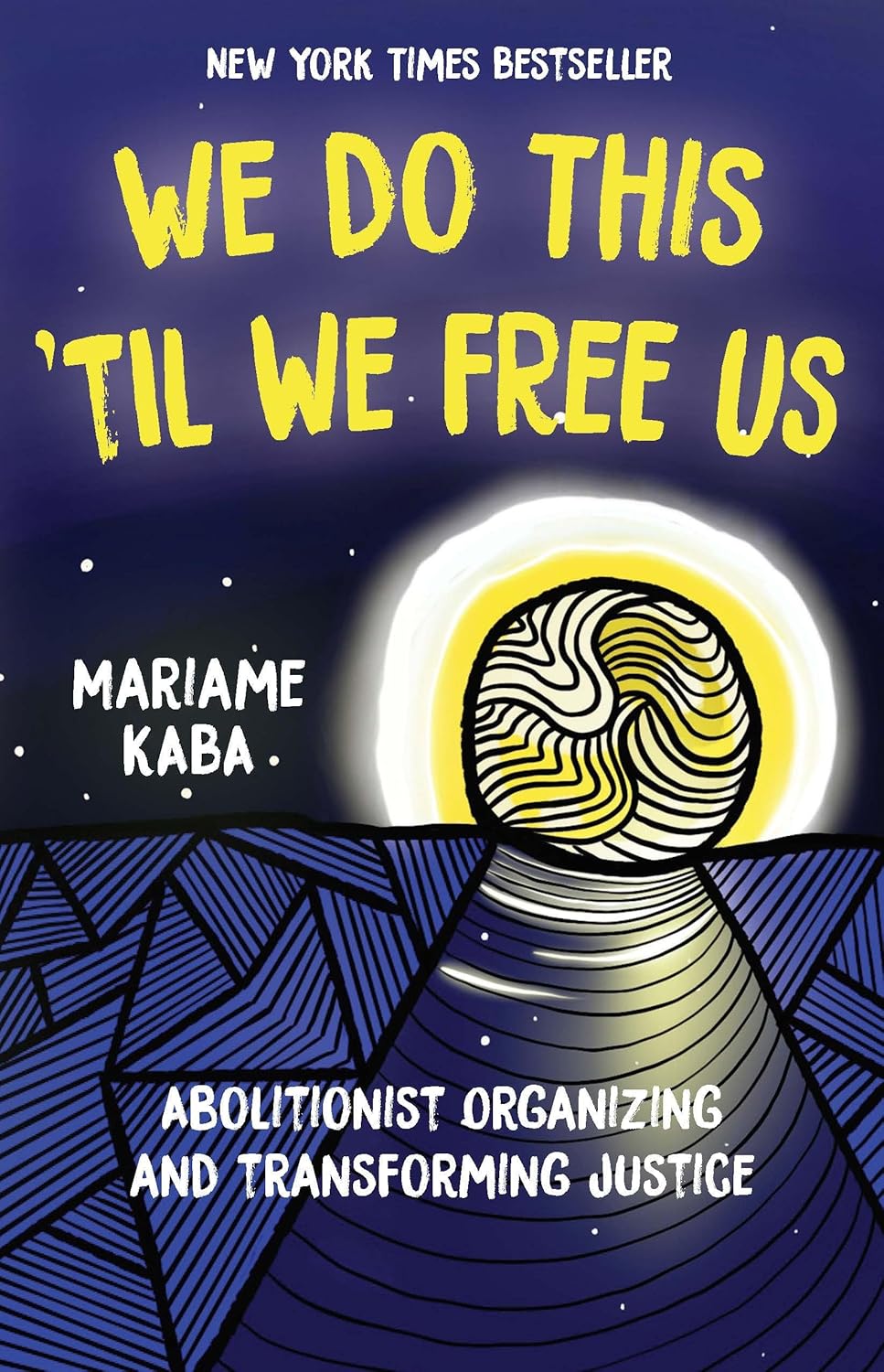
By: Mariame Kaba (Author), Tamara Nopper (Editor), 2021, Paperback (Abolitionist Papers, 1)
New York Times Bestseller
“Organizing is both science and art. It is thinking through a vision, a strategy, and then figuring out who your targets are, always being concerned about power, always being concerned about how you’re going to actually build power in order to be able to push your issues, in order to be able to get the target to actually move in the way that you want to.”
What if social transformation and liberation isn’t about waiting for someone else to come along and save us? What if ordinary people have the power to collectively free ourselves? In this timely collection of essays and interviews, Mariame Kaba reflects on the deep work of abolition and transformative political struggle.
With a foreword by Naomi Murakawa and chapters on seeking justice beyond the punishment system, transforming how we deal with harm and accountability, and finding hope in collective struggle for abolition, Kaba’s work is deeply rooted in the relentless belief that we can fundamentally change the world. As Kaba writes, “Nothing that we do that is worthwhile is done alone.”

This book will ship on or after the release date of June 16, 2026
A new graphic novel memoir chronicling the recent horrific days in Palestine, from Mohammad Sabaaneh, the winner of the Palestine Book Award.
This powerful graphic novel sheds light on the reality of life in both the West Bank and Gaza during this terrifying time. Told from the perspective of the author's brother's experience in prison and that of those in Gaza struggling to survive displacement, starvation, and attack.
In October of 2023, Sabaaneh went on a tour in Europe to promote his book about life under occupation in Palestine. Whether a Palestinian is inside a detention center or in any city or village, they are all in a big prison. The book ends with one message: 'we will not leave.' Upon his return to Palestine, he was trapped within the walls of his home—unable to see his aging parents, or his brother, who was locked away in an Israeli detention center.
So begins this vital story of struggle and survival.

INSTANT NEW YORK TIMES BESTSELLER
After a decade abroad, the National Book Award– and Pulitzer Prize–winning writer Evan Osnos returns to three places he has lived in the United States―Greenwich, CT; Clarksburg, WV; and Chicago, IL―to illuminate the origins of America’s political fury.
Evan Osnos moved to Washington, D.C., in 2013 after a decade away from the United States, first reporting from the Middle East before becoming the Beijing bureau chief at the Chicago Tribune and then the China correspondent for The New Yorker. While abroad, he often found himself making a case for his home country, urging the citizens of Egypt, Iraq, or China to trust that even though America had made grave mistakes throughout its history, it aspired to some foundational moral commitments: the rule of law, the power of truth, the right of equal opportunity for all. But when he returned to the United States, he found each of these principles under assault.
In search of an explanation for the crisis that reached an unsettling crescendo in 2020―a year of pandemic, civil unrest, and political turmoil―he focused on three places he knew firsthand: Greenwich, Connecticut; Clarksburg, West Virginia; and Chicago, Illinois. Reported over the course of six years, Wildland follows ordinary individuals as they navigate the varied landscapes of twenty-first-century America. Through their powerful, often poignant stories, Osnos traces the sources of America’s political dissolution. He finds answers in the rightward shift of the financial elite in Greenwich, in the collapse of social infrastructure and possibility in Clarksburg, and in the compounded effects of segregation and violence in Chicago. The truth about the state of the nation may be found not in the slogans of political leaders but in the intricate details of individual lives, and in the hidden connections between them. As Wildland weaves in and out of these personal stories, events in Washington occasionally intrude, like flames licking up on the horizon.
A dramatic, prescient examination of seismic changes in American politics and culture, Wildland is the story of a crucible, a period bounded by two shocks to America’s psyche, two assaults on the country’s sense of itself: the attacks of September 11, 2001, and the storming of the U.S. Capitol on January 6, 2021. Following the lives of everyday Americans in three cities and across two decades, Osnos illuminates the country in a startling light, revealing how we lost the moral confidence to see ourselves as larger than the sum of our parts.
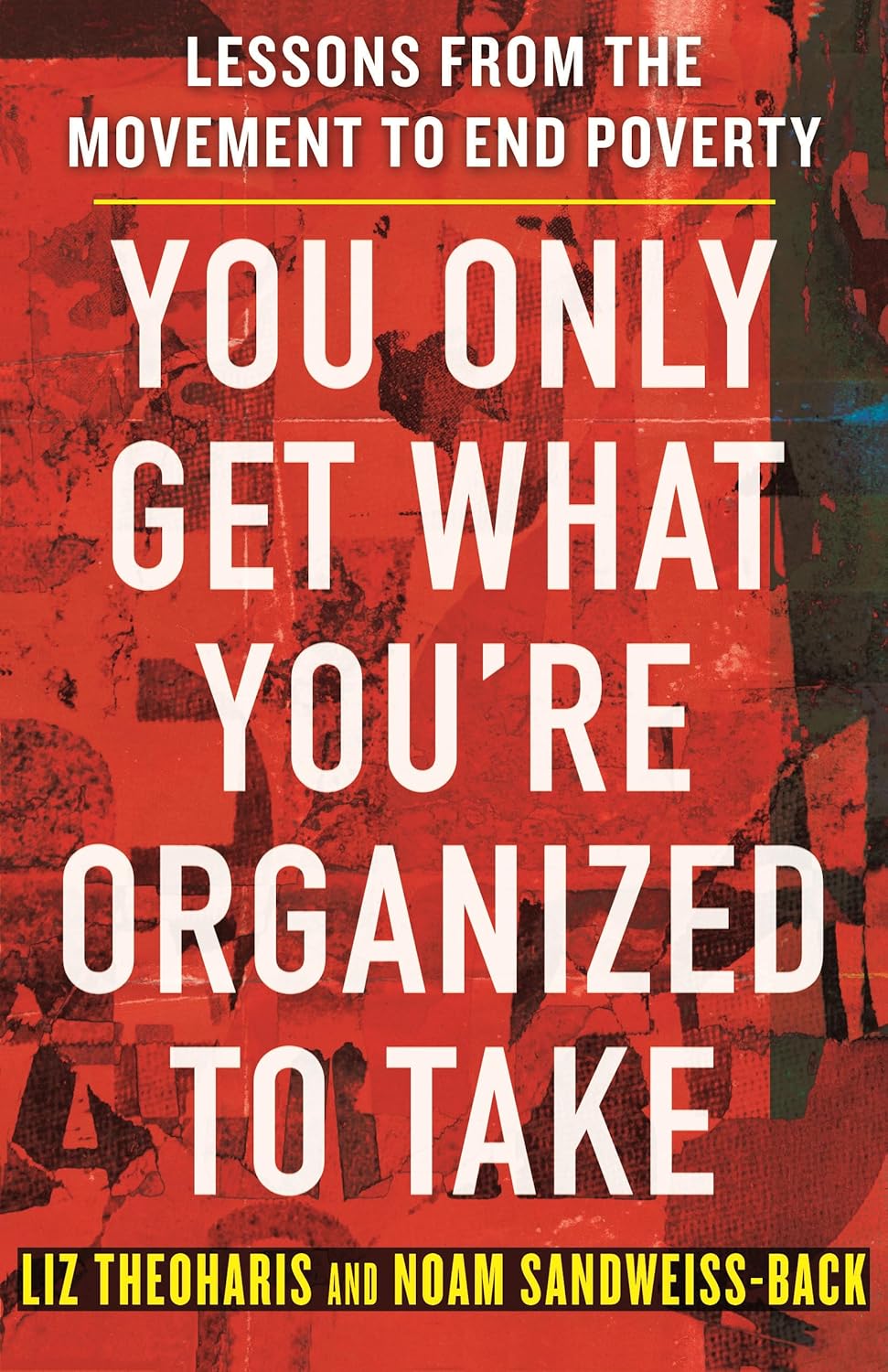
You Only Get What You're Organized to Take: Lessons from the Movement to End Poverty
$27.95
Unit price perYou Only Get What You're Organized to Take: Lessons from the Movement to End Poverty
$27.95
Unit price perBy: Liz Theoharis (Author), Noam Sandweiss-Back (Author), 2025, Hardcover
One of the nation’s leading anti-poverty organizers and moral voices shares the largely untold story of the movement to end poverty, open to all, and led by the poor themselves
As one of the nation’s leading anti-poverty organizers and moral voices, Rev. Dr. Liz Theoharis explores the largely untold history of poor people’s movements in the United States and traces her own journey through some of the most significant anti-poverty struggles of the past thirty years.
In this book, Theoharis introduces us to the people leading the movement to end poverty, including:
- multiracial groups of homeless people rising up from the streets and seizing empty, federally-owned homes;
- mothers on welfare shutting down entire city blocks and going toe-to-toe with some of the most powerful people in the country;
- farmworkers busting modern-day slave rings and winning living wages from multinational fast-food companies; and
- coal miners, veterans, unemployed workers, students, artists, and more joining together in unusual and creative alliances to fight, sing, and pray their way toward freedom.
Drawing from personal experience, history, religion, political strategy, and more, Theoharis argues that American poverty will not end because of the goodwill of the powerful or through the charitable actions of well-meaning people alone. It will happen through a mass movement to end poverty, open to all, and led by the poor.
Theoharis passionately reminds us that poor people are not condemned to be subjects of history, but have always been agents of transformative change, and can be once again. Indeed, to reorient our society around the needs of everyone and reinvigorate the promise of democracy, the poor can and must become the architects of a new America.