Sort by:
882 of 1932 products
882 of 1932 products
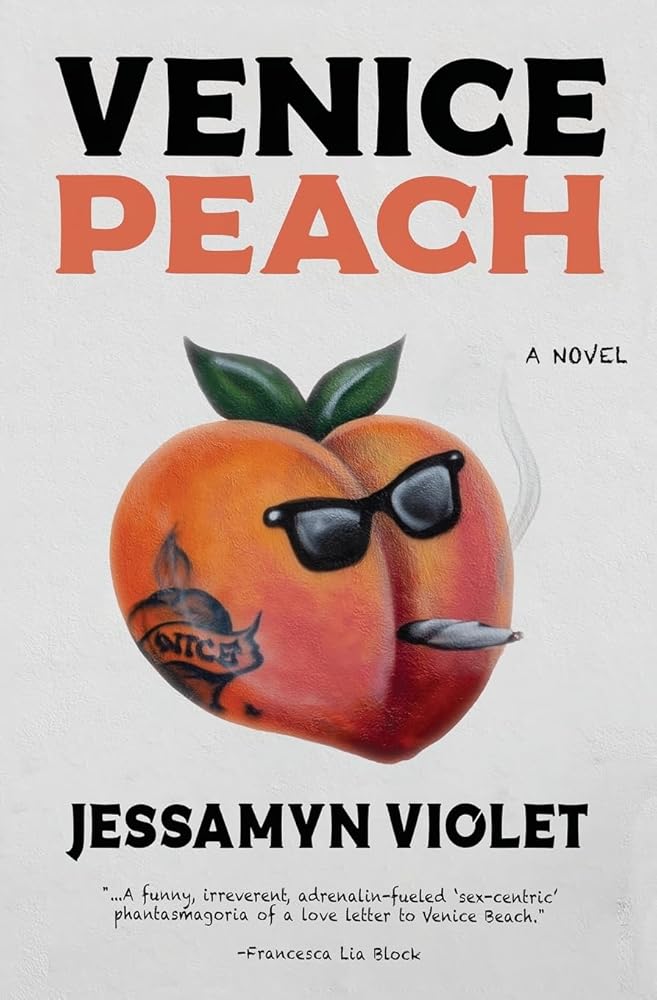
Welcome to the Dark Carnival of Futurism...
One dark, windy supermoon night in the near future, a woman's ill-timed tarot question rips open a portal between dimensions, unleashing cosmic chaos. Step right up to Venice Peach, a flamboyantly freakish circus on the gritty Venice Beach boardwalk, where bizarre talents and mind-bending spectacles are just the beginning. Get lost in a funhouse maze of reality-shattering events and untamed, sex-fueled showdowns. Featuring a cast of gonzo characters tee-tottering on the slippery slope of ambition, only to be thrown wildly off-course by creepy canal creatures, zombie seagulls, and a robot president-this is a fast, raunchy ride with enough twists to leave you twisted.
No glitches, no guts, no glory.

Andrew Sean Greer, Pulitzer Prize-winning author of Less, showcases his wit, sophistication, and deep knowledge of focaccia in this magical and madcap tale of a young man who takes an unspecified job with a charismatic elderly Baronessa at her crumbling villa in the Tuscan hills.
A TIME AND OPRAH DAILY MOST ANTICIPATED BOOK OF THE YEAR
Broke and directionless, our young man (the chosen moniker of Villa Coco's narrator) takes a job in the Italian countryside as the all-purpose assistant (technically, the employment ad asked for "adjutant") to Lisabetta, known to her friends as Coco, a strong-willed, wealthy widow of great local renown. Technically, our young man is an archivist, charged with cataloguing Coco's extensive and eclectic collection of art and artifacts, but what are his actual duties? He is charged with ridding the house of a marten, whatever that is, locating the antediluvian septic system, entertaining an endless carousel of guests (from bohemian painters to elderly princesses to handsome nephews), attending a funeral in order to make off with the urn, and not inadvertently sabotaging Coco's great and final plan--to locate the lost love of her life and be reunited before it's too late.
Told with the signature wit, insight, and deeply felt humanity that made Less an international phenomenon, Villa Coco is a dazzling, sun-soaked ode to life itself--a romp through a youthfully self-constructed emotional obstacle course, a meditation on what we give and take from others, and a bawdy Mediterranean ballad about becoming who you've always wanted to be.

By: Tommy Orange (Author), 2025, Paperback
NEW YORK TIMES BESTSELLER • The Pulitzer Prize-finalist and author of the breakout bestseller There There ("Pure soaring beauty."The New York Times Book Review) delivers a masterful follow-up to his already classic first novel. Extending his constellation of narratives into the past and future, Tommy Orange traces the legacies of the Sand Creek Massacre of 1864 and the Carlisle Indian Industrial School through three generations of a family in a story that is by turns shattering and wondrous.
"For the sake of knowing, of understanding, Wandering Stars blew my heart into a thousand pieces and put it all back together again. This is a masterwork that will not be forgotten, a masterwork that will forever be part of you.” —Morgan Talty, bestselling author of Night of the Living Rez
Colorado, 1864. Star, a young survivor of the Sand Creek Massacre, is brought to the Fort Marion prison castle, where he is forced to learn English and practice Christianity by Richard Henry Pratt, an evangelical prison guard who will go on to found the Carlisle Indian Industrial School, an institution dedicated to the eradication of Native history, culture, and identity. A generation later, Star’s son, Charles, is sent to the school, where he is brutalized by the man who was once his father’s jailer. Under Pratt’s harsh treatment, Charles clings to moments he shares with a young fellow student, Opal Viola, as the two envision a future away from the institutional violence that follows their bloodlines.
In a novel that is by turns shattering and wondrous, Tommy Orange has conjured the ancestors of the family readers first fell in love with in There There—warriors, drunks, outlaws, addicts—asking what it means to be the children and grandchildren of massacre. Wandering Stars is a novel about epigenetic and generational trauma that has the force and vision of a modern epic, an exceptionally powerful new book from one of the most exciting writers at work today and soaring confirmation of Tommy Orange’s monumental gifts.
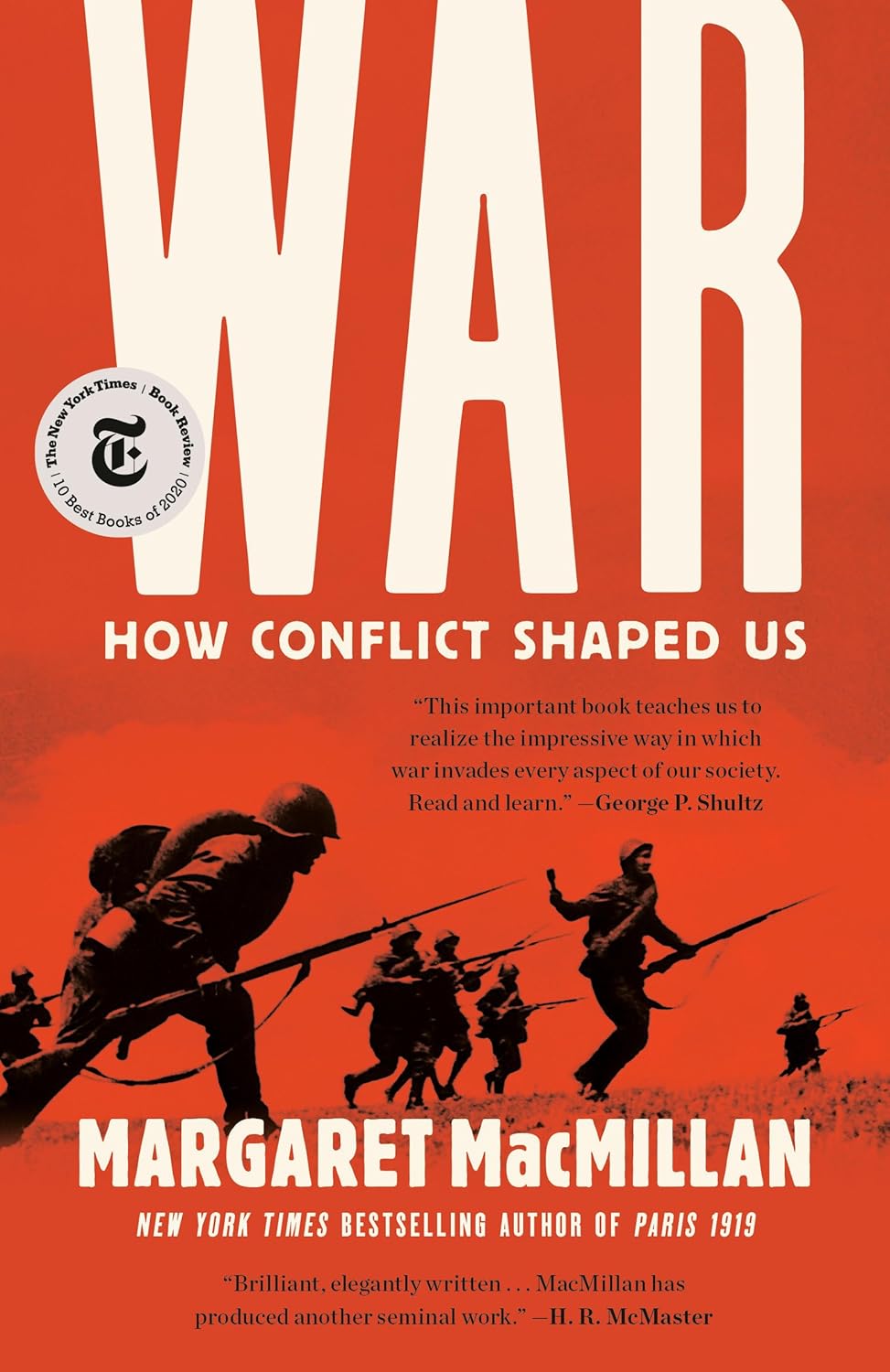
By: Margaret Macmillan (Author), 2021, Paperback
Is peace an aberration? The New York Times bestselling author of Paris 1919offers a provocative view of war as an essential component of humanity.
NAMED ONE OF THE TEN BEST BOOKS OF THE YEAR BY THE NEW YORK TIMES BOOK REVIEW
“Margaret MacMillan has produced another seminal work. . . . She is right that we must, more than ever, think about war. And she has shown us how in this brilliant, elegantly written book.”—H.R. McMaster, author of Dereliction of Duty and Battlegrounds: The Fight to Defend the Free World
The instinct to fight may be innate in human nature, but war—organized violence—comes with organized society. War has shaped humanity’s history, its social and political institutions, its values and ideas. Our very language, our public spaces, our private memories, and some of our greatest cultural treasures reflect the glory and the misery of war. War is an uncomfortable and challenging subject not least because it brings out both the vilest and the noblest aspects of humanity.
Margaret MacMillan looks at the ways in which war has influenced human society and how, in turn, changes in political organization, technology, or ideologies have affected how and why we fight. War: How Conflict Shaped Us explores such much-debated and controversial questions as: When did war first start? Does human nature doom us to fight one another? Why has war been described as the most organized of all human activities? Why are warriors almost always men? Is war ever within our control?
Drawing on lessons from wars throughout the past, from classical history to the present day, MacMillan reveals the many faces of war—the way it has determined our past, our future, our views of the world, and our very conception of ourselves.

Do you ever feel like you've outgrown your pain, but it still lives in you-shaping your choices, your energy, and the way you see yourself? You move on, yet the weight of the past lingers in your body, your thoughts, and your relationships.
Water Before Coffee helps you break that cycle. Through grounded reflection and practical guidance, you'll learn to recognize what you've been carrying and how to finally release it. You'll uncover how trauma reshapes motivation, self-worth, health, and connection-and discover how to rebuild each part of your life with clarity and intention.
In these pages, you'll learn to steady yourself again, to move beyond survival mode, to rebuild confidence, and to create space for calm that endures. As the noise settles and clarity returns, you'll begin to see yourself with renewed honesty and strength.
Every good cup of coffee begins with clear, pure water. Every new beginning starts with clarity within.
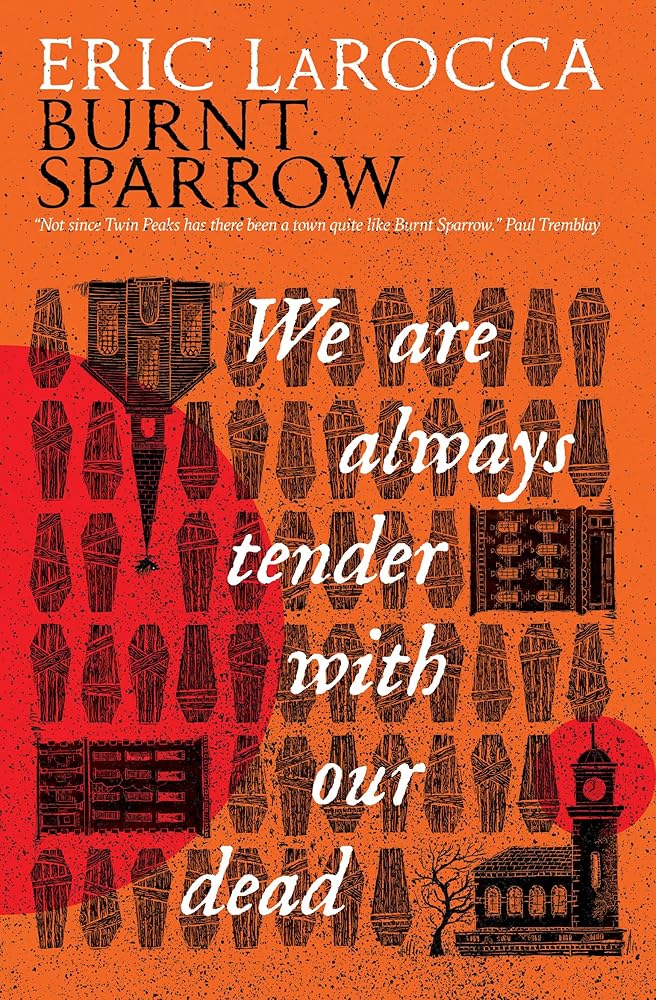
Michael McDowell’s Blackwater meets Clive Barker’s The Great and Secret Show in the disturbing first installment of a new trilogy of intense, visceral, beautifully written queer horror set in a small New England town.
A chilling supernatural tale of transgressive literary horror from the Bram Stoker Award® finalist and Splatterpunk Award-winning author of Things Have Gotten Worse Since We Last Spoke.
The lives of those residing in the isolated town of Burnt Sparrow, New Hampshire, are forever altered after three faceless entities arrive on Christmas morning to perform a brutal act of violence—a senseless tragedy that can never be undone. While the townspeople grieve their losses and grapple with the aftermath of the attack, a young teenage boy named Rupert Cromwell is forced to confront the painful realities of his family situation. Once relationships become intertwined and more carnage ensues as a result of the massacre, the town residents quickly learn that true retribution is futile, cruelty is earned, and certain thresholds must never be crossed no matter what.
Engrossing, atmospheric, and unsettling, this is a devastating story of a small New England community rocked by an unforgivable act of violence. Writing with visceral intensity and profound eloquence, LaRocca journeys deep into the dark heart of Burnt Sparrow, leaving you chilled to the bone and wanting more.

"A powerful story about the fierce love of friendship, and finding the courage to love and accept yourself." Elissa Grossell Dickey, author of The Speed of Light
When twenty-five-year-old Kai Larssen agrees to pose as his best friend Mariah's date at a family gathering, he doesn't expect to fall-hard-for her twin brother, Ray. Anxious, magnetic, and achingly off-limits, Ray is everything Kai has ever wanted. But coming out to Ray means risking Mariah's privacy-and their friendship.
Back in New York, Kai and Ray grow closer, and Kai finds himself trapped in a tangle of half-truths and unspoken feelings. As the lies pile up, Kai must decide: is love worth the cost of betrayal?
Told in luminous prose, We Are Made of Scars & Starlight is a tender, heartbreaking novella about mental health, disability, and queer desire in the heart of the modern city. Poignant and full of hope, it's a story of self-discovery, chosen family, and the courage it takes to be seen.

"We Are Not Numbers is not just a book—it's my life, their life, and our shared story ... This is Gaza as it truly is, written by those who live it every day" —MOTAZ AZIZA
"This book is a jailbreak and a miracle" —NAOMI KLEIN
"Essential ... A project that insists on liberation" —TA-NEHISI COATES
"Impossible to put down or forget" —RIZ AHMED
A teenage girl stares at her roof, hoping it won’t collapse over her head. A young student searches the Internet for photos of libraries around the world, hoping he’ll be able to visit them one day. Another walks around the city, taking notes of all the buildings she dreams of repairing.
These are the stories of young people from Gaza, born under Israeli occupation and blockade. They are people who have endured unspeakable struggles and losses, who keep fighting to be recognized not as numbers, but as human beings with hopes, dreams, and lives worth living.
We Are Not Numbers was founded in 2014 to give voice to the youth of Gaza. In this collection—vital, urgent and full of heart, spanning over ten years to the present moment—we gain an unparalleled insight into the past, as well as the current and next generation of Palestinian leaders, artists, scientists and scholars and imagine where we might go from here.

A heart-wrenching standalone novel by #1 New York Times bestselling author TJ Klune, We Burned So Bright follows an older queer couple on an end-of-the-world road-trip.
The road stretched out before them. No other cars, just the headlights on the blacktop. Above, the cracked moon in a kaleidoscope sky….
Husbands Don and Rodney have lived a good long life. Together they’ve experienced the highest highs of love and family, and lows so low that they felt like the end of the world.
Now, the world is ending for real. A wandering black hole is coming for Earth and in a month everything and everyone they’ve ever known will be gone.
Suddenly, after 40 years together, Don and Rodney are out of time. They’re in a race against the clock to make it from Maine to Washington State to take care of some unfinished business before it’s all over.
On the road they meet those who refuse to believe death is coming and those who rush to meet it. But there are also people living their final days as best they know how–impromptu weddings, bright burning bonfires, shared meals, new friends.
And as the black hole draws near, among ball lightning and under a cracked moon in a kaleidoscope sky, Don and Rodney will look back on their lives and ask if their best was good enough.
Is it enough to burn bright if nothing comes from the ashes?
By: Mariame Kaba (Author), Tamara Nopper (Editor), 2021, Paperback (Abolitionist Papers, 1)
New York Times Bestseller
“Organizing is both science and art. It is thinking through a vision, a strategy, and then figuring out who your targets are, always being concerned about power, always being concerned about how you’re going to actually build power in order to be able to push your issues, in order to be able to get the target to actually move in the way that you want to.”
What if social transformation and liberation isn’t about waiting for someone else to come along and save us? What if ordinary people have the power to collectively free ourselves? In this timely collection of essays and interviews, Mariame Kaba reflects on the deep work of abolition and transformative political struggle.
With a foreword by Naomi Murakawa and chapters on seeking justice beyond the punishment system, transforming how we deal with harm and accountability, and finding hope in collective struggle for abolition, Kaba’s work is deeply rooted in the relentless belief that we can fundamentally change the world. As Kaba writes, “Nothing that we do that is worthwhile is done alone.”
NEW YORK TIMES BESTSELLER • The highly acclaimed, provocative essay on feminism and sexual politics—from the award-winning author of Americanah
"A call to action, for all people in the world, to undo the gender hierarchy." —Medium
In this personal, eloquently-argued essay—adapted from the much-admired TEDx talk of the same name—Chimamanda Ngozi Adichie offers readers a unique definition of feminism for the twenty-first century. Drawing extensively on her own experiences and her deep understanding of the often masked realities of sexual politics, here is one remarkable author’s exploration of what it means to be a woman now—and an of-the-moment rallying cry for why we should all be feminists.
From an author “destined to become a titan of the macabre and unsettling” (Erin A. Craig, #1 New York Times bestselling author), a haunting debut—soon to be a Netflix original movie—about two homeowners whose lives are turned upside down when the house’s previous residents unexpectedly visit.
As a young, queer couple who flip houses, Charlie and Eve can’t believe the killer deal they’ve just gotten on an old house in a picturesque neighborhood. As they’re working in the house one day, there’s a knock on the door. A man stands there with his family, claiming to have lived there years before and asking if it would be alright if he showed his kids around. People pleaser to a fault, Eve lets them in.
As soon as the strangers enter their home, inexplicable things start happening, including the family’s youngest child going missing and a ghostly presence materializing in the basement. Even more weird, the family can’t seem to take the hint that their visit should be over. And when Charlie suddenly vanishes, Eve slowly loses her grip on reality. Something is terribly wrong with the house and with the visiting family—or is Eve just imagining things?
This unputdownable and spine-tingling novel “is like quicksand: the further you delve into its pages, the more immobilized you become by a spiral of terror. We Used to Live Here will haunt you even after you have finished it” (Agustina Bazterrica, author of Tender Is the Flesh).
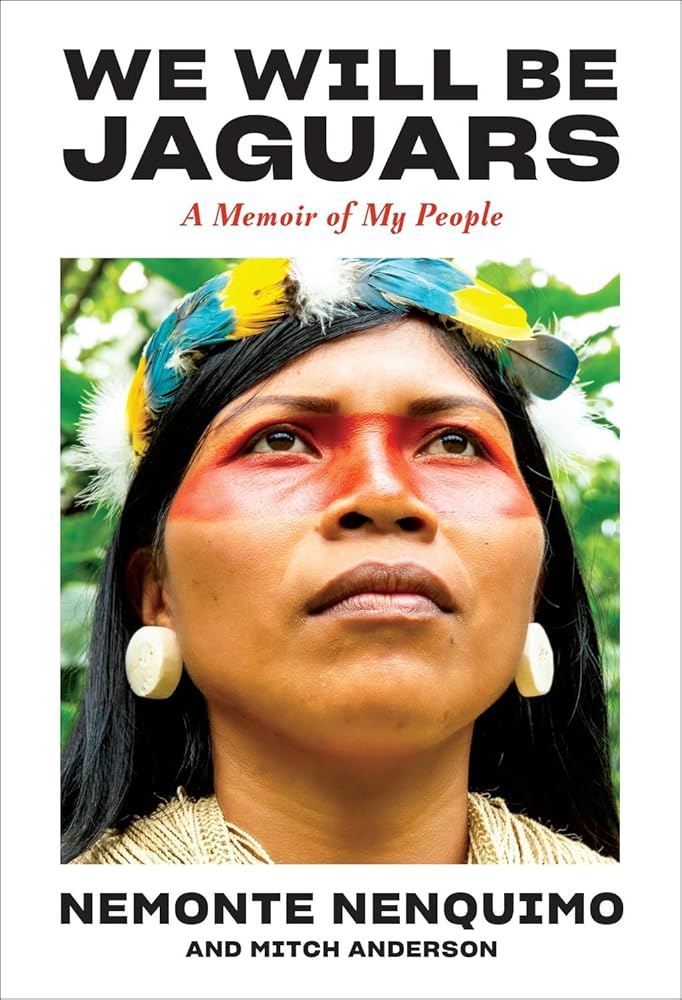
From a fearless, internationally acclaimed activist comes an impassioned memoir about an indigenous childhood, a clash of cultures, and the fight to save the Amazon rainforest
We Will Be Jaguars is an astonishing memoir by an equally astonishing woman. Nenquimo is a winner of TIME magazine's Earth Award, and MS. magazine named this book among the Most Anticipated Feminist Books of 2024.
Born into the Waorani tribe of Ecuador's Amazon rainforest--one of the last to be contacted by missionaries in the 1950s--Nemonte Nenquimo had a singular upbringing.
She was taught about plant medicines, foraging, oral storytelling, and shamanism by her elders. At age fourteen, she left the forest for the first time to study with an evangelical missionary group in the city. Eventually, her ancestors began appearing in her dreams, pleading with her to return and embrace her own culture. She listened.
Two decades later, Nemonte has emerged as one of the most forceful voices in climate change activism. She has spearheaded the alliance of indigenous nations across the Upper Amazon and led her people to a landmark victory against Big Oil, protecting over a half million acres of primary rainforest. Her message is as sharp as a spear--honed by her experiences battling loggers, miners, oil companies and missionaries.
In We Will Be Jaguars, she partners with her husband, Mitch Anderson, founder of Amazon Frontlines, digging into generations of oral history, uprooting centuries of conquest, hacking away at racist notions of indigenous peoples, and ultimately revealing a life story as rich, harsh, and vital as the Amazon rainforest herself.

We Will be Shelter stands as a powerful anthology of contemporary poems that unflinchingly confront issues of social justice. What sets this collection apart is its unwavering commitment to inspiring positive transformation through the art of poetry. Within its pages, beautifully crafted verses take center stage, captivating readers with their evocative power. This anthology serves as both a call to awareness and an invitation to introspection, urging readers to examine their role in shaping a just and equitable world. Through the eloquence of these poems, readers are compelled to take meaningful action, transforming empathy into activism and propelling society toward a brighter future.

With successful careers in midswing at age twenty-nine, David and Susan Wooten decided to take a calculated risk and leave the corporate world behind temporarily to pursue a dream. "We're Outta Here!" chronicles their 14 month bicycling and backpacking adventure through 30 countries around the world. From Hiroshima to Kathmandu and Calcutta to the south of France, the couple traveled with a pair of 14 by 24 inch backpacks, a tight budget and a very open mind. Inspiring words of wisdom and great travel tips told with a candid, upbeat flair.