Sort by:
822 of 1774 products
822 of 1774 products
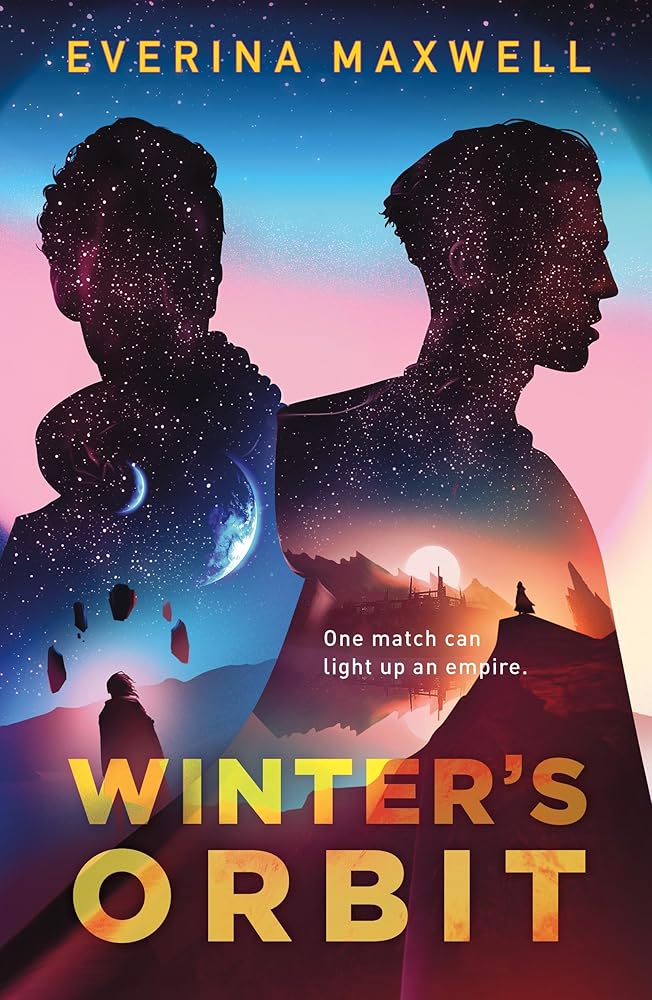
A Sunday Times Bestseller!
A 2022 Alex Award Winner!
Brand-new Bramble edition! Now with a bonus short-story.
“Sparks fly” (NPR) in Everina Maxwell’s gut-wrenching and romantic space opera debut.
Prince Kiem, a famously disappointing minor royal and the Emperor’s least favorite grandchild, has been called upon to be useful for once. He’s been commanded to fulfill an obligation of marriage to the representative of the Empire’s newest and most rebellious vassal planet. His future husband, Count Jainan, is a widower and murder suspect.
Neither wants to be wed, but with a conspiracy unfolding around them and the fate of the Empire at stake, they will have to navigate the thorns and barbs of court intrigue, the machinations of war, and the long shadows of Jainan’s past, and they’ll have to do it together.
So begins a legendary love story amid the stars.
Like Ancillary Justice meets Red, White and Royal Blue, Winter’s Orbit is perfect for fans of Lois McMaster Bujold.
“High-pitched noises escaped me; I shouted, more than once, 'Now kiss!' ... in a world so relentlessly uncertain, there’s a powerfully simple pleasure in the experience of a promise kept.” ―The New York Times Book Review
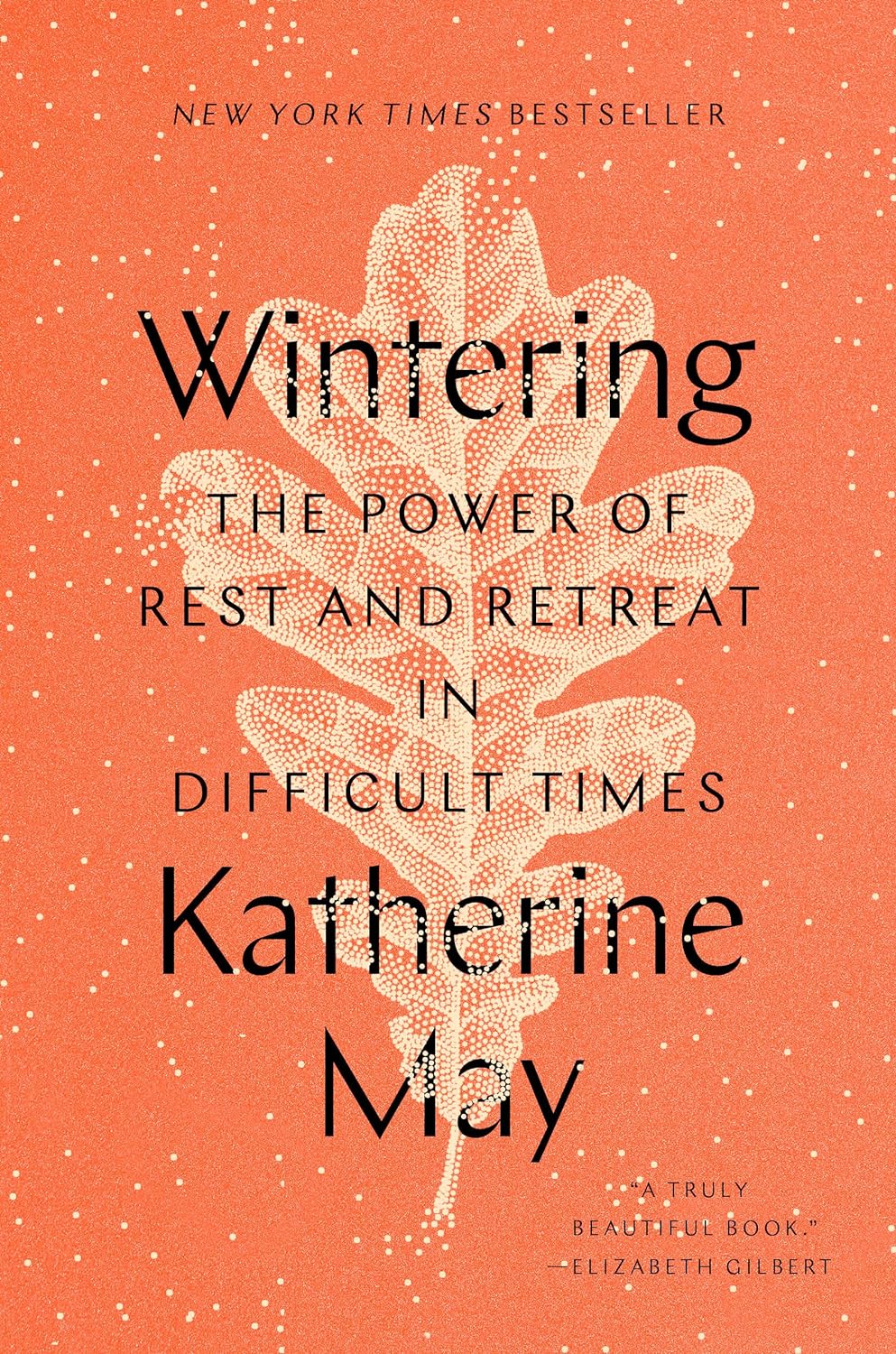
By: Katherine May (Author), Hardcover, 2020
THE RUNAWAY NEW YORK TIMES BESTSELLER
“Katherine May opens up exactly what I and so many need to hear but haven't known how to name.” —Krista Tippett, On Being
“Every bit as beautiful and healing as the season itself. . . . This is truly a beautiful book.” —Elizabeth Gilbert
"Proves that there is grace in letting go, stepping back and giving yourself time to repair in the dark...May is a clear-eyed observer and her language is steady, honest and accurate—capturing the sense, the beauty and the latent power of our resting landscapes." —Wall Street Journal
From the author of the New York Times bestseller Enchantment: Awakening Wonder in an Anxious Age, this is an intimate, revelatory exploration of the ways we can care for and repair ourselves when life knocks us down.
Sometimes you slip through the cracks: unforeseen circumstances like an abrupt illness, the death of a loved one, a break up, or a job loss can derail a life. These periods of dislocation can be lonely and unexpected. For May, her husband fell ill, her son stopped attending school, and her own medical issues led her to leave a demanding job. Wintering explores how she not only endured this painful time, but embraced the singular opportunities it offered.
A moving personal narrative shot through with lessons from literature, mythology, and the natural world, May's story offers instruction on the transformative power of rest and retreat. Illumination emerges from many sources: solstice celebrations and dormice hibernation, C.S. Lewis and Sylvia Plath, swimming in icy waters and sailing arctic seas.
Ultimately Wintering invites us to change how we relate to our own fallow times. May models an active acceptance of sadness and finds nourishment in deep retreat, joy in the hushed beauty of winter, and encouragement in understanding life as cyclical, not linear. A secular mystic, May forms a guiding philosophy for transforming the hardships that arise before the ushering in of a new season.

Included in LitHub’s Most Anticipated Poetry of 2026
The poems in with snow pouring southward past the window turn with and for relatives and beloveds across seas and oceans, continents and nations, languages and histories. In this collection, public and personal archives work with literary translations across several dialects of the Inupiaq language, and re-complexify Arctics at a time when empires once again seem interested in flattening and erasing millennia of Indigenous inhabitation, care, and situatedness. It was written between Massachusetts, Inuit Nunaat, Sápmi, the “Old World” and through waves of overlapping pandemics, political and social exigencies, and solidarities.

NAMED A BEST BOOK OF THE YEAR BY THE WASHINGTON POST, VOGUE, MARIE CLAIRE, READER'S DIGEST, AND GOOD HOUSEKEEPING
“A gripping read…Unabashedly queer, probing and unafraid…Exceedingly engaging.” –USA Today
“Sublimely weird, fluently paced, brazenly funny and gayer still, and it richly deserves to find readers.” –New York Times
From the author of the New York Times–bestselling sensation Mostly Dead Things: a surprising and moving story of two mothers, one difficult son, and the limitations of marriage, parenthood, and love
If she’s being honest, Sammie Lucas is scared of her son. Working from home in the close quarters of their Florida house, she lives with one wary eye peeled on Samson, a sullen, unknowable boy who resists her every attempt to bond with him. Uncertain in her own feelings about motherhood, she tries her best—driving, cleaning, cooking, prodding him to finish projects for school—while growing increasingly resentful of Monika, her confident but absent wife. As Samson grows from feral toddler to surly teenager, Sammie’s life begins to deteriorate into a mess of unruly behavior, and her struggle to create a picture-perfect queer family unravels. When her son’s hostility finally spills over into physical aggression, Sammie must confront her role in the mess—and the possibility that it will never be clean again.
Blending the warmth and wit of Arnett’s breakout hit, Mostly Dead Things, with a candid take on queer family dynamics, With Teeth is a thought-provoking portrait of the delicate fabric of family—and the many ways it can be torn apart.

A Green Creek Novel (Green Creek, 1)
Wolfsong is the beginning of the Green Creek Series, the beloved fantasy romance sensation by New York Times bestselling author TJ Klune, about love, loyalty, betrayal, and family.
The paperback edition features beautiful orange sprayed edges, holographic cover and a bonus short story.
“Wolfsong is so well written that I'm in awe of TJ Klune's talent.” ―Charlaine Harris
The Bennett family has a secret: They're not just a family, they're a pack. Wolfsong is Ox Matheson's story.
Oxnard Matheson was twelve when his father taught him a lesson: Ox wasn’t worth anything and people would never understand him. Then his father left.
Ox was sixteen when the energetic Bennett family moved in next door, harboring a secret that would change him forever. The Bennetts are shapeshifters. They can transform into wolves at will. Drawn to their magic, loyalty, and enduring friendships, Ox feels a gulf between this extraordinary new world and the quiet life he’s known, but he finds an ally in Joe, the youngest Bennett boy.
Ox was twenty-three when murder came to town and tore a hole in his heart. Violence flared, tragedy split the pack, and Joe left town, leaving Ox behind. Three years later, the boy is back. Except now he’s a man – charming, handsome, but haunted – and Ox can no longer ignore the song that howls between them.
The Green Creek Series is for adult readers.
Now available from Tor Books.
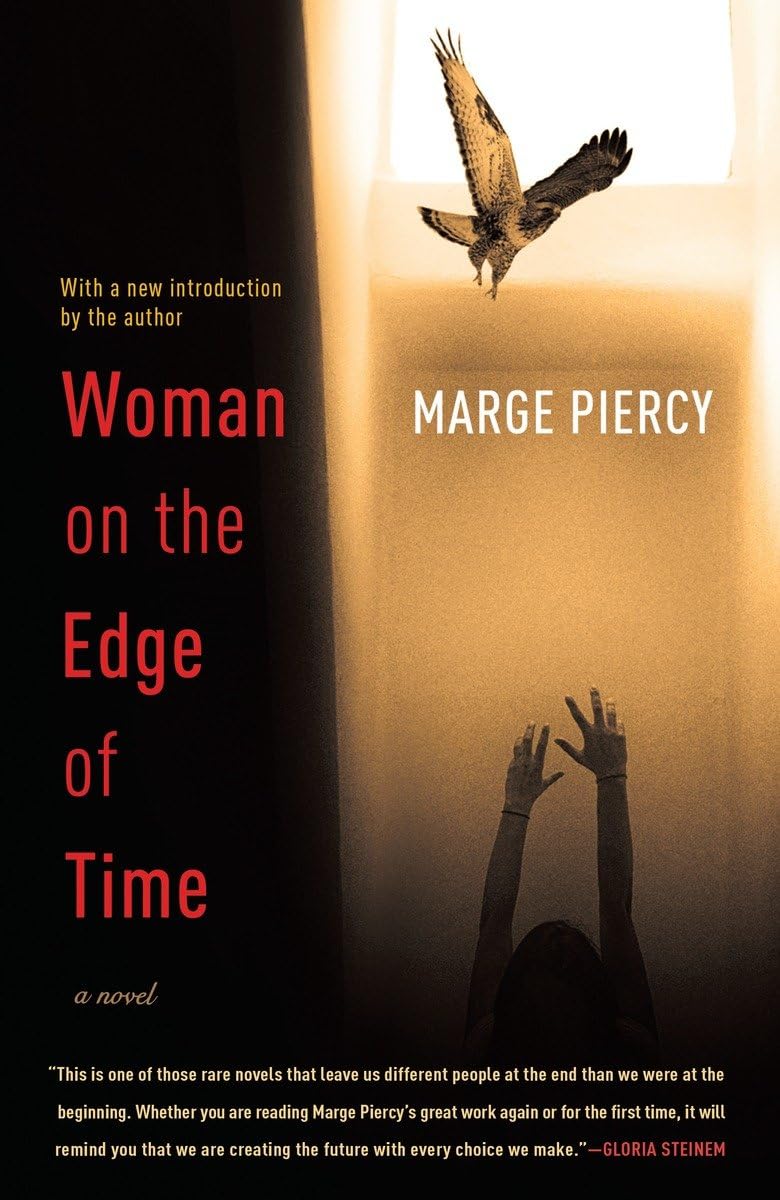
Hailed as a classic of speculative fiction, Marge Piercy’s landmark novel is a transformative vision of two futures—and what it takes to will one or the other into reality. Harrowing and prescient, Woman on the Edge of Time speaks to a new generation on whom these choices weigh more heavily than ever before.
Connie Ramos is a Mexican American woman living on the streets of New York. Once ambitious and proud, she has lost her child, her husband, her dignity—and now they want to take her sanity. After being unjustly committed to a mental institution, Connie is contacted by an envoy from the year 2137, who shows her a time of sexual and racial equality, environmental purity, and unprecedented self-actualization. But Connie also bears witness to another potential outcome: a society of grotesque exploitation in which the barrier between person and commodity has finally been eroded. One will become our world. And Connie herself may strike the decisive blow.
Praise for Woman on the Edge of Time
“This is one of those rare novels that leave us different people at the end than we were at the beginning. Whether you are reading Marge Piercy’s great work again or for the first time, itwill remind you that we are creating the future with every choice we make.”—Gloria Steinem
“An ambitious, unusual novel about the possibilities for moral courage in contemporary society.”—The Philadelphia Inquirer
“A stunning, even astonishing novel . . . marvelous and compelling.”—Publishers Weekly
“Connie Ramos’s world is cuttingly real.”—Newsweek
“Absorbing and exciting.”—The New York Times Book Review

Men like us don't trust easy.
Ugly, oversized, and better with plants than with people, small-town farmer Griffin lives a lonely life. Then Keynes arrives, a beautiful stranger from the city, riding a wave of wealth, glamour, and mystery. He shouldn't be interested in Griff, and yet, he is.
Interested in touching him.
Interested in hurting him.
Interested in... turning up at his job?
When Griff's newfound nemesis takes over his beloved farm, enough is enough. Keynes may be clever, charming, and instantly popular-but he's also fake, vicious, and clearly hiding something. Griff's determined to unravel his secrets and expose the man beneath.
The last thing he expects is for that man to ruin him.

When Eleanor founded Guadalupe Street Co-op in the early 1980s, she was in her mid-twenties and madly in love with her girlfriend, Meg. Together, they envisioned an idyllic grocery store owned by its workers and customers.
Forty years later, Guadalupe Street Co-op is an iconic Austin business with a loyal customer base, an antiquated business model, and a disgruntled staff. Roz, one of the store’s senior managers, is too caught up stalking her ex-wife online to notice that her girlfriend, Molly, is plotting with her coworkers to unionize. Roz also doesn’t see that Molly is not-so-secretly in a situationship with Randy, the dairy manager leading their collective.
Unfolding over the course of a single week during Texas hurricane season, Work to Do pings between the co-op’s first year and present day, as the unionization bid reaches fever pitch. The wind howls, the power goes out, and water creeps through the front door as questions of who owns the grocery store and who has a right to its future are posed. And will the workers ever be paid enough to buy the organic groceries they shelve?
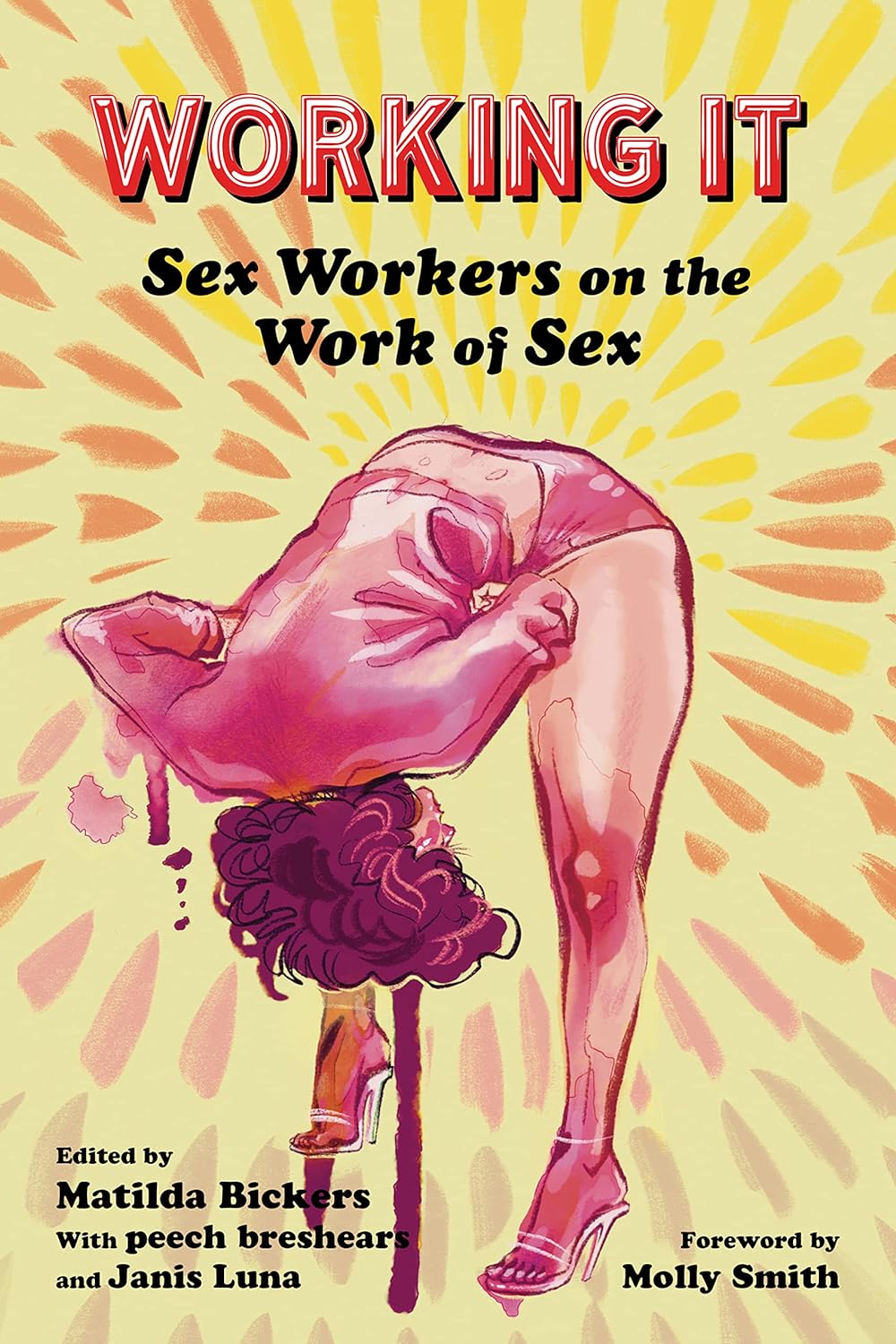
By: Matilda Bickers (Editor), peech breshears (Editor), Janice Luna (Editor), Molly Smith (Foreword), 2023, Paperback
Fiercely intelligent, fantastically transgressive, Working It is an intimate portrait of the lives of sex workers. A polyphonic story of triumph, survival, and solidarity this collection showcases the vastly different experiences and interests of those who have traded sex; among them a brothel worker in Australia, First Nation survivors of the Canadian child welfare system, and an afro-latina single parent raising a radicalized child. Packed with first-person essays, interviews, poetry, drawings, mixed-media collage, and photographs Working It honors the complexity of lived experience. Sometimes heartbreaking, sometimes hardboiled, these dazzling pieces will go straight to the heart.

Embark on a transformative journey into the world of self-publishing with "Writing Our Truths," a comprehensive guide crafted specifically for BIPOC writers ready to share their unique narratives with the world.
Tayler Simon, a self-publishing book coach that specializes in working with BIPOC, queer, trans, and disabled writers, guides you through the process of harnessing your unique voice in order to spark change and connection in a wounded world.
In a literary and academic landscape that often echoes uniformity and gatekeeps access, this book serves as a beacon, inviting BIPOC writers to reclaim their voices, stories, and cultural truths. From the inception of an idea to the triumphant moment of publication, this guide navigates the intricate path of self-publishing to empower BIPOC writers to become architects of their own literary destinies.
"Writing Our Truths" is not just a guide; it's a call to action for BIPOC writers to claim their space in the publishing world. Whether you're a seasoned writer or just beginning your author voyage, this book is your compass, guiding you toward the fulfillment of your writing dreams. It's time to pen your narrative, embrace your truth, and embark on the self-publishing journey that awaits. Let "Writing Our Truths" be your companion in this empowering exploration of cultural expression and literary self-determination.

By Alexandria Bellefleur, Paperback
After a disastrous blind date, Darcy Lowell is desperate to stop her well-meaning brother from playing matchmaker ever again. Love—and the inevitable heartbreak—is the last thing she wants. So she fibs and says her latest set up was a success. Darcy doesn’t expect her lie to bite her in the ass. Elle Jones, one of the astrologers behind the popular Twitter account, Oh My Stars, dreams of finding her soul mate. But she knows it is most assuredly not Darcy... a no-nonsense stick-in-the-mud, who is way too analytical, punctual, and skeptical for someone as free-spirited as Elle. When Darcy’s brother—and Elle's new business partner—expresses how happy he is that they hit it off, Elle is baffled.
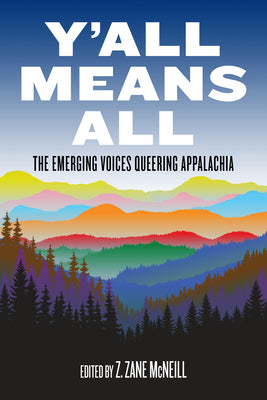
By: Z. Zane McNeill (Editor), 2022, Paperback
Y'all Means All is a celebration of the weird and wonderful aspects of a troubled region in all of their manifest glory! This collection is a thought-provoking hoot and a holler of "we’re queer and we’re here to stay, cause we’re every bit a piece of the landscape as the rocks and the trees" echoing through the hills of Appalachia and into the boardrooms of every media outlet and opportunistic author seeking to define Appalachia from the outside for their own political agendas. Multidisciplinary and multi-genre, Y’all necessarily incorporates elements of critical theory, such as critical race theory and queer theory, while dealing with a multitude of methodologies, from quantitative analysis, to oral history and autoethnography.
This collection eschews the contemporary trend of "reactive" or "responsive" writing in the genre of Appalachian studies, and alternatively, provides examples of how modern Appalachians are defining themselves on their own terms. As such, it also serves as a toolkit for other Appalachian readers to follow suit, and similarly challenge the labels, stereotypes and definitions often thrust upon them. While providing blunt commentary on the region's past and present, the book’s soul is sustained by the resilience, ingenuity, and spirit exhibited by the authors; values which have historically characterized the Appalachian region and are continuing to define its culture to the present.
This book demonstrates above all else that Appalachia and its people are filled with a vitality and passion for their region which will slowly but surely effect long-lasting and positive changes in the region. If historically Appalachia has been treated as a "mirror" of the country, this book breaks that trend by allowing modern Appalachians to examine their own reflections and to share their insights in an honest, unfiltered manner with the world.

By: Nina Lacour (Author), 2023, Paperback
FROM BESTSELLING AND PRINTZ-AWARD WINNING AUTHOR NINA LACOUR, PERFECT FOR READERS OF WRITERS AND LOVERS
“A study of complex, modern love…Expertly illuminates the trauma that Sara and Emilie are both wrestling with, as well as their hope and healing…Lingers like a perfectly mixed cocktail.” ―San Francisco Chronicle
“A Carol for our times.” ―Harper’s Bazaar
Sara Foster runs away from home at sixteen, leaving behind the girl she once was, capable of trust and intimacy. Years later, in Los Angeles, she is a sought-after bartender, renowned as much for her brilliant cocktails as for the mystery that clings to her. Across the city, Emilie Dubois is in a holding pattern, yearning for the beauty and community her Creole grandparents cultivated but unable to commit. On a whim, she takes a job arranging flowers at the glamorous restaurant Yerba Buena.
The morning Emilie and Sara first meet at Yerba Buena, their connection is immediate. But soon Sara's old life catches up to her, upending everything she thought she wanted, just as Emilie has finally gained her own sense of purpose. Will their love be more powerful than their pasts?
At once exquisite and expansive, astonishing in its humanity and heart, Yerba Buena is a testament to the healing qualities of a shared meal, a perfectly crafted drink, a space we claim for ourselves. Nina LaCour’s adult debut novel is a love story for our time.

In 52 short stories, Jan Ranft takes you on an emotional journey through the queer worlds of Germany and the U.S. These tales explore gay men's experiences with love, loss, friendship, and the search for happiness-sometimes tender, sometimes raw, and always deeply human. From moments of humor to heartbreak, erotic passion to quiet romance, each story offers a unique glimpse into the joys and struggles of connection. With unvarnished honesty and relatable depth, his collection captures the many facets of gay men's lives and loves. Look forward to a laid-back bumper car boy, gay werewolves, a desperate mother, a fairy godmother, the crazy king of plush toys, and a seemingly lost future. Jan Ranft lives and works in Saarbrücken, Germany. He has published over a hundred short stories so far.