Sort by:
882 of 1932 products
882 of 1932 products
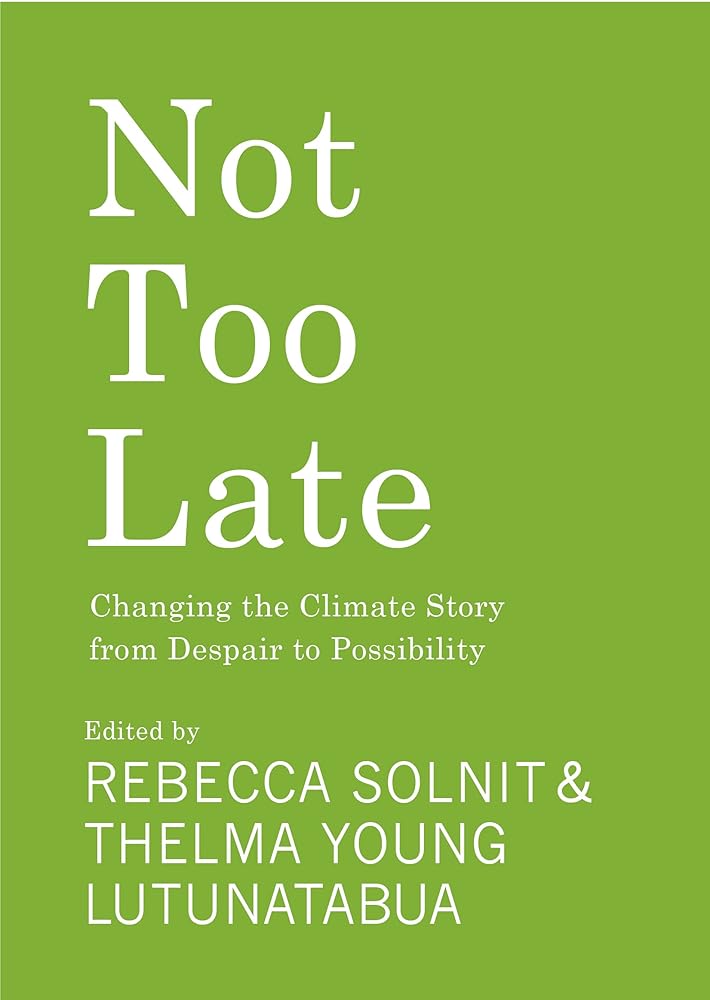
An energizing case for hope about the climate, from Rebecca Solnit (“the voice of the resistance”—New York Times), climate activist Thelma Young Lutunatabua, and a chorus of voices calling on us to rise to the moment.
Not Too Late is the book for anyone who is despondent, defeatist, or unsure about climate change and seeking answers. As the contributors to this volume make clear, the future will be decided by whether we act in the present—and we must act to counter institutional inertia, fossil fuel interests, and political obduracy.
These dispatches from the climate movement around the world feature the voices of organizers like Guam-based lawyer and writer Julian Aguon; climate scientists like Dr. Jacquelyn Gill and Dr. Edward Carr; poets like Marshall Islands activist Kathy Jetnil-Kijner; and longtime organizers like The Tyranny of Oil author Antonia Juhasz. Guided by Rebecca Solnit’s typical clear-eyed wisdom and enriched by photographs and quotes, Not Too Late leads readers from discouragement to possibilities, from climate despair to climate hope.
How can I enjoy my hot disabled body whilst dealing with internalised ableism?
How can I best navigate my sex life with mobility issues or a carer?
Why are queer spaces so inaccessible - and what can I do about it?
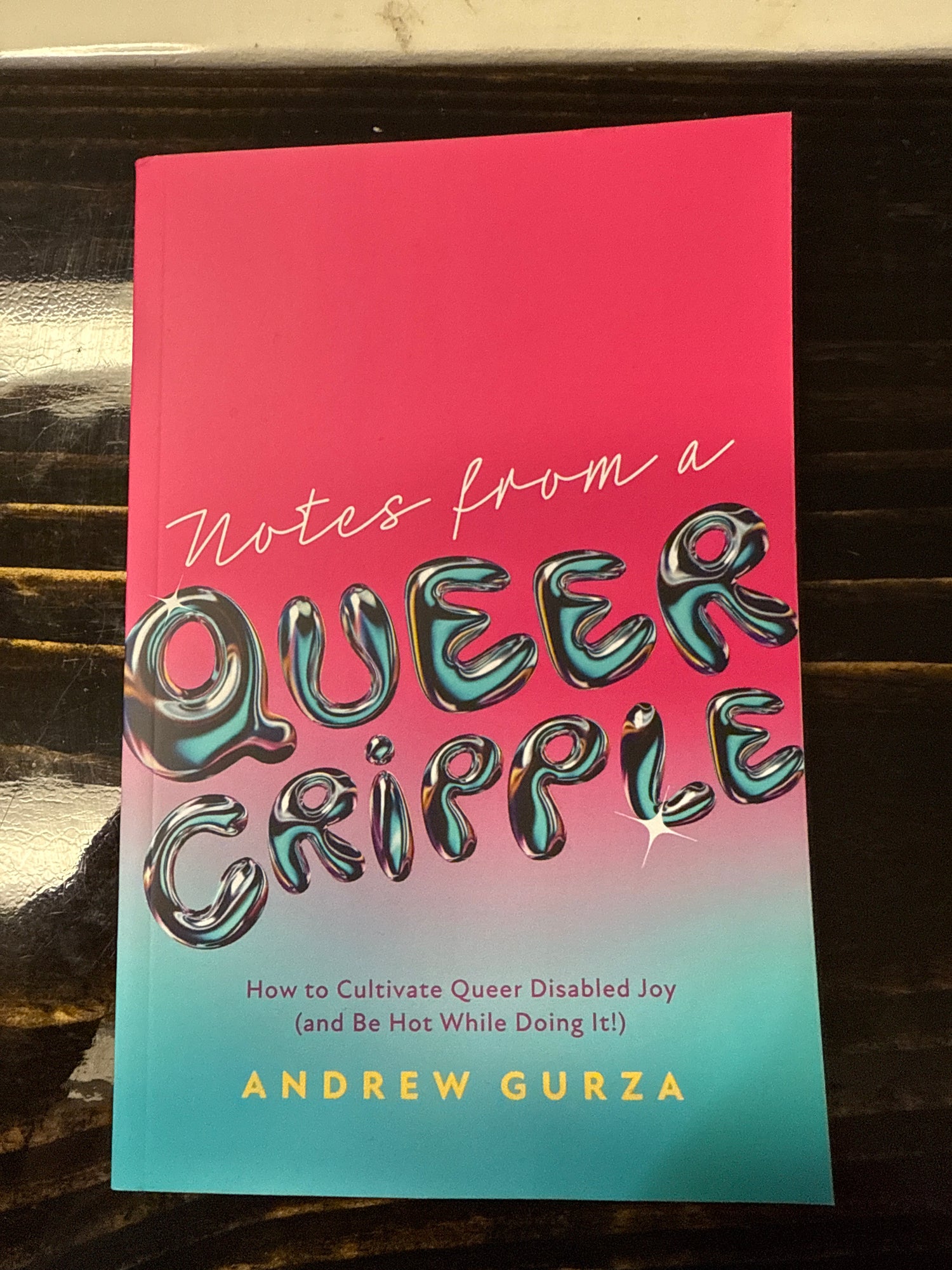
Andrew Gurza is seriously hot. He's also seriously disabled. Having spent a lifetime navigating the bars, clubs and apps of the queer scene, he's learned a thing or two about sparking queer crip joy amidst the hellscape of ableism, microaggressions and 'pity sex'.
With advice on everything from sexual autonomy and self-pleasure to date-prep and disability disclosure - this is both a self-care bible and an urgent call for the queer community to do better.
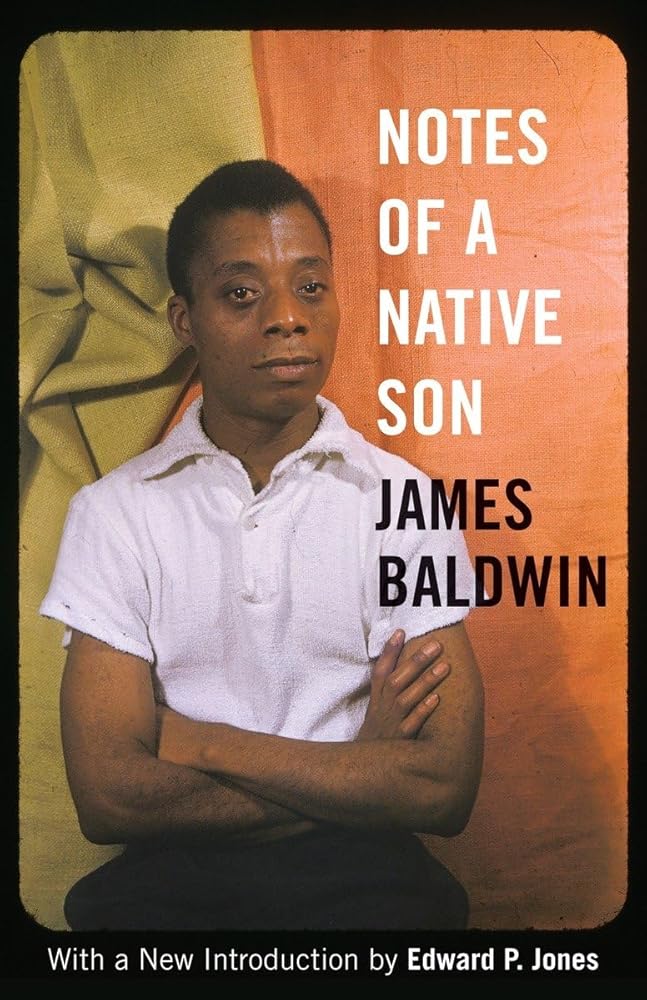
#26 on The Guardian's list of 100 best nonfiction books of all time, the essays explore what it means to be Black in America
In an age of Black Lives Matter, James Baldwin's essays on life in Harlem, the protest novel, movies, and African Americans abroad are as powerful today as when they were first written. With films like I Am Not Your Negro and the forthcoming If Beale Street Could Talk bringing renewed interest to Baldwin's life and work, Notes of a Native Son serves as a valuable introduction.
Written during the 1940s and early 1950s, when Baldwin was only in his twenties, the essays collected in Notes of a Native Son capture a view of black life and black thought at the dawn of the civil rights movement and as the movement slowly gained strength through the words of one of the most captivating essayists and foremost intellectuals of that era. Writing as an artist, activist, and social critic, Baldwin probes the complex condition of being black in America. With a keen eye, he examines everything from the significance of the protest novel to the motives and circumstances of the many black expatriates of the time, from his home in “The Harlem Ghetto” to a sobering “Journey to Atlanta.”
Notes of a Native Son inaugurated Baldwin as one of the leading interpreters of the dramatic social changes erupting in the United States in the twentieth century, and many of his observations have proven almost prophetic. His criticism on topics such as the paternalism of white progressives or on his own friend Richard Wright’s work is pointed and unabashed. He was also one of the few writing on race at the time who addressed the issue with a powerful mixture of outrage at the gross physical and political violence against black citizens and measured understanding of their oppressors, which helped awaken a white audience to the injustices under their noses. Naturally, this combination of brazen criticism and unconventional empathy for white readers won Baldwin as much condemnation as praise.
Notes is the book that established Baldwin’s voice as a social critic, and it remains one of his most admired works. The essays collected here create a cohesive sketch of black America and reveal an intimate portrait of Baldwin’s own search for identity as an artist, as a black man, and as an American.

Bestselling author, NYU professor, and cohost of the Pivot podcast, Scott Galloway offers a path forward for men and parents of boys.
Boys and men are in crisis. Rarely has a cohort fallen further and faster than young men living in Western democracies. Boys are less likely to graduate from high school or college than girls. One in seven men reports having no friends, and men account for three of every four deaths of despair in America. Even worse, the lack of attention to these problems has created a void filled by voices espousing misogyny, the demonization of others, and a toxic vision of masculinity. But this is not just a male issue: women and children can’t flourish if men aren’t doing well. As we know from spasms of violence, there is nothing more dangerous than a lonely, broke young man.
Scott Galloway has been sounding the alarm on this issue for years. In Notes on Being a Man, Galloway explores what it means to be a man in modern America. He promotes the importance of healthy masculinity and mental strength. He shares his own story from boyhood to manhood. He explores his parent’s difficult divorce, working through his anger and depression issues, trying to make money, and raising two boys. He shares the sometimes funny, often painful, lessons he learned along the way.
Some of these lessons include:
* Being a good dad means being good to their mother.
* Action absorbs anxiety.
* Find what you’re good at—follow your talent.
* Get out of the house.
* Take risk and be willing to feel like an imposter. This is a key to professional success—and masculinity.
* Acknowledge your blessings—and create opportunities for others. Be of surplus value.
* Be kind. That’s the secret to success in relationships.
With unflinching honesty, Scott Galloway maps out an enriching, inspiring operator’s manual for being a man today.
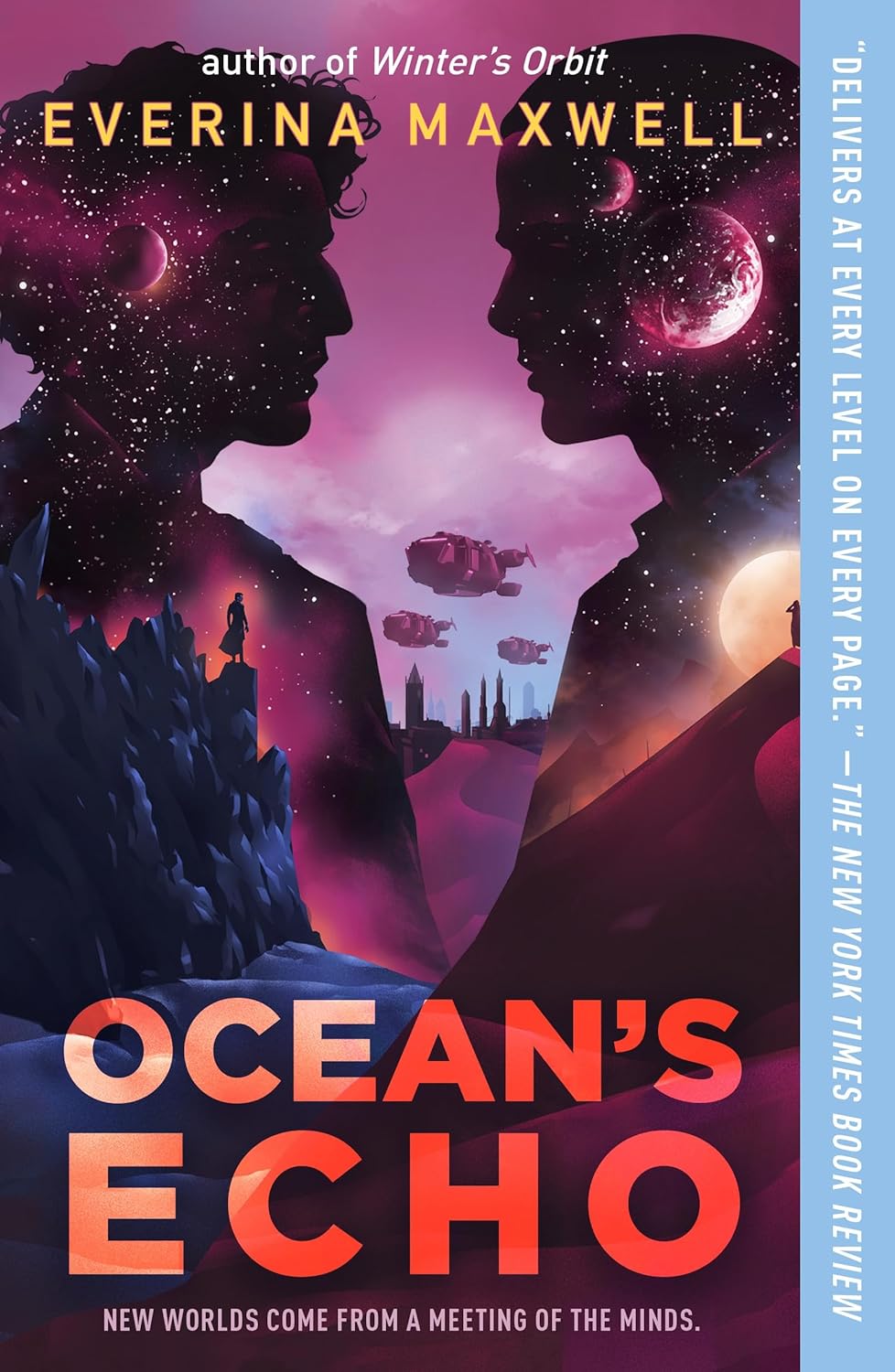
By: Everina Maxell (Author), 2023, Paperback (The Resolution Universe)
Ocean's Echo is a stand-alone space adventure about a bond that will change the fate of worlds, set in the same universe as Everina Maxwell's hit debut, Winter's Orbit.
"I inhaled this one like I needed it to live." ―New York Times Book Review
Rich socialite, inveterate flirt, and walking disaster Tennalhin Halkana can read minds. Tennal, like all neuromodified “readers,” is a security threat on his own. But when controlled, readers are a rare asset. Not only can they read minds, but they can navigate chaotic space, the maelstroms surrounding the gateway to the wider universe.
Conscripted into the military under dubious circumstances, Tennal is placed into the care of Lieutenant Surit Yeni, a duty-bound soldier, principled leader, and the son of a notorious traitor general. Whereas Tennal can read minds, Surit can influence them. Like all other neuromodified “architects,” he can impose his will onto others, and he’s under orders to control Tennal by merging their minds.
Surit accepted a suspicious promotion-track request out of desperation, but he refuses to go through with his illegal orders to sync and control an unconsenting Tennal. So they lie: They fake a sync bond and plan Tennal's escape.
Their best chance arrives with a salvage-retrieval mission into chaotic space―to the very neuromodifcation lab that Surit's traitor mother destroyed twenty years ago. And among the rubble is a treasure both terrible and unimaginably powerful, one that upends a decades-old power struggle, and begins a war.
Tennal and Surit can no longer abandon their unit or their world. The only way to avoid life under full military control is to complete the very sync they've been faking.
Can two unwilling weapons of war bring about peace?
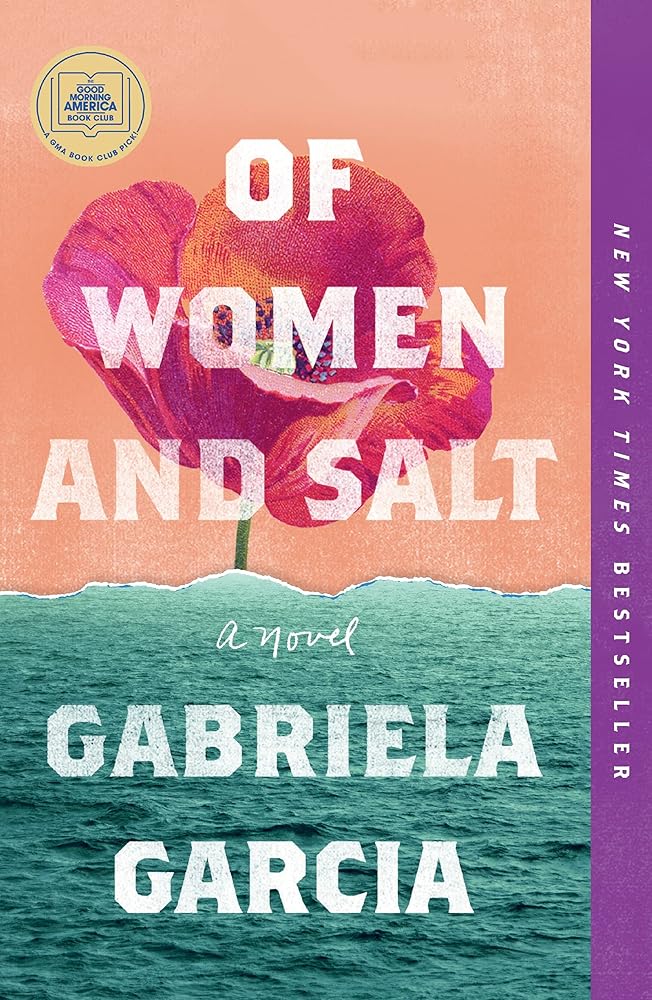
AN INSTANT NEW YORK TIMES BESTSELLER
THE WASHINGTON POST NOTABLE BOOK OF 2021
A GOOD MORNING AMERICA BOOK CLUB PICK
WINNER of the Isabel Allende Most Inspirational Fiction Award - International Latino Book Awards • WINNER of
Best Literary Fiction - She Reads Best of 2021 Awards • FINALIST for the 2022 Southern Book Prize • LONGLISTED for Crook’s Corner Book Prize • NOMINEE for 2021 Goodreads Choice Award in Debut Novel and Historical Fiction
A sweeping, masterful debut about a daughter's fateful choice, a mother motivated by her own past, and a family legacy that begins in Cuba before either of them were born
In present-day Miami, Jeanette is battling addiction. Daughter of Carmen, a Cuban immigrant, she is determined to learn more about her family history from her reticent mother and makes the snap decision to take in the daughter of a neighbor detained by ICE. Carmen, still wrestling with the trauma of displacement, must process her difficult relationship with her own mother while trying to raise a wayward Jeanette. Steadfast in her quest for understanding, Jeanette travels to Cuba to see her grandmother and reckon with secrets from the past destined to erupt.
From 19th-century cigar factories to present-day detention centers, from Cuba to Mexico, Gabriela Garcia's Of Women and Salt is a kaleidoscopic portrait of betrayals―personal and political, self-inflicted and those done by others―that have shaped the lives of these extraordinary women. A haunting meditation on the choices of mothers, the legacy of the memories they carry, and the tenacity of women who choose to tell their stories despite those who wish to silence them, this is more than a diaspora story; it is a story of America’s most tangled, honest, human roots.

By: Haley Jakobson (Author), 2023, Paperback
“Old Enough is full of growth, heartbreak, and winsome bisexual chaos.”—Vogue
A debut novel “as astute, funny, and loving as your best friend from college”* about a young bisexual woman who is pulled between a new sense of community and loyalty to a friendship she’s outgrown
*Isle McElroy
Savannah "Sav" Henry is almost the person she wants to be, or at least she's getting closer. It’s the second semester of her sophomore year. She’s finally come out as bisexual, is making friends with the other queers in her dorm, and has just about recovered from her disastrous first queer “situationship.” She is cautiously optimistic that her life is about to begin.
But when she learns that Izzie, her best friend from childhood, has gotten engaged, Sav faces a crisis of confidence. Things with Izzie haven’t been the same since what happened between Sav and Izzie’s older brother when they were sixteen. Now, with the wedding around the corner, Sav is forced to reckon with trauma she thought she could put behind her.
On top of it all, Sav can’t stop thinking about Wes from her Gender Studies class—sweet, funny Wes, with their long eyelashes and green backpack. There’s something different here—with Wes and with her new friends (who delight in teasing her about this face-burning crush); it feels, terrifyingly, like they might truly see her in a way no one has before.
With a singularly funny, heartfelt voice, Old Enough explores queer love, community, and what it means to be a sexual assault survivor. Haley Jakobson has written a love letter to friendship and an honest depiction of what finding your people can feel like—for better or worse.
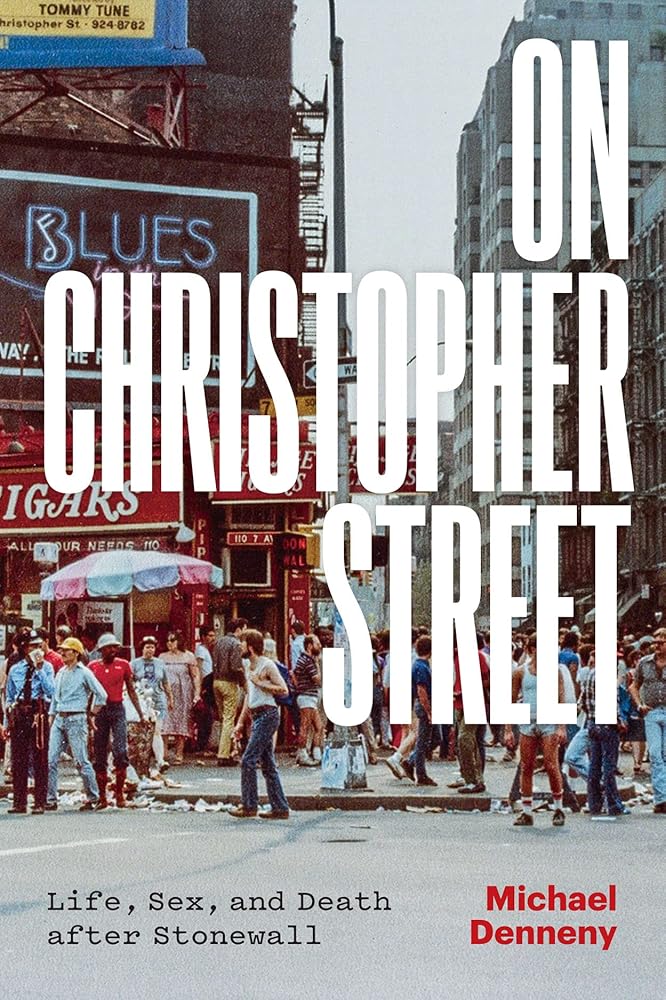
Through the eyes of publishing icon Michael Denneny, this cultural autobiography traces the evolution of the US’s queer community in the three decades post-Stonewall.
The Stonewall Riots of 1969 and the AIDS crisis of the 1980s have been captured in minute detail, and rightly memorialized in books, on tv, and in film as pivotal and powerful moments in queer history. Yet what about the moments in between—the tumultuous decade post-Stonewall when the queer community’s vitality and creativity exploded across the country, even as the AIDS crisis emerged?
Michael Denneny was there for it all. As a founder and editor of the wildly influential magazine Christopher Street and later as the first openly gay editor at a major publishing house, Denneny critically shaped publishing around gay subjects in the 1970s and beyond. At St. Martin’s Press, he acquired a slew of landmark titles by gay authors—many for his groundbreaking Stonewall Inn Editions—propelling queer voices into the mainstream cultural conversation. On Christopher Street is Denneny’s time machine, going back to that heady period to lay out the unfolding geographies and storylines of gay lives and capturing the raw immediacy of his and his contemporaries’ daily lives as gay people in America. Through forty-one micro-chapters, he uses his journal writings, articles, interviews, and more from the 1970s and ‘80s to illuminate the twists and turns of a period of incomparable cultural ferment.
One of the few surviving voices of his generation, Denneny transports us back in time to share those vibrant in-between moments in gay lives—the joy, sorrow, ecstasy, and energy—across three decades of queer history.
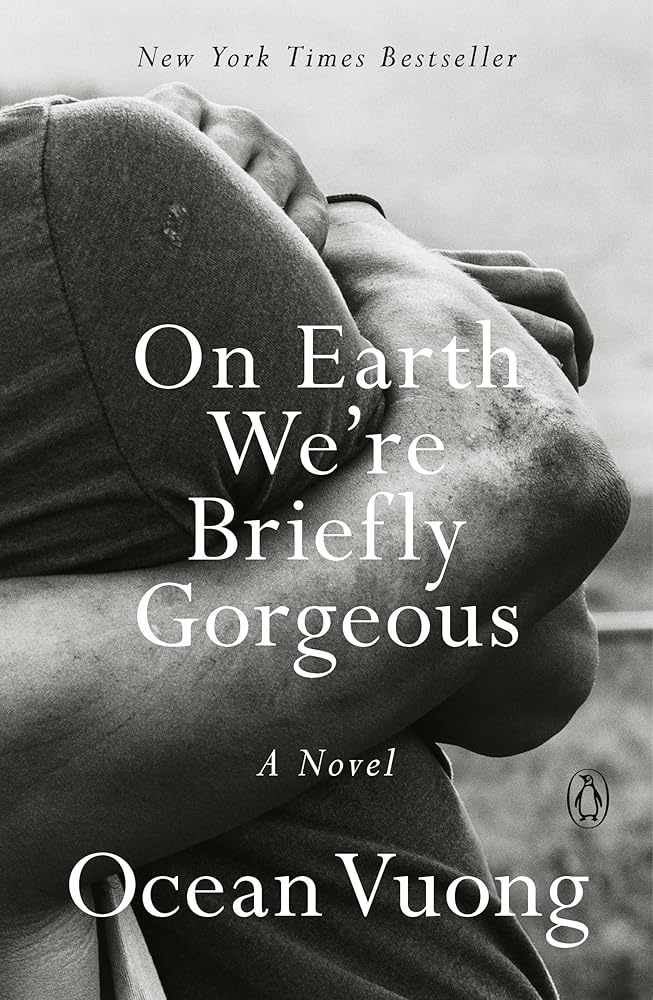
A New York Times bestseller - Nominated for the National Book Award for Fiction - Ocean Vuong's debut novel is a shattering portrait of a family, a first love, and the redemptive power of storytelling
New York Times Readers Pick: 100 Best Books of the 21st Century
"A lyrical work of self-discovery that's shockingly intimate and insistently universal...Not so much briefly gorgeous as permanently stunning." --Ron Charles, The Washington Post
"This is one of the best novels I've ever read...Ocean Vuong is a master. This book a masterpiece."--Tommy Orange, author of There There and Wandering Stars
On Earth We're Briefly Gorgeous is a letter from a son to a mother who cannot read. Written when the speaker, Little Dog, is in his late twenties, the letter unearths a family's history that began before he was born -- a history whose epicenter is rooted in Vietnam -- and serves as a doorway into parts of his life his mother has never known, all of it leading to an unforgettable revelation. At once a witness to the fraught yet undeniable love between a single mother and her son, it is also a brutally honest exploration of race, class, and masculinity. Asking questions central to our American moment, immersed as we are in addiction, violence, and trauma, but undergirded by compassion and tenderness, On Earth We're Briefly Gorgeous is as much about the power of telling one's own story as it is about the obliterating silence of not being heard.
With stunning urgency and grace, Ocean Vuong writes of people caught between disparate worlds, and asks how we heal and rescue one another without forsaking who we are. The question of how to survive, and how to make of it a kind of joy, powers the most important debut novel of many years.
Named a Best Book of the Year by:
GQ, Kirkus Reviews, Booklist, Library Journal, TIME, Esquire, The Washington Post, Apple, Good Housekeeping, The New Yorker, The New York Public Library, Elle.com, The Guardian, The A.V. Club, NPR, Lithub, Entertainment Weekly, Vogue.com, The San Francisco Chronicle, Mother Jones, Vanity Fair, The Wall Street Journal Magazine, and more!

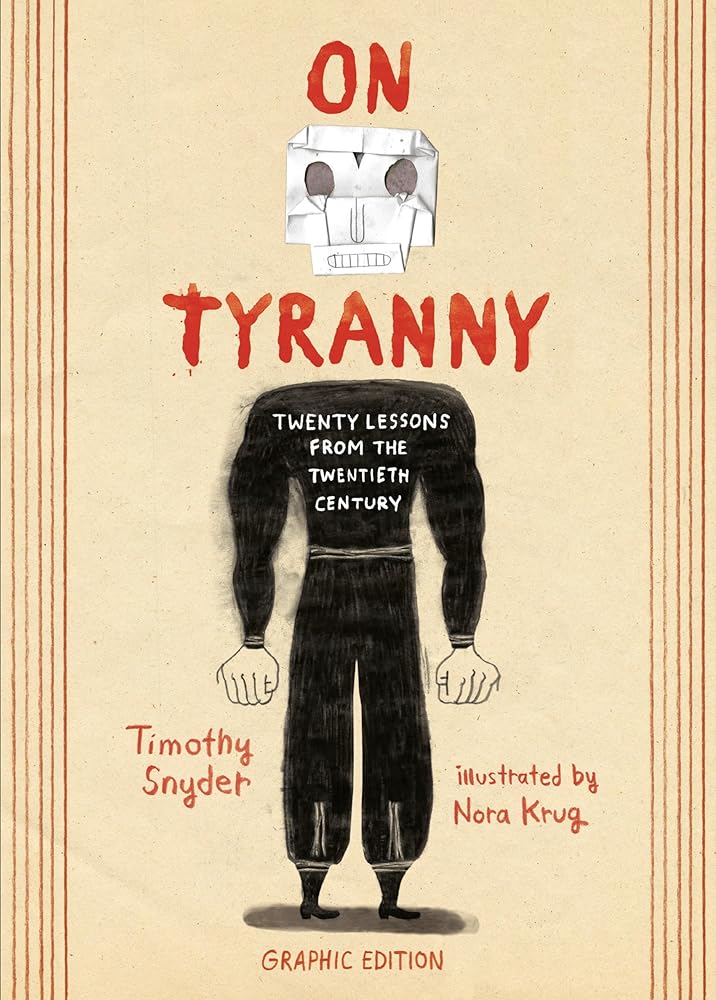
NEW YORK TIMES BESTSELLER • A graphic edition of historian Timothy Snyder’s lessons for surviving and resisting America’s arc toward authoritarianism, featuring the visual storytelling talents of renowned illustrator Nora Krug
“Nora Krug has visualized and rendered some of the most valuable lessons of the twentieth century, which will serve all citizens as we shape the future.”—Shepard Fairey, artist and activist
Timothy Snyder’s New York Times bestseller On Tyranny uses the darkest moments in twentieth-century history, from Nazism to Communism, to teach twenty lessons on resisting modern-day authoritarianism. Among the twenty include a warning to be aware of how symbols used today could affect tomorrow (“4: Take responsibility for the face of the world”), an urgent reminder to research everything for yourself and to the fullest extent (“11: Investigate”), a point to use personalized and individualized speech rather than clichéd phrases for the sake of mass appeal (“9: Be kind to our language”), and more.
In this graphic edition, Nora Krug draws from her highly inventive art style in Belonging—at once a graphic memoir, collage-style scrapbook, historical narrative, and trove of memories—to breathe new life, color, and power into Snyder’s riveting historical references, turning a quick-read pocket guide of lessons into a visually striking rumination. In a time of great uncertainty and instability, this edition of On Tyranny emphasizes the importance of being active, conscious, and deliberate participants in resistance.
#1 NEW YORK TIMES BESTSELLER • A “bracing” (Vox) guide for surviving and resisting America’s turn towards authoritarianism, from “a rising public intellectual unafraid to make bold connections between past and present” (The New York Times)
“Timothy Snyder reasons with unparalleled clarity, throwing the past and future into sharp relief. He has written the rare kind of book that can be read in one sitting but will keep you coming back to help regain your bearings.”—Masha Gessen
The Founding Fathers tried to protect us from the threat they knew, the tyranny that overcame ancient democracy. Today, our political order faces new threats, not unlike the totalitarianism of the twentieth century. We are no wiser than the Europeans who saw democracy yield to fascism, Nazism, or communism. Our one advantage is that we might learn from their experience.
On Tyranny is a call to arms and a guide to resistance, with invaluable ideas for how we can preserve our freedoms in the uncertain years to come.
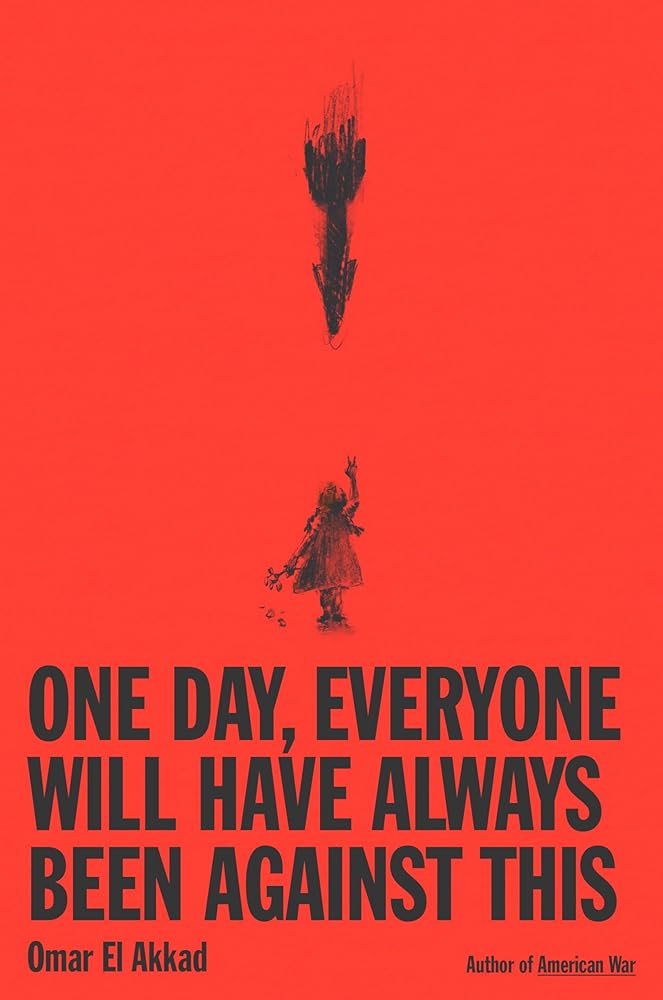
NEW YORK TIMES BESTSELLER • LONGLISTED FOR THE NATIONAL BOOK AWARD • SHORTLISTED FOR THE 2025 PALESTINE BOOK AWARDS • From award-winning novelist and journalist Omar El Akkad comes a powerful reckoning with what it means to live in a West that betrays its fundamental values.
"[A] bracing memoir and manifesto." —The New York Times
"I can’t think of a more important piece of writing to read right now. I found hope here, and help, to face what the world is now, all that it isn’t anymore. Please read this. I promise you won’t regret it." —Tommy Orange, bestselling author of Wandering Stars and There There
On October 25, 2023, after just three weeks of the bombardment of Gaza, Omar El Akkad put out a tweet: “One day, when it’s safe, when there’s no personal downside to calling a thing what it is, when it’s too late to hold anyone accountable, everyone will have always been against this.” This tweet has been viewed more than 10 million times.
As an immigrant who came to the West, El Akkad believed that it promised freedom. A place of justice for all. But in the past twenty years, reporting on the War on Terror, Ferguson, climate change, Black Lives Matter protests, and more, and watching the unmitigated slaughter in Gaza, El Akkad has come to the conclusion that much of what the West promises is a lie. That there will always be entire groups of human beings it has never intended to treat as fully human—not just Arabs or Muslims or immigrants, but whoever falls outside the boundaries of privilege. One Day, Everyone Will Have Always Been Against This is a chronicle of that painful realization, a moral grappling with what it means, as a citizen of the U.S., as a father, to carve out some sense of possibility in a time of carnage.
This is El Akkad’s nonfiction debut, his most raw and vulnerable work to date, a heartsick breakup letter with the West. It is a brilliant articulation of the same breakup we are watching all over the United States, in family rooms, on college campuses, on city streets; the consequences of this rupture are just beginning. This book is for all the people who want something better than what the West has served up. This is the book for our time.

Ken Kesey's bracing, inslightful novel about the meaning of madness and the value of self-reliance, and the inspiration for the new Netflix original series Ratched
Boisterous, ribald, and ultimately shattering, Ken Kesey’s One Flew Over the Cuckoo’s Nest is the seminal novel of the 1960s that has left an indelible mark on the literature of our time. Here is the unforgettable story of a mental ward and its inhabitants, especially the tyrannical Big Nurse Ratched and Randle Patrick McMurphy, the brawling, fun-loving new inmate who resolves to oppose her. We see the struggle through the eyes of Chief Bromden, the seemingly mute half-Indian patient who witnesses and understands McMurphy’s heroic attempt to do battle with the awesome powers that keep them all imprisoned.

*INSTANT NEW YORK TIMES BESTSELLER*
*INSTANT USA TODAY BESTSELLER*
*INSTANT #1 INDIE BESTSELLER*
From the New York Times bestselling author of Red, White & Royal Blue comes a new romantic comedy that will stop readers in their tracks...
For cynical twenty-three-year-old August, moving to New York City is supposed to prove her right: that things like magic and cinematic love stories don’t exist, and the only smart way to go through life is alone. She can’t imagine how waiting tables at a 24-hour pancake diner and moving in with too many weird roommates could possibly change that. And there’s certainly no chance of her subway commute being anything more than a daily trudge through boredom and electrical failures.
But then, there’s this gorgeous girl on the train.
Jane. Dazzling, charming, mysterious, impossible Jane. Jane with her rough edges and swoopy hair and soft smile, showing up in a leather jacket to save August’s day when she needed it most. August’s subway crush becomes the best part of her day, but pretty soon, she discovers there’s one big problem: Jane doesn’t just look like an old school punk rocker. She’s literally displaced in time from the 1970s, and August is going to have to use everything she tried to leave in her own past to help her. Maybe it’s time to start believing in some things, after all.
Casey McQuiston’s One Last Stop is a magical, sexy, big-hearted romance where the impossible becomes possible as August does everything in her power to save the girl lost in time.
"A dazzling romance, filled with plenty of humor and heart." - Time Magazine, "The 21 Most Anticipated Books of 2021"
"Dreamy, other worldly, smart, swoony, thoughtful, hilarious - all in all, exactly what you'd expect from Casey McQuiston!" - Jasmine Guillory, New York Times bestselling author of The Proposal and Party for Two