Sort by:
822 of 1774 products
822 of 1774 products

A funny, bullshit-free and surprising history
Queer families have always existed
Even Sappho, the OG lesbian, had a daughter named Cleis, in honour of vaginas everywhere! For centuries, the women of ‘The Golden Orchid Society’ in Qing-dynasty China were getting married and raising daughters together – platonically, obviously... And Vita Sackville-West and Harold Nicolson’s fabulously bisexual open marriage proved women really can have it all – a husband, two kids, a writing career and Virginia Woolf.
Maybe you’re exploring your options. Maybe you don’t want kids but you have questions. Either way, Kirsty Loehr provides another rollicking guide to the ups and downs of queer parenthood through the ages.
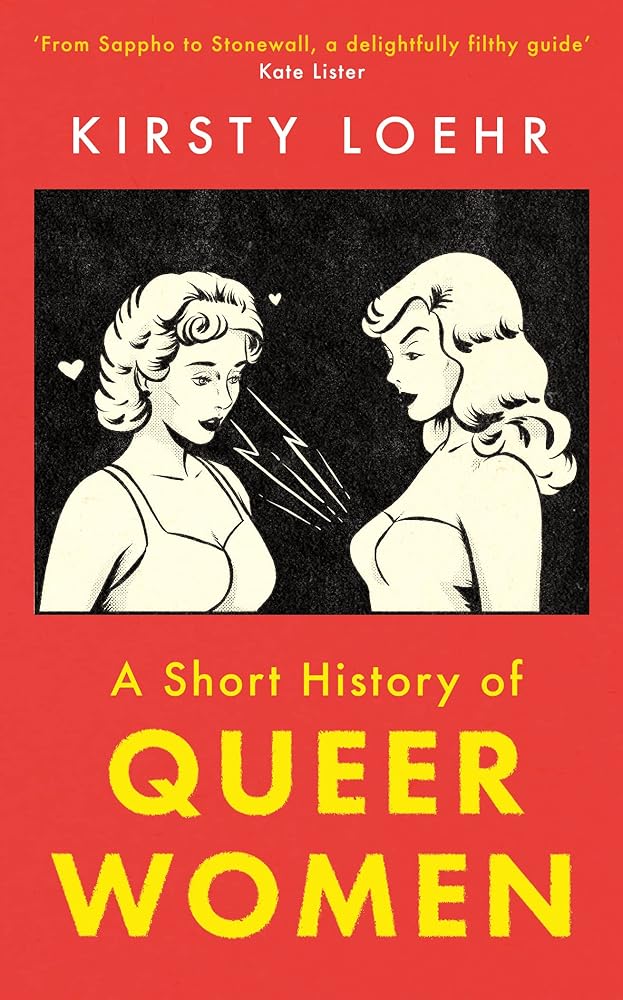
Queer women have always existed – let’s put them back in the history books
No, they weren’t ‘just friends’!
Queer women have been written out of history since, well, forever. ‘But historians famously care about women!’, said no one. From Anne Bonny and Mary Read who sailed the seas together disguised as pirates, to US football captain Megan Rapinoe declaring ‘You can’t win a championship without gays on your team’, via countless literary salons and tuxedos, A Short History of Queer Women sets the record straight on women who have loved other women through the ages.
Who says lesbians can’t be funny?

A Story of the City: Poems Occasional and Otherwise
When Ed Madden was named poet laureate for the City of Columbia, South Carolina, in 2015, he became the first city laureate in the state of South Carolina. During his two terms as city laureate, Madden documented the life and history of the city. He engaged the community by making poetry a public art, posting poems on city buses, sidewalks, movie screens, coffee sleeves, restaurant menus, and faux parking tickets distributed in downtown Columbia one bright and sunny April Fool's Day. While these poems are about a specific city, they ring true for almost any Southern city-maybe any city in America-with its ceremonial occasions and its natural disasters, its misleading public monuments and its protest marches, and its inevitably complex histories. His post officially began with a commemoration of the historic burning of Columbia during the American Civil War and ended with the selection of a new city flag. This collection spans either years of ceremony and controversy, an eclipse and a pandemic, welcomes and elegies, history and hope.

“Many a reader longing for a sense of homecoming in the realm of romantic fantasy will find it in A Strange and Stubborn Endurance.”―Jacqueline Carey
“Stolen me? As soon to say a caged bird can be stolen by the sky.”
Velasin vin Aaro never planned to marry at all, let alone a girl from neighboring Tithena. When an ugly confrontation reveals his preference for men, Vel fears he’s ruined the diplomatic union before it can even begin. But while his family is ready to disown him, the Tithenai envoy has a different solution: for Vel to marry his former intended’s brother instead.
Caethari Aeduria always knew he might end up in a political marriage, but his sudden betrothal to a man from Ralia, where such relationships are forbidden, comes as a shock.
With an unknown faction willing to kill to end their new alliance, Vel and Cae have no choice but to trust each other. Survival is one thing, but love―as both will learn―is quite another.
Byzantine politics, lush sexual energy, and a queer love story that is by turns sweet and sultry, Foz Meadows' A Strange and Stubborn Endurance is an exploration of gender, identity, and self-worth. It is a book that will live in your heart long after you turn the last page.

An indispensable guide to understanding the Israel–Palestine conflict, and how we might yet still find a way out of it.
'Ilan Pappe is the most original, radical and hard-hitting of Israel’s "new historians".' Avi Shlaim, author of Three Worlds
The devastation of 7 October 2023 and the horrors that followed astounded the world. But the Israel–Palestine conflict didn’t start on 7 October. It didn’t start in 1967 either, when Israel occupied the West Bank, or in 1948 when the state of Israel was declared. It started in 1882, when the first Zionist settlers arrived in what was then Ottoman Palestine. Ilan Pappe untangles the history of two peoples, now sharing one land. Going back to the founding fathers of Zionism, Pappe expertly takes us through the twists and turns of international policy towards Israel–Palestine, Palestinian resistance to occupation, and the changes taking place in Israel itself.

An enchanting novel about a witch who has a second chance to get her magical powers—and her life—back on track, from the national bestselling author of The Very Secret Society of Irregular Witches.
Sera Swan was once one of the most powerful witches in Britain. Then she resurrected her great-aunt Jasmine from the (very recently) dead, lost most of her magic, befriended a semi-villainous talking fox, and was exiled from her magical Guild. Now she (slightly reluctantly and just a bit grumpily) helps Aunt Jasmine run an inn in Lancashire, where she deals with her quirky guests' shenanigans, tries to keep the talking fox in check, and longs for the magical future she lost.
When she learns about an old spellbook that holds the secret to restoring her power, she turns to Luke Larsen, a gorgeous historian who might just be able to help her unlock the book’s mysteries. Luke, who has his own reasons for staying at the inn, never planned on getting involved in the madcap goings-on around him and definitely had no intention of letting certain grumpy innkeepers past his icy walls, so no one is more surprised than he is when he not only agrees to help, but also finds himself thawing.
Running an inn, reclaiming lost magic, and staying one step ahead of the watchful Guild is a lot for anyone, but Sera is about to discover that she doesn’t have to do it alone... and that the weird, wonderful family she’s made might be the best magic of all.

A woman’s handbook to demystifying the world of weed, whether it’s being used for pain relief, a moment of calm, or a fit of giggles.
Women of all ages are using cannabis to feel and look better. For rookies and experienced marijuana users alike, this lively, information-filled book is just the supportive guide you need to find the right dose to relieve anxiety, depression, and inflammation, and mitigate the onset of dementia and other signs of aging. Plus boost moods, ease aches, even lose weight, and get restful sleep. And a dose just for fun? Well, that works, too!
Here’s how to navigate the typical dispensary, with its overwhelming options of concentrates, edibles, vape pens, and tinctures. Understand the amazing health-giving compounds found in cannabis—THC, CBD, terpenes, and more—and how to use topicals to reduce pain and give your skin a healthy glow. There’s even advice on how not to get high but still reap all the amazing health benefits.
Plus over twenty recipes, from edibles like Classic Pot Brownies and Netflix and Chill Caramels to self-care products like Radiant Glow Serum and Happy Body Bar.

Abolitionist Intimacies: Queer and Trans Migrants against the Deportation State
$26.95
Unit price perAbolitionist Intimacies: Queer and Trans Migrants against the Deportation State
$26.95
Unit price perIn Abolitionist Intimacies, Eithne Luibhéid examines writings by and about queer- and trans-identified migrants and allies who contest pervasive US immigration practices and work toward a future without detention, deportation, and border controls. Luibhéid shows how these migrants and activists confront such controls by mobilizing intimacies—forging close connections in order to survive in the present. From forms of kinship beyond the heterosexual nuclear family to networks of solidarity, intimacies allow queer and trans migrants and allies to challenge the infrastructures that support the deportation state: proposed pathways to citizenship for undocumented migrants; marriage as a means for legalization; traffic interactions as a pipeline to deportation; and queer and trans migrant detention. In the process, activists and theorists have advanced new visions and configurations of possible intimacies that not only challenge deportation but also rework what immigration control and citizenship could mean. By focusing on these abolitionist efforts as well as the publicly available records on queer and trans deportees, Luibhéid highlights the new understandings that emerge when the experiences of queer and trans people are centered.

From bestselling authors and journalistic titans Ezra Klein and Derek Thompson, Abundance is a once-in-a-generation, paradigm-shifting call to renew a politics of plenty, face up to the failures of liberal governance, and abandon the chosen scarcities that have deformed American life.
To trace the history of the twenty-first century so far is to trace a history of unaffordability and shortage. After years of refusing to build sufficient housing, America has a national housing crisis. After years of limiting immigration, we don’t have enough workers. Despite decades of being warned about the consequences of climate change, we haven’t built anything close to the clean-energy infrastructure we need. Ambitious public projects are finished late and over budget—if they are ever finished at all. The crisis that’s clicking into focus now has been building for decades—because we haven’t been building enough.
Abundance explains that our problems today are not the results of yesteryear’s villains. Rather, one generation’s solutions have become the next generation’s problems. Rules and regulations designed to solve the problems of the 1970s often prevent urban-density and green-energy projects that would help solve the problems of the 2020s. Laws meant to ensure that government considers the consequences of its actions have made it too difficult for government to act consequentially. In the last few decades, our capacity to see problems has sharpened while our ability to solve them has diminished.
Progress requires facing up to the institutions in life that are not working as they need to. It means, for liberals, recognizing when the government is failing. It means, for conservatives, recognizing when the government is needed. In a book exploring how we can move from a liberalism that not only protects and preserves but also builds, Klein and Thompson trace the political, economic, and cultural barriers to progress and propose a path toward a politics of abundance. At a time when movements of scarcity are gaining power in country after country, this is an answer that meets the challenges of the moment while grappling honestly with the fury so many rightfully feel.

Starred Review from Booklist, “this powerful account will comfort those who grew up feeling broken.”
What does love look like when you are not interested in sex?
Growing up, Caitlin Cook knew the recipe for social success from watching television and reading books: two best friends, two enemies, and a boyfriend. So she arranged her life accordingly: making friends and dreaming of the boys she met in school.
But she felt that inside, something was wrong with her. Because though she wanted to get close to people, every time she experimented with sex, she just felt bored.
This graphic novel follows Caitlin Cook, who is asexual but does not yet fully realize it. From evangelical purity politics to the footloose college campus, Caitlin navigates different worlds each with their own sexual orthodoxies, and clumsily attempts to fit into each of them. A thoughtful and immersive coming-of-age memoir about one girl's struggle to figure out and then claim her asexual identity.

An engaging exploration of what it means to be asexual in a world that’s obsessed with sexual attraction, and what the ace perspective can teach all of us about desire and identity.
What exactly is sexual attraction and what is it like to go through life not experiencing it? What does asexuality reveal about gender roles, about romance and consent, and the pressures of society? This accessible examination of asexuality shows that the issues that aces face—confusion around sexual activity, the intersection of sexuality and identity, navigating different needs in relationships—are the same conflicts that nearly all of us will experience. Through a blend of reporting, cultural criticism, and memoir, Ace addresses the misconceptions around the “A” of LGBTQIA and invites everyone to rethink pleasure and intimacy.
Journalist Angela Chen creates her path to understanding her own asexuality with the perspectives of a diverse group of asexual people. Vulnerable and honest, these stories include a woman who had blood tests done because she was convinced that “not wanting sex” was a sign of serious illness, and a man who grew up in a religious household and did everything “right,” only to realize after marriage that his experience of sexuality had never been the same as that of others. Disabled aces, aces of color, gender-nonconforming aces, and aces who both do and don’t want romantic relationships all share their experiences navigating a society in which a lack of sexual attraction is considered abnormal. Chen’s careful cultural analysis explores how societal norms limit understanding of sex and relationships and celebrates the breadth of sexuality and queerness.

Written by Oscar Wilde's only grandson, After Oscar recounts the gripping story of Wilde and his enduring legacy.
"Fascinating...A magnificent blend of scholarship and memoir and a vital contribution to Wildeana."--Stephen Fry, actor and author
Oscar Wilde died in November 1900, exiled in Paris, his reputation in tatters, exhausted by scandal and prison life. While the details of his life in the limelight are well known, often ignored are the reverberations of the Wilde scandal over the decades following his trial and death.
With pathos, humor, and his grandfather's signature wit, Merlin Holland charts the extraordinary afterlife of the legendary writer and thinker, tracing the dramatic fluctuations in Wilde's posthumous reputation.
A true feat of storytelling and scholarship, After Oscar documents decades of sensationalist conjecture surrounding the Wilde family and exposes a century of bigotry and hypocrisy within the cultural establishment. Here is a book that will amuse, infuriate, fascinate, and shock. Readers beware--you're in for a Wilde ride.

A NEW YORK TIMES NOTABLE BOOK OF THE YEAR
LONGLISTED FOR THE BOOKER PRIZE
Finalist for the Publishing Triangle's Edmund White Award for Debut Fiction
Named one of the Best Books of the Year by the New Yorker, Washington Post, TIME, and The Guardian
“A work of stirring genius, a catalogue of intimacies and inventions, desires and dreams."
―Jacob Brogan, Washington Post
An exhilarating debut from a radiant new voice, After Sappho reimagines the intertwined lives of feminists at the turn of the twentieth century.
“The first thing we did was change our names. We were going to be Sappho,” so begins this intrepid debut novel, centuries after the Greek poet penned her lyric verse. Ignited by the same muse, a myriad of women break from their small, predetermined lives for seemingly disparate paths: in 1892, Rina Faccio trades her needlepoint for a pen; in 1902, Romaine Brooks sails for Capri with nothing but her clotted paintbrushes; and in 1923, Virginia Woolf writes: “I want to make life fuller and fuller.” Writing in cascading vignettes, Selby Wynn Schwartz spins an invigorating tale of women whose narratives converge and splinter as they forge queer identities and claim the right to their own lives. A luminous meditation on creativity, education, and identity, After Sappho announces a writer as ingenious as the trailblazers of our past.
“This book is splendid: Impish, irate, deep, courageous. . . . Brava!”―Lucy Ellmann, author of Ducks, Newburyport


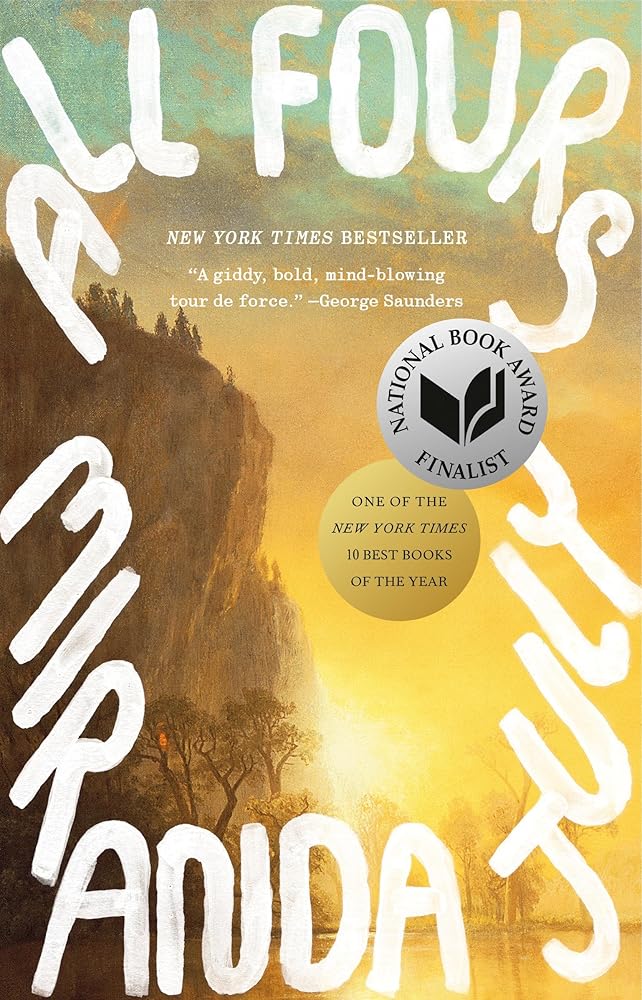
A NEW YORK TIMES TOP TEN BOOK OF THE YEAR
A WASHINGTON POST NOTABLE BOOK OF THE YEAR
ONE OF TIME MAGAZINE’S TOP 10 FICTION BOOKS OF 2024
ONE OF NPR’S “BOOKS WE LOVE” 2024
NAMED A BEST BOOK OF THE YEAR BY:
THE NEW YORKER ● VOGUE ● FINANCIAL TIMES ● OPRAH DAILY ● VULTURE ● VOX
The New York Times bestselling author returns with an irreverently sexy, tender, hilarious and surprising novel about a woman upending her life
“A frank novel about a midlife awakening, which is funnier and more boldly human than you ever quite expect . . . nothing short of riveting.” —Vogue
“All Fours has spurred a whisper network of women fantasizing about desire and freedom. . . . It’s the talk of every group text."—The New York Times
“All Fours possessed me. I picked it up and neglected my life until the last page, and then I started begging every woman I know to read it as soon as possible.”—The Cut
A semi-famous artist announces her plan to drive cross-country, from LA to NY. Thirty minutes after leaving her husband and child at home, she spontaneously exits the freeway, checks into a nondescript motel, and immerses herself in an entirely different journey.
Miranda July’s second novel confirms the brilliance of her unique approach to fiction. With July’s wry voice, perfect comic timing, unabashed curiosity about human intimacy, and palpable delight in pushing boundaries, All Fours tells the story of one woman’s quest for a new kind of freedom. Part absurd entertainment, part tender reinvention of the sexual, romantic, and domestic life of a forty-five-year-old female artist, All Fours transcends expectation while excavating our beliefs about life lived as a woman. Once again, July hijacks the familiar and turns it into something new and thrillingly, profoundly alive.