Sort by:
33 products
33 products

By: Tricia Hersey (Author), 2022, Hardcover
***INSTANT NEW YORK TIMES BESTSELLER***
Disrupt and push back against capitalism and white supremacy. In this book, Tricia Hersey, aka The Nap Bishop, encourages us to connect to the liberating power of rest, daydreaming, and naps as a foundation for healing and justice.
What would it be like to live in a well-rested world? Far too many of us have claimed productivity as the cornerstone of success. Brainwashed by capitalism, we subject our bodies and minds to work at an unrealistic, damaging, and machine‑level pace –– feeding into the same engine that enslaved millions into brutal labor for its own relentless benefit.

Bestselling author, NYU professor, and cohost of the Pivot podcast, Scott Galloway offers a path forward for men and parents of boys.
Boys and men are in crisis. Rarely has a cohort fallen further and faster than young men living in Western democracies. Boys are less likely to graduate from high school or college than girls. One in seven men reports having no friends, and men account for three of every four deaths of despair in America. Even worse, the lack of attention to these problems has created a void filled by voices espousing misogyny, the demonization of others, and a toxic vision of masculinity. But this is not just a male issue: women and children can’t flourish if men aren’t doing well. As we know from spasms of violence, there is nothing more dangerous than a lonely, broke young man.
Scott Galloway has been sounding the alarm on this issue for years. In Notes on Being a Man, Galloway explores what it means to be a man in modern America. He promotes the importance of healthy masculinity and mental strength. He shares his own story from boyhood to manhood. He explores his parent’s difficult divorce, working through his anger and depression issues, trying to make money, and raising two boys. He shares the sometimes funny, often painful, lessons he learned along the way.
Some of these lessons include:
* Being a good dad means being good to their mother.
* Action absorbs anxiety.
* Find what you’re good at—follow your talent.
* Get out of the house.
* Take risk and be willing to feel like an imposter. This is a key to professional success—and masculinity.
* Acknowledge your blessings—and create opportunities for others. Be of surplus value.
* Be kind. That’s the secret to success in relationships.
With unflinching honesty, Scott Galloway maps out an enriching, inspiring operator’s manual for being a man today.
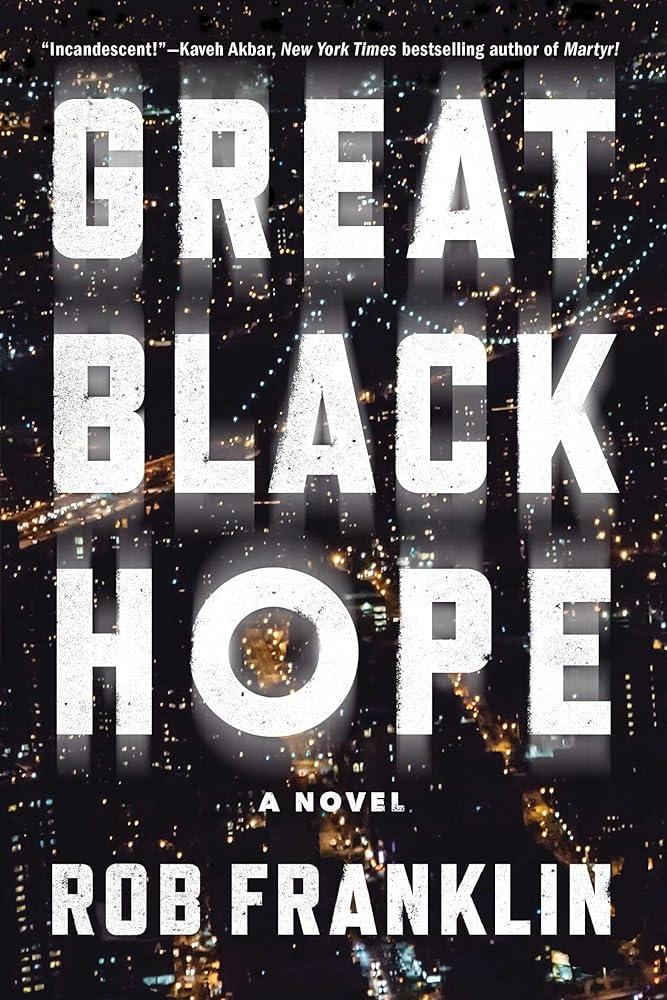
"Incandescent…full of sentences I want to cut out and glue to my forehead." —Kaveh Akbar, New York Times bestselling author of Martyr!
"Great Black Hope is at once a novel of crime—with a gripping pace, propelled by a question that needs answering—and a timeless coming of age story." —Rumaan Alam, bestselling author of Entitlement
A gripping, elegant debut novel about a young Black man caught between worlds of race and class, glamour and tragedy, a friend’s mysterious death and his own arrest, from an electrifying new voice.
An arrest for cocaine possession on the last day of a sweltering New York summer leaves Smith, a queer Black Stanford graduate, in a state of turmoil. Pulled into the court system and mandated treatment, he finds himself in an absurd but dangerous situation: his class protects him, but his race does not.
It’s just weeks after the death of his beloved roommate Elle, the daughter of a famous soul singer, and he’s still reeling from the tabloid spectacle—as well as lingering questions around how well he really knew his closest friend. He flees to his hometown of Atlanta, only to buckle under the weight of expectations from his family of doctors and lawyers and their history in America. But when Smith returns to New York, it’s not long before he begins to lose himself to his old life—drawn back into the city’s underworld, where his search for answers may end up costing him his freedom and his future.
Smith goes on a dizzying journey through the nightlife circuit, anonymous recovery rooms, Atlanta’s Black society set, police investigations and courtroom dramas, and a circle of friends coming of age in a new era. Great Black Hope is a propulsive, glittering story about what it means to exist between worlds, to be upwardly mobile yet spiraling downward, and how to find a way back to hope.

Eagerly awaited debut fiction from one of Canada's most exciting and admired writers, winner of the internationally prestigious Windham-Campbell Prize. Canisia Lubrin's debut fiction is that rare work of a brilliant, startlingly original book that combines immense literary and political force. Its structure is deceptively simple and it departs from the infamous real-life "Code Noir," a set of historical decrees originally passed in 1685 by King Louis XIV of France defining the conditions of slavery in the French colonial empire. The original Code had fifty-nine articles; Code Noir has fifty-nine short, linked fictions that present vivid, unforgettable, multi-layered fragments, filled with globe-wise characters who desire to live beyond the ruins of the past. Ranging in style from contemporary realism to dystopia, from futuristic fantasy to historical fiction, this stream of irrepressible stories ultimately exists far beyond the enclosures of official decrees. An original, timely, culturally daring, virtuoso performance by a rising literary star. Includes fifty-nine breathtaking black-and-white drawings--one at the start of each story--by acclaimed visual artist Torkwase Dyson.
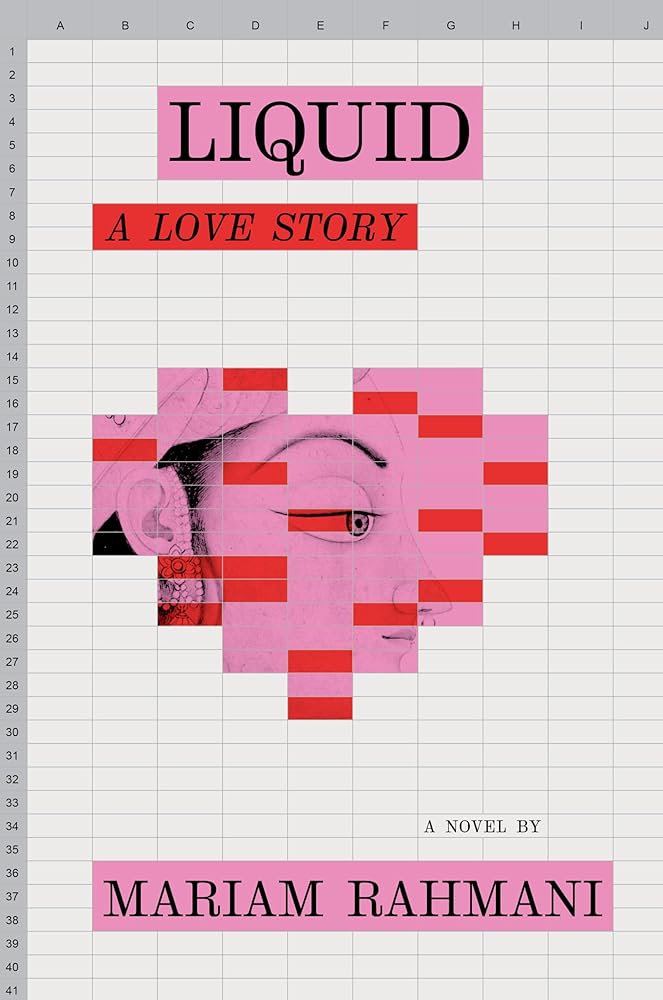
The Marriage Plot meets The Idiot in this brilliant debut, which tells the story of a young Muslim scholar stuck in the mire of adjunct professorship in Los Angeles who decides to give up her career in academia and marry rich, committing herself to 100 dates in the course of a single summer. By midsummer reality hits, taking her—and her project—to Tehran.
The unnamed Iranian-Indian American narrator of Liquid has always believed herself to be the smartest person in the room. And from an early age, she and her best friend—a poet-turned-marketer named Adam—have turned their noses up at other peoples’ riches. But two years after earning a PhD from UCLA, the narrator is no closer to the middle-class comfort promised to her by the prestige of her fancy, scholarship-funded education and the successes of her immigrant parents. Jokingly, Adam suggests she just "marry rich."
But our protagonist, whose PhD thesis compared Eastern and Western views of marriage in film and literature, takes the idea seriously. She makes a spreadsheet and outlines a goal: 100 dates with people of all genders and a marriage proposal in hand by the official start of the fall semester. What follows is a whirlwind summer packed with dating: martinis sans vermouth with the lazy scion of an Eastside construction empire; board games with a butch producer who owns a house in the hills and a newly dented Porsche; a Venmo request from a “socialist” trust fund babe; and an evening spent dodging the halitosis of a maxillofacial surgeon from Orange County.
Only a tragedy in Tehran and an overdue familial reckoning can alter the narrator’s increasingly manic trajectory and force her to confront the contradictions of her life in Los Angeles. And as doubts begin to creep in about her marriage project, it suddenly seems possible that the eligible prospect she’s been looking for has been beneath her nose the entire time.
For fans of Kaveh Akbar and Elif Batuman, Liquid delivers a modern tale of romance, loss, and belonging like no other. Mariam Rahmani’s gorgeous high-wire satire explodes off the page with verve and originality in this riveting spin on the classic romantic comedy.
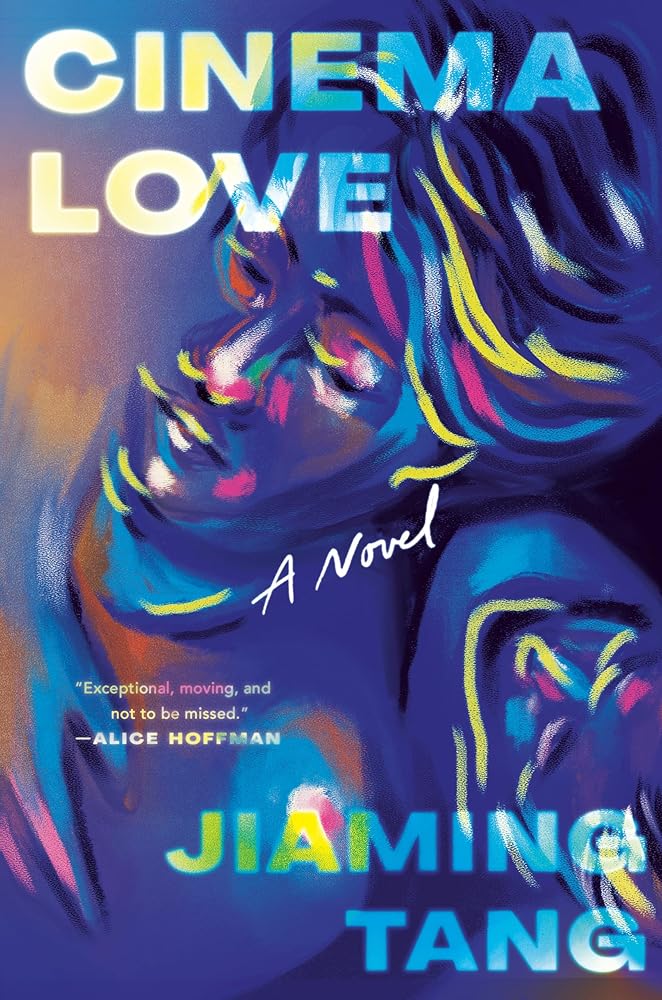
Shortlisted for the 2025 Carnegie Medal for Excellence in Fiction
A Dakota Johnson x TeaTime Book Club Pick
“Exceptional, moving, and not to be missed.”—Alice Hoffman
“Gentle and fierce, heartbreaking without sacrificing its sense of humor . . . I have never read anything like it.”—Robert Jones, Jr.
A staggering, tender epic about gay men in rural China and the women who marry them.
For over thirty years, Old Second and Bao Mei have cobbled together a meager existence in New York City’s Chinatown. But unlike other couples, these two share an unusual past. In rural Fuzhou, before they emigrated, they frequented the Workers’ Cinema: a theater where gay men cruised for love.
While classic war films played, Old Second and his countrymen found intimacy in the screening rooms. In the box office, Bao Mei sold movie tickets to closeted men, guarding their secrets and finding her own happiness with the projectionist. But when Old Second’s passion for his male lover is revealed, a series of haunting events unfold, propelling these characters toward an uncertain future in America.
Spanning three timelines—post-socialist China, 1980s Chinatown, and contemporary New York—Cinema Love is an “exceptional" and "moving” (Alice Hoffman) epic about men and women who find themselves in forbidden relationships; the weight of secrets; and the way memory forever hauntsthe present.
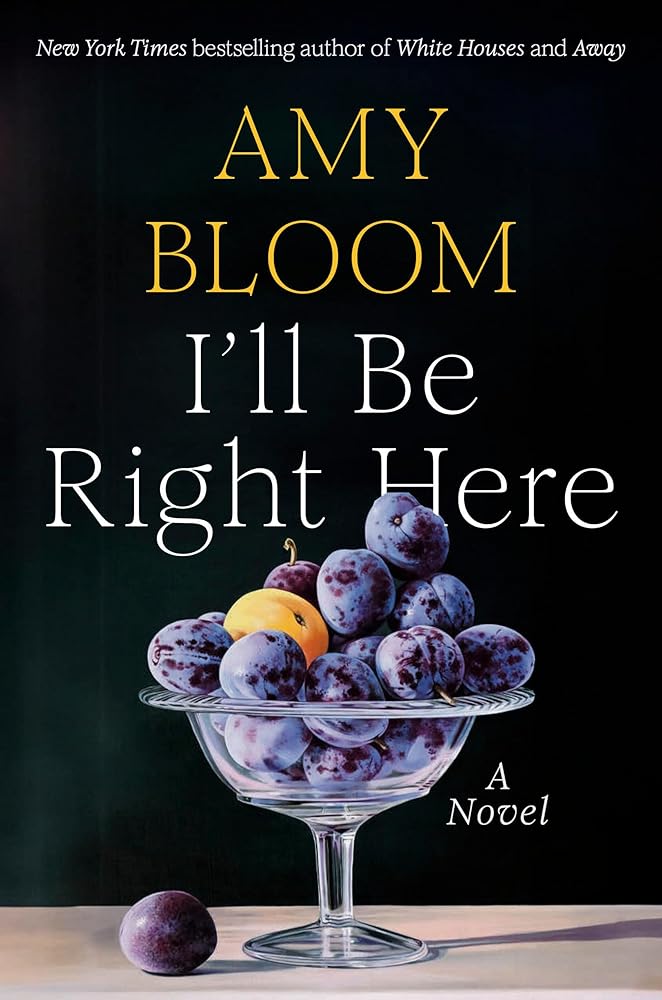
An epic, intimate novel about an unconventional and irresistible family—from the New York Times bestselling author of In Love, White Houses, and Away
Immigrating alone from Paris to New York after the crucible of World War II, young Gazala becomes friends with two spirited sisters, Anne and Alma. When Gazala’s lost, beloved brother, Samir, joins her in Manhattan, this contentious, inseparable foursome makes their way into the twenty-first century, becoming the beating heart of a multigenerational found family.
The passing years are marked by the business of everyday existence and the inevitable surprises of erupting passions, of great and small waves of joy and despair, from the beginning of life to its end. Gazala and Samir make a home together, Anne leaves her husband for his sister, and Anne’s restless daughter grows up to raise a child on her own and to join a throuple, becoming who she wants to be. Through it all, amid the tumult of these decades, the four friends and their best beloveds stand by one another, protecting, annoying, and celebrating themselves, steadfastly unapologetic about their desires and the unorthodox family they have created. As the next generation falls in and out of love, experiencing triumphs, mistakes and disappointments, the central pillars of their lives are the four indomitable elders they call the “Greats.”
In I’ll Be Right Here, Amy Bloom embraces the complexity and richness of humanity and the lawlessness of love, bringing her trademark voice, wry humor, and compassionate eye to the many, often mysterious ways we live as we love, and hope to be loved in return.
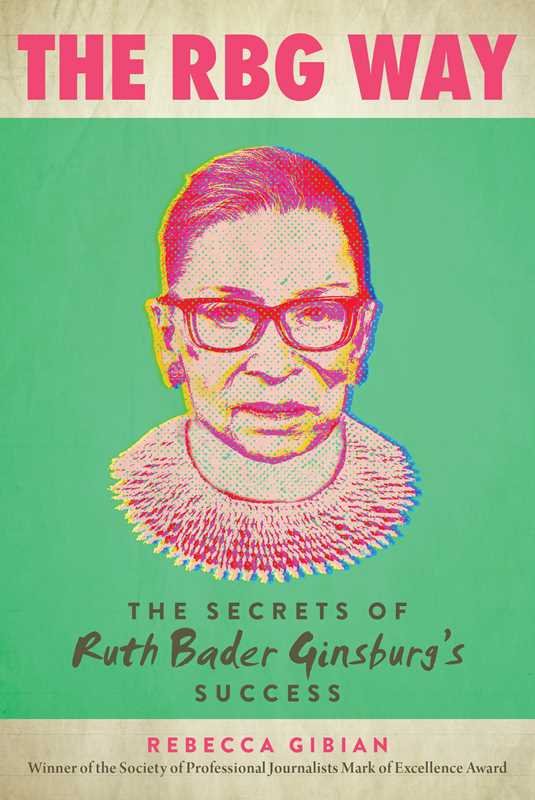

Understanding and Applying the Wisdom of Justice Ruth Bader Ginsburg! Given her incredible tenure as a Supreme Court justice as well as her monumental impact on the modern women’s rights movement, Ruth Bader Ginsburg has become one of the most prominent political leaders of today. To complement her judicial significance, she has also become one of the most culturally popular political figures in US history. Not only has her workout routine gone viral (and been detailed in a book by her trainer), but RBG's story has been featured in multiple critically acclaimed films. Organized into three parts and then broken down into more specific chapters within each part,The RBG Way offers wisdom from Justice Ginsburg, based on comments she has made on particular topics of importance. Insight is offered on subjects such as women's rights, creating lasting partnerships, overcoming hardship, how to be brave, and how to create lasting change. Rebecca Gibian offers her seasoned journalistic perspective to shed light on beliefs that RBG holds strongly, in a manner that is both comprehensive and accessible
A scholar and activist’s brilliant socio-political examination of Asian Americans who refuse to assimilate and instead build their own belonging on their own terms outside of mainstream American institutions.
In this hard-hitting and deeply personal book, a combination of manifesto and memoir, scholar, sociologist, and activist Bianca Mabute-Louie transforms the ways we understand race, class, citizenship, and the concept of assimilation and its impact on Asian American communities from the nineteenth century to present day.
UNASSIMILABLE opens with a focus on the San Gabriel Valley (SGV), the first Asian ethnoburb in Los Angeles County and in the nation, where she grew up. A suburban neighborhood with a conspicuous Asian immigrant population, SGV thrives not because of its assimilation into Whiteness, but because of its unapologetic catering to its immigrant community.
Mabute-Louie then examines “Predominantly White Institutions With A lot of Asians” and how these institutions shape the racial politics of Asian Americans and Asian internationals, including the fight against affirmative action and the fight for ethnic studies. She moves on to interrogate the role of the religion, showing how the immigrant church is a sanctuary even as it is an extension of colonialism and the American Empire. In the book’s conclusion, Bianca looks to the future, boldly proposing a reconsideration of the term Asian American for a new label that better clarifies who Asians in America are today.
UNASSIMILABLE offers a radical vision of Asian American political identity informed by a refusal of Whiteness and collective care for each other. It is a forthright declaration against assimilation and in service of cross-racial, anti-imperialist solidarity and revolutionary politics. Scholarly yet accessible, informative and informed, this book is a major addition to Ethnic Studies and American Studies.

“I’ve never read a book that is as timely, urgent and essential as this one. A battle plan for keeping this nation from falling into fascism.” —Khalil Gibran Muhammad, author of The Condemnation of Blackness
From the bestselling author of How Fascism Works, a searing confrontation with the far right’s efforts to rewrite history and undo a century of progress on race, gender, sexuality, and class.
The human race finds itself again under threat of a rising global fascist movement. In the United States, democracy is under attack by an authoritarian movement that has found fertile ground among the country’s conservative politicians and voters, but similar movements have found homes in the hearts and minds of people all across the globe. To understand the shape, form, and stakes of this assault, we must go back to extract lessons from our past.
Democracy requires a common understanding of reality, a shared view of what has happened, that informs ordinary citizens’ decisions about what should happen, now and in the future. Authoritarians target this shared understanding, seeking to separate us from our own history to destroy our self-understanding and leave us unmoored, resentful, and confused. By setting us against each other, authoritarians represent themselves as the sole solution.
In authoritarian countries, critical examination of those nations’ history and traditions is discouraged if not an outright danger to those who do it. And it is no accident that local and global institutions of education have become a battleground, the authoritarian right’s tip of the spear, where learning and efforts to upend a hierarchal status quo can be put to end by coercion and threats of violence. Democracies entrust schools and universities to preserve a common memory of positive change, generated by protests, social movements, and rebellions. The authoritarian right must erase this history, and, along with it, the very practice of critical inquiry that has so often been the engine of future progress.
In Erasing History, Yale professor of philosophy Jason Stanley exposes the true danger of the authoritarian right’s attacks on education, identifies their key tactics and funders, and traces their intellectual roots. He illustrates how fears of a fascist future have metastasized, from hypothetical threat to present reality. And he shows that hearts and minds are won in our schools and universities—places, he explains, that democratic societies across the world are now ill-prepared to defend against the fascist assault currently underway.
Deeply informed and urgently needed, Erasing History is a global call to action for those who wish to preserve democracy—in America and abroad—before it is too late.
By: Christopher B Hays (Author), Richard B Hays (Author), 2024, Hardcover
A fresh, deeply biblical account of God’s expanding grace and mercy, tracing how the Bible’s narrative points to the full inclusion of LGBTQ people in Christian communities
Discussions of the Bible and human sexuality often focus on a scattered handful of specific passages. But arguments about this same set of verses have reached an impasse, two leading biblical scholars believe; these debates are missing the forest for the trees.
In this learned and beautifully written book, Richard and Christopher Hays explore a more expansive way of listening to the overarching story that scripture tells. They remind us of a dynamic and gracious God who is willing to change his mind, consistently broadening his grace to include more and more people. Those who were once outsiders find themselves surprisingly embraced within the people of God, while those who sought to enforce exclusive boundaries are challenged to rethink their understanding of God’s ways.
The authors—a father and son—point out ongoing conversations within the Bible in which traditional rules, customs, and theologies are rethought. They argue that God has already gone on ahead of our debates and expanded his grace to people of different sexualities. If the Bible shows us a God who changes his mind, they say, perhaps today’s Christians should do the same. The book begins with the authors’ personal experiences of controversies over sexuality and closes with Richard Hays’s epilogue reflecting on his own change of heart and mind.

By: Angie Thomas (Author), 2019, Hardcover
The YA love letter to hip-hop—streaming on Paramount+ September 23, 2022! Starring Sanaa Lathan (in her directorial debut), Jamila C. Gray, Da’Vine Joy Randolph, Lil Yachty, Method Man, Mike Epps, GaTa (Davionte Ganter), Miles Gutierrez-Riley, Titus Makin Jr., and Michael Anthony Cooper Jr.
#1 New York Times bestseller · Seven starred reviews · Boston Globe-Horn Book Award Honor Book
Sixteen-year-old Bri wants to be one of the greatest rappers of all time. Or at least win her first battle. As the daughter of an underground hip hop legend who died right before he hit big, Bri’s got massive shoes to fill. But it’s hard to get your come up when you’re labeled a hoodlum at school, and your fridge at home is empty after your mom loses her job. So Bri pours her anger and frustration into her first song, which goes viral . . . for all the wrong reasons.
Bri soon finds herself at the center of a controversy, portrayed by the media as more menace than MC. But with an eviction notice staring her family down, Bri doesn’t just want to make it—shehasto. Even if it means becoming the very thing the public has made her out to be.
Insightful, unflinching, and full of heart, On the Come Up is an ode to hip hop from one of the most influential literary voices of a generation. It is the story of fighting for your dreams, even as the odds are stacked against you; and about how, especially for young black people, freedom of speech isn’t always free.
“For all the struggle in this book, Thomas rarely misses a step as a writer. Thomas continues to hold up that mirror with grace and confidence. We are lucky to have her, and lucky to know a girl like Bri.”—The New York Times Book Review
Plus don't miss Concrete Rose, Angie Thomas's powerful prequel to her phenomenal bestseller, The Hate U Give!
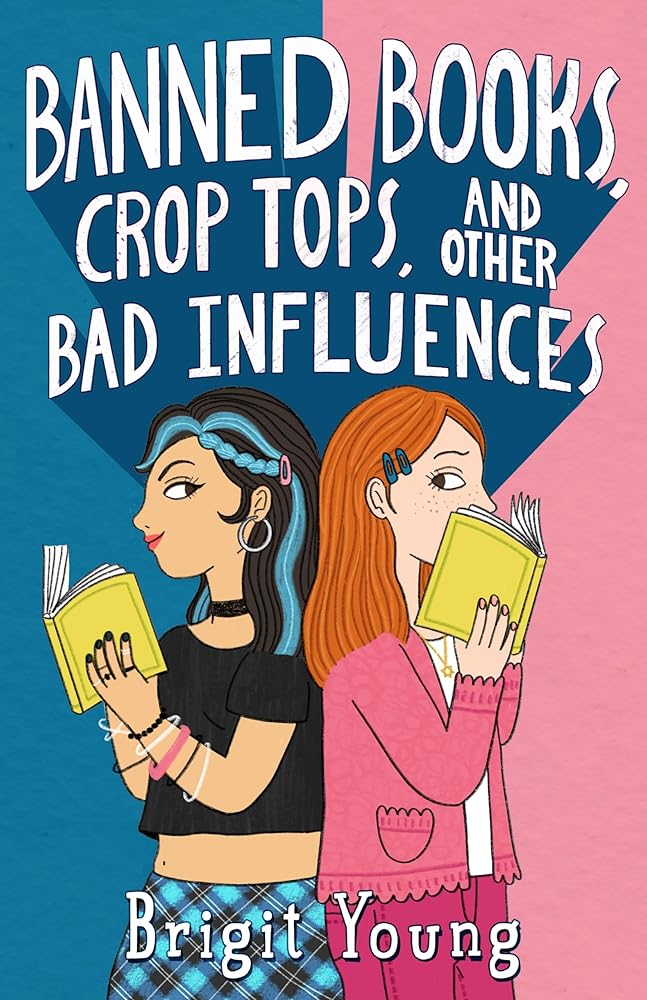
Perfect for fans of Star Fish and From the Desk of Zoe Washington, a nuanced middle grade from the author of The Prettiest about two girls―one "bad" and one "good"―who join forces against book banning and censorship.
Rose is a good girl. She listens to her parents and follows every rule. After all, they’re there for a reason―right? And adults always know best.
Talia, the new girl from New York City, doesn’t think so. After only a week at school, her bad reputation is already making enemies. First on the list: Charlotte, Rose’s lifelong best friend.
So why can’t Rose stop wondering what it would be like to be Talia’s friend? And why does Rose read a banned book that she recommends? Rose doesn’t know. But the forbidden book makes her ask questions she’s never thought of in her life. When Talia suggests they start a banned book club, how can Rose say no?
Pushing against her parents, her school, and even Charlotte opens a new world for Rose. But when some of Talia's escapades become more scary than exciting, Rose must decide when it's right to keep quiet and when it's time to speak out.

By: John Feinstein (Author), 2020, Hardcover
The path to victory starts on the sidelines, in this fast-paced new middle grade series from #1 New York Times bestselling sportwriting powerhouse John Feinstein.
Twelve-year-old Jeff Michaels, son of a Philadelphia TV sports reporter, is just learning to play soccer on the new sixth-grade team at his middle school. Andrea Carillo has fought her way onto the squad, but the coach doesn’t think girls should play with boys, so she’s riding the bench with Jeff―even though she’s one of the best players.
With Jeff’s help, the Philly media gets ahold of the story, and suddenly Andi is all over the news as she shows her worth on the soccer field. But amid bullies, threats, and a media firestorm, will Andi’s skills and Jeff’s perseverance be enough to save the season?
An action-packed novel about two kids who may be "benchwarmers," but prove themselves naturals when it comes to teamwork, friendship, and finding a path to victory.

Eden Jones has exactly three friends. And they're all fake.
From a web of lies and anxiety to true friendship and queer joy; this is the wonderful second book from the author of the Indies Introduce and Indie Next List pick, Jude Saves the World.
Why go through the stress of making friends when you can just pretend? It works for Eden and their social anxiety . . . until their mom announces she’s throwing them a birthday party and all their friends are invited.
Eden’s “friends,” Duke, Ramona, and Tabitha, are all real kids from school . . . but Eden’s never actually spoken to them before. Now Eden will do whatever it takes to convince them to be their friends ― at least until the party is over.
When things start to go better than Eden expects and the group starts to bond, Eden finds themself trapped in a lie that gets worse the longer they keep it up. What happens if their now sort-of-real friends discover that Eden hasn’t been honest with them from the very beginning?
Author Ronnie Riley creates a world full of queer joy and all the ups and downs of true friendship. This book is perfect for fans of Guts or Forget Me Not.