F*ck 45

Sort by:
50 products
50 products

A rousing call to arms whose influence is still felt today
Originally published on the eve of the 1848 European revolutions, The Communist Manifesto is a condensed and incisive account of the worldview Marx and Engels developed during their hectic intellectual and political collaboration. Formulating the principles of dialectical materialism, they believed that labor creates wealth, hence capitalism is exploitive and antithetical to freedom.
This new edition includes an extensive introduction by Gareth Stedman Jones, Britain's leading expert on Marx and Marxism, providing a complete course for students of The Communist Manifesto, and demonstrating not only the historical importance of the text, but also its place in the world today.
For more than seventy years, Penguin has been the leading publisher of classic literature in the English-speaking world. With more than 1,700 titles, Penguin Classics represents a global bookshelf of the best works throughout history and across genres and disciplines. Readers trust the series to provide authoritative texts enhanced by introductions and notes by distinguished scholars and contemporary authors, as well as up-to-date translations by award-winning translators.
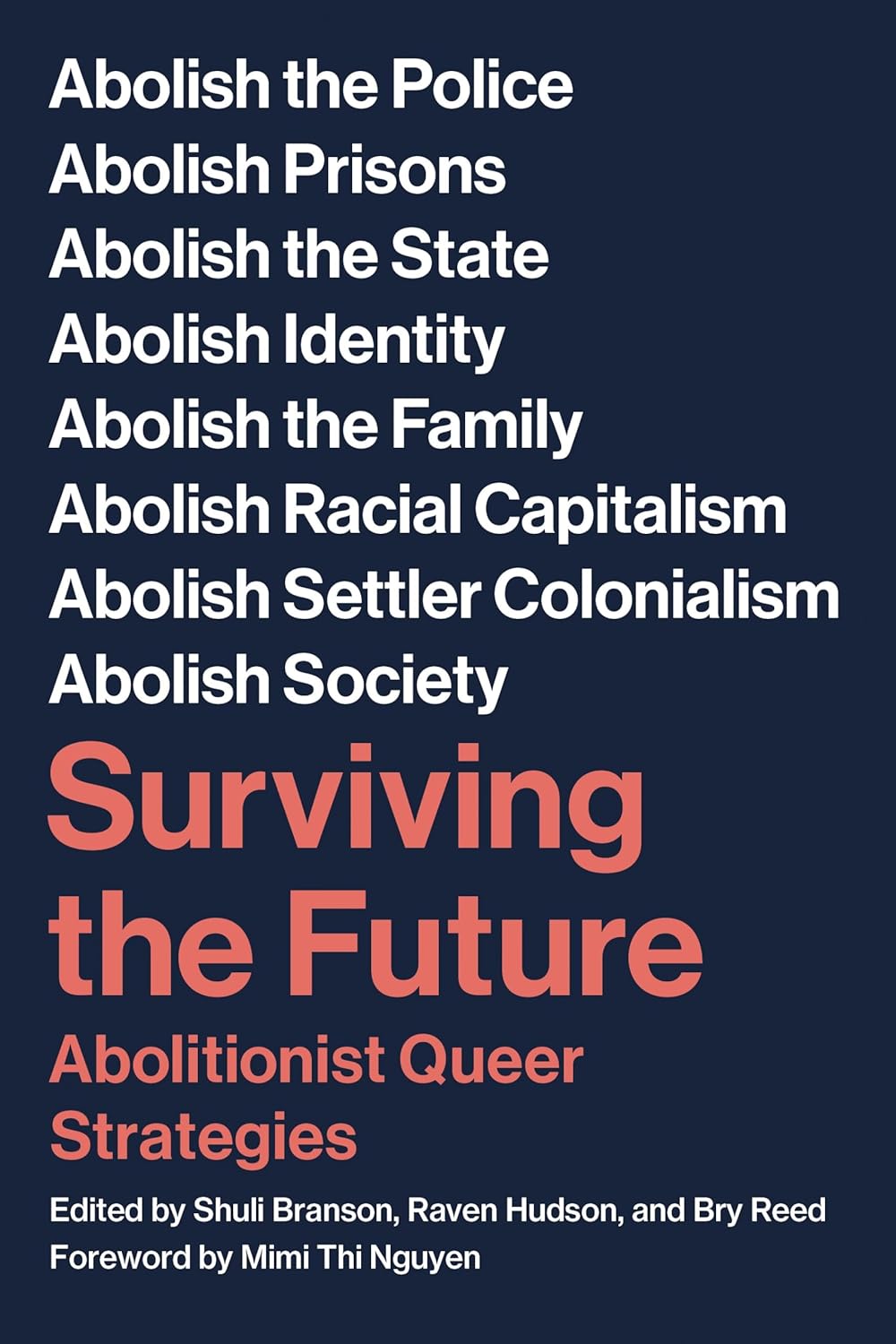
By: Shuli Branson (Editor), Raven Hudson (Editor), Bry Reed (Editor), Mimi Thi Nguyen (Foreword)
Surviving the Future is a collection of the most current ideas in radical queer movement work and revolutionary queer theory. Beset by a new pandemic, fanning the flames of global uprising, these queers cast off progressive narratives of liberal hope while building mutual networks of rebellion and care. These essays propose a militant strategy of queer survival in an ever precarious future. Starting from a position of abolition—of prisons, police, the State, identity, and racist cisheteronormative society—this collection refuses the bribes of inclusion in a system built on our expendability. Though the mainstream media saturates us with the boring norms of queer representation (with a recent focus on trans visibility), the writers in this book ditch false hope to imagine collective visions of liberation that tell different stories, build alternate worlds, and refuse the legacies of racial capitalism, anti-Blackness, and settler colonialism. The work curated in this book spans Black queer life in the time of COVID-19 and uprising, assimilation and pinkwashing settler colonial projects, subversive and deviant forms of representation, building anarchist trans/queer infrastructures, and more. Contributors include Che Gossett, Yasmin Nair, Mattilda Bernstein Sycamore, Adrian Shanker, Kitty Stryker, Toshio Meronek, and more.


2.25"
Tags : Anti-Trump, Liberal, Feminist, Resist, Resistance, the rich


2.25"
Tags : Anti-Trump, Liberal, Feminist, Resist, Resistance, LGBTQ, trans rights


"Is that asshole still president?" Style No. PL16 For those of us who need this everyday to not die inside.


A New York Times bestseller!
What do you do when you spot a wild Trump in the election season? New York Times bestselling author and comedian Michael Ian Black has some sage advice for children (and all the rest of us who are scratching our heads in disbelief) in this perfectly timely parody picture book intended for adults that would be hysterical if it wasn’t so true.
The beasty is called an American Trump.
Its skin is bright orange, its figure is plump.
Its fur so complex you might get enveloped.
Its hands though are, sadly, underdeveloped.
The Trump is a curious creature, very often spotted in the wild, but confounding to our youngest citizens. A business mogul, reality TV host, and now…political candidate? Kids (and let’s be honest many adults) might have difficulty discerning just what this thing that’s been dominating news coverage this election cycle is. Could he actually be real? Are those…words coming out of his mouth? Why are his hands so tiny? And perhaps most importantly, what on earth do you do when you encounter an American Trump?
With his signature wit and a classic picture book style, comedian Michael Ian Black introduces those unfamiliar with the Americus Trumpus to his distinguishing features and his mystifying campaign for world domination…sorry…President of the United States.

#1 NEW YORK TIMES BESTSELLER • Rachel Maddow traces the fight to preserve American democracy back to World War II, when a handful of committed public servants and brave private citizens thwarted far-right plotters trying to steer our nation toward an alliance with the Nazis.
“A ripping read—well rendered, fast-paced and delivered with the same punch and assurance that she brings to a broadcast. . . . The parallels to the present day are strong, even startling.”—The New York Times (Editors’ Choice)
Inspired by her research for the hit podcast Ultra, Rachel Maddow charts the rise of a wild American strain of authoritarianism that has been alive on the far-right edge of our politics for the better part of a century. Before and even after our troops had begun fighting abroad in World War II, a clandestine network flooded the country with disinformation aimed at sapping the strength of the U.S. war effort and persuading Americans that our natural alliance was with the Axis, not against it. It was a sophisticated and shockingly well-funded campaign to undermine democratic institutions, promote antisemitism, and destroy citizens’ confidence in their elected leaders, with the ultimate goal of overthrowing the U.S. government and installing authoritarian rule.
That effort worked—tongue and groove—alongside an ultra-right paramilitary movement that stockpiled bombs and weapons and trained for mass murder and violent insurrection.
At the same time, a handful of extraordinary activists and journalists were tracking the scheme, exposing it even as it was unfolding. In 1941 the U.S. Department of Justice finally made a frontal attack, identifying the key plotters, finding their backers, and prosecuting dozens in federal court.
None of it went as planned.
While the scheme has been remembered in history—if at all—as the work of fringe players, in reality it involved a large number of some of the country’s most influential elected officials. Their interference in law enforcement efforts against the plot is a dark story of the rule of law bending and then breaking under the weight of political intimidation.
That failure of the legal system had consequences. The tentacles of that unslain beast have reached forward into our history for decades. But the heroic efforts of the activists, journalists, prosecutors, and regular citizens who sought to expose the insurrectionists also make for a deeply resonant, deeply relevant tale in our own disquieting times.
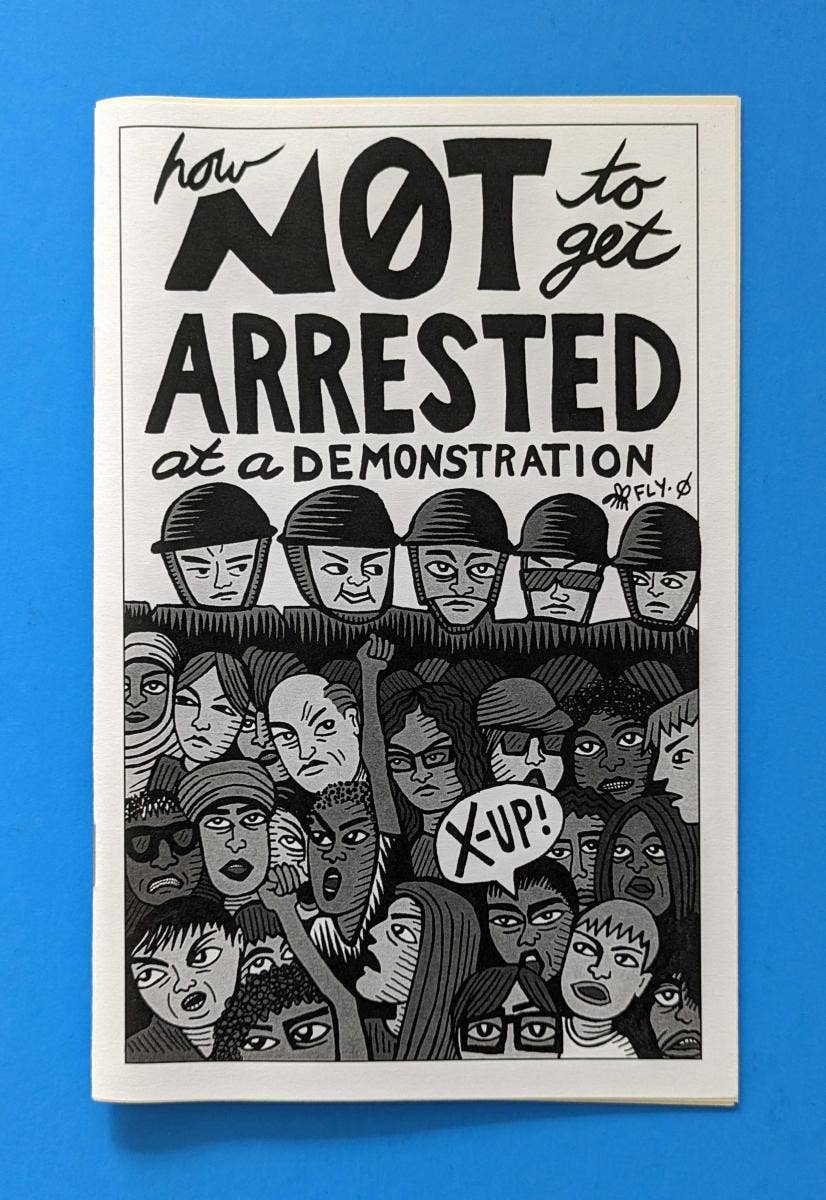
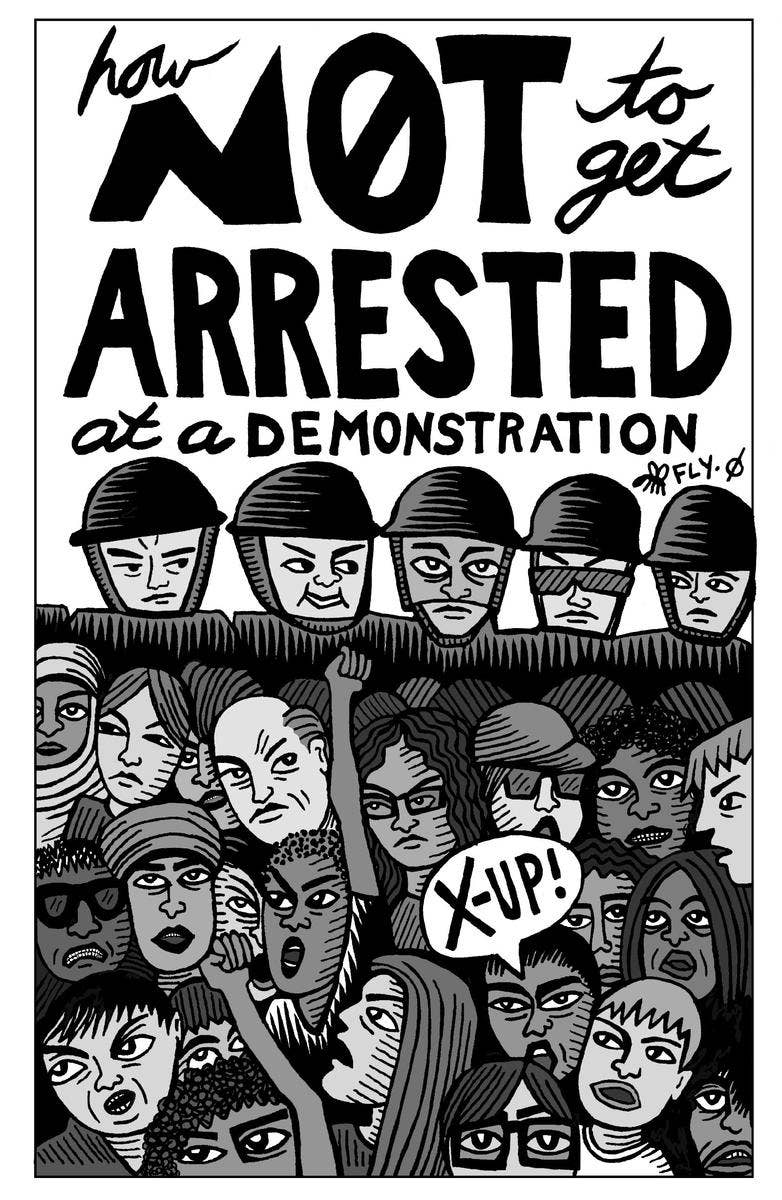
Remember that 'Oh shit' moment you had at your first protest? Or maybe you've been avoiding the news and your Facebook feed; you want to get out there and be involved but you don't even know where to start with the shit-show of our current state of affairs. How Not to be Arrested is a zine full of illustrations, checklists, and thoroughly researched survival tips for the beginner demonstrator and the seasoned activist. This is the zine I wish I'd had when I was a newbie and it's still my go to in my evolved status of fledgling activist.

A powerful manifesto for a world without borders from two immigration policy experts and activists
Borders harm all of us: they must be abolished.
Borders divide workers and families, fuel racial division, and reinforce global disparities. They encourage the expansion of technologies of surveillance and control, which impact migrants and citizens both.
Bradley and de Noronha tell what should by now be a simple truth: borders are not only at the edges of national territory, in airports, or at border walls. Borders are everyday and everywhere; they follow people around and get between us, and disrupt our collective safety, freedom and flourishing.
Against Borders is a passionate manifesto for border abolition, arguing that we must transform society and our relationships to one another, and build a world in which everyone has the freedom to move and to stay.


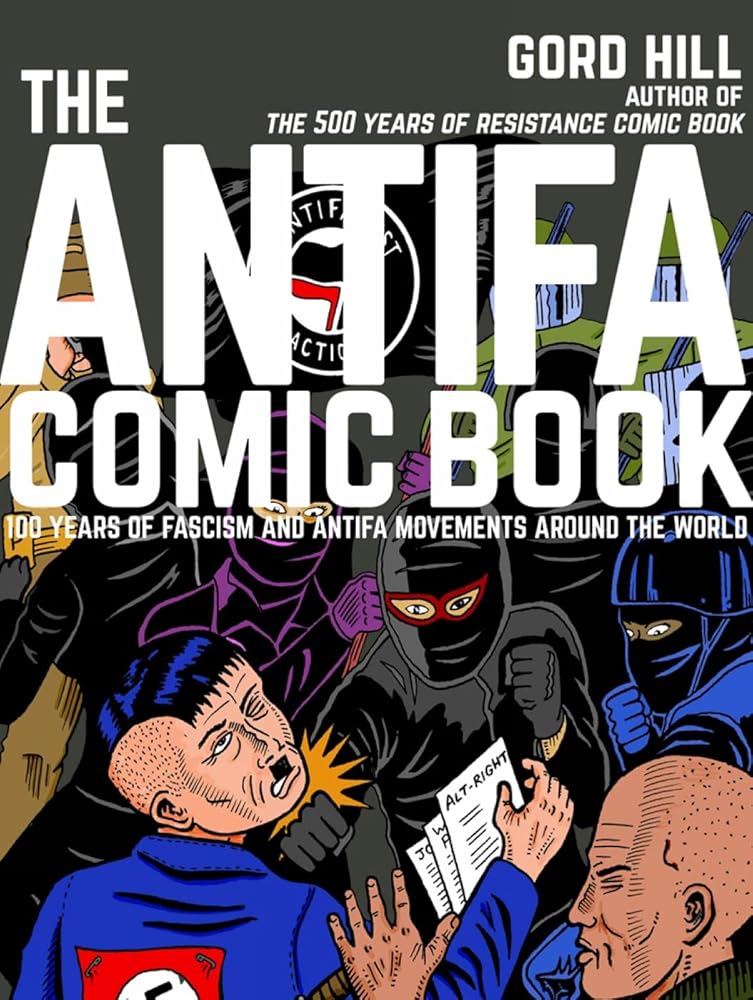
The shocking images of neo-Nazis marching in Charlottesville, North Carolina in the summer of 2017 linger in the mind, but so do those of the passionate protestors who risked their lives to do the right thing. In this stirring graphic non-fiction book by the acclaimed author of The 500 Years of Resistance Comic Book, Gord Hill looks at the history of fascism over the last 100 years, and the concurrent antifa movements that work fastidiously to topple it.
Fascism is a relatively new political ideology and movement, yet in its short history some of the greatest atrocities against humanity have been carried out in its name. Its poisonous roots have taken hold in every region of the world, from its beginnings in post-World War I Italy, through Nazi Germany, Franco’s Spain, and the KKK in America. And today, emboldened by the American president, fascism is alive and well again. At the same time, antifa activists have proven, through history and again today, that the spirit of resistance is alive and well, and necessary.
In The Antifa Comic Book, Gord Hill documents these powerful moments of conflict and confrontation with a perceptive eye and a powerful sense of resolve.