Sort by:
395 of 1799 products
395 of 1799 products

"The Trans Memoir We've Always Needed." —Autostraddle
"This blistering memoir is the book I didn’t know I needed... I’m so grateful they had the courage to share their experience in such a transparent, authentic way." —One of BuzzFeed's Most Anticipated Books of 2022
• One of The Millions' Most Anticipated Books of the Month • One of Ms. Magazine's Most Anticipated Reads of 2022 • One of BookRiot's LGBTQ Books You Need to Read •
When divorce moves young R/B Mertz away from rural Pennsylvania and their abusive father, Mertz's life is torn in two. Mertz's mom and new stepdad dive headfirst into conservative Catholic homeschooling, entrenching themselves in a world dominated by saints, prayers, and having as many babies as possible, just as Mertz is starting to realize they might be queer.
Mertz clings to Catholicism as a rebellion against their anti-Catholic bio-dad, and to movies and musicals as beacons of the world outside the conservative closet constructed by the homeschoolers—who might actually be more concerned with being conservative than with being good, while Mertz's bio-dad just wants them to be "normal."
Trying to stave off the inevitable, Mertz enrolls in a conservative Catholic college in Ohio. Coming of age in the early aughts, they grapple with flirtations, sexual encounters, and confusing relationships with students and faculty, as they try to figure out how to live a life in a world hell-bent on making them choose between their community and their identity.
At turns rebellious, charming, and self-effacing, Mertz struggles to navigate this oppressive environment, questioning whether or not there is a place for them inside or outside of the Catholic Church; whether they can be themselves on the left or the right; whether they can be "conservative" or "liberal;" or whether they can be at all. Ultimately, Burning Butch is the courageous story of a trans / non-binary butch on a quest to survive with their authenticity intact.

A striking literary memoir of genderfluidity, class, masculinity, and the American Southwest that captures the author's experience coming of age in a Tucson, Arizona, trailer park.
Newly arrived in the Sonoran Desert, eleven-year-old Zoë's world is one of giant beetles, thundering javelinas, and gnarled paloverde trees. With the family's move to Cactus Country RV Park, Zoë has been given a fresh start and a new, shorter haircut.
Although Zoë doesn't have the words to express it, he experiences life as a trans boy--and in Cactus Country, others begin to see him as a boy, too. Here, Zoë spends hot days chasing shade and freight trains with an ever-rotating pack of sunburned desert kids, and nights fending off his own questions about the body underneath his baggy clothes.
As Zoë enters adolescence, he must reckon with the sexism, racism, substance abuse, and violence endemic to the working class Cactus Country men he's grown close to, whose hard masculinity seems as embedded in the desert landscape as the cacti sprouting from parched earth. In response, Zoë adopts an androgynous style and new pronouns, but still cannot escape what it means to live in a gendered body, particularly when a fraught first love destabilizes their sense of self.
But beauty flowers in this desert, too. Zoë persists in searching for answers that can't be found in Cactus Country, dreaming of a day they might leave the park behind to embrace whatever awaits beyond.
Equal parts harsh and tender, Cactus Country is an invitation for readers to consider how we find our place in a world that insists on stark binaries, and a precisely rendered journey of self-determination that will resonate with anyone who's ever had to fight to be themself.
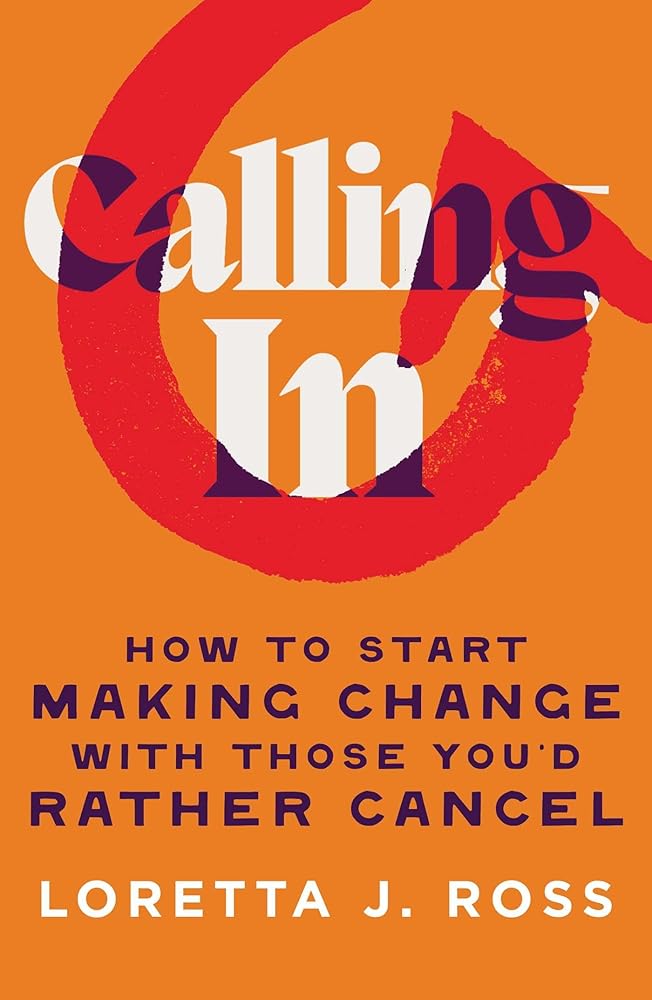
From a pioneering Black feminist and MacArthur “Genius” Fellow, an urgent and exhilarating memoir-manifesto-handbook about how to rein in the excesses of cancel culture so we can truly communicate and solve problems together.
In 1979, Loretta Ross was a single mother who’d had to drop out of Howard University. She was working at Washington, DC’s Rape Crisis Center when she got a letter from a man in prison saying he wanted to learn how to not be a rapist anymore. At first, she was furious. As a survivor of sexual violence, she wanted to write back pouring out her rage. But instead, she made a different choice, a choice to reject the response her trauma was pushing her towards, a choice that set her on the path towards developing a philosophy that would come to guide her whole career: rather than calling people out, try to call even your unlikeliest allies in. Hold them accountable—but do so with love.
Calling In is at once a handbook, a manifesto, and a memoir—because the power of Loretta Ross’s message comes from who she is and what she’s lived through. She’s a Black woman who’s deprogrammed white supremacists, a survivor who’s taught convicted rapists the principles of feminism. With stories from her five remarkable decades in activism, she vividly illustrates why calling people in—inviting them into conversation instead of conflict by focusing on your shared values over a desire for punishment—is the more strategic choice if you want to make real change. And she shows you how to do so, whether in the workplace, on a college campus, or in your living room.
Courageous, awe-inspiring, and blisteringly authentic, Calling In is a practical new solution from one of our country’s most extraordinary change-makers—one anyone can learn to use to transform frustrating and divisive conflicts that stand in the way of real connection with the people in your life.

Debtors have been mocked, scolded and lied to for decades. We have been told that it is perfectly normal to go into debt to get medical care, to go to school, or even to pay for our own incarceration. We 've been told there is no way to change an economy that pushes the majority of people into debt while a small minority hoard wealth and power.
The coronavirus pandemic has revealed that mass indebtedness and extreme inequality are a political choice. In the early days of the crisis, elected officials drew up plans to spend trillions of dollars. The only question was: where would the money go and who would benefit from the bailout?
The truth is that there has never been a lack of money for things like housing, education and health care. Millions of people never needed to be forced into debt for those things in the first place.
Armed with this knowledge, a militant debtors movement has the potential to rewrite the contract and assure that no one has to mortgage their future to survive.
Debtors of the World Must Unite.
As isolated individuals, debtors have little influence. But as a bloc, we can leverage our debts and devise new tactics to challenge the corporate creditor class and help win reparative, universal public goods.
Individually, our debts overwhelm us. But together, our debts can make us powerful.

An international cultural history of the multifunctional plant.
Cannabis explores the historical, pharmacological, and cultural significance of the controversial plant. Beginning with cannabis’s origins as a food source in Southeast Asia, Borougerdi describes the global evolution of cannabis over the centuries, with a particular focus on its spread across the Atlantic and its modern renaissance in cuisine. The book also investigates the stimulant’s mood-altering forms of consumption, from smoking to edibles and drinks. A richly illustrated guide, this book draws together a diverse account of international cannabis cultures in a single, captivating narrative.

Learn everything there is to know about your period with this positive puberty book for ages 10-14! A follow-up to the popular Celebrate Your Body and Celebrate Your Body 2.
When you get your period for the first time (or know you will soon), you might have some questions about what to expect. Celebrate Your Period has the answers, with friendly explanations of how periods work, what they might feel like, and more, so you can take on this part of puberty with confidence!
Feel prepared―Understand your body better with a basic breakdown of the menstrual cycle, hormones, reproductive organs, and the signs that your first period is on the way.
What about pads and tampons?―Learn about the different products available for managing your period, and period symptoms like cramps, so you can make the best choices for you.
Be period positive―Your body is amazing―and menstruating is completely normal! This body-positive period book helps you feel good about your body and celebrate growing up great.
Feel empowered when it comes to your period with the ultimate book on menstruation for girls!

The #1 New York Times bestselling author of How to Be an Antiracist traces the rise of the authoritarian and xenophobic movements threatening democracies around the globe.

***This item will ship on or after the release date of June 16, 2026***
An openly Lesbian couple survives and thrives in 19th century Vermont–a true story, as told by Tillie Walden.
The month is February in the year 1807. The place is Weybridge, Vermont: small, cold, lonely, and beautiful. Sylvia Drake is exhausted. As an unwed woman with few prospects, she is residing with and caring for her sister’s rambunctious family. Today the house is abuzz awaiting a guest―Charity Bryant. A friend of the family, she is most known for her elegant letters, with their swoopy and evocative penmanship and carefully chosen prose. But Charity’s visit is a guise, she is coming to Vermont to start over after heartbreak and rumours―so many rumours―that have grown too loud back in Massachusetts.
Being openly gay in 19th century New England is not an easy row to hoe. But Charity can only be herself, and she immediately catches―and holds―the eye of none other than Sylvia Drake. From this point on, for 44 years, the two would be inseparable, building a life together despite all odds and living as a lesbian couple in small town Vermont.
The true, exceptional story of these remarkable women is brought to life with humor and passion by the unparalleled and award-winning Tillie Walden (Spinning, On A Sunbeam). We see America grow alongside these women over a period that brings about the railroad, many novels, 14 Presidents, riots, rebellion, plagues, and poetry. Based on extensive archives of their writing, Charity and Sylvia is a groundbreaking biography that is also the story of 19th century America.

Climate Change and How We'll Fix It: The Real Problem and What We Can Do to Fix It
$14.95
Unit price perClimate Change and How We'll Fix It: The Real Problem and What We Can Do to Fix It
$14.95
Unit price perChildren wonder: why aren’t adults doing more about climate change? This clear, to-the-point, and fully illustrated guide answers kids’ questions—and shows how they can play an important role in solving the problem.
Some of the most renowned climate activists—including Greta Thunberg—are children and teens, for they are the ones who will inherit the planet and its problems. This important guide enlightens kids about why climate change is real, why it’s serious, what’s causing it, and how we can fix it. It explains why grownups aren’t doing enough, why one group of people alone can’t solve it, and what the roadblocks are, from wealth disparity to our dependence on air travel. Using brief, focused text, every colorfully illustrated page presents the debate surrounding the crucial issues; dialogue balloons, bursts, and problem boxes help make the climate crisis more understandable to young people so they can become problem solvers and leaders in creating a better world.

Climate Injustice: Why We Need to Fight Global Inequality to Combat Climate Change
$29.95
Unit price perClimate Injustice: Why We Need to Fight Global Inequality to Combat Climate Change
$29.95
Unit price perFrom one of the world’s most celebrated thinkers on climate change comes a groundbreaking investigation into extreme weather • “I can’t recommend this book highly enough. It will change how you think about the most important story of our time."—JEFF GOODELL, New York Times bestselling author of The Heat Will Kill You First
"Searing in her clarity … Fredi Otto demonstrates, irrefutably, how the North's fossil-fuel-powered “extractivist” economic model drives global climate disruption at the expense of the living world. Climate Injustice prosecutes the case; all it needs now is a courtroom, preferably in The Hague."—JOHN VAILLANT, author of Fire Weather: A True Story from a Hotter World
Climate change does not affect everyone equally. While many scientists focus on studying climate change as a physics problem, Friederike Otto, one of the world’s most renowned climate scientists, sees it as a symptom of the global crisis of inequality, not its cause. In this ambitious, fast-paced book, she offers concrete examples of how extreme weather events caused by climate change reveal uncomfortable truths about the failures of political and social infrastructures around the world.
Comparing eight extreme weather events—including heat waves in North America, floods in Pakistan, droughts in Madagascar, and wildfires in Australia—Otto reveals how climate change is affecting the world’s most vulnerable, whether they are women working on farms in Ghana during heat waves, or elderly people who died during floods in Germany. In particular, Otto examines the Global North’s extractionist view of the Global South, a view that ensures elites are protected while others bear the brunt of the climate disaster.
Climate Injustice shares the stories of real people, shining a light on the real damage inflicted on real lives. Above all, it shows how racism, colonialism, sexism, and climate change are interconnected, and how positive changes on one level can lead to positive effects on another. Authored by the co-founder of World Weather Attribution, a cutting-edge scientific method that pinpointed the role of climate change in extreme weather events for the first time, Climate Injustice offers a groundbreaking view on the fires, floods, heatwaves, and storms that are wreaking havoc at an alarming pace.
Inequality and injustice are at the core of what makes climate change a problem for humanity. Fairness and global justice must therefore be at the core of the solution. Climate justice concerns everyone.


A revised and updated edition of Emily Nagoski’s game-changing New York Times bestseller Come As You Are, featuring new information and research on mindfulness, desire, and pleasure that will radically transform your sex life.
For much of the 20th and 21st centuries, women’s sexuality was an uncharted territory in science, studied far less frequently—and far less seriously—than its male counterpart.
That is, until Emily Nagoski’s Come As You Are, which used groundbreaking science and research to prove that the most important factor in creating and sustaining a sex life filled with confidence and joy is not what the parts are or how they’re organized but how you feel about them. In the years since the book’s initial publication, countless women have learned through Nagoski’s accessible and informative guide that things like stress, mood, trust, and body image are not peripheral factors in a woman’s sexual wellbeing; they are central to it—and that even if you don’t always feel like it, you are already sexually whole by just being yourself. This revised and updated edition continues that mission with new information and advanced research, demystifying and decoding the science of sex so that everyone can create a better sex life and discover more pleasure than you ever thought possible.
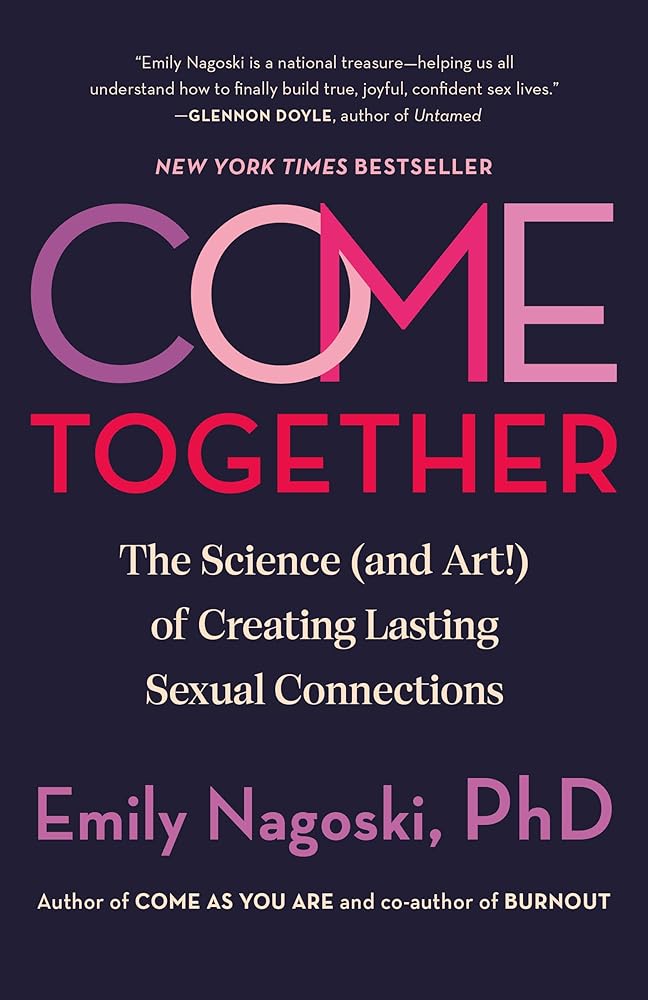
NEW YORK TIMES BESTSELLER • From the author of Come as You Are and co-author of Burnout comes an illuminating exploration of how to maintain a happy sex life in a long-term relationship.
“Emily Nagoski is a national treasure—helping us all understand how to finally build true, joyful, confident sex lives.”—Glennon Doyle, author of Untamed
In Come as You Are, Emily Nagoski, PhD, revolutionized the way we think about women’s sexuality. Now, in Come Together, Nagoski takes on a fundamentally misunderstood subject: sex in long-term relationships.
Most of us struggle at some point to maintain a sexual connection with our partner/s or spouse. And many of us are given not-very-good advice on what to do about it. In this book, Nagoski dispels the myths we’ve been taught about sex—for instance, the belief that sexual satisfaction and desire are highest at the beginning of a relationship and that they inevitably decline the longer that relationship lasts. Nagoski assures us that’s not true.
So, what is true? Come Together isn’t about how much we want sex, or how often we’re having it; it’s about whether we like the sex we’re having. Nagoski breaks down the obstacles that impede us from enjoying sex—from stress and body image to relationship difficulties and gendered beliefs about how sex “should” be—and presents the best ways to overcome them. You’ll learn:
• that “spontaneous desire” is not the kind of desire to strive for if you want to have great sex for decades
• vocabulary for talking with partners about ways to get in “the mood” and how to not take it personally when “the mood” is nowhere to be found
• how to understand your own and your partner’s “emotional floorplan,” so that you have a blueprint for how to get to a sexy state of mind
Written with scientific rigor, humor, and compassion, Nagoski shows us what great sex can look like, how to create it in our own lives, and what to do when struggles arise.
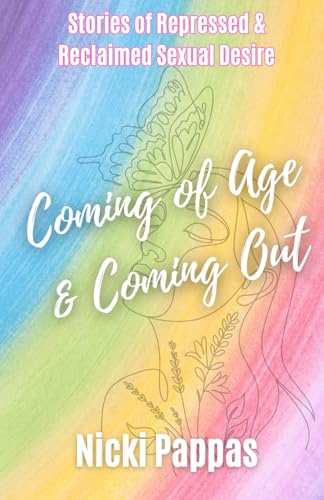
Coming of Age and Coming Out: Stories of Repressed and Reclaimed Sexual Desire
$18.00
Unit price perComing of Age and Coming Out: Stories of Repressed and Reclaimed Sexual Desire
$18.00
Unit price perNicki Pappas thought she was heterosexual when she married her evangelical sweetheart at the age of twenty. Coming of Age and Coming Out is her journey from repressed to reclaimed sexual desire.
Through a collection of stories, she authentically shares the raw truths about coming of age from childhood through adolescence and then coming out in her thirties as queer and non-monogamous.

Our hopes with Coming Out Together. Memoirs on the LGBTQ+ Experience, is that it helps make those who have gone through the experience of coming out, or are currently going through it, to know that they are not alone, that it can get better, or that it might just not be all that bad. Some coming out stories are hard, some ugly, and some good. All are important. By shining the light onto these experiences, we hope to contribute to the positive ripple effects of progress
-Shannon Ronan. Author and Founder of Open Air Press