Sort by:
395 of 1799 products
395 of 1799 products

All are made in the image and likeness of God. If this is what we believe, then trans people, like all people, reflect something of God, and not just in the ways that they share in common with others, but also in the ways that they are different. They remind us that God is beyond all of our categories, even gender. In this book, Tara Soughers explores theology from the position of a trans ally-a parent of a trans young adult as well as priest. What does it mean about God and about humans, that there is not a strict gender binary? How can we affirm and include what we have learned about the permeability of boundaries to affirm those whose path does not follow traditional cultural stereotypes, and how might the broadening help us to understand the God who is never two for Christians, but both one and three? What gifts does this broader understanding bring to the church?

From bestselling author Martha Beck, a new path to overcoming anxiety by awakening the creativity within
We live in an epidemic of anxiety. Most of us assume that the key to overcoming it is to think our way out. And for a while it works. But there is always something that sends us back into the anxious spiral we’ve been trying to climb out of.
In Beyond Anxiety, Dr. Martha Beck explains why anxiety is skyrocketing around you, and likely within you. She also tells you how to not only reduce your anxiety but use it to propel you into a life filled with peace, meaning, and joy.
Using a combination of the latest neuroscience as well as her background in sociology and coaching, Beck explains how our brains tend to get stuck in an “anxiety spiral,” a feedback system that can increase anxiety indefinitely. To climb out, we must engage different parts of our nervous system—the parts involved in creativity. Beck provides instructions for engaging the “creativity spiral,” in a process that not only shuts down anxiety but leads to innovative problem solving, a sense of meaning and purpose, and joyful, intimate connection with others—and with the world.
The opposite of anxiety, it turns out, is a wonderful new way of life—one that can calm and inspire us as individuals and help us become a source of healing for everything around us.

Beyond Survival: Strategies and Stories from the Transformative Justice Movement
$18.00
Unit price perBeyond Survival: Strategies and Stories from the Transformative Justice Movement
$18.00
Unit price perTransformative justice seeks to solve the problem of violence at the grassroots level, without relying on punishment, incarceration, or policing. Community-based approaches to preventing crime and repairing its damage have existed for centuries. However, in the punative atmosphere of contemporary criminal justice systems, they are often marginalized and operate under the radar. Beyond Survival puts these strategies front and center as real alternatives to today’s failed models of confinement and “correction.”
In this collection, a diverse group of authors focuses on concrete and practical forms of redress and accountability, assessing existing practices and marking paths forward. They use a variety of forms—from toolkits to personal essays—to delve deeply into the “how to” of transformative justice, providing alternatives to calling the police, ways to support people having mental health crises, stories of community-based murder investigations, and much more. At the same time, they document the history of this radical movement, creating space for long-time organizers to reflect on victories, struggles, mistakes, and transformations.

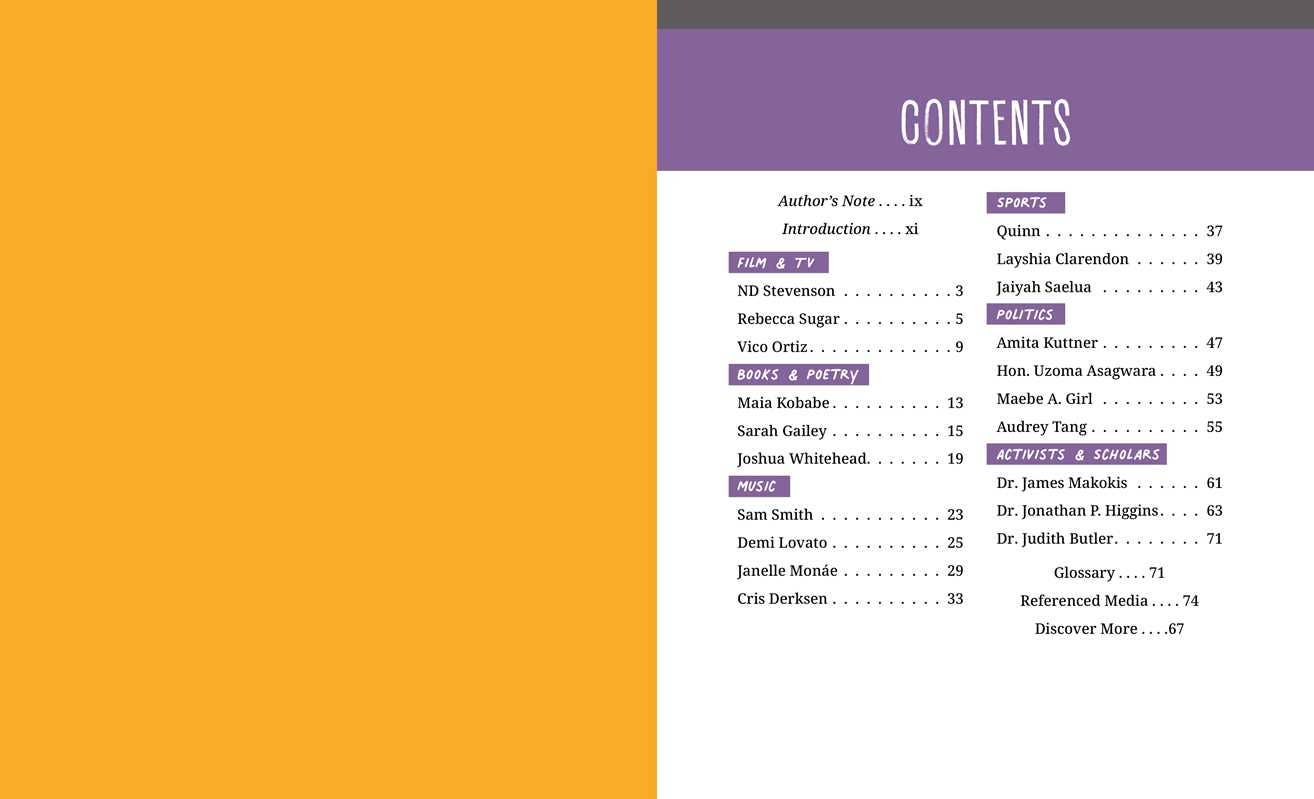
Beyond They/Them: 20 Influential Nonbinary and Gender-Diverse People You Should Know
$21.99
Unit price perBeyond They/Them: 20 Influential Nonbinary and Gender-Diverse People You Should Know
$21.99
Unit price perBeyond They/Them is a captivating, gorgeously illustrated book celebrating 20 trailblazing nonbinary, genderqueer, and two-spirit individuals who have left an indelible mark on music, sports, film and television, politics, and more.
Explore 20 biographies of game-changing and noteworthy nonbinary people of diverse backgrounds and in a wide variety of industries. Beyond They/Them: 20 Influential Nonbinary People You Should Know is a fully illustrated guide to celebrities, activists, musicians, and other influential people of various identities across the nonbinary spectrum. Complete with beautiful illustrations by the talented artist Cameron Mukwa and written by Em Dickson, this book is a celebration of nonbinary joy and proves that there has been, and always will be, a place for people of all genders.
Featured individuals include:
* ND Stevenson
* JanelleMonáe
* Rebecca Sugar
* Maia Kobabe
* Sarah Gailey
* Joshua Whitehead
* Quinn
* Layshia Clarendon
* Jaiyah Saelua
* Vico Ortiz
* Sam Smith
* Demi Lovato
* Cris Derksen
* Amita Kuttner
* Uzomo Asagwara
* Maebe A. Girl
* Audrey Tang
* Dr. James Makokis
* Dr. Jonathan P. Higgins
* Judith Butler
Essential Reading for Pride: Selected as a Favorite LGBTQ+ Book for Adults by People Magazine
A provocative, eye-opening, and original book on the science of sexuality beyond gender from an internationally bestselling psychologist.
For psychological scientist and bestselling author Dr. Julia Shaw, the dearth of information on bisexuality was crushing, so she dug deep and found a colorful and fascinating world that she could help bring out of the shadows.
In Bi: The Hidden Culture, History, and Science of Bisexuality, Shaw explores all that we know about the world’s largest sexual minority through a personal journey that starts with her own openly bisexual identity and celebrates the resilience and beautiful diversity of the bi community. This rigorous and entertaining book will challenge us to think deeper about who we are and how we love.
Significant strides have been made in the movement for LGBTQ+ rights, visibility, and empowerment, but the conversation is far from over.
My partner doesn't believe I'm bisexual, what should I do?
How should I approach sex with someone of a different gender for the first time?
Can I reconcile being bisexual with wanting a biological child?
Identifying as bisexual can be a pretty confusing experience - navigating experimentation versus orientation, at times presenting as a straight-passing member of a queer community, at other times having people discredit your attraction to multiple genders. Lewis Oakley, creator of the Ask A Bi Dad column, knows every trick in the book - and he's here to answer your most burning questions...
Warm, chatty, wise and startlingly honest - this is your new bi bible.
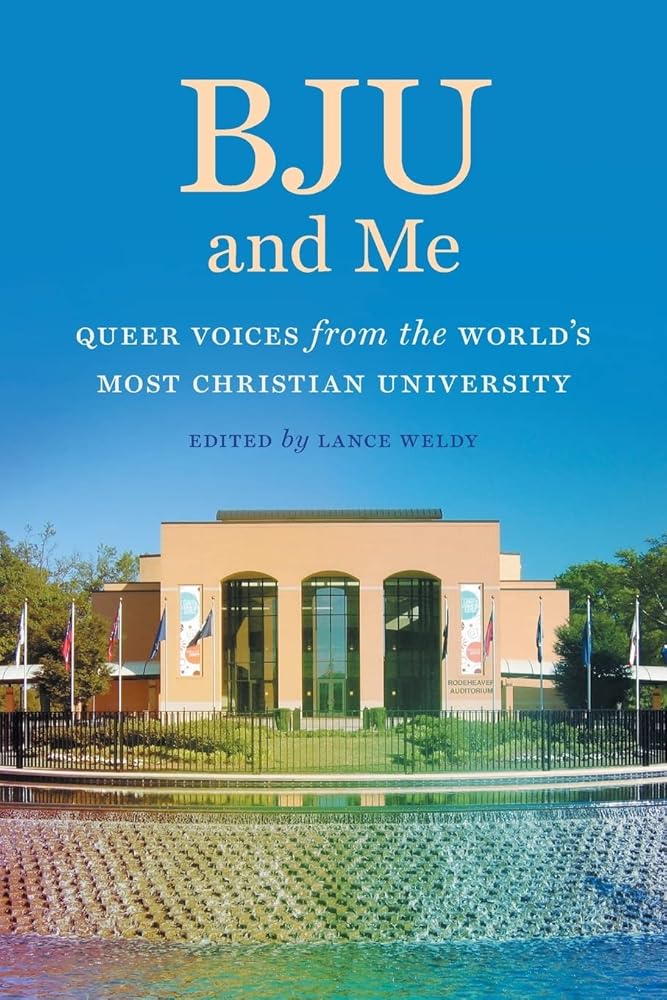
Bob Jones University is a Christian, fundamentalist, nondenominational liberal arts school in Greenville, South Carolina. BJU was founded in 1927 by Christian evangelist Bob Jones Sr., who was against the secularization of higher education and the influence of religious liberalism in denominational colleges. For most of the twentieth century, BJU branded itself as the “World’s Most Unusual University” because of its separatist culture. Many BJU students come from fundamentalist communities and are aware of BJU’s strict rules and conservative lifestyle. So why would queer students enroll at BJU?
A former queer student of BJU himself, Lance Weldy has come to terms with his own involvement with the institution and has reached out to other queer students to help represent the range of queer experience in this restrictive atmosphere. BJU and Me: Queer Voices from the World’s Most Christian University provides behind-the-scenes explanations from nineteen former BJU students from the past few decades who now identify as LGBT+. They write about their experiences, reflect on their relationships with a religious institution, and describe their vulnerability under a controlling regime.
Some students hid their sexuality and graduated under the radar; others transferred to other schools but faced reparative therapy elsewhere; some endured mandatory counseling sessions on campus; while still others faced incredible obstacles after being outed by or to the BJU administration. These students give voices to their queer experiences at BJU and share their unique stories, including encounters with internal and/or external trauma and their paths to self-validation and recovery. Often their journeys led them out of fundamentalism and the BJU network entirely.
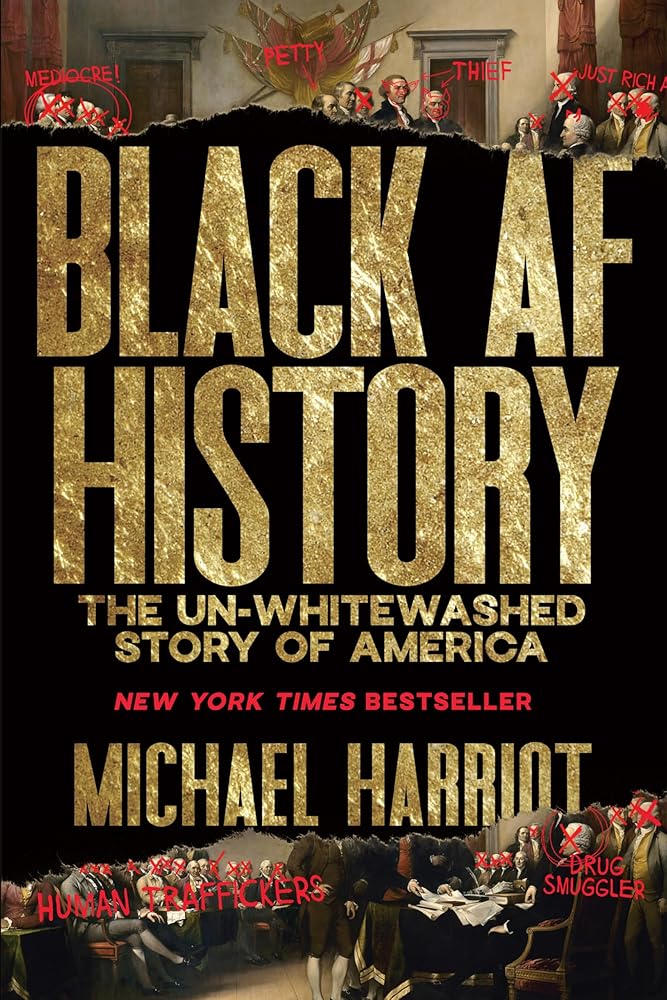
NEW YORK TIMES BESTSELLER * NAACP IMAGE AWARD NOMINEE * AMAZON'S TOP 20 HISTORY BOOKS OF 2023 * B&N BEST OF EDUCATIONAL HISTORY * THE ROOT'S BEST BOOKS OF 2023 * CHICAGO PUBLIC LIBRARY FAVORITE BOOKS OF 2023
From acclaimed columnist and political commentator Michael Harriot, a searingly smart and bitingly hilarious retelling of American history that corrects the record and showcases the perspectives and experiences of Black Americans.
America’s backstory is a whitewashed mythology implanted in our collective memory. It is the story of the pilgrims on the Mayflower building a new nation. It is George Washington’s cherry tree and Abraham Lincoln’s log cabin. It is the fantastic tale of slaves that spontaneously teleported themselves here with nothing but strong backs and negro spirituals. It is a sugarcoated legend based on an almost true story.
It should come as no surprise that the dominant narrative of American history is blighted with errors and oversights—after all, history books were written by white men with their perspectives at the forefront. It could even be said that the devaluation and erasure of the Black experience is as American as apple pie.
In Black AF History, Michael Harriot presents a more accurate version of American history. Combining unapologetically provocative storytelling with meticulous research based on primary sources as well as the work of pioneering Black historians, scholars, and journalists, Harriot removes the white sugarcoating from the American story, placing Black people squarely at the center. With incisive wit, Harriot speaks hilarious truth to oppressive power, subverting conventional historical narratives with little-known stories about the experiences of Black Americans. From the African Americans who arrived before 1619 to the unenslavable bandit who inspired America’s first police force, this long overdue corrective provides a revealing look into our past that is as urgent as it is necessary. For too long, we have refused to acknowledge that Americanhistory is white history. Not this one. This history is Black AF.

A longtime educator explores how the study of Black history challenges our understanding of race, nation, and the stories we tell about who we are.
Black history is under attack from powerful forces that seek to excise it from classrooms, libraries, and the popular imagination. Yet its opponents fail to understand a simple truth: the best education challenges our assumptions, helps us see larger forces at work, and gives us glimpses of alternate futures.
In Black History Is for Everyone, Brian Jones offers a meditation on the power of Black history, using his own experiences as a lifelong learner and classroom teacher to question everything—from the radicalism of the American Revolution to the meaning of “race” and “nation.”
With warmth and immersive storytelling, Jones encourages us to delve deeper into our collective history, explores how curiosity about our world is essential—and reminds us that with stakes so high, the effort is worth it.


Longtime NBC News reporter Char Adams writes a deeply compelling and rigorously reported history of Black political movements told through the lens of Black-owned bookstores, which have been centers for organizing from abolition to the Civil Rights Movement to Black Lives Matter.
In Black-Owned, Char Adams celebrates the living history of Black bookstores. Packed with stories of activism, espionage, violence, community, and perseverance, Black-Owned starts with the first Black-owned bookstore, which an abolitionist opened in New York in 1834, and after the bookshop’s violent demise, Black book-lovers carried on its cause. In the twentieth century, civil rights and Black Power activists started a Black bookstore boom nationwide. Malcolm X gave speeches in front of the National Memorial African Book Store in Harlem—a place dubbed “Speakers’ Corner”—and later, Black bookstores became targets of FBI agents, police, and racist vigilantes. Still, stores continued to fuel Black political movements.
Amid these struggles, bookshops were also places of celebration: Eartha Kitt and Langston Hughes held autograph parties at their local Black-owned bookstores. Maya Angelou became the face of National Black Bookstore Week. And today a new generation of Black activists is joining the radical bookstore tradition, with rapper Noname opening her Radical Hood Library in Los Angeles and several stores making national headlines when they were overwhelmed with demand in the Black Lives Matter era. As Adams makes clear, in an time of increasing repression, Black bookstores are needed now more than ever.
Full of vibrant characters and written with cinematic flair, Black-Owned is an enlightening story of community, resistance, and joy.

An urgent and accessible handbook for peaceful protesters, activists, and community organizers—anyone trying to defend their rights, hold their government accountable, or change the world
Blueprint for Revolution will teach you how to
• make oppression backfire by playing your opponents’ strongest card against them
• identify the “almighty pillars of power” in order to shift the balance of control
• dream big, but start small: learn how to pick battles you can win
• listen to what people actually care about in order to incorporate their needs into your revolutionary vision
• master the art of compromise to bring together even the most disparate groups
• recognize your allies and view your enemies as potential partners
• use humor to make yourself heard, defuse potentially violent situations, and “laugh your way to victory”
Praise for Blueprint for Revolution
“The title is no exaggeration. Otpor’s methods . . . have been adopted by democracy movements around the world. The Egyptian opposition used them to topple Hosni Mubarak. In Lebanon, the Serbs helped the Cedar Revolution extricate the country from Syrian control. In Maldives, their methods were the key to overthrowing a dictator who had held power for thirty years. In many other countries, people have used what Canvas teaches to accomplish other political goals, such as fighting corruption or protecting the environment.”—The New York Times
“A clear, well-constructed, and easily applicable set of principles for any David facing any Goliath (sans slingshot, of course) . . . By the end of Blueprint, the idea that a punch is no match for a punch line feels like anything but a joke.”—The Boston Globe
“An entertaining primer on the theory and practice of peaceful protest.”—The Guardian
“With this wonderful book, Srdja Popovic is inspiring ordinary people facing injustice and oppression to use this tool kit to challenge their oppressors and create something much better. When I was growing up, we dreamed that young people could bring down those who misused their power and create a more just and democratic society. For Srdja Popovic, living in Belgrade in 1998, this same dream was potentially a much more dangerous idea. But with an extraordinarily courageous group of students that formed Otpor!, Srdja used imagination, invention, cunning, and lots of humor to create a movement that not only succeeded in toppling the brutal dictator Slobodan Milošević but has become a blueprint for nonviolent revolution around the world. Srdja rules!”—Peter Gabriel
“Blueprint for Revolution is not only a spirited guide to changing the world but a breakthrough in the annals of advice for those who seek justice and democracy. It asks (and not heavy-handedly): As long as you want to change the world, why not do it joyfully? It’s not just funny. It’s seriously funny. No joke.”—Todd Gitlin, author of The Sixties and Occupy Nation

From erotic labor, to the rights of people who use psychoactive substances, to reproductive health and carcerality—we are living through a political moment when debates about bodily autonomy are at a fever pitch.
Body Autonomy: Decolonizing Sex Work and Drug Use is a bold and timely collection that confronts these charged issues at the intersection of social justice and public health. It reveals the histories behind the United State's ideological wars and illustrates their costs to all of us. It is a primer on healing-centered harm reduction, which presents a visionary framework and set of practical strategies to advance unity and care while working to transform conditions for communities that bear the brunt of interpersonal and systemic violence, overdose deaths, and health inequities. In the words of leading advocates, service providers, and the scholars whose lives and communities have been harmed by American neo-colonial policies, Body Autonomy offers promising, healing-centered interventions that represent a critical culture shift.
This collection features trusted voices on health and social policy reform, including Kate D'Adamo, Justice Rivera, Ismail Ali, Paula Kahn, and Sasanka Jinadasa, as well as respected healers like Richael Faithful, Amira Barakat Al-Baladi, and Mona Knotte. The articles, interviews, worksheets, and poems within are an offering to expand our collective understanding of survival, healing, and embodied freedom. Body Autonomy is a must read for anyone with a compassionate worldview, people seeking to know more about underground economies, and those who know that punishment doesn't lead to security. It is a liberatory design and a prayer for what's possible.

**A 2024 LAMBDA LITERARY AWARD FINALIST**
“Zachary Zane is one of the best sex writers working today.” —Dan Savage, New York Times bestselling author
Named a Most Anticipated LGBTQ+ Book of the Year by Buzzfeed
A sex and relationship columnist bares it all in a series of essays—part memoir, part manifesto—that explore the author’s coming-of-age and coming out as a bisexual man and move toward embracing and celebrating sex unencumbered by shame.
As a boy, Zachary Zane sensed that all was not right when images of his therapist naked popped into his head. Without an explanation as to why, a deep sense of shame pervaded these thoughts. Though his therapist assured him a little imagination was nothing to be ashamed of, over the years, society told him otherwise.
Boyslut is a series of personal and tantalizing essays that articulate how our society still shames people for the sex that they have and the sexualities that they inhabit. Through the lens of his bisexuality and much self-described sluttiness, Zane breaks down exactly how this sexual shame negatively impacts the sex and relationships in our lives, and through personal experience, shares how we can unlearn the harmful, entrenched messages that society imparts to us.
From stories of drug-fueled threesomes and risqué Grindr hookups to insights on dealing with rejection and living with his boyfriend and his boyfriend’s wife, Boyslut is reassuring and often painfully funny—but is most potently a testimony that we can all learn to live healthier lives unburdened by stigma.
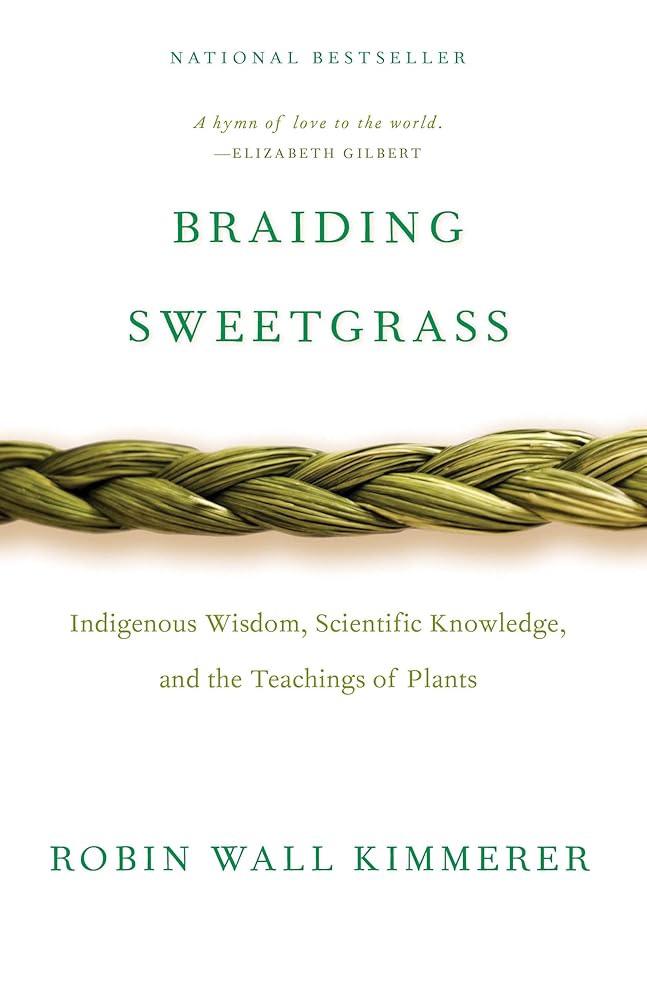
Braiding Sweetgrass: Indigenous Wisdom, Scientific Knowledge and the Teachings of Plants
$22.00
Unit price perBraiding Sweetgrass: Indigenous Wisdom, Scientific Knowledge and the Teachings of Plants
$22.00
Unit price perA New York Times Bestseller
A Washington Post Bestseller
Named a "Best Essay Collection of the Decade" by Literary Hub
As a botanist, Robin Wall Kimmerer has been trained to ask questions of nature with the tools of science. As a member of the Citizen Potawatomi Nation, she embraces the notion that plants and animals are our oldest teachers. In Braiding Sweetgrass, Kimmerer brings these two lenses of knowledge together to take us on “a journey that is every bit as mythic as it is scientific, as sacred as it is historical, as clever as it is wise” (Elizabeth Gilbert).
Drawing on her life as an indigenous scientist, and as a woman, Kimmerer shows how other living beings―asters and goldenrod, strawberries and squash, salamanders, algae, and sweetgrass―offer us gifts and lessons, even if we've forgotten how to hear their voices. In reflections that range from the creation of Turtle Island to the forces that threaten its flourishing today, she circles toward a central argument: that the awakening of ecological consciousness requires the acknowledgment and celebration of our reciprocal relationship with the rest of the living world. For only when we can hear the languages of other beings will we be capable of understanding the generosity of the earth, and learn to give our own gifts in return.

"A must-read, an antidote to powerlessness, a literary companion for the ages."
–Michelle Tea, author of Against Memoir
"Editors' Choice"
–New York Times Book Review
A comprehensive collection of feminist manifestos, chronicling rage and dreams from the nineteenth century to the present day
A landmark collection spanning two centuries and four waves of feminist activism and writing, Burn It Down! is a testament to what is possible when women are driven to the edge. The manifesto—raging, demanding, quarreling and provocative—has always been central to feminism, and it’s the angry, brash feminism we need now.
Collecting over seventy-five manifestos from around the world, Burn It Down! is a rallying cry and a call to action. Among this confrontational sisterhood, you’ll find the Dyke Manifesto by the Lesbian Avengers, The Ax Tampax Poem Feministo by the Bloodsisters Project, The Manifesto of Apocalyptic Witchcraft by Peter Grey, Simone de Beauvoir’s pro-abortion Manifesto of the 343, Double Jeopardy: To Be Black and Female by Frances M. Beal, and many more.
Feminist academic and writer Breanne Fahs argues that we need manifestos in all their urgent rawness, for it is at the bleeding edge of rage and defiance that new ideas are born.