Sort by:
882 of 1932 products
882 of 1932 products
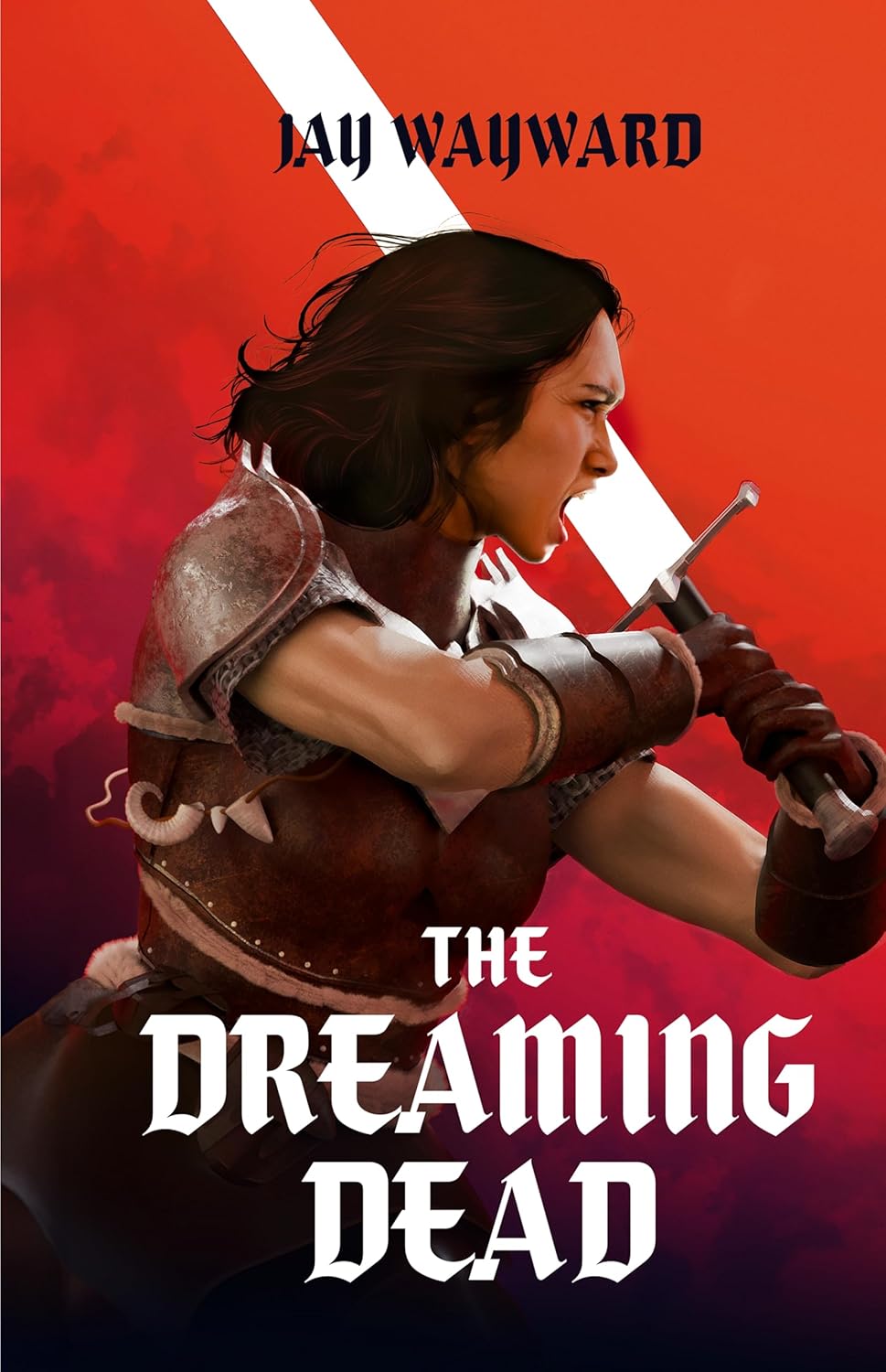
Keno Sif is a marauder who has made her name killing, drinking, and breaking hearts across the vast continent of Atlas. Together with her mentor Buri the Giant, and the master thief Ivon, their combined bounties have an army of mercenaries dogging their every waking moment.
After a reckless escape lands them among the ruins of a lost kingdom, Sif begins to suffer from nightmares calling her to the sunken city of Agartha, said to be the resting place of both horrific tragedy and priceless treasure. Maybe enough treasure to escape arrest for good.
Decades later, Sif has retreated into the snowy mountains of her homeland, wanting only to be left in peace. But when she is forced to defend a cursed girl named Najah from a common enemy, Sif realizes that the only way to protect her solitary life is by accompanying the girl back into a world she'd hoped to forget. The closer they get to unraveling Najah's curse, the more Sif's memories of Agartha call to her.
It seems all roads lead back to that city at the end of the world, and the horrors Sif left there decades ago.
The Dreaming Dead is a queer dark fantasy about finding your place with the family you choose, and finding your purpose even after the world has cast you aside.
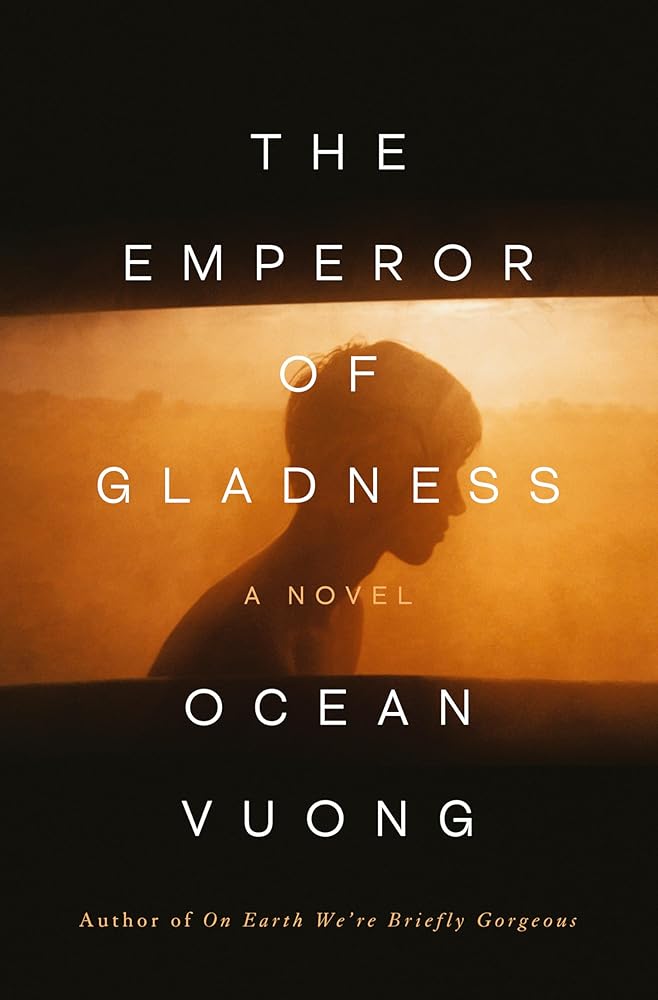
The instant New York Times bestseller • Oprah’s Book Club Pick • Ocean Vuong returns with a bighearted novel about chosen family, unexpected friendship, and the stories we tell ourselves in order to survive
“Stunning . . . A heartfelt and powerful examination of those living on the fringes of society, and the unique challenges they face to survive and thrive.” —Oprah Winfrey
“Magnificent . . . In writing this book, Vuong may have joined the ranks of an elite few great novelists.” —Leigh Haber, Los Angeles Times
The hardest thing in the world is to live only once…
One late summer evening in the post-industrial town of East Gladness, Connecticut, nineteen-year-old Hai stands on the edge of a bridge in pelting rain, ready to jump, when he hears someone shout across the river. The voice belongs to Grazina, an elderly widow succumbing to dementia, who convinces him to take another path. Bereft and out of options, he quickly becomes her caretaker. Over the course of the year, the unlikely pair develops a life-altering bond, one built on empathy, spiritual reckoning, and heartbreak, with the power to transform Hai’s relationship to himself, his family, and a community on the brink.
Following the cycles of history, memory, and time, The Emperor of Gladness shows the profound ways in which love, labor, and loneliness form the bedrock of American life. At its heart is a brave epic about what it means to exist on the fringes of society and to reckon with the wounds that haunt our collective soul. Hallmarks of Ocean Vuong’s writing—formal innovation, syntactic dexterity, and the ability to twin grit with grace through tenderness—are on full display in this story of loss, hope, and how far we would go to possess one of life’s most fleeting mercies: a second chance.

A plan for transitioning to a more sustainable world--while keeping the economy afloat
Ulrike Hermann is an economics correspondent whose books on social and economic policy issues are bestsellers in Germany. Here--translated by journalist and international broadcaster David Shaw--Ulrike explores how we might manage to transition to a more sustainable world without the collapse of the economy.
The End of Capitalism tells the story of Capitalism--from its beginnings in 1760 England, where textiles manufacturers had the idea to replace human workers with machines--and what it really means for the world when individual profits overshadow communal and environmental needs.
Hermann makes an argument for a "circular economy," an economy where only what can be recycled is consumed. We know by now the ruinous effects of Capitalism on the climate and environment. While we hear that "green growth" is meant to be the savior, Ulrike argues that we need "green shrinkage" instead.
Her example for a solution is the British war economy of the 1940s. This is not a utopian scenario (it would involve personal restrictions and government planning) but a comprehensive example of how resources can be diverted.
An interesting and important read for serious thinkers who hope to upend Capitalism, The End of Capitalism offers a realistic alternative from an expert in the field. Readers of Rebecca Solnit, Naomi Klein and Rutgar Bregman; progressive-minded readers; and anyone interested in a different future should read this.
The translation of this book was supported by a grant from the Goethe-Institut.
The classic guide to love, sex, and intimacy beyond the limits of conventional monogamy has been fully updated to reflect today’s modern attitudes and the latest information on nontraditional relationships.
“One of the most useful relationship books you could ever read, no matter what your lifestyle choices. It’s chock-full of great information about communication, jealousy, asking for what you want, and maintaining a relationship with integrity.”—Annie Sprinkle, PhD, sexologist and author of Dr. Sprinkle’s Spectacular Sex
For 20 years The Ethical Slut—widely known as the “Poly Bible”—has dispelled myths and showed curious readers how to maintain a successful polyamorous lifestyle through open communication, emotional honesty, and safer sex practices. The third edition of this timeless guide to the ethics of relationships, communication, and sex has been revised to include:
• Interviews with poly millennials (young people who have grown up without the prejudices their elders encountered regarding gender, orientation, sexuality, and relationships)
• Tributes to polyamory pioneers
• Tools for conflict resolution and instructions on how to improve interpersonal dynamics
• New sidebars on topics such as asexuality, sex workers, LGBTQ terminology, and ways polys can connect and thrive
The authors also include new content addressing nontraditional relationships beyond the polyamorous paradigm of “more than two”: couples who don't live together, couples who don't have sex with each other, nonparallel arrangements, couples with widely divergent sex styles, power disparities, and cross-orientation relationships, while utilizing nonbinary gender language and new terms that have come into common usage since the last edition.

A mysterious figure. A dead televangelist. A series of bizarre rituals.
Margo has spent most of her life without a family, and with a telekinetic gift she can't quite explain. Since losing her mother less than a year ago, she's felt more alone than ever. When her fiancé Sam takes her to his remote Iowa hometown to meet his family and begin planning their wedding, Margo finally begins to feel like she's home. But the feeling doesn't last long, and Margo soon feels out of place among her future in-laws. Sam's family is different from what she'd expected. Not only is their obsession with a deceased televangelist unsettling, but Margo has begun seeing a strange, mysterious figure from her past—a figure that she thought was put to rest with her mother's passing.
As Sam's family begins to take over the wedding plans, Margo tries to regain some control by turning to the town's sole wedding planner, who soon becomes her only confidant, perhaps because she reminds Margo of her former love. But the more Margo tries to distance her past from her future with Sam, the deeper his family pulls her in, forcing upon her generationally archaic traditions that border on ritualistic. As Margo unearths the family's dark web of secrets, she begins to suspect that she may have been brought here for a reason, and it may cost her her life.
In the psychologically unsettling vein of I'm Thinking of Ending Things and The Women in the Dark, combined with the socially aware suspense of Get Out, The Ever End takes elevated horror to a new level with a queer, twisted, feminist story that will keep readers guessing until the end, and stay with them long after that.

DELUXE EDITION―a beautiful hardcover edition featuring dark teal sprayed edges, a foil stamp on the casing, and full-page illustrations!
From Alix E. Harrow, the New York Times bestselling author of Starling House, comes a moving and genre-defying quest about the lady-knight whose legend built a nation, and the cowardly historian sent back through time to make sure she plays her part–even if it breaks his heart.
Sir Una Everlasting was Dominion’s greatest hero: the orphaned girl who became a knight, who died for queen and country. Her legend lives on in songs and stories, in children’s books and recruiting posters―but her life as it truly happened has been forgotten.
Centuries later, Owen Mallory―failed soldier, struggling scholar―falls in love with the tale of Una Everlasting. Her story takes him to war, to the archives―and then into the past itself. Una and Owen are tangled together in time, bound to retell the same story over and over again, no matter what it costs.
But that story always ends the same way. If they want to rewrite Una’s legend―if they want to tell a different story--they’ll have to rewrite history itself.
“Alix E. Harrow is a fantasy author who just does not miss.” ―Paste Magazine
A LEGEND. A LIE. A LOVE STORY.
"Alix E. Harrow is an exceptional, undeniable talent." ―Olivie Blake, New York Times bestselling author of The Atlas Six
An utter masterpiece…I loved every single page. ―Rachel Gillig, New York Times and USA Today bestselling author of One Dark Window
Over twenty-two months in 1979 and 1981 nearly two dozen children were unspeakably murdered in Atlanta despite national attention and outcry; they were all Black. James Baldwin investigated these murders, the Black administration in Atlanta, and Wayne Williams, the Black man tried for the crimes. Because there was only evidence to convict Williams for the murders of two men, the children's cases were closed, offering no justice to the families or the country. Baldwin's incisive analysis implicates the failures of integration as the guilt party, arguing, "There could be no more devastating proof of this assault than the slaughter of the children."
As Stacey Abrams writes in her foreword, "The humanity of black children, of black men and women, of black lives, has ever been a conundrum for America. Forty years on, Baldwin's writing reminds us that we have never resolved the core query: Do black lives matter? Unequivocally, the moral answer is yes, but James Baldwin refuses such rhetorical comfort." In this, his last book, by excavating American race relations Baldwin exposes the hard-to-face ingrained issues and demands that we all reckon with them.
![The Explosive Child [Sixth Edition]: A New Approach for Understanding and Parenting Easily Frustrated, Chronically Inflexible Children](http://queerhavenbooks.com/cdn/shop/files/34bf90f60e05b8eadf33ca7650810e25db867130971c6733f10767eeb2490717.jpg?v=1753376436&width=1500)
![The Explosive Child [Sixth Edition]: A New Approach for Understanding and Parenting Easily Frustrated, Chronically Inflexible Children cover image](http://queerhavenbooks.com/cdn/shop/files/9780063092464.jpg?v=1755707687&width=1500)
Now in a revised and updated 6th edition, the groundbreaking, research-based approach to understanding and parenting children who frequently exhibit severe fits of temper and other challenging behaviors, from a distinguished clinician and pioneer in the field.
What’s an explosive child? A child who responds to routine problems with extreme frustration—crying, screaming, swearing, kicking, hitting, biting, spitting, destroying property, and worse. A child whose frequent, severe outbursts leave his or her parents feeling frustrated, scared, worried, and desperate for help. Most of these parents have tried everything-reasoning, explaining, punishing, sticker charts, therapy, medication—but to no avail. They can’t figure out why their child acts the way he or she does; they wonder why the strategies that work for other kids don’t work for theirs; and they don’t know what to do instead.
Dr. Ross Greene, a distinguished clinician and pioneer in the treatment of kids with social, emotional, and behavioral challenges, has worked with thousands of explosive children, and he has good news: these kids aren’t attention-seeking, manipulative, or unmotivated, and their parents aren’t passive, permissive pushovers. Rather, explosive kids are lacking some crucial skills in the domains of flexibility/adaptability, frustration tolerance, and problem solving, and they require a different approach to parenting.
Throughout this compassionate, insightful, and practical book, Dr. Greene provides a new conceptual framework for understanding their difficulties, based on research in the neurosciences. He explains why traditional parenting and treatment often don’t work with these children, and he describes what to do instead. Instead of relying on rewarding and punishing, Dr. Greene’s Collaborative Problem Solving model promotes working with explosive children to solve the problems that precipitate explosive episodes, and teaching these kids the skills they lack.
The Faggots and Their Friends Between Revolutions is a beloved queer utopian text written by Larry Mitchell with lush illustrations by Ned Asta, published by Calamus Press in 1977. Part-fable, part-manifesto, the book takes place in Ramrod, an empire in decline, and introduces us to the communities of the faggots, the women, the queens, the queer men, and the women who love women who are surviving the ways and world of men. Cherished by many over the four decades since its publication, The Faggots and Their Friends Between Revolutions offers a trenchant critique of capitalism, assimilation, and patriarchy that is deeply relevant today. This new edition will feature essays from performance artist Morgan Bassichis, who adapted the book to music with TM Davy in 2017 for a performance at the New Museum, and activist filmmaker Tourmaline.

“Being the killjoy is often a joy unto itself, and Ahmed shows us how to embrace it in all its liberatory glory” (Ms. magazine)
Do you refuse to laugh at offensive jokes? Have you ever been accused of ruining dinner by pointing out your companion’s sexist comment? Are you often told to stop being so “woke”? If so, you might be a feminist killjoy—and this handbook is for you. In this book, feminist theorist Sara Ahmed shows how killing joy can be a radical world-making project.
Presenting sharp analysis of literature, film, and influential feminist works, and drawing on her own experiences as a queer feminist scholar-activist of color, Ahmed reveals the invaluable lessons of the feminist killjoy, from the importance of asking questions to the power of the eye roll. The Feminist Killjoy Handbook offers an outstretched hand to feminist killjoys everywhere and an essential intellectual guide to the transformative power of getting in the way.

NATIONAL BESTSELLER • The book that galvanized the nation, gave voice to the emerging civil rights movementin the 1960s—and still lights the way to understanding race in America today. • "The finest essay I’ve ever read.” —Ta-Nehisi Coates
At once a powerful evocation of James Baldwin's early life in Harlem and a disturbing examination of the consequences of racial injustice, the book is an intensely personal and provocative document from the iconic author of If Beale Street Could Talk and Go Tell It on the Mountain. It consists of two "letters," written on the occasion of the centennial of the Emancipation Proclamation, that exhort Americans, both black and white, to attack the terrible legacy of racism.
Described by The New York Times Book Review as "sermon, ultimatum, confession, deposition, testament, and chronicle … all presented in searing, brilliant prose," The Fire Next Time stands as a classic of literature.

The New York Times bestseller, these groundbreaking essays and poems about race—collected by National Book Award winner Jesmyn Ward and written by the most important voices of her generation—are “thoughtful, searing, and at times, hopeful. The Fire This Time is vivid proof that words are important, because of their power to both cleanse and to clarify” (USA TODAY).
In this bestselling, widely lauded collection, Jesmyn Ward gathers our most original thinkers and writers to speak on contemporary racism and race, including Carol Anderson, Jericho Brown, Edwidge Danticat, Kevin Young, Claudia Rankine, and Honoree Jeffers. “An absolutely indispensable anthology” (Booklist, starred review), The Fire This Time shines a light on the darkest corners of our history, wrestles with our current predicament, and imagines a better future.
Envisioned as a response to The Fire Next Time, James Baldwin’s groundbreaking 1963 essay collection, these contemporary writers reflect on the past, present, and future of race in America. We’ve made significant progress in the fifty-odd years since Baldwin’s essays were published, but America is a long and painful distance away from a “post-racial society”—a truth we must confront if we are to continue to work towards change. Baldwin’s “fire next time” is now upon us, and it needs to be talked about; The Fire This Time “seeks to place the shock of our own times into historical context and, most importantly, to move these times forward” (Vogue).

In 1966 in Rabun County, Georgia, a group of high school English students created theFoxfire magazine, a literary journal that celebrated Appalachian stories, peoples, and culture. The publication was filled with poetry and prose from local students and authors and featured interviews with community members. These oral histories quickly became the focal point of the magazine and, eventually, the material that generated the multivolume Foxfire book series.
Now, pulled from the vast Foxfire archive comes the first volume in the series focused specifically on the lives of Appalachian women. These remarkable narratives illuminate a diverse regional culture held together by the threads that are woven between women and place, and through generations. Told sometimes with humor, sometimes with sadness, but always with a gripping rawness and honesty, the stories recount women's lived experiences from the 1960s to the present. The interviews cover work, family, and community, illuminating Cherokee, Black, and white women's experiences; changes in Appalachian culture; and the importance of relationships in daily life. Reading each interview in this book is almost like joining these women on their porches and in their homes as they take us on a journey through their lives. Taken together, the stories speak against regional stereotypes and offer instead a sampling of the many expressions of these women's strength.
“This is the history of the gay and lesbian movement that we’ve been waiting for.” —The Washington Post
The sweeping story of the struggle for gay and lesbian rights—based on amazing interviews with politicians, military figures, and members of the entire LGBT community who face these challenges every day.
The fight for gay and lesbian civil rights—the years of outrageous injustice, the early battles, the heart-breaking defeats, and the victories beyond the dreams of the gay rights pioneers—is the most important civil rights issue of the present day. In “the most comprehensive history to date of America’s gay-rights movement” (The Economist), Lillian Faderman tells this unfinished story through the dramatic accounts of passionate struggles with sweep, depth, and feeling.
The Gay Revolution begins in the 1950s, when gays and lesbians were criminals, psychiatrists saw them as mentally ill, churches saw them as sinners, and society victimized them with hatred. Against this dark backdrop, a few brave people began to fight back, paving the way for the revolutionary changes of the 1960s and beyond. Faderman discusses the protests in the 1960s; the counter reaction of the 1970s and early eighties; the decimated but united community during the AIDS epidemic; and the current hurdles for the right to marriage equality.
“A compelling read of a little-known part of our nation’s history, and of individuals whose stories range from heart-wrenching to inspiring to enraging to motivational” (Chicago Tribune), The Gay Revolution paints a nuanced portrait of the LGBT civil rights movement. A defining account, this is the most complete and authoritative book of its kind.

Is their real-life love story doomed to be a tragedy, or can they rewrite the ending?
London, 1883
Finely dressed and finely drunk, Charlie Price is a man dedicated to his vices. Chief among them is his explicit novel collection, though his impending marriage to a woman he can’t love will force his carefully curated collection into hiding.
Before it does, Charlie is determined to have one last hurrah: meeting his favorite author in person.
Miles Montague is more gifted as a smut writer than a shopkeep and uses his royalties to keep his flagging bookstore afloat. So when a cheerful dandy appears out of the mist with Miles's highly secret pen name on his pretty lips, Miles assumes the worst. But Charlie Price is no blackmailer; he’s Miles's biggest fan.
A scribbled signature on a worn book page sets off an affair as scorching as anything Miles has ever written. But Miles is clinging to a troubled past, while Charlie’s future has spun entirely out of his control…
Carina Adores is home to romantic love stories where LGBTQ+ characters find their happily-ever-afters.
Lucky Lovers of London
Book 1: The Gentleman's Book of Vices