
Sort by:
321 products
321 products

Shows how trans activists confront the intersections of white supremacy and transphobia
Trans Geographies of Joy charts the stories of trans activists in Atlanta, focusing particularly on people of color, to document how they confront the intersections of white supremacy and transphobia through their organizing. The volume offers insight into the oft-overlooked trans activist scene, particularly as political strategists and the broader news media struggle to make sense of newly-purple states like Georgia.
Elias Capello uncovers how trans activists create spaces to help them feel safe in the face of the violence they routinely encounter. He argues that colonialism, white supremacy, and cisnormativity are all connected through shame, designating cisgender bodies as "safe, secure, and sane.” Cisgender culture masks itself within whiteness to create a narrative of safety that prioritizes cisgender lives, all the while pathologizing, policing, and commodifying trans lives. Yet, as Capello illuminates, trans activists offer alternative narratives of safety, creating spaces of joy outside of cisnormativity’s colonial-based shame. The volume details how activists create art, spaces, and communities that help them flourish, illuminating trans pleasure and joy rather than focusing solely on the struggles trans people face.


Over the past few years, we have witnessed a growing wave of anti-LGBTQ+ bills and policies across the United States. According to the ACLU, in 2023 alone, 507 anti-LGBTQ bills were proposed in 47 states; among these, 84 have been passed into law.
The targets of many of these legislative attacks have been the most vulnerable among us—transgender and LGBTQ+ youth. From “Don’t Say Gay” laws to healthcare restrictions, anti-LGBTQ+ policies are impacting trans and queer youth in almost every sphere of their lives, including the medical care they can access, the sports teams they can play on, what they are allowed to talk about in the classroom, and the books they are allowed to check out from the library. The results of this discrimination are often deadly, with over half of transgender and non-binary youth seriously contemplating suicide, and many others falling victim to violent hate crimes inspired by this hostile climate.
Trans Kids, Our Kids: Stories and Resources from the Frontlines of the Movement for Transgender Youth shares the stories of transgender youth and their families, exploring the choices they are making to survive in today's environment. The book also gives voice to the medical providers who are providing care to transgender youth, as well as the activists, teachers and faith leaders who are leading the resistance efforts.
By contextualizing and sharing these stories, as well as offering resources and next steps, Trans Kids aims to both narrativize the pain and fear experienced by everyday Americans in this cultural moment, as well as highlighting the courage, hope, and resilience of transgender and LGBTQ+ youth, their families, and the people who support them.

Transgender History, Third Edition: A Resource for Today's Struggle―and Tomorrow's
$22.99
Unit price perTransgender History, Third Edition: A Resource for Today's Struggle―and Tomorrow's
$22.99
Unit price perThe groundbreaking guide to trans history in America, revised and updated for a new political era.
Transgender History is the modern classic on transgender life in America since the nineteenth century, encompassing the major movements, writings, and events that shape today’s gender revolution.
Susan Stryker’s sweeping, intersectional account charts more than a century of history, showing how rising acceptance in the 1960s and 2010s was met with waves of bigotry and intolerance that began in the ’70s and continue today.
Through her explanation of central concepts and terms, informative sidebars, and brief biographies of trans pioneers, Stryker reminds readers of one crucial truth: Transgender people have always been here. In good times and bad, they’ve built supportive and expansive communities, battled for freedom, and transformed American culture and society in the process.
Now completely revised and updated, including a longer, global history and a timely chronicle of the latest wave of anti-trans backlash, Transgender History remains both a vital resource and a powerful testament to the enduring legacy of trans lives.
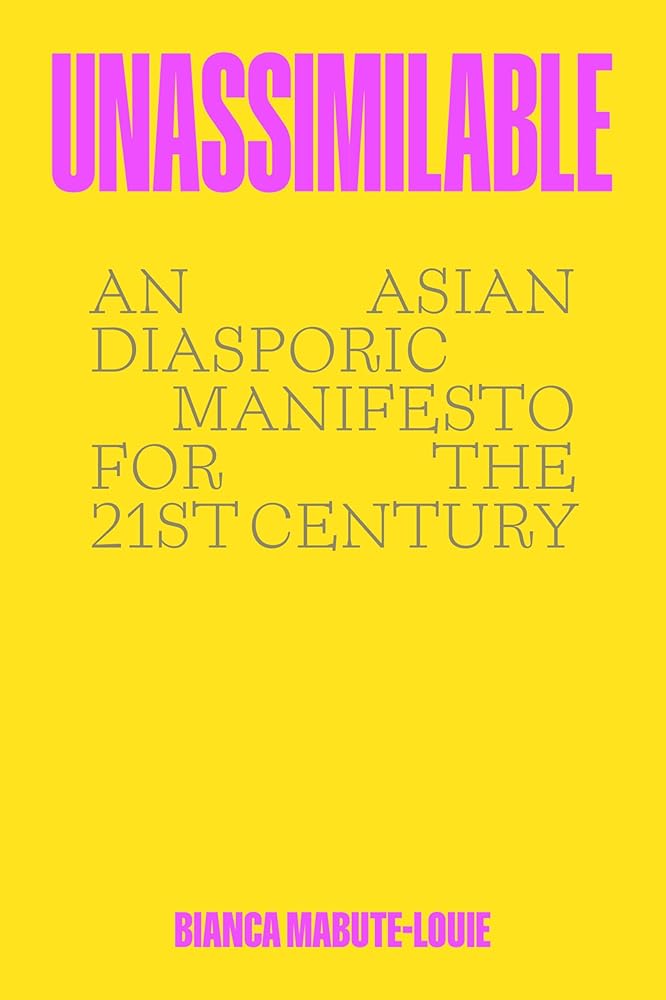
A scholar and activist’s brilliant socio-political examination of Asian Americans who refuse to assimilate and instead build their own belonging on their own terms outside of mainstream American institutions.
In this hard-hitting and deeply personal book, a combination of manifesto and memoir, scholar, sociologist, and activist Bianca Mabute-Louie transforms the ways we understand race, class, citizenship, and the concept of assimilation and its impact on Asian American communities from the nineteenth century to present day.
UNASSIMILABLE opens with a focus on the San Gabriel Valley (SGV), the first Asian ethnoburb in Los Angeles County and in the nation, where she grew up. A suburban neighborhood with a conspicuous Asian immigrant population, SGV thrives not because of its assimilation into Whiteness, but because of its unapologetic catering to its immigrant community.
Mabute-Louie then examines “Predominantly White Institutions With A lot of Asians” and how these institutions shape the racial politics of Asian Americans and Asian internationals, including the fight against affirmative action and the fight for ethnic studies. She moves on to interrogate the role of the religion, showing how the immigrant church is a sanctuary even as it is an extension of colonialism and the American Empire. In the book’s conclusion, Bianca looks to the future, boldly proposing a reconsideration of the term Asian American for a new label that better clarifies who Asians in America are today.
UNASSIMILABLE offers a radical vision of Asian American political identity informed by a refusal of Whiteness and collective care for each other. It is a forthright declaration against assimilation and in service of cross-racial, anti-imperialist solidarity and revolutionary politics. Scholarly yet accessible, informative and informed, this book is a major addition to Ethnic Studies and American Studies.

“Those who build walls are their own prisoners. I am going to go fulfill my proper function in the social organism. I’m going to go unbuild walls.”
―Ursula K. Le Guin, The Dispossessed
Drawing from over twenty years of activism on local and national levels, this striking book offers an organizer’s perspective on the intersections of immigrant rights, racial justice, and prison abolition.
In the wake of post-9/11 xenophobia, Obama’s record-level deportations, Trump’s immigration policies, and the 2020 uprisings for racial justice, the US remains entrenched in a circular discourse regarding migrant justice. As organizer Silky Shah argues in Unbuild Walls, we must move beyond building nicer cages or advocating for comprehensive immigration reform. Our only hope for creating a liberated society for all, she insists, is abolition.
Unbuild Walls dives into US immigration policy and its relationship to mass incarceration, from the last forty years up to the present, showing how the prison-industrial complex and immigration enforcement are intertwined systems of repression. Incorporating historical and legal analyses, Shah’s personal experience as an organizer, as well as stories of people, campaigns, organizations, and localities that have resisted detention and deportation, Shah assesses the movement’s strategies, challenges, successes, and shortcomings. Featuring a foreword by Amna A. Akbar, Unbuild Walls is an expansive and radical intervention, bridging the gaps between movements for immigrant rights, racial justice, and prison abolition.


Armed with only six passages in the Bible―often known as the "Clobber Passages"―the conservative Christian position has been one that stands against the full inclusion of our LGBTQ siblings. UnClobber reexamines each of those frequently quoted passages of Scripture, alternating with author Colby Martin's own story of being fired from an evangelical megachurch when they discovered his stance on sexuality.
UnClobber reexamines what the Bible says (and does not say) about homosexuality in such a way that sheds divine light on outdated and inaccurate assumptions and interpretations. This new edition equips study groups and congregations with questions for discussion and a sermon series guide for preachers.


Richard D. Wolff masterfully explains why Karl Marx’s analysis of class struggle is fundamental to a proper understanding of capitalism and explores how to build a more sustainable democratic society.
Class struggle is everywhere, and it influences everything and everyone in our society. Marx is the person who first explained this struggle systematically. For Marx, capitalism signified not the end of history, but rather the latest phase of human development that leads ordinary people to rid themselves of “all the muck of ages and become fitted to found society anew."
Marx’s theories are deeply prescient and relevant in our efforts to understand and cope with the crises of our time. Every day, we see more evidence that the capitalist system is both undermining itself and those whose labor it depends on, as Marx predicted.
Understanding Marxism is an essential resource for looking at the power and usefulness of Marx’s criticism of the capitalist economic system―and how we can move beyond it to a truly sustainable and democratic society based on workers’ self-management.

Socialism is a yearning for justice, community, and the greater realization of human potential. Cornel West calls it “the best accessible and reliable treatment we have of what socialism is, was, and should be.”
Understanding Socialism is a plainspoken text that disarms false narratives, confronts past failures, and offers a path to a fresh and modern understanding of socialism, by outlining what democracy in the workplace could look like.
Wolff not only explains what socialism is and has meant to its various proponents, he also looks at the transition from feudalism to capitalism as a model to help us visualize an evolution from our current socioeconomic state.
Understanding Socialism explores how socialist theory was used and applied to help shape the histories of countries such as Russia and China, and beyond. Wolff also analyzes the successes and defeats of those countries, the world's reactions to them, and how they offer important lessons for the building of a democratic, worker-controlled 21st-century socialism.

Addictions replace relationships, says Microcosm Publishing bestseller Dr. Faith, in her latest series of zines that use brain science and swearing that'll make you laugh, think, and take the practical steps you need to. If you would like to not be addicted anymore, then this zine walks you through the array of options, from total abstinence programs to the many shades of harm reduction and replacing your problem relationship with more positive things. Worth reading if you're struggling with addiction yourself or if you're wondering how to help someone else.






Sleep is so, so, so important! We spend a third of our lives doing it... well, ideally we do. In reality, we get far less sleep than our bodies and minds need. Microcosm Publishing bestseller Dr. Faith makes a strong case for upping our sleep game and gives an abundance of clinically-proven advice to help you sleep better. She also weighs in on the various drugs and potions out there that promise sleep assistance--some are terrible and others work alright but with some precautions. If you have problems sleeping, you'll likely find the recommendations you need here.
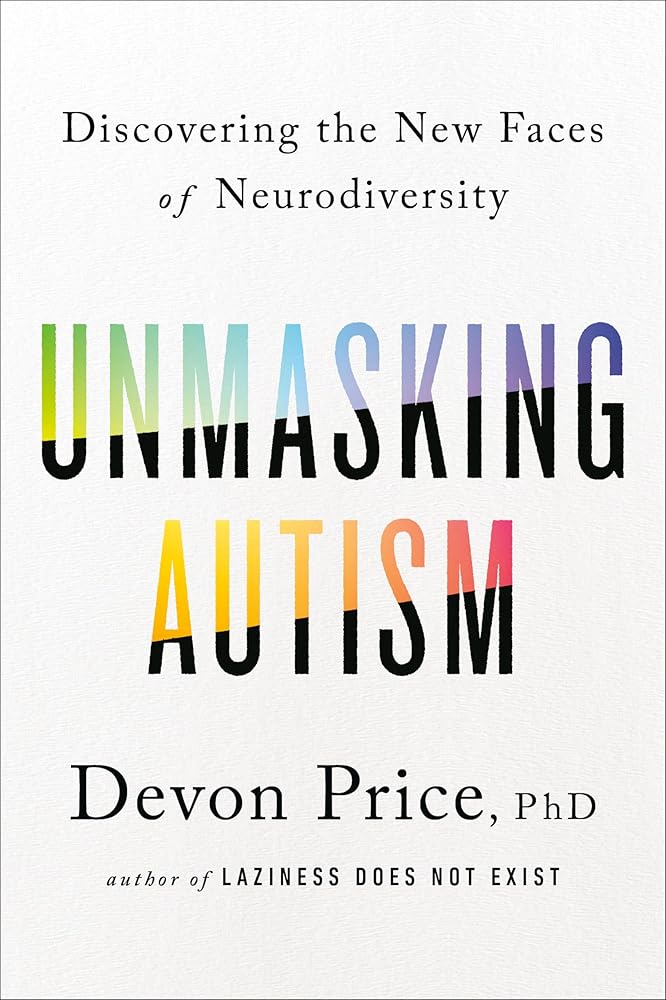
A deep dive into the spectrum of Autistic experience and the phenomenon of masked Autism, giving individuals the tools to safely uncover their true selves while broadening society’s narrow understanding of neurodiversity
“A remarkable work that will stand at the forefront of the neurodiversity movement.”—Barry M. Prizant, PhD, CCC-SLP, author of Uniquely Human: A Different Way of Seeing Autism
For every visibly Autistic person you meet, there are countless “masked” Autistic people who pass as neurotypical. Masking is a common coping mechanism in which Autistic people hide their identifiably Autistic traits in order to fit in with societal norms, adopting a superficial personality at the expense of their mental health. This can include suppressing harmless stims, papering over communication challenges by presenting as unassuming and mild-mannered, and forcing themselves into situations that cause severe anxiety, all so they aren’t seen as needy or “odd.”
In Unmasking Autism, Dr. Devon Price shares his personal experience with masking and blends history, social science research, prescriptions, and personal profiles to tell a story of neurodivergence that has thus far been dominated by those on the outside looking in. For Dr. Price and many others, Autism is a deep source of uniqueness and beauty. Unfortunately, living in a neurotypical world means it can also be a source of incredible alienation and pain. Most masked Autistic individuals struggle for decades before discovering who they truly are. They are also more likely to be marginalized in terms of race, gender, sexual orientation, class, and other factors, which contributes to their suffering and invisibility. Dr. Price lays the groundwork for unmasking and offers exercises that encourage self-expression, including:
• Celebrating special interests
• Cultivating Autistic relationships
• Reframing Autistic stereotypes
• And rediscovering your values
It’s time to honor the needs, diversity, and unique strengths of Autistic people so that they no longer have to mask—and it’s time for greater public acceptance and accommodation of difference. In embracing neurodiversity, we can all reap the rewards of nonconformity and learn to live authentically, Autistic and neurotypical people alike.