Sort by:
321 products
321 products

“Who would black women get to be if we did not have to create from a place of resistance?”
Hip Hop Womanist writer and theologian EbonyJanice’s book of essays center a fourth wave of Womanism, dreaming, the pursuit of softness, ancestral reverence, and radical wholeness as tools of liberation.
All The Black Girls Are Activists is a love letter to Black girls and Black women, asking and attempting to offer some answers to “Who would black women get to be if we did not have to create from a place of resistance?” by naming Black women’s wellness, wholeness, and survival as the radical revolution we have been waiting for.
About the Author: EbonyJanice is a dynamic lecturer, transformational speaker, passionate multi-faith preacher, and creative focused on Decolonizing Authority, Hip Hop Scholarship, Womanism as a Political and Spiritual/Religious tool for Liberation, Blackness as Religion, Dialogue as central to professional development and personal growth, and Women and Gender Studies focused on black girlhood.
EbonyJanice holds a B.A. in Cultural Anthropology and Political Science and a Master of Arts in Social Change with a concentration in Spiritual Leadership, Womanist Theology, and Racial Justice. She is the founder of Black Girl Mixtape, a multi-platform safe think-space centering the intellectual and creative authority of black women in the form of a lecture series, an online learning institute, and a creative collaborative.
EbonyJanice is also the founder of Dream Yourself Free, a Spiritual Mentoring project focused on black women's healing, dreaming, ease, play, and wholeness as their activism and resistance work.

In her first nonfiction book in a decade, the #1 bestselling writer who taught millions of readers to live authentically (Eat Pray Love) and creatively (Big Magic) shows how to break free.
In 2000, Elizabeth Gilbert met Rayya. They became friends, then best friends, then inseparable. When tragedy entered their lives, the truth was finally laid bare: The two were in love. They were also a pair of addicts, on a collision course toward catastrophe.
What if your most beautiful love story turned into your biggest nightmare? What if the dear friend who taught you so much about your self-destructive tendencies became the unstable partner with whom you disastrously reenacted every one of them? And what if your most devastating heartbreak opened a pathway to your greatest awakening?
All the Way to the River is a landmark memoir that will resonate with anyone who has ever been captive to love—or to any other passion, substance, or craving – and who yearns, at long last, for liberation.

A mesmerizing firsthand account of the warping of American reality over the past decade as Donald Trump has risen to dominance—from a participatory witness who got so far inside the distortion field that it swallowed her whole.
Olivia Nuzzi spent a third of her life observing those in power. She became a reporter in 2014, when the political landscape began to reconfigure itself around a singular personality whom she was uniquely primed to understand. Over the next ten years, she used her access and eye for detail to chronicle his campaigns, trials, and government in blockbuster feature stories that drove the national conversation and propelled her to the heights of her profession.
Then, in 2024, her personal life collided with the public interest in a scandal that cost Nuzzi her job and reputation. Amid a full-blown tabloid frenzy, Nuzzi went quiet, drove west, and spent the next year in self-imposed exile at the edge of the country, where she wrote this searing and astonishingly clear-eyed account of what she—and we—have experienced over the last decade.
Nuzzi walked through hell and she took notes. The result is a brilliant and bracing reckoning with recent history from one of our sharpest political observers. Beginning in the present in California, and then turning her gaze back east and back in time, she crafts a dazzling mosaic of the Trump era: her many behind-the-scenes encounters with Trump himself, from their first meeting in Trump Tower to a wealth of revelatory conversations about his Hollywood aspirations, his dreams, his fears about being assassinated, and more; the life she led uneasily that skidded to a halt; the rise of digital surveillance and the decline of privacy; the normalization of political violence; and the collision of polarization with the democratization of information to sow doubt about every aspect of our reality.
American Canto is also a powerful personal history. Nuzzi’s account of growing up in working-class New Jersey as the child of alcoholics in the shadow of New York City and 9/11 is raw and moving. Her mother was angry, beautiful, and unpredictable. Her father, a loving man who supported his family as a sanitation worker, removed debris from Ground Zero. They both died young. A version of Nuzzi did, too. She approached this “kind of death” with the critical distance of a reporter. When interrogating her own mistakes, Nuzzi confesses, “I had trained my whole life in the battlefield of crisis.”
Despite her profession, Olivia Nuzzi has never been interested in breaking news. American Canto is not a memoir, nor a tell-all, nor a book about the president. Instead, it is something more artful and more interesting—a character study of a nation undergoing radical transformation in real time. It seeks to reframe our understanding of the history we are living through from the perspective of someone who observed it from within the kaleidoscope and now sees it clearly from the other side.

The first intersectional history of the Black and Native American struggle for freedom in our country that also reframes our understanding of who was Indigenous in early America
Beginning with pre-Revolutionary America and moving into the movement for Black lives and contemporary Indigenous activism, Afro-Indigenous historian Kyle T. Mays argues that the foundations of the US are rooted in antiblackness and settler colonialism, and that these parallel oppressions continue into the present. He explores how Black and Indigenous peoples have always resisted and struggled for freedom, sometimes together, and sometimes apart. Whether to end African enslavement and Indigenous removal or eradicate capitalism and colonialism, Mays show how the fervor of Black and Indigenous peoples calls for justice have consistently sought to uproot white supremacy.
Mays uses a wide-array of historical activists and pop culture icons, “sacred” texts, and foundational texts like the Declaration of Independence and Democracy in America. He covers the civil rights movement and freedom struggles of the 1960s and 1970s, and explores current debates around the use of Native American imagery and the cultural appropriation of Black culture. Mays compels us to rethink both our history as well as contemporary debates and to imagine the powerful possibilities of Afro-Indigenous solidarity.
Includes an 8-page photo insert featuring Kwame Ture with Dennis Banks and Russell Means at the Wounded Knee Trials; Angela Davis walking with Oren Lyons after he leaves Wounded Knee, SD; former South African president Nelson Mandela with Clyde Bellecourt; and more.

A 2023 Lambda Literary Award Finalist in Nonfiction
An Electric Literature “Most Anticipated LGBTQ+ Book of 2022” Selection
A love letter to the legendary Black and Latinx LGBTQ underground subculture, uncovering its abundant legacy and influence in popular culture.
What is Ballroom? Not a song, a documentary, a catchphrase, a TV show, or an individual pop star. It is an underground subculture founded over a century ago by LGBTQ African American and Latino men and women of Harlem. Arts-based and intersectional, it transcends identity, acting as a fearless response to the systemic marginalization of minority populations.
Ricky Tucker pulls from his years as a close friend of the community to reveal the complex cultural makeup and ongoing relevance of house and Ballroom, a space where trans lives are respected and applauded, and queer youth are able to find family and acceptance. With each chapter framed as a “category” (Vogue, Realness, Body, et al.), And the Category Is . . . offers an impressionistic point of entry into this subculture, its deeply integrated history, and how it’s been appropriated for mainstream audiences. Each category features an exclusive interview with fierce LGBTQ/POC Ballroom members—Lee Soulja, Benjamin Ninja, Twiggy Pucci Garçon, and more—whose lives, work, and activism drive home that very category.
At the height of public intrigue and awareness about Ballroom, thanks to TV shows like FX’s Pose, Tucker’s compelling narratives help us understand its relevance in pop culture, dance, public policy with regard to queer communities, and so much more. Welcome to the norm-defying realness of Ballroom.

A gripping account of one family’s battle to protect their daughter against transphobia and hate in contemporary America
Our country stands at a critical cultural crossroads, with a wave of anti-trans legislation emerging at unprecedented levels, targeting trans children, in particular, who face increasing stigmatization and erasure. Sim Butler’s And the Dragons Do Come is a poignant account of one family’s experience of parenting and supporting a trans child against this nightmarish backdrop.
In recent years, the Butler family faced an impossible reality in their home state of Alabama, where trans rights are increasingly under attack. Butler recounts their family’s struggles and sacrifices to protect their trans child against the barrage of state-sanctioned intolerance in the legal, educational, and health arenas.
Around the time she turned twelve, his daughter’s personal struggles became political fodder. Along with other trans kids, she was outlawed from playing sports and forbidden to use the girls’ bathroom. Another law made Butler and his wife felons for seeking trans-affirming health care for her. When her charter school was featured in several gubernatorial campaign ads, local community members began driving through the parking lot to yell at the trans kids.
Serving both as a compassionate story of one family’s struggle for acceptance and as a window onto a fraught issue that parents, grandparents, other family members, and friends are confronting across the nation, And the Dragons Do Come provides a firsthand perspective on the human cost of anti-trans sentiment.

2023 Lambda Literary Award Finalist, Lesbian Memoir/Biography
Named the BEST LGBTQ+ MEMOIR of 2022 by Book Riot
Named a New York Public Library Best Book of 2022
Weatherford Award finalist, nonfiction
“Commands your attention from the first page to the last word.” —Morgan Jerkins
“I’m glad this memoir exists . . . and I’m especially glad it’s so good.” —Vauhini Vara, New York Magazine
When Neema Avashia tells people where she’s from, their response is nearly always a disbelieving “There are Indian people in West Virginia?” A queer Asian American teacher and writer, Avashia fits few Appalachian stereotypes. But the lessons she learned in childhood about race and class, gender and sexuality continue to inform the way she moves through the world today: how she loves, how she teaches, how she advocates, how she struggles.
Another Appalachia examines both the roots and the resonance of Avashia’s identity as a queer desi Appalachian woman, while encouraging readers to envision more complex versions of both Appalachia and the nation as a whole. With lyric and narrative explorations of foodways, religion, sports, standards of beauty, social media, gun culture, and more, Another Appalachia mixes nostalgia and humor, sadness and sweetness, personal reflection and universal questions.

WINNER OF THE PULITZER PRIZE • “A rich, penetrating, and moving portrayal of Arab-Jewish hostility, told in human terms.”—Newsday
Now expanded and updated • “The best and most comprehensive work there is in the English language on this subject.”—The New York Times
In this monumental work, extensively researched and more relevant than ever, David Shipler delves into the origins of the prejudices that exist between Jews and Arabs that have been intensified by war, terrorism, and nationalism.
Focusing on the diverse cultures that exist side by side in Israel and Palestine, Shipler examines the process of indoctrination that begins in schools; he discusses the effects of socioeconomic differences, the clashes of Israeli and Palestinian historical narratives, religious conflicts between Islam and Judaism, views of the Holocaust, and much more. And he writes of the people: the Arab woman in love with a Jew, the retired Israeli military officer now disillusioned, the Palestinian militant devoted to violent means, the Israeli and Palestinian schoolchildren who reach across the divides in search of reconciliation.
Their stories, and the hundreds of others, reflect not only the reality of “wounded spirits” but also the healing inside minds necessary for eventual coexistence in the promised land.
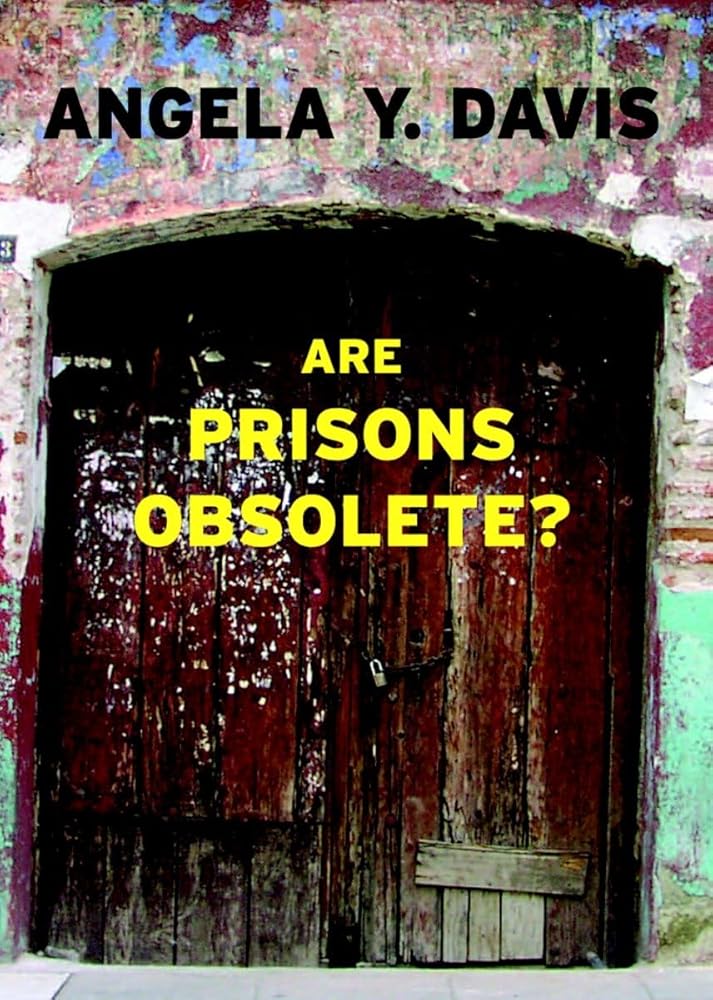
With her characteristic brilliance, grace and radical audacity, Angela Y. Davis has put the case for the latest abolition movement in American life: the abolition of the prison. As she quite correctly notes, American life is replete with abolition movements, and when they were engaged in these struggles, their chances of success seemed almost unthinkable. For generations of Americans, the abolition of slavery was sheerest illusion. Similarly,the entrenched system of racial segregation seemed to last forever, and generations lived in the midst of the practice, with few predicting its passage from custom. The brutal, exploitative (dare one say lucrative?) convict-lease system that succeeded formal slavery reaped millions to southern jurisdictions (and untold miseries for tens of thousands of men, and women). Few predicted its passing from the American penal landscape. Davis expertly argues how social movements transformed these social, political and cultural institutions, and made such practices untenable.
In Are Prisons Obsolete?, Professor Davis seeks to illustrate that the time for the prison is approaching an end. She argues forthrightly for "decarceration", and argues for the transformation of the society as a whole.

An inclusive and landmark history, emphasizing how essential Asian American experiences are to any understanding of US history
Original and expansive, Asian American Histories of the United States is a nearly 200-year history of Asian migration, labor, and community formation in the US. Reckoning with the onset of the COVID-19 pandemic and the surge in anti-Asian hate and violence, award-winning historian Catherine Ceniza Choy presents an urgent social history of the fastest growing group of Americans. The book features the lived experiences and diverse voices of immigrants, refugees, US-born Asian Americans, multiracial Americans, and workers from industries spanning agriculture to healthcare.
Despite significant Asian American breakthroughs in American politics, arts, and popular culture in the twenty-first century, a profound lack of understanding of Asian American history permeates American culture. Choy traces how anti-Asian violence and its intersection with misogyny and other forms of hatred, the erasure of Asian American experiences and contributions, and Asian American resistance to what has been omitted are prominent themes in Asian American history. This ambitious book is fundamental to understanding the American experience and its existential crises of the early twenty-first century.
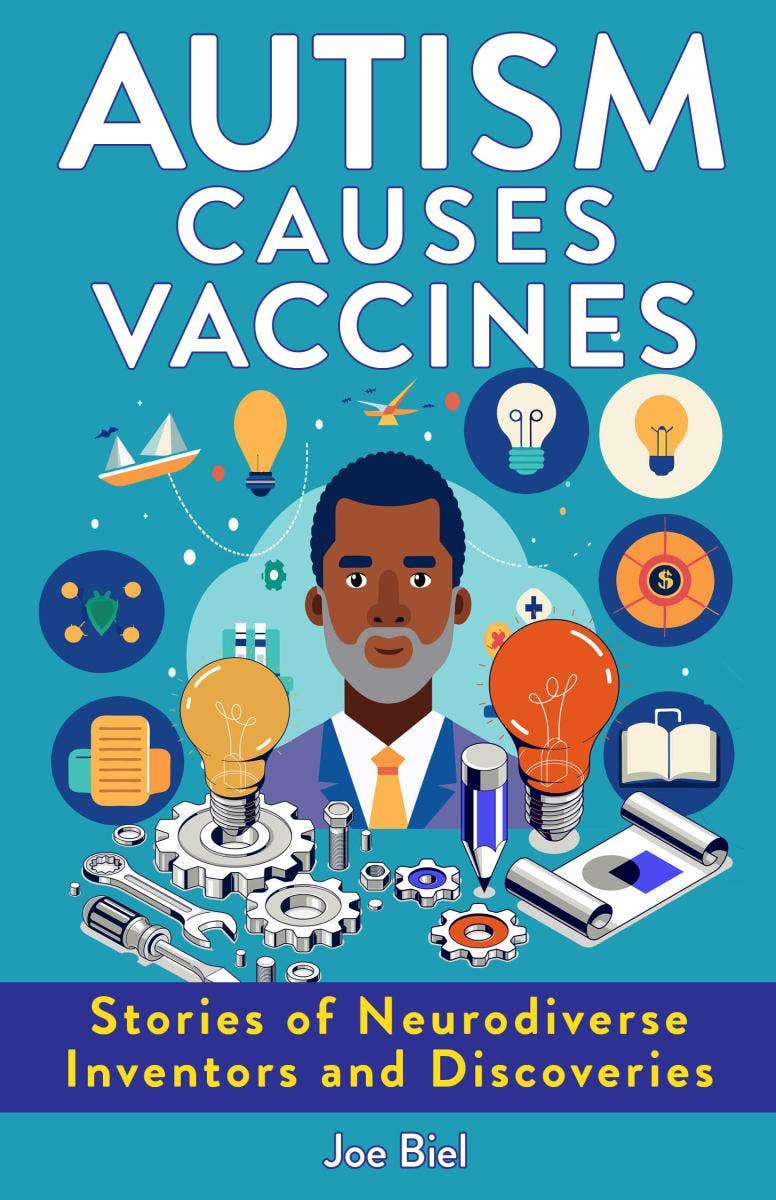
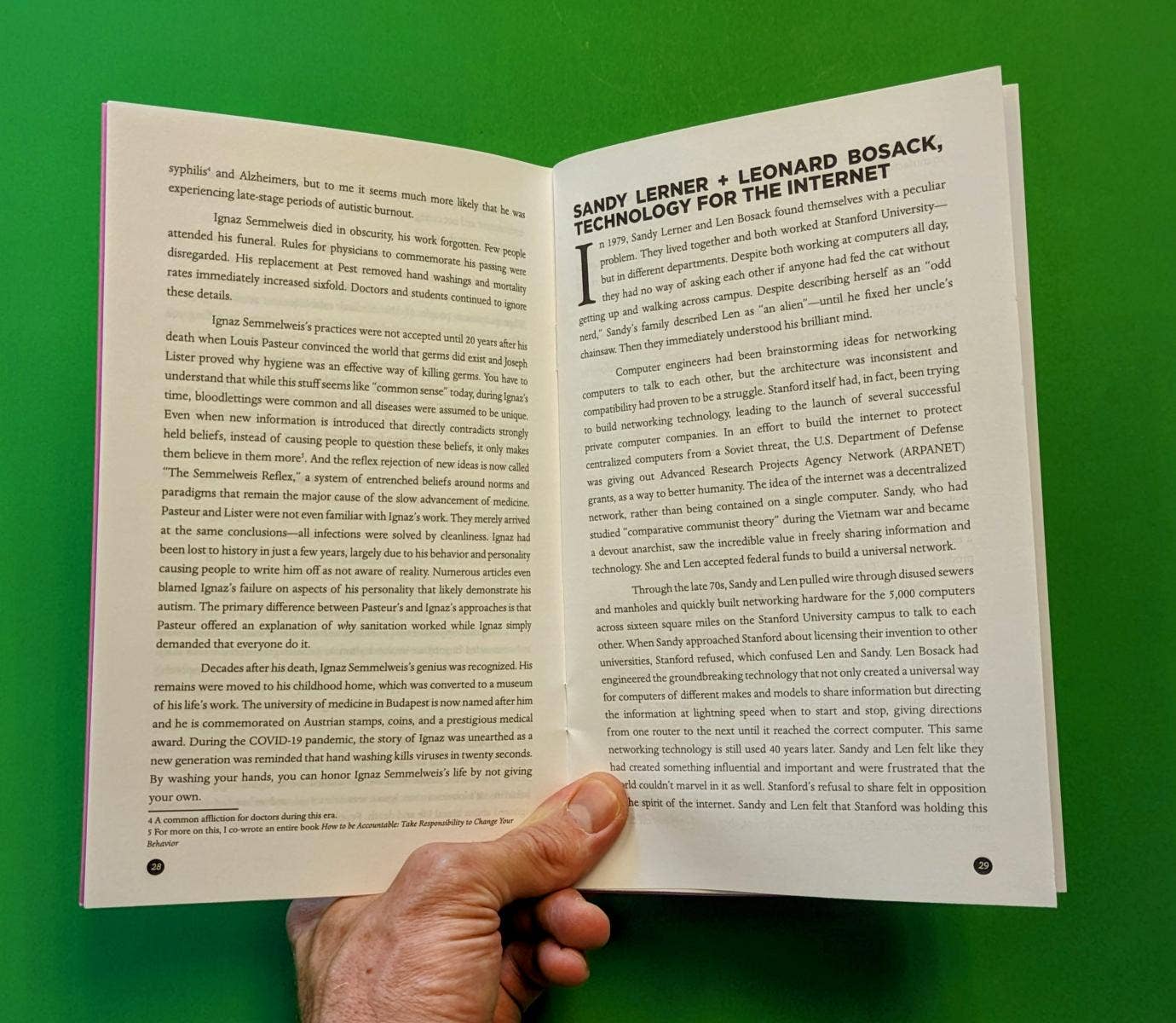

14 Writers - 14 Stories - 14 Truths
The stories contained within this anthology were almost never written. Each contributing author dug deep to discover the one thing they’d avoided writing about and made the brave decision to speak their truth. But they didn’t stop there. Every essay in this collection also includes a companion piece, a “behind-the-scenes” look at what it took to move through the struggle, shame, self-doubt, fear, and more to put these words to the page.
Avoided No More reminds us that we all have stories buried within us, that there’s power in sharing our truth, and, perhaps most importantly, that none of us are truly alone on this journey.
Contributors:
Katie Boateng, Federica Bruniera, Becka Eppley, Serine Goodmond, Amanda Conley Hines, Jinx Malcolm, Kim Marsh, Lyda Michopoulou, Nicki Pappas, Tina Strawn, Therese Temitayo, Asha Unni, Laura Vegh and Maria Wade
--
Published by Plymouth James Press, an imprint of The Open Book Company

Baby Making for Everybody: Family Building and Fertility for LGBTQ+ and Solo Parents
$19.99
Unit price perBaby Making for Everybody: Family Building and Fertility for LGBTQ+ and Solo Parents
$19.99
Unit price perThis inclusive, straightforward guide to fertility is What to Expect Before You’re Expecting for families outside the heterosexual nuclear family model—perfect for LGBTQ+ and solo parents who want to have kids but don’t know where to start.
In Baby Making for Everybody, queer millennial midwives Ray Rachlin and Marea Goodman use their professional expertise to demystify the dizzying process of pursuing parenthood as queer and solo people, offering detailed, gender-affirming, body-positive advice on topics including:
* Fertility tracking for people with uteruses
* Choosing a sperm donor, egg donor, or surrogate
* Legal considerations for LGBTQ+ families
* Navigating pregnancy and gender identity
* IUI, ICI, and IVF procedures
* Foster parenting and adoption
* Miscarriage and infertility
The result is a much-needed compassionate step-by-step guide for every aspect of the complicated, messy, and glorious process of building a family. Combining practical information with personal narratives and first-person community wisdom, this book provides prospective parents with the information they need to grow their families.

Backwoods Witchcraft: Conjure & Folk Magic from Appalachia (The Backwoods Library)
$18.95
Unit price perBackwoods Witchcraft: Conjure & Folk Magic from Appalachia (The Backwoods Library)
$18.95
Unit price perIn Backwoods Witchcraft, Jake Richards offers up a folksy stew of family stories, lore, omens, rituals, and conjure crafts that he learned from his great-grandmother, his grandmother, and his grandfather, a Baptist minister who Jake remembers could "rid someone of a fever with an egg or stop up the blood in a wound." The witchcraft practiced in Appalachia is very much a folk magic of place, a tradition that honors the seen and unseen beings that inhabit the land as well as the soil, roots, and plant life.
The materials and tools used in Appalachia witchcraft are readily available from the land. This "grounded approach" will be of keen interest to witches and conjure folk regardless of where they live. Readers will be guided in how to build relationships with the spirits and other beings that dwell around them and how to use the materials and tools that are readily available on the land where one lives.
This book also provides instructions on how to create a working space and altar and make conjure oils and powders. A wide array of tried-and-true formulas are also offered for creating wealth, protecting one from gossip, spiritual cleansing, and more.
![Bad Feminist [Tenth Anniversary Limited Collector's Edition]: Essays cover image](http://queerhavenbooks.com/cdn/shop/files/9780063384804.jpg?v=1778792529&width=1500)
TENTH ANNIVERSARY LIMITED COLLECTOR’S EDITION
Roxane Gay's New York Times bestselling debut collection of essays spanning politics, criticism, and feminism—a modern classic from one of the most prominent voices of her generation—is now available in a beautifully designed Tenth anniversary limited edition, with a stunning foil cover and hot pink sprayed edges, the perfect collector’s edition for her fans
“Pink is my favorite color. I used to say my favorite color was black to be cool, but it is pink—all shades of pink. If I have an accessory, it is probably pink. I read Vogue, and I’m not doing it ironically, though it might seem that way. I once live-tweeted the September issue.”
In these funny and insightful essays, Gay takes us through the journey of her evolution as a woman (Sweet Valley High) of color (The Help) while also taking readers on a ride through culture of the last few years (Girls, Django in Chains) and commenting on the state of feminism today (abortion, Chris Brown). The portrait that emerges is not only one of an incredibly insightful woman continually growing to understand herself and our society, but also one of our culture.
Roxane Gay’s groundbreaking Bad Feminist is a sharp, funny, and spot-on look at the ways in which the culture we consume becomes who we are, and an inspiring call-to-arms of all the ways we still need to do better, from a writer whose mark on our culture continues to be made.