Sort by:
321 products
321 products

A memoir and mythography of a Black trans man’s journey from Baby Girl to Black Boi, through gender, race, and trans theory made personal
In a country built on the daily oppression and incarceration of Black people, on the rejection of queer and trans rights, how does a Black trans man become himself or find home? “Home is commonly understood as a place of bodily safety, a place where one can find themselves a resting place, but for me and for many Black queer folk, our bodies most often preclude any home-making with those kinds of securities.” It is this reality that spurred Kai Marshall Green's investigation into bodies—and the love between them—discounted by the mainstream as deviant, deficient, and defective.
In his powerful debut memoir, Green recounts his lifelong transition from “Baby Girl" to “Black Boi,” his current and future self. Laced through his accounts of traversing discrimination, misunderstanding, and abuse from family, society, and academia are experiments in letter writing and biomythography, continuing in the literary tradition of Audre Lorde. Through A Body Made Home, Green explores the long, stuttering arc of transition as a Black queer person in America, recasting visions of home, narratives of metamorphosis, and dreams of freedom.
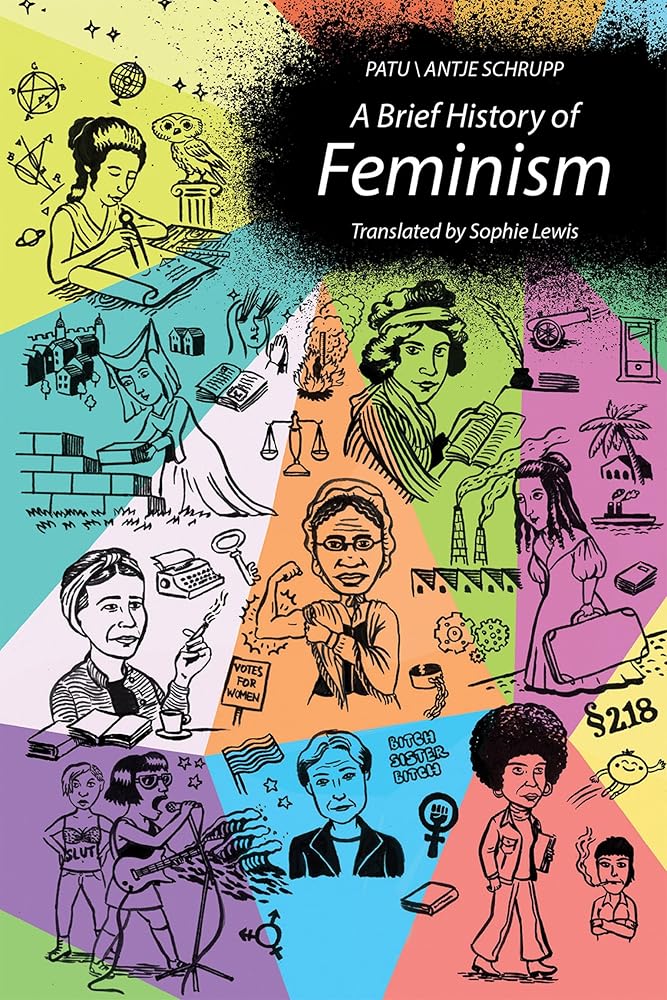
An engaging illustrated history of feminism from antiquity through third-wave feminism, featuring Sappho, Mary Magdalene, Mary Wollstonecraft, Sojourner Truth, Simone de Beauvoir, and many others.
The history of feminism? The right to vote, Susan B. Anthony, Gloria Steinem, white pantsuits? Oh, but there's so much more. And we need to know about it, especially now. In pithy text and pithier comics, A Brief History of Feminism engages us, educates us, makes us laugh, and makes us angry. It begins with antiquity and the early days of Judeo-Christianity. (Mary Magdalene questions the maleness of Jesus's inner circle: “People will end up getting the notion you don't want women to be priests.” Jesus: “Really, Mary, do you always have to be so negative?”) It continues through the Middle Ages, the Early Modern period, and the Enlightenment (“Liberty, equality, fraternity!” “But fraternity means brotherhood!”). It covers the beginnings of an organized women's movement in the nineteenth century, second-wave Feminism, queer feminism, and third-wave Feminism.
Along the way, we learn about important figures: Olympe de Gouges, author of the “Declaration of the Rights of Woman and the Female Citizen” (guillotined by Robespierre); Flora Tristan, who linked the oppression of women and the oppression of the proletariat before Marx and Engels set pen to paper; and the poet Audre Lorde, who pointed to the racial obliviousness of mainstream feminism in the 1970s and 1980s. We learn about bourgeois and working-class issues, and the angry racism of some American feminists when black men got the vote before women did. We see God as a long-bearded old man emerging from a cloud (and once, as a woman with her hair in curlers). And we learn the story so far of a history that is still being written.

A Genocide Foretold: Reporting on Survival and Resistance in Occupied Palestine
$18.95
Unit price perA Genocide Foretold: Reporting on Survival and Resistance in Occupied Palestine
$18.95
Unit price perWith intimate and harrowing portraits of the human consequences of oppression, occupation, and violence experienced in Palestine today, Pulitzer-prize-winning journalist Chris Hedges issues a call to action urging us to bear witness and engage with the ongoing humanitarian crisis.
Hedges wrote the first section of the book when he was in Ramallah in July 2024, and he draws from his experience doing extensive reporting from the Middle East, including Gaza, for the New York Times.
A Genocide Foretold confronts the stark realities of life under siege in Gaza and the heroic effort ordinary Palestinians are waging to resist and survive. Weaving together personal stories, historical context, and unflinching journalism, Chris Hedges provides an intimate portrait of systemic oppression, occupation, and violence. The book includes chapters on:
* What life is like in Gaza City and Ramallah in the midst of approaching bombs and gunfire.
* The history of the dispossession of Palestinians of their land in relation to the ideology of Zionism.
* A portrait of Amr, a 17-year-old highschool student who is forced to evacuate his village with his family.
* Psychoanalysis of the state of permanent war that has led to the destruction of hospitals, telecommunications centers, governmental buildings, roads, homes universities, schools, and libraries and archaeological and heritage sites in Gaza.
* The ways in which the collective retribution against innocents is a familiar tactic employed by colonial rulers.
* A heartbreaking final chapter called “Letter to the Children of Gaza.”
Hedges, the Pulitzer Prize–winning former Middle East Bureau Chief for The New York Times, is an Arabic speaker who spent seven years covering the conflict. He wrote the first section of the book when he was in Ramallah in July 2024. A Pulitzer-Prize winning journalist, he is also the author of two bestselling books, War is a Force that Gives us Meaning and The Greatest Evil is War. In A Genocide Foretold he writes with an emotional depth that can only be achieved from spending many years on the ground in Gaza and the West Bank. A Genocide Foretold is a call to action, urging us to bear witness and engage with the ongoing humanitarian crisis.
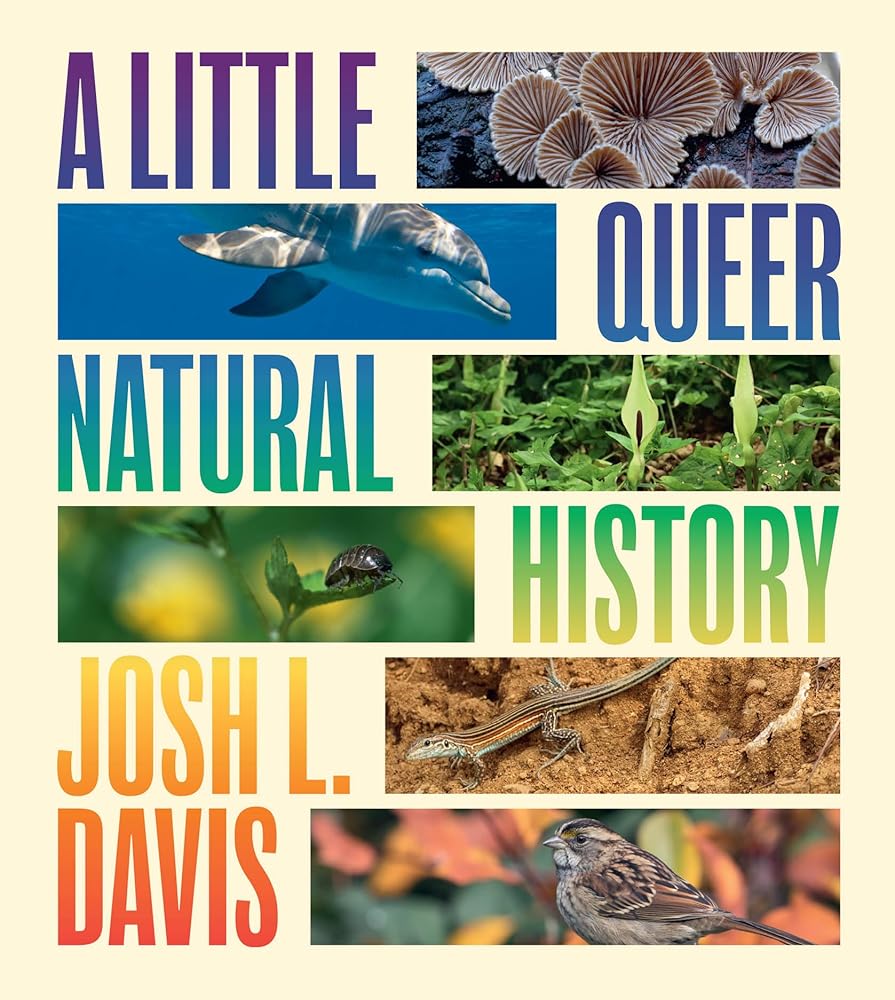
Beautifully illustrated and scientifically informed, a celebration of the astonishing diversity of sexual behavior and biology found in nature.
From a pair of male swans raising young to splitgill mushrooms with over 23,000 mating types, sex in the natural world is wonderfully diverse. Josh L. Davis considers how, for many different organisms—animals, plants, and fungi included—sexual reproduction and sex determination rely on a surprisingly complex interaction among genes, hormones, environment, and chance. As Davis introduces us to fascinating biological concepts like parthenogenesis (virgin birth), monoecious plants (individuals with separate male and female flowers), and sex-reversed genitals, we see turtle hatchlings whose sex is determined by egg temperature; butterflies that embody male and female biological tissue in the same organism; and a tomato that can reproduce three different ways at the same time. Davis also reveals animal and plant behaviors in nature that researchers have historically covered up or explained away, like queer sex among Adélie penguins or bottlenose dolphins, and presents animal behaviors that challenge us to rethink our assumptions and prejudices. Featuring fabulous sex-fluid fishes and ant, wasp, and bee queens who can choose both how they want to have sex and the sex of their offspring, A Little Queer Natural History offers a larger lesson: that the diversity we see in our own species needs no justification and represents just a fraction of what exists in the natural world.

A “riveting” and “indispensable” (Alison Bechdel) cultural history of queer women’s lives in the second half of the twentieth century, told through six iconic spaces
For as long as queer women have existed, they’ve created gathering grounds where they can be themselves. From the intimate darkness of the lesbian bar to the sweaty camaraderie of the softball field, these spaces aren’t a luxury—they’re a necessity for queer women defining their identities. In A Place of Our Own, journalist June Thomas invites readers into six iconic lesbian spaces over the course of the last sixty years, including the rural commune, the sex toy boutique, the vacation spot, and the feminist bookstore.
Thomas blends her own experiences with archival research and rare interviews with pioneering figures like Elaine Romagnoli, Susie Bright, and Jacqueline Woodson. She richly illustrates the lives of the business owners, entrepreneurs, activists, and dreamers who shaped the long struggle for queer liberation. Thomas illuminates what is gained and lost in the shift from the exclusive, tight-knit women’s spaces of the ’70s toward today’s more inclusive yet more diffuse LGBTQ+ communities.
At once a love letter, a time capsule, and a bridge between generations of queer women, A Place of Our Own brings the history—and timeless present—of the lesbian community to vivid life.

A Queer History of the United States: Revised And Expanded (ReVisioning History)
$22.00
Unit price perA Queer History of the United States: Revised And Expanded (ReVisioning History)
$22.00
Unit price perA revised and expanded edition of the first book to cover the entirety of lesbian, gay, bisexual, and transgender history, from pre-1492 to the present
In this new edition of A Queer History of the United States, Michael Bronski’s classic book now covers 500 years, bringing queer history into the 21st century and further illuminates how profoundly the LGBTQ+ life and people have shaped America.
Drawing upon primary documents, literature, and popular culture, Bronski weaves a comprehensive tapestry of LGBTQ+ history, providing startling examples of unknown or ignored aspects of our collective past.
From the ineffectiveness of sodomy laws in the colonies, to how rock music and youth culture unintentionally engendered the devastating backlash against gay rights in the late 1970s; from individuals such as Robert Treat Paine and Ezekiel Dodge, Harvard classmates in 1774 who formed a deep, loving relationship and wrote passionate love letters to one another to Lucy Hicks Andersen, a married African American socialite and celebrity chef in Oxnard, California, whose story appeared in Time magazine in 1945 after her transgender identity became known, Bronski covers an eclectic breadth of facts and stories.
This revised edition includes details on the evolution of the transgender liberation movement, the upsurge of vibrant queer movements of color, the groundbreaking emergence of new sexual and gender identities, and concludes by analyzing the current conservative backlash against LGBTQ rights, racial and social justice policies, and the drive to eradicate historical diversity.
Not simply about "gay history" it is about all American history, Bronski’s dynamic and revealing narrative radically reframes how we understand our past and, more important, our present.

A funny, bullshit-free and surprising history
Queer families have always existed
Even Sappho, the OG lesbian, had a daughter named Cleis, in honour of vaginas everywhere! For centuries, the women of ‘The Golden Orchid Society’ in Qing-dynasty China were getting married and raising daughters together – platonically, obviously... And Vita Sackville-West and Harold Nicolson’s fabulously bisexual open marriage proved women really can have it all – a husband, two kids, a writing career and Virginia Woolf.
Maybe you’re exploring your options. Maybe you don’t want kids but you have questions. Either way, Kirsty Loehr provides another rollicking guide to the ups and downs of queer parenthood through the ages.
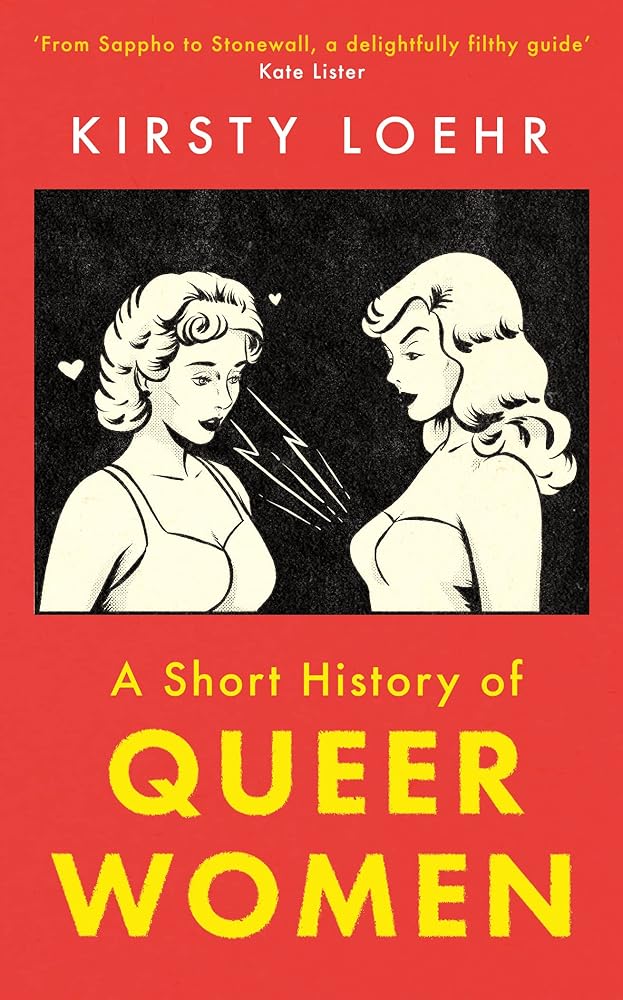
Queer women have always existed – let’s put them back in the history books
No, they weren’t ‘just friends’!
Queer women have been written out of history since, well, forever. ‘But historians famously care about women!’, said no one. From Anne Bonny and Mary Read who sailed the seas together disguised as pirates, to US football captain Megan Rapinoe declaring ‘You can’t win a championship without gays on your team’, via countless literary salons and tuxedos, A Short History of Queer Women sets the record straight on women who have loved other women through the ages.
Who says lesbians can’t be funny?

An indispensable guide to understanding the Israel–Palestine conflict, and how we might yet still find a way out of it.
'Ilan Pappe is the most original, radical and hard-hitting of Israel’s "new historians".' Avi Shlaim, author of Three Worlds
The devastation of 7 October 2023 and the horrors that followed astounded the world. But the Israel–Palestine conflict didn’t start on 7 October. It didn’t start in 1967 either, when Israel occupied the West Bank, or in 1948 when the state of Israel was declared. It started in 1882, when the first Zionist settlers arrived in what was then Ottoman Palestine. Ilan Pappe untangles the history of two peoples, now sharing one land. Going back to the founding fathers of Zionism, Pappe expertly takes us through the twists and turns of international policy towards Israel–Palestine, Palestinian resistance to occupation, and the changes taking place in Israel itself.

A woman’s handbook to demystifying the world of weed, whether it’s being used for pain relief, a moment of calm, or a fit of giggles.
Women of all ages are using cannabis to feel and look better. For rookies and experienced marijuana users alike, this lively, information-filled book is just the supportive guide you need to find the right dose to relieve anxiety, depression, and inflammation, and mitigate the onset of dementia and other signs of aging. Plus boost moods, ease aches, even lose weight, and get restful sleep. And a dose just for fun? Well, that works, too!
Here’s how to navigate the typical dispensary, with its overwhelming options of concentrates, edibles, vape pens, and tinctures. Understand the amazing health-giving compounds found in cannabis—THC, CBD, terpenes, and more—and how to use topicals to reduce pain and give your skin a healthy glow. There’s even advice on how not to get high but still reap all the amazing health benefits.
Plus over twenty recipes, from edibles like Classic Pot Brownies and Netflix and Chill Caramels to self-care products like Radiant Glow Serum and Happy Body Bar.

Abolitionist Intimacies: Queer and Trans Migrants against the Deportation State
$26.95
Unit price perAbolitionist Intimacies: Queer and Trans Migrants against the Deportation State
$26.95
Unit price perIn Abolitionist Intimacies, Eithne Luibhéid examines writings by and about queer- and trans-identified migrants and allies who contest pervasive US immigration practices and work toward a future without detention, deportation, and border controls. Luibhéid shows how these migrants and activists confront such controls by mobilizing intimacies—forging close connections in order to survive in the present. From forms of kinship beyond the heterosexual nuclear family to networks of solidarity, intimacies allow queer and trans migrants and allies to challenge the infrastructures that support the deportation state: proposed pathways to citizenship for undocumented migrants; marriage as a means for legalization; traffic interactions as a pipeline to deportation; and queer and trans migrant detention. In the process, activists and theorists have advanced new visions and configurations of possible intimacies that not only challenge deportation but also rework what immigration control and citizenship could mean. By focusing on these abolitionist efforts as well as the publicly available records on queer and trans deportees, Luibhéid highlights the new understandings that emerge when the experiences of queer and trans people are centered.

From bestselling authors and journalistic titans Ezra Klein and Derek Thompson, Abundance is a once-in-a-generation, paradigm-shifting call to renew a politics of plenty, face up to the failures of liberal governance, and abandon the chosen scarcities that have deformed American life.
To trace the history of the twenty-first century so far is to trace a history of unaffordability and shortage. After years of refusing to build sufficient housing, America has a national housing crisis. After years of limiting immigration, we don’t have enough workers. Despite decades of being warned about the consequences of climate change, we haven’t built anything close to the clean-energy infrastructure we need. Ambitious public projects are finished late and over budget—if they are ever finished at all. The crisis that’s clicking into focus now has been building for decades—because we haven’t been building enough.
Abundance explains that our problems today are not the results of yesteryear’s villains. Rather, one generation’s solutions have become the next generation’s problems. Rules and regulations designed to solve the problems of the 1970s often prevent urban-density and green-energy projects that would help solve the problems of the 2020s. Laws meant to ensure that government considers the consequences of its actions have made it too difficult for government to act consequentially. In the last few decades, our capacity to see problems has sharpened while our ability to solve them has diminished.
Progress requires facing up to the institutions in life that are not working as they need to. It means, for liberals, recognizing when the government is failing. It means, for conservatives, recognizing when the government is needed. In a book exploring how we can move from a liberalism that not only protects and preserves but also builds, Klein and Thompson trace the political, economic, and cultural barriers to progress and propose a path toward a politics of abundance. At a time when movements of scarcity are gaining power in country after country, this is an answer that meets the challenges of the moment while grappling honestly with the fury so many rightfully feel.

Starred Review from Booklist, “this powerful account will comfort those who grew up feeling broken.”
What does love look like when you are not interested in sex?
Growing up, Caitlin Cook knew the recipe for social success from watching television and reading books: two best friends, two enemies, and a boyfriend. So she arranged her life accordingly: making friends and dreaming of the boys she met in school.
But she felt that inside, something was wrong with her. Because though she wanted to get close to people, every time she experimented with sex, she just felt bored.
This graphic novel follows Caitlin Cook, who is asexual but does not yet fully realize it. From evangelical purity politics to the footloose college campus, Caitlin navigates different worlds each with their own sexual orthodoxies, and clumsily attempts to fit into each of them. A thoughtful and immersive coming-of-age memoir about one girl's struggle to figure out and then claim her asexual identity.

An engaging exploration of what it means to be asexual in a world that’s obsessed with sexual attraction, and what the ace perspective can teach all of us about desire and identity.
What exactly is sexual attraction and what is it like to go through life not experiencing it? What does asexuality reveal about gender roles, about romance and consent, and the pressures of society? This accessible examination of asexuality shows that the issues that aces face—confusion around sexual activity, the intersection of sexuality and identity, navigating different needs in relationships—are the same conflicts that nearly all of us will experience. Through a blend of reporting, cultural criticism, and memoir, Ace addresses the misconceptions around the “A” of LGBTQIA and invites everyone to rethink pleasure and intimacy.
Journalist Angela Chen creates her path to understanding her own asexuality with the perspectives of a diverse group of asexual people. Vulnerable and honest, these stories include a woman who had blood tests done because she was convinced that “not wanting sex” was a sign of serious illness, and a man who grew up in a religious household and did everything “right,” only to realize after marriage that his experience of sexuality had never been the same as that of others. Disabled aces, aces of color, gender-nonconforming aces, and aces who both do and don’t want romantic relationships all share their experiences navigating a society in which a lack of sexual attraction is considered abnormal. Chen’s careful cultural analysis explores how societal norms limit understanding of sex and relationships and celebrates the breadth of sexuality and queerness.

Written by Oscar Wilde's only grandson, After Oscar recounts the gripping story of Wilde and his enduring legacy.
"Fascinating...A magnificent blend of scholarship and memoir and a vital contribution to Wildeana."--Stephen Fry, actor and author
Oscar Wilde died in November 1900, exiled in Paris, his reputation in tatters, exhausted by scandal and prison life. While the details of his life in the limelight are well known, often ignored are the reverberations of the Wilde scandal over the decades following his trial and death.
With pathos, humor, and his grandfather's signature wit, Merlin Holland charts the extraordinary afterlife of the legendary writer and thinker, tracing the dramatic fluctuations in Wilde's posthumous reputation.
A true feat of storytelling and scholarship, After Oscar documents decades of sensationalist conjecture surrounding the Wilde family and exposes a century of bigotry and hypocrisy within the cultural establishment. Here is a book that will amuse, infuriate, fascinate, and shock. Readers beware--you're in for a Wilde ride.