LGBTQIA+ History Month
Sort by:
31 products
31 products
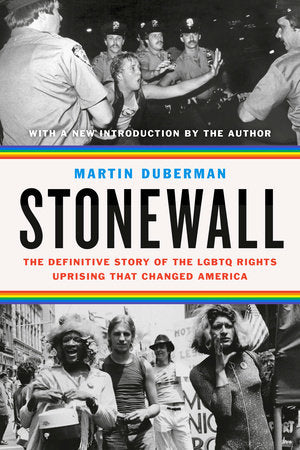
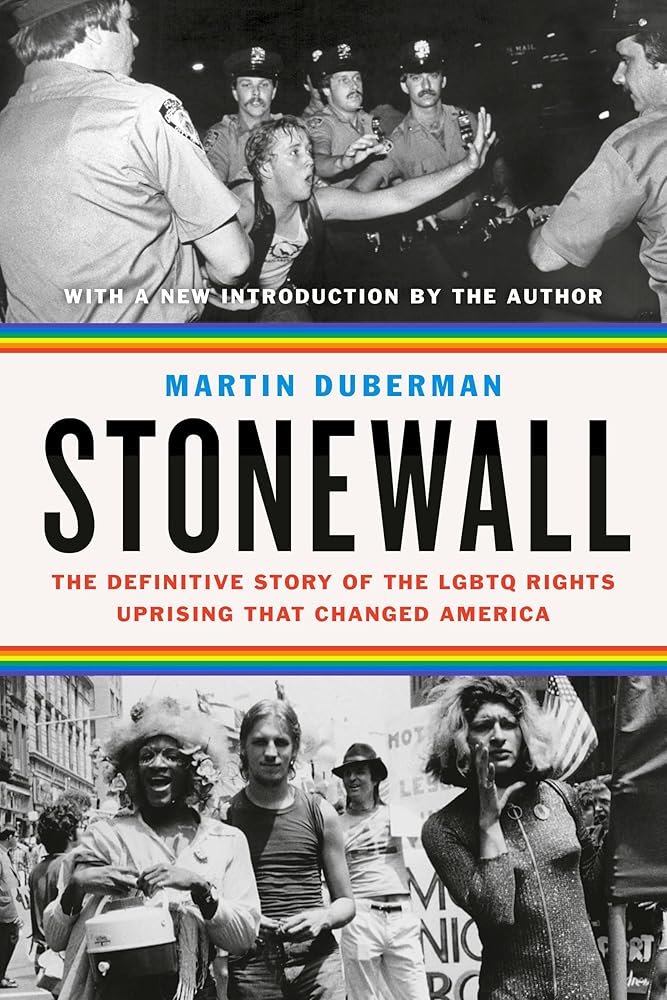
Stonewall: The Definitive Story of the LGBTQ Rights Uprising that Changed America
$20.00
Unit price perStonewall: The Definitive Story of the LGBTQ Rights Uprising that Changed America
$20.00
Unit price perThe definitive account of the Stonewall Riots, the first gay rights march, and the LGBTQ activists at the center of the movement.
“Martin Duberman is a national treasure.”—Masha Gessen, The New Yorker
On June 28, 1969, the Stonewall Inn, a gay bar in New York's Greenwich Village, was raided by police. But instead of responding with the typical compliance the NYPD expected, patrons and a growing crowd decided to fight back. The five days of rioting that ensued changed forever the face of gay and lesbian life.
In Stonewall, renowned historian and activist Martin Duberman tells the full story of this pivotal moment in history. With riveting narrative skill, he re-creates those revolutionary, sweltering nights in vivid detail through the lives of six people who were drawn into the struggle for LGBTQ rights. Their stories combine to form an unforgettable portrait of the repression that led up to the riots, which culminates when they triumphantly participate in the first gay rights march of 1970, the roots of today's pride marches.
Fifty years after the riots, Stonewall remains a rare work that evokes with a human touch an event in history that still profoundly affects life today.
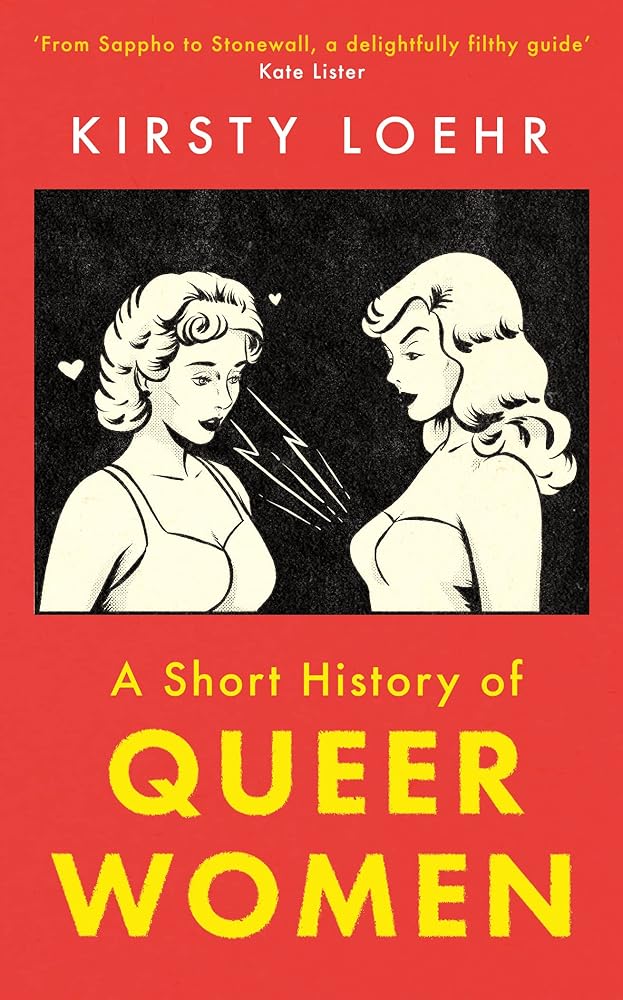
Queer women have always existed – let’s put them back in the history books
No, they weren’t ‘just friends’!
Queer women have been written out of history since, well, forever. ‘But historians famously care about women!’, said no one. From Anne Bonny and Mary Read who sailed the seas together disguised as pirates, to US football captain Megan Rapinoe declaring ‘You can’t win a championship without gays on your team’, via countless literary salons and tuxedos, A Short History of Queer Women sets the record straight on women who have loved other women through the ages.
Who says lesbians can’t be funny?
These “very funny-deep dives into the lives of the most dastardly queer people in history” offer a passionate argument for rethinking gay politics beyond identity (Vogue).
What can we learn from the homosexual villains, failures, and baddies of our past?
We all remember Oscar Wilde, but who speaks for Bosie? What about those ‘bad gays’ whose unexemplary lives reveal more than we might expect? Many popular histories seek to establish homosexual heroes, pioneers, and martyrs but, as Huw Lemmey and Ben Miller argue, the past is filled with queer people whose sexualities and dastardly deeds have been overlooked despite their being informative and instructive.
Based on the hugely popular podcast series of the same name, Bad Gays asks what we can learn about LGBTQ+ history, sexuality and identity through its villains, failures, and baddies. With characters such as the Emperor Hadrian, anthropologist Margaret Mead and notorious gangster Ronnie Kray, the authors tell the story of how the figure of the white gay man was born, and how he failed. They examine a cast of kings, fascist thugs, artists and debauched bon viveurs. Imperial-era figures Lawrence of Arabia and Roger Casement get a look-in, as do FBI boss J. Edgar Hoover, lawyer Roy Cohn, and architect Philip Johnson.
Together these amazing life stories expand and challenge mainstream assumptions about sexual identity: showing that homosexuality itself was an idea that emerged in the 19th century, one central to major historical events.
Bad Gays is a passionate argument for rethinking gay politics beyond questions of identity, compelling readers to search for solidarity across boundaries.
FINALIST FOR THE 2021 PULITZER PRIZE IN HISTORY. INSTANT NEW YORK TIMES BEST SELLER.
New York Times Book Review Editors' Choice. Winner of the 2021 Randy Shilts Award for Gay Nonfiction. One of The Washington Post's Top 50 Nonfiction Books of 2020.
From a young Harvard- and Cambridge-trained historian, and the Creator and Executive Producer of The Book of Queer (coming June 2022 to Discovery+), the secret history of the fight for gay rights that began a generation before Stonewall.
In 1957, Frank Kameny, a rising astronomer working for the U.S. Defense Department in Hawaii, received a summons to report immediately to Washington, D.C. The Pentagon had reason to believe he was a homosexual, and after a series of humiliating interviews, Kameny, like countless gay men and women before him, was promptly dismissed from his government job. Unlike many others, though, Kameny fought back.
Based on firsthand accounts, recently declassified FBI records, and forty thousand personal documents, Eric Cervini's The Deviant's War unfolds over the course of the 1960s, as the Mattachine Society of Washington, the group Kameny founded, became the first organization to protest the systematic persecution of gay federal employees. It traces the forgotten ties that bound gay rights to the Black Freedom Movement, the New Left, lesbian activism, and trans resistance. Above all, it is a story of America (and Washington) at a cultural and sexual crossroads; of shocking, byzantine public battles with Congress; of FBI informants; murder; betrayal; sex; love; and ultimately victory.
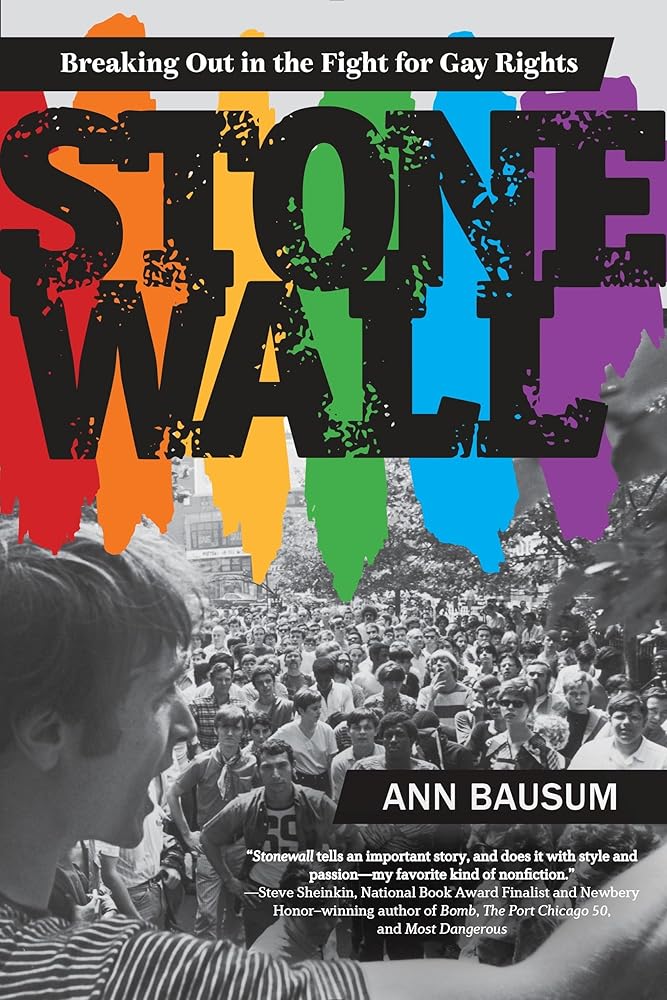
The first history of gay rights for teen readers, written by award-winning nonfiction author Ann Bausum.
That’s the Stonewall.
The Stonewall Inn.
Pay attention.
History walks through that door.
In 1969 being gay in the United States was a criminal offense. It meant living a closeted life or surviving on the fringes of society. People went to jail, lost jobs, and were disowned by their families for being gay. Most doctors considered homosexuality a mental illness. There were few safe havens. The Stonewall Inn, a Mafia-run, filthy, overpriced bar in New York City’s Greenwich Village, was one of them.
Police raids on gay bars happened regularly in this era. But one hot June night, when cops pounded on the door of the Stonewall, almost nothing went as planned. Tensions were high. The crowd refused to go away. Anger and frustration boiled over.
The raid became a riot.
The riot became a catalyst.
The catalyst triggered an explosive demand for gay rights.
A riveting exploration of the Stonewall Riots and the national Gay Rights movement that followed is eye-opening, unflinching, and inspiring.
Upon its first publication more than twenty years ago, And the Band Played on was quickly recognized as a masterpiece of investigative reporting.
An international bestseller, a nominee for the National Book Critics Circle Award, and made into a critically acclaimed movie, Shilts' expose revealed why AIDS was allowed to spread unchecked during the early 80's while the most trusted institutions ignored or denied the threat. One of the few true modern classics, it changed and framed how AIDS was discussed in the following years. Now republished in a special 20th Anniversary edition, And the Band Played On remains one of the essential books of our time.

A narrative blend of history, cultural criticism, and memoir in celebration of everyday queer women, based on a lesbian helpline that existed in North London in the nineties, and "a clear-eyed and moving addition to the still-expanding record of lesbian lives" (Publishers Weekly).
With warmth and humour, Elizabeth Lovatt reimagines the women who called and volunteered for the Lesbian Line in the 1990s, whilst also tracing her own journey from accidentally coming out to disastrous dates to finding her chosen family. With callers and agents alike dealing with first crushes and break-ups, sex and marriage, loneliness and illness, this is a celebration of the ordinary lives of queer women.
Through these revelations of the complexities, difficulties and revelries of everyday life, Lovatt investigates the ethics of writing about queer 'sheros' and the role living-history plays in the way we live today. What do we owe to our lesbian forebears? What can we learn from them when facing racism, transphobia and ableism in the community today?
Steeped in pop culture references and feminist and queer theory, Thank You for Calling the Lesbian Line is a timely and vital exploration of how lesbian identity continues to remake and redefine itself in the 21st century, and where it might lead us in the future.
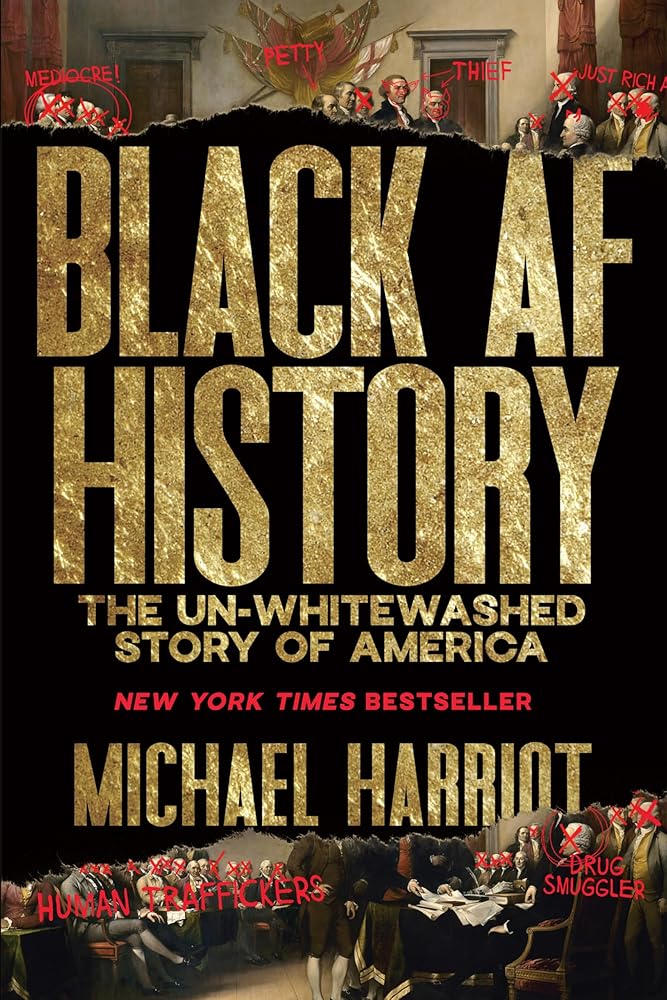
NEW YORK TIMES BESTSELLER * NAACP IMAGE AWARD NOMINEE * AMAZON'S TOP 20 HISTORY BOOKS OF 2023 * B&N BEST OF EDUCATIONAL HISTORY * THE ROOT'S BEST BOOKS OF 2023 * CHICAGO PUBLIC LIBRARY FAVORITE BOOKS OF 2023
From acclaimed columnist and political commentator Michael Harriot, a searingly smart and bitingly hilarious retelling of American history that corrects the record and showcases the perspectives and experiences of Black Americans.
America’s backstory is a whitewashed mythology implanted in our collective memory. It is the story of the pilgrims on the Mayflower building a new nation. It is George Washington’s cherry tree and Abraham Lincoln’s log cabin. It is the fantastic tale of slaves that spontaneously teleported themselves here with nothing but strong backs and negro spirituals. It is a sugarcoated legend based on an almost true story.
It should come as no surprise that the dominant narrative of American history is blighted with errors and oversights—after all, history books were written by white men with their perspectives at the forefront. It could even be said that the devaluation and erasure of the Black experience is as American as apple pie.
In Black AF History, Michael Harriot presents a more accurate version of American history. Combining unapologetically provocative storytelling with meticulous research based on primary sources as well as the work of pioneering Black historians, scholars, and journalists, Harriot removes the white sugarcoating from the American story, placing Black people squarely at the center. With incisive wit, Harriot speaks hilarious truth to oppressive power, subverting conventional historical narratives with little-known stories about the experiences of Black Americans. From the African Americans who arrived before 1619 to the unenslavable bandit who inspired America’s first police force, this long overdue corrective provides a revealing look into our past that is as urgent as it is necessary. For too long, we have refused to acknowledge that Americanhistory is white history. Not this one. This history is Black AF.

One of Entertainment Weekly's Top 10 Nonfiction Books of the Decade
A definitive history of the successful battle to halt the AIDS epidemic, here is the incredible story of the grassroots activists whose work turned HIV from a mostly fatal infection to a manageable disease. Almost universally ignored, these men and women learned to become their own researchers, lobbyists, and drug smugglers, established their own newspapers and research journals, and went on to force reform in the nation’s disease-fighting agencies. From the creator of, and inspired by, the seminal documentary of the same name, How to Survive a Plague is an unparalleled insider’s account of a pivotal moment in the history of American civil rights.
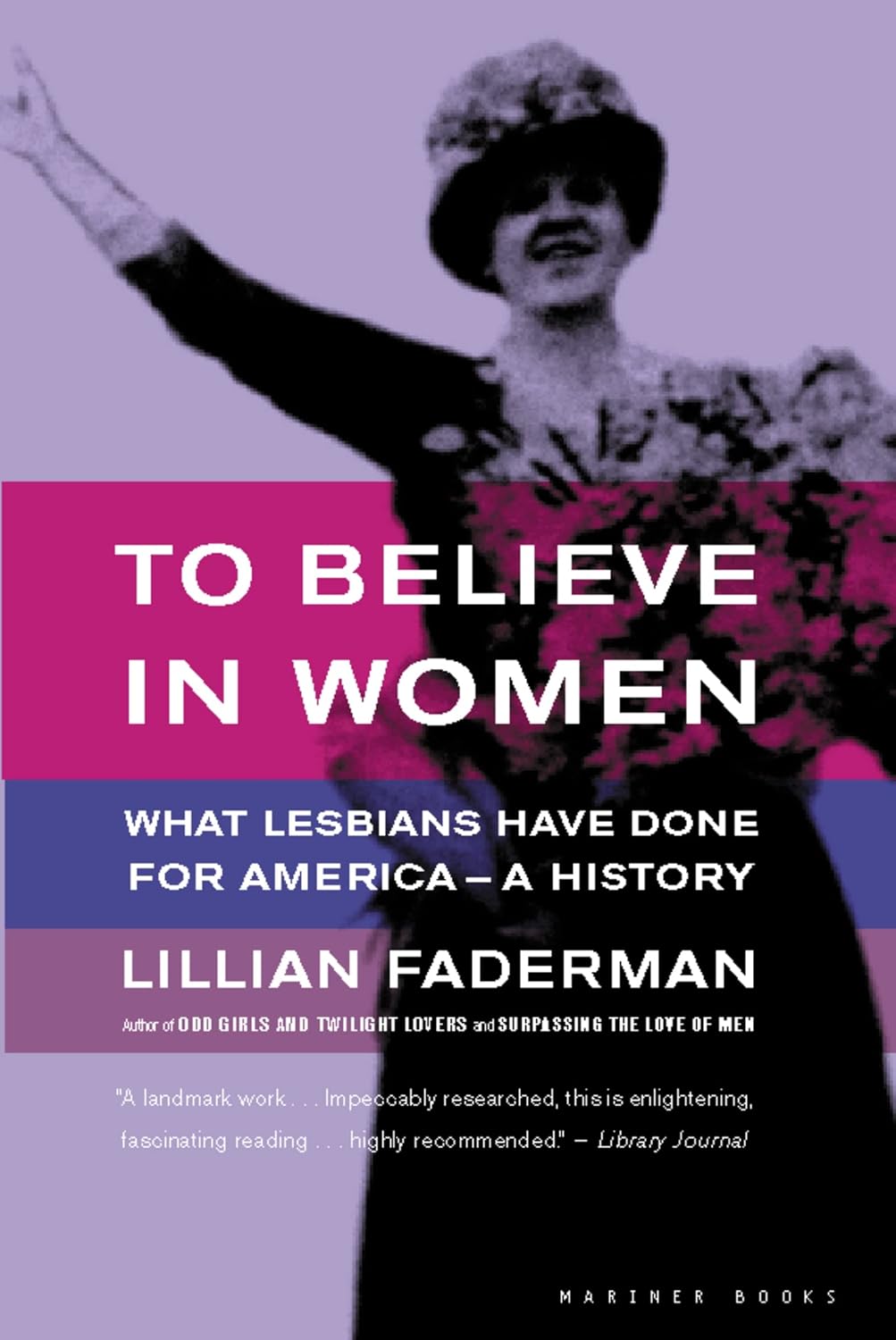
By: Lillian Faderman Professor (Author), 2000, Paperback
This landmark work of lesbian history focuses on how certain late-nineteenth-century and twentieth-century women whose lives can be described as lesbian were in the forefront of the battle to secure the rights and privileges that large numbers of Americans enjoy today. Lillian Faderman persuasively argues that their lesbianism may in fact have facilitated their accomplishments. A book of impeccable research and compelling readability, TO BELIEVE IN WOMEN will be a source of enlightenment for all, and for many a singular source of pride.

(ReVisioning History)
The first-ever Black history to center queer voices, this landmark study traces the lives of LGBTQ+ Black Americans from slavery to present day
Gender and sexual expression have always been part of the Black freedom struggle
In this latest book in Beacon’s award-winning ReVisioning History series, Professors C. Riley Snorton and Darius Bost unearth the often overlooked history of the Black queer community in the United States.
Arguing that both gender and sexual expression have been an intimate and intricate part of Black freedom struggle, Snorton and Bost present historical contributions of Black queer, trans, and gender non-conforming Americans from slavery to the present day to highlight how the fight against racial injustice has always been linked to that of sexual and gender justice.
Interweaving stories of queer and trans figures such as:
* Private William Cathay/Cathay Williams, born female but enlisted in the Army as a man in the mid-1860s
* Josephine Baker, internationally known dancer and entertainer of the early 20th century who was also openly bisexual
* Bayard Rustin, prominent Civil Rights activist whose well known homosexuality was viewed as a potential threat to the movement
* Amanda Milan, a black trans woman whose murder in 2000 unified the trans people of color community,
this book includes a deep dive into the marginalization, unjust criminalization, and government legislation of Black queer and trans existence. It also shows how Black Americans have played an integral role in the modern LGBTQ rights movement, countering narratives that have predominantly focused on white Americans.
Through storytelling and other narratives, Snorton and Bost show how the Black queer community has always existed, regardless of the attempts to stamp it out, and how those in it continue to fight for their rightful place in the world.

New York Times Bestseller
Now part of the HBO docuseries "Exterminate All the Brutes," written and directed by Raoul Peck
Recipient of the American Book Award
The first history of the United States told from the perspective of indigenous peoples
Today in the United States, there are more than five hundred federally recognized Indigenous nations comprising nearly three million people, descendants of the fifteen million Native people who once inhabited this land. The centuries-long genocidal program of the US settler-colonial regimen has largely been omitted from history. Now, for the first time, acclaimed historian and activist Roxanne Dunbar-Ortizoffers a history of the United States told from the perspective of Indigenous peoples and reveals how Native Americans, for centuries, actively resisted expansion of the US empire.
With growing support for movements such as the campaign to abolish Columbus Day and replace it with Indigenous Peoples’ Day and the Dakota Access Pipeline protest led by the Standing Rock Sioux Tribe, An Indigenous Peoples’ History of the United States is an essential resource providing historical threads that are crucial for understanding the present. In An Indigenous Peoples’ History of the United States, Dunbar-Ortiz adroitly challenges the founding myth of the United States and shows how policy against the Indigenous peoples was colonialist and designed to seize the territories of the original inhabitants, displacing or eliminating them. And as Dunbar-Ortiz reveals, this policy was praised in popular culture, through writers like James Fenimore Cooper and Walt Whitman, and in the highest offices of government and the military. Shockingly, as the genocidal policy reached its zenith under President Andrew Jackson, its ruthlessness was best articulated by US Army general Thomas S. Jesup, who, in 1836, wrote of the Seminoles: “The country can be rid of them only by exterminating them.”
Spanning more than four hundred years, this classic bottom-up peoples’ history radically reframes US history and explodes the silences that have haunted our national narrative.
An Indigenous Peoples' History of the United States is a 2015 PEN Oakland-Josephine Miles Award for Excellence in Literature.
Now an award-winning documentary feature film
The search for a “patient zero”—popularly understood to be the first person infected in an epidemic—has been key to media coverage of major infectious disease outbreaks for more than three decades. Yet the term itself did not exist before the emergence of the HIV/AIDS epidemic in the 1980s. How did this idea so swiftly come to exert such a strong grip on the scientific, media, and popular consciousness? In Patient Zero, Richard A. McKay interprets a wealth of archival sources and interviews to demonstrate how this seemingly new concept drew upon centuries-old ideas—and fears—about contagion and social disorder.
McKay presents a carefully documented and sensitively written account of the life of Gaétan Dugas, a gay man whose skin cancer diagnosis in 1980 took on very different meanings as the HIV/AIDS epidemic developed—and who received widespread posthumous infamy when he was incorrectly identified as patient zero of the North American outbreak. McKay shows how investigators from the US Centers for Disease Control inadvertently created the term amid their early research into the emerging health crisis; how an ambitious journalist dramatically amplified the idea in his determination to reframe national debates about AIDS; and how many individuals grappled with the notion of patient zero—adopting, challenging and redirecting its powerful meanings—as they tried to make sense of and respond to the first fifteen years of an unfolding epidemic. With important insights for our interconnected age, Patient Zero untangles the complex process by which individuals and groups create meaning and allocate blame when faced with new disease threats. What McKay gives us here is myth-smashing revisionist history at its best.

Third Edition
The groundbreaking guide to trans history in America, revised and updated for a new political era.
Transgender History is the modern classic on transgender life in America since the nineteenth century, encompassing the major movements, writings, and events that shape today’s gender revolution.
Susan Stryker’s sweeping, intersectional account charts more than a century of history, showing how rising acceptance in the 1960s and 2010s was met with waves of bigotry and intolerance that began in the ’70s and continue today.
Through her explanation of central concepts and terms, informative sidebars, and brief biographies of trans pioneers, Stryker reminds readers of one crucial truth: Transgender people have always been here. In good times and bad, they’ve built supportive and expansive communities, battled for freedom, and transformed American culture and society in the process.
Now completely revised and updated, including a longer, global history and a timely chronicle of the latest wave of anti-trans backlash, Transgender History remains both a vital resource and a powerful testament to the enduring legacy of trans lives.
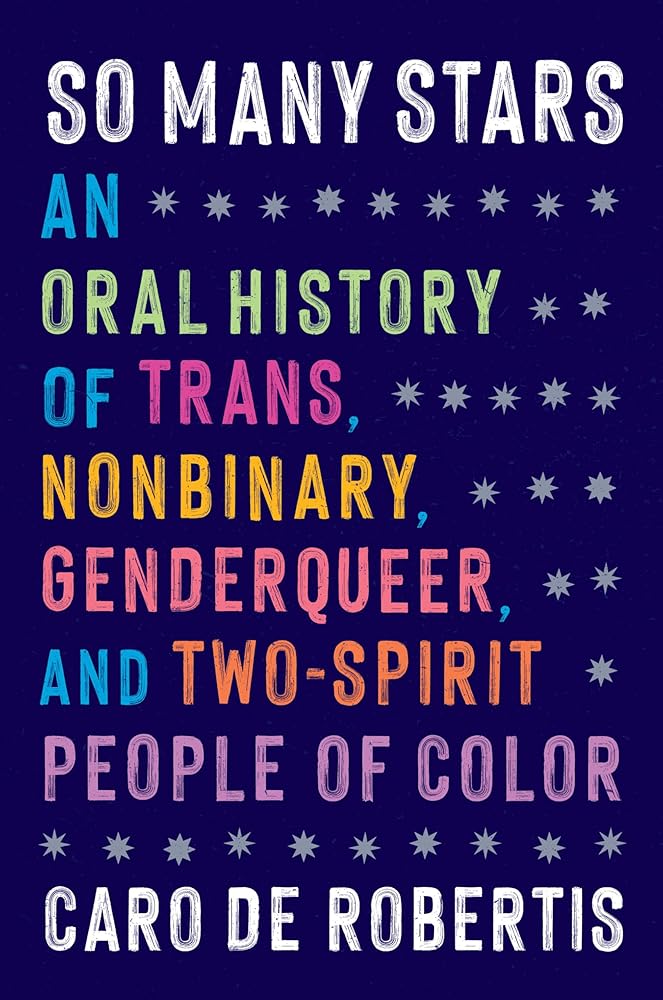
From the acclaimed novelist, a first-of-its-kind, deeply personal, and moving oral history of a generation of trans and gender nonconforming elders of color—from leading activists to artists to ordinary citizens—who tell their own stories of breathtaking courage, cultural innovations, and acts of resistance.
So Many Stars knits together the voices of trans, nonbinary, genderqueer, and two-spirit elders of color as they share authentic, intimate accounts of how they created space for themselves and their communities in the world. This singular project collects the testimonies of twenty elders, each a glimmering thread in a luminous tapestry, preserving their words for future generations—who can more fully exist in the world today because of these very trailblazers.
De Robertis creates a collective coming-of-age story based on hundreds of hours of interviews, offering rare snapshots of ordinary life: kids growing up, navigating family issues and finding community, coming out and changing how they identify over the years, building movements and weathering the AIDS crisis, and sharing wisdom for future generations. Often narrating experiences that took place before they had the array of language that exists today to self-identify beyond the gender binary, this generation lived through remarkable changes in American culture, shaped American culture, and yet rarely takes center stage in the history books. Their stories feel particularly urgent in the current political moment, but also remind readers that their experiences are not new, and that young trans and nonbinary people today belong to a long lineage.
The anecdotes in these pages are riveting, joyful, heartbreaking, full of personality and wisdom, and artfully woven together into one immersive narrative. In De Robertis’s words, So Many Stars shares “behind-the-scenes tales of what it meant—and still means—to create an authentic life, against the odds.”