Sort by:
1958 products
1958 products


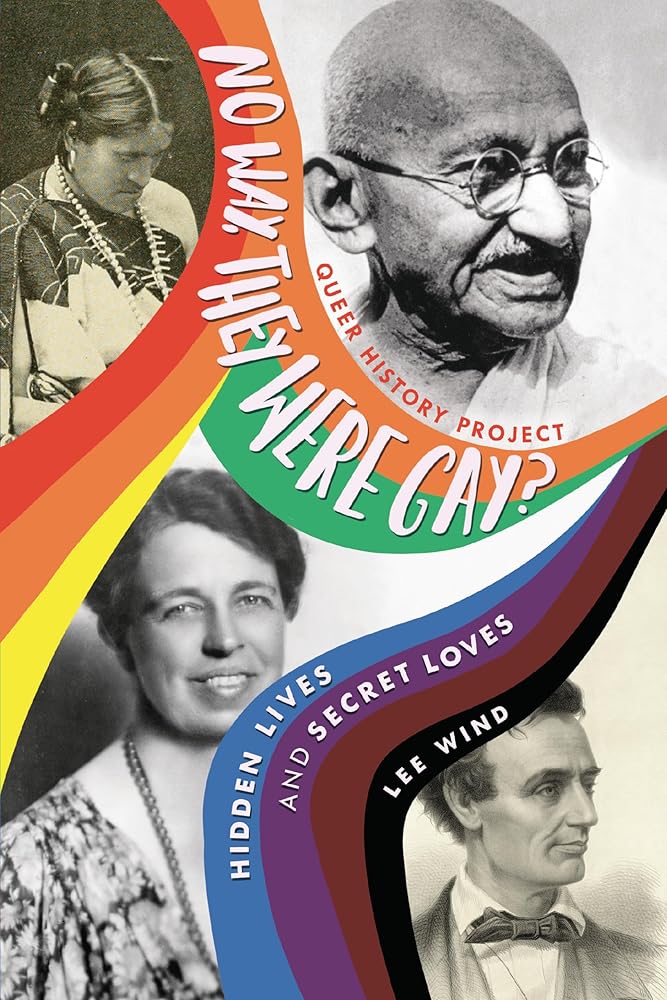
"History" sounds really official. Like it's all fact. Like it's definitely what happened.
But that's not necessarily true. History was crafted by the people who recorded it. And sometimes, those historians were biased against, didn't see, or couldn't even imagine anyone different from themselves.
That means that history has often left out the stories of LGBTQIA+ people: men who loved men, women who loved women, people who loved without regard to gender, and people who lived outside gender boundaries. Historians have even censored the lives and loves of some of the world's most famous people, from William Shakespeare and Pharaoh Hatshepsut to Cary Grant and Eleanor Roosevelt.
Join author Lee Wind for this fascinating journey through primary sources―poetry, memoir, news clippings, and images of ancient artwork―to explore the hidden (and often surprising) Queer lives and loves of two dozen historical figures.

An assembly of refusals portraying the radical power of “no” by the renowned scholar and author of The Feminist Killjoy Handbook, Sara Ahmed.
To be heard as complaining is not to be heard, writes Sara Ahmed. In her sweeping exploration of complaint as a means of resistance, Ahmed attunes her “feminist ear” to those who seek to challenge powerful institutions. She shows how complaints can unbury past complaints, getting them out of filing cabinets or from behind closed doors, allowing us to see institutions more clearly—how they work, and for whom they work.
Where complaints live, how complaints are made, who receives them, who buries them and where—Ahmed’s accessible, attentive writing brings to life the lessons learned from people knocking at closed doors, teaching us how to collectively resist the glacial weight of institutional power. This book inspires all of us to persist, to say “No!” and to build new collectivities that break down brick walls together.

Young Royals meets The Prince and Me when a disgraced princess falls for a new student at their all-girls boarding school, but the two must hide their forbidden love at all costs.
Princess Rosemary of Henland can't afford distractions. She's working tirelessly to repair her image following a scandal that lost the trust of both her country and her best friend. Unfortunately, when a beautiful and funny new student joins her boarding school, Rose finds herself quite distracted indeed.
Attending Bramppath College on a music scholarship, talented pianist Danni expects to be an outcast amongst the wealthy children of the elite, but she is pleasantly surprised to be taken in by the ex-best friend of the princess. The more Danni gets to know her new classmates, the more intrigued she becomes by Rose.
When somebody sees something they shouldn't and rumors circulate throughout Henland, Rose and Danni must either find a way to deflect the ever-increasing eyes on their relationship, or end it altogether. Because one thing is clear: if Rose's fragile reputation takes any more hits, the palace will do whatever they must to separate Rose and Danni. Forever.
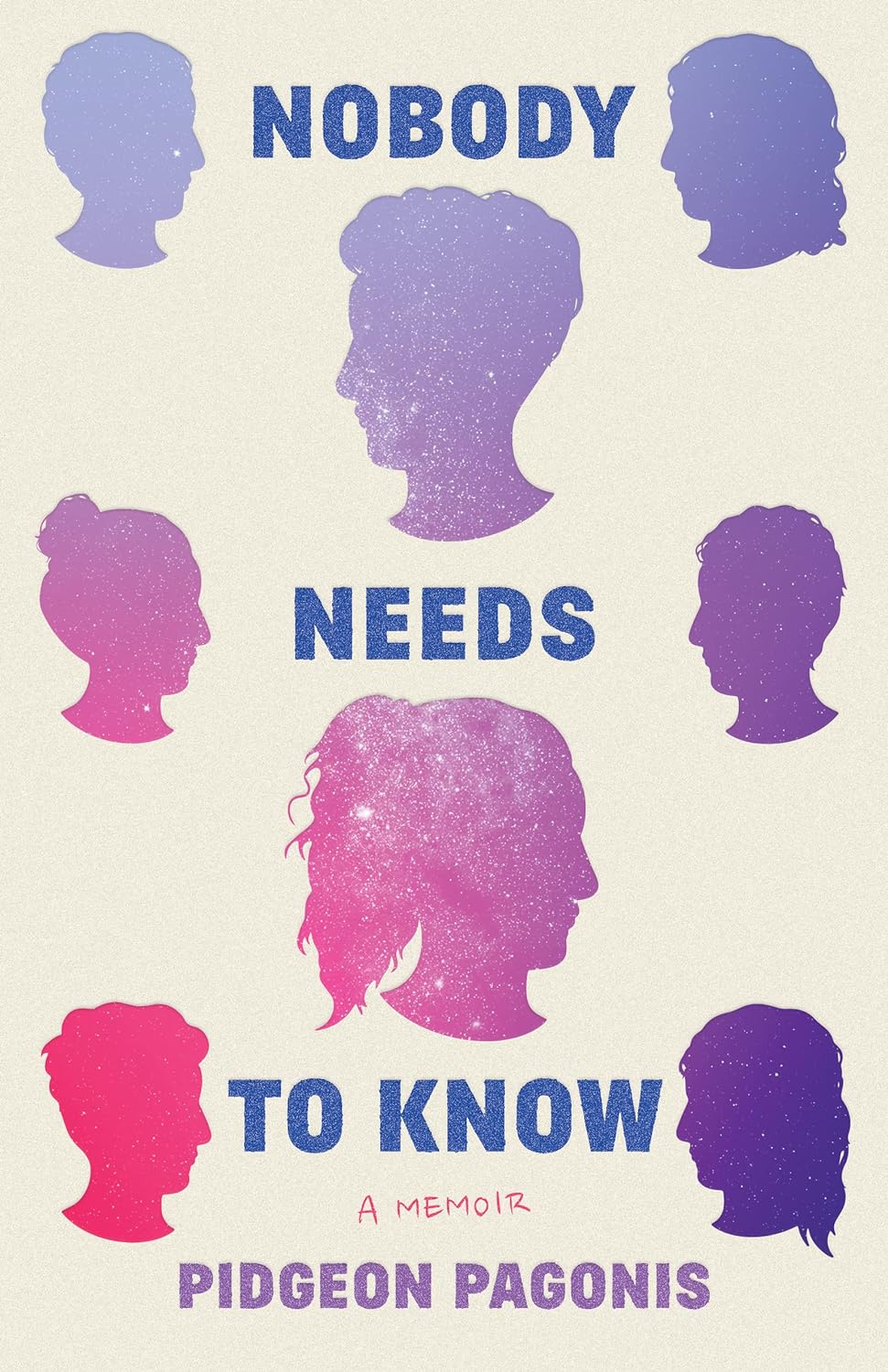
By: Pidgeon Pagonis (Author), Joey Soloway (Introduction), 2023, Paperback
From intersex activist Pidgeon Pagonis comes a candid and life-affirming true story of identity, lies, family secrets, and the healing power of truth.
Pidgeon Pagonis always felt like their life was a constant attempt to fit in with other girls―a feeling that was only exacerbated when puberty failed to hit. They never understood why…until they uncovered the secret that had haunted their childhood.
Bouncing between their Chicago home and the city’s children’s hospital, Pidgeon weathered a series of traumatic surgeries, fabrications, and misdirections. It wasn’t until college that Pidgeon pieced together the puzzle of their identity: they’d been born intersex but raised as a girl, their life shaped by lies that left them physically and mentally scarred. But for Pidgeon, what began as a shameful and traumatic discovery transforms into a painful yet joyous journey of self-love, truth, and healing.
Pidgeon’s inspiring memoir is for everyone whose body and spirit defy expectations, a fierce challenge to a system hell-bent on enforcing binary definitions. Ultimately, it’s a celebration of the freedom and empowerment that come from learning the truth about who you are―and living it.

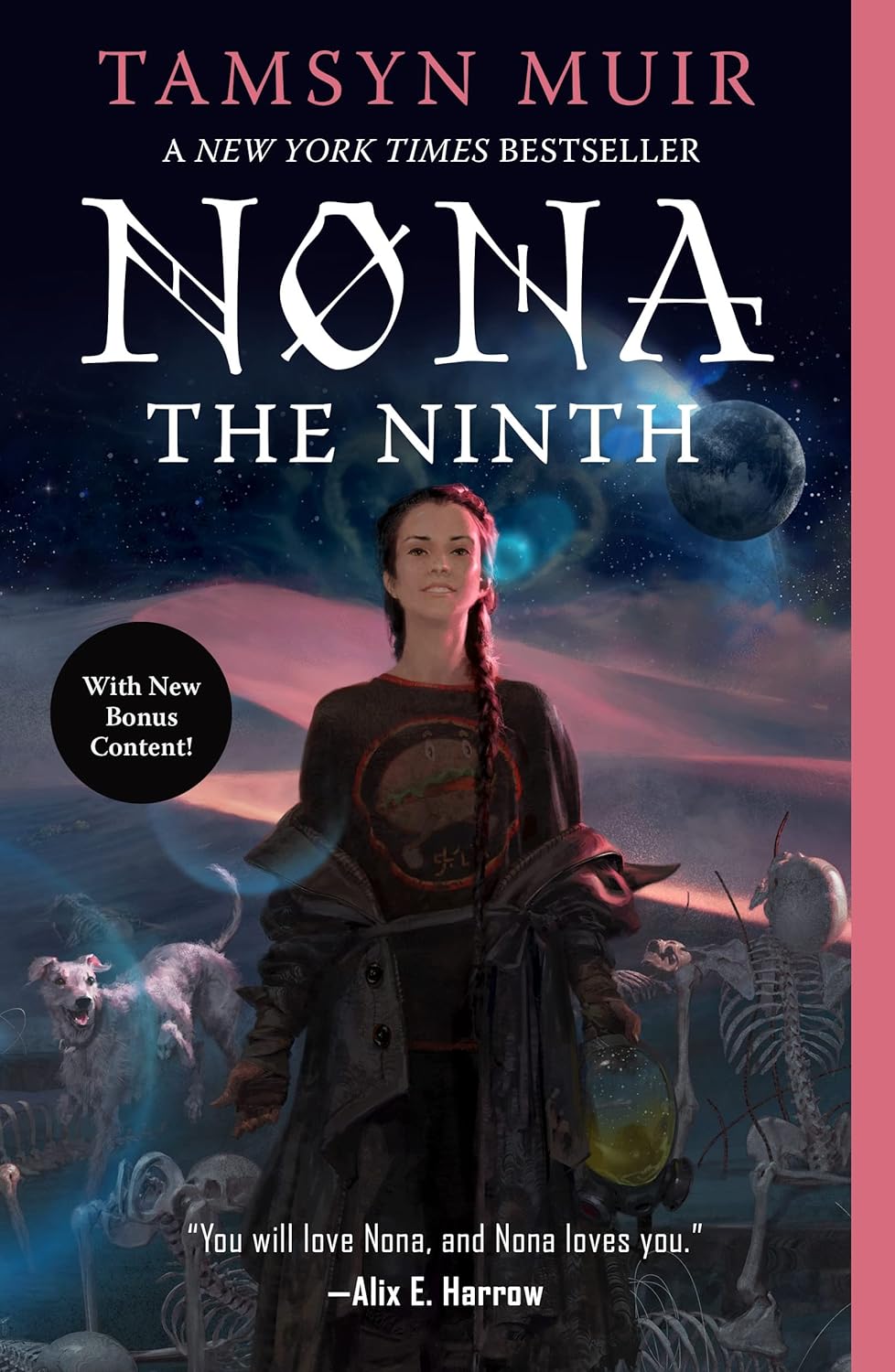
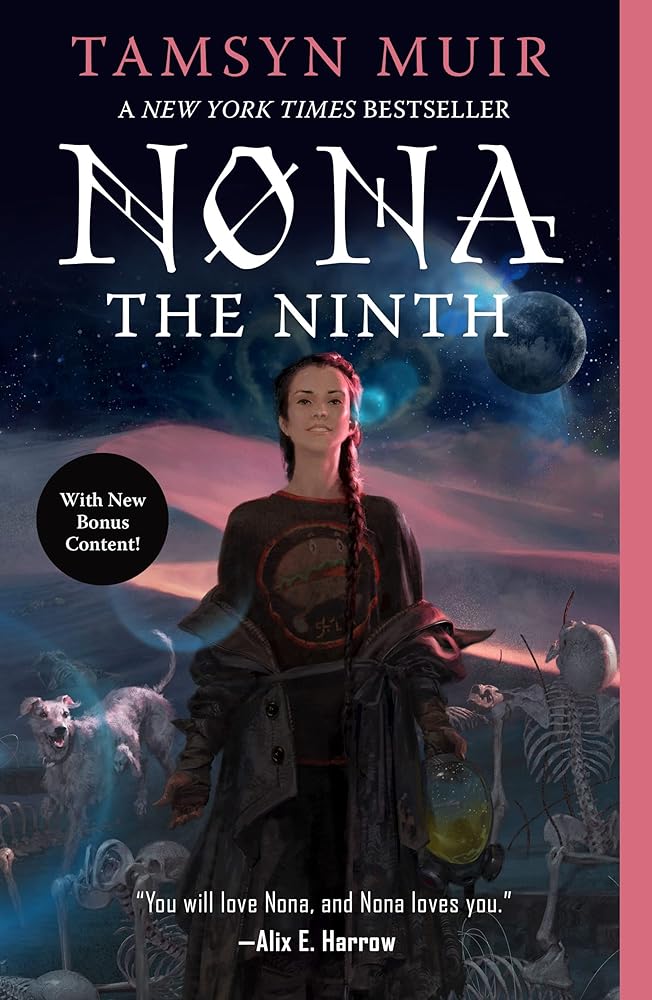
Tamsyn Muir's New York Times and USA Today bestselling Locked Tomb Series continues with Nona ...the Ninth?
A Finalist for the Hugo and Locus Awards!
An Indie Next Pick!
The Locked Tomb is a 2023 Hugo Finalist for Best Series!
“You will love Nona, and Nona loves you.” ―Alix E. Harrow
“Unlike anything I've ever read.” ―V.E. Schwab on Gideon the Ninth
“Deft, tense and atmospheric, compellingly immersive and wildly original.” ―The New York Times on Gideon the Ninth
Her city is under siege.
The zombies are coming back.
And all Nona wants is a birthday party.
In many ways, Nona is like other people. She lives with her family, has a job at her local school, and loves walks on the beach and meeting new dogs. But Nona's not like other people. Six months ago she woke up in a stranger's body, and she's afraid she might have to give it back.
The whole city is falling to pieces. A monstrous blue sphere hangs on the horizon, ready to tear the planet apart. Blood of Eden forces have surrounded the last Cohort facility and wait for the Emperor Undying to come calling. Their leaders want Nona to be the weapon that will save them from the Nine Houses. Nona would prefer to live an ordinary life with the people she loves, with Pyrrha and Camilla and Palamedes, but she also knows that nothing lasts forever.
And each night, Nona dreams of a woman with a skull-painted face...

Nonbinary Life is an invitation to imagine the possibilities of life outside of gender.
To write, to think, to imagine, to agitate, and to love without regard for gender is to lead a non-binary life. In this genre-defying work of autotheory, Marquis Bey proposes a radical refusal: to relinquish gender as a framework we carry - for ourselves and for others - and to embrace modes of being that exist outside of its grasp.
Spanning questions of pronouns, masculinity, love, family, language, and even the Redwood National Forest, Nonbinary Life blends memoir and theory to provide a philosophical meditation on what it means to live beyond the binary


A reflection on the many manifestations of broken trust in nonmonogamous relationships, and how to heal from them.
Nonmonogamy can assume many shapes, none of which can claim to be a “safe” model of intimacy. The jet-setting passport paramour who fits the needs of many far-flung lovers into a single carryon has as many opportunities to do right or wrong by their partners as the members of a homebound triad who prefer raising a family to raising hell on the nightlife scene.
Even the most casual of connections requires trust, and where there is trust, there is the potential for betrayal. As long as there have been love stories, there has been love lost through deception, abandonment, or callous disregard of intimate bonds. Intimacy, exclusive or otherwise, can be exploratory or confined, collaborative or autonomous, but one thing it can never be is risk free.
Yes, there is cheating in nonmonogamous relationships. There are other forms of betrayal, too: the cliquish injustices of in-group bullying, the violation of having personal information shared by a trusted partner, the humiliation of seeing someone who claimed to love you “trade up” for a partner with more social, sexual or plain old economic capital. Trust can be broken, and in turn break people, in a great number of ways.
In Nonmonogamy and Betrayal, Eve Rickert, co-author of More Than Two, Second Edition: Cultivating Nonmonogamous Relationships with Kindness and Integrity, explores a regrettable inclination among many who practise nonmonogamy: to downplay or minimize the destructive capacity of broken trust, both to the betrayed partner and to the larger community. Nonmonogamy and Betrayal not only unravels the varieties of betrayal that can occur in nonmonogamy, but explores pathways to recognition and healing.

An examination of how we live in a mononormative paradigm and how nonmonogamous people can defy the status quo.
Exploring nonmonogamy can require us to shift our worldview and deconstruct what we’ve been taught about relationship dynamics. However, it is difficult to defy paradigms while also existing within them―even as we strive to unlearn established norms, we can find ourselves unintentionally reproducing the principles of paradigms like mononormativity in our nonmonogamous relationships. In a society where monogamy is established as normal and reinforced through legal systems and cultural etiquette, this is not surprising.
By examining prevalent cultural norms and values, and presenting real-life examples of mononormativity’s impact, Marla Schreiber encourages readers to consider their own preconceptions and guides them towards effectively defying mononormativity and other intersecting paradigms.
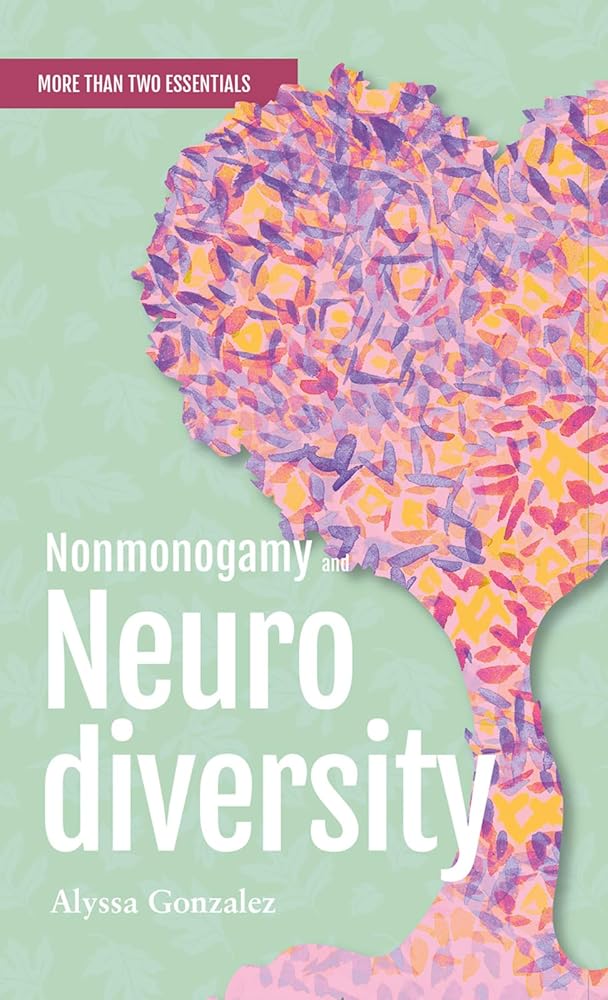
Too often, the neurodivergent community is marginalized, de-sexualized or patronized. Neurodivergent people are often not seen as part of the romantic or sexual landscape, let alone as people who can have multiple partners. However, the fact that neurodivergent people do not see the world or operate within it as other people do makes nonmonogamy both uniquely challenging and uniquely well-suited to them.
This book is for neurodivergent people considering or practicing nonmonogamy. Its goal is to help neurodivergent people understand how well-suited they are to the polyamorous life, and to help them recognize and manage the challenges that being neurodivergent can bring to nonmonogamy. It is also for the partners and potential partners of neurodivergent people, to encourage them to understand different perspectives and to help them be understanding, accommodating and well-informed. Nomonogamous relationships do not belong exclusively to the neurotypicals, but to us all.,

5,000,000 COPIES SOLD WORLDWIDE • TRANSLATED IN MORE THAN 35 LANGUAGES
What is Violent Communication?
If “violent” means acting in ways that result in hurt or harm, then much of how we communicate—judging others, bullying, having racial bias, blaming, finger pointing, discriminating, speaking without listening, criticizing others or ourselves, name-calling, reacting when angry, using political rhetoric, being defensive or judging who’s “good/bad” or what’s “right/wrong” with people—could indeed be called “violent communication.”
What is Nonviolent Communication?
Nonviolent Communication is the integration of four things:
• Consciousness: a set of principles that support living a life of compassion, collaboration, courage, and authenticity
• Language: understanding how words contribute to connection or distance
• Communication: knowing how to ask for what we want, how to hear others even in disagreement, and how to move toward solutions that work for all
• Means of influence: sharing “power with others” rather than using “power over others”
Nonviolent Communication serves our desire to do three things:
• Increase our ability to live with choice, meaning, and connection
• Connect empathically with self and others to have more satisfying relationships
• Sharing of resources so everyone is able to benefit

Show your pride with these vinyl stickers designed by one of our staff members!
Approximately 3" across, suitable for indoor or outdoor use. Printed in the USA by Sticker Blitz.