Sort by:
1959 products
1959 products

“No writer has better understood the mix of fear and possibility, peril and exuberance that's marked this new millennium.”
―Bill McKibben
“An elegant reminder that activist victories are easily forgotten, and that they often come in extremely unexpected, roundabout ways.”
―The New Yorker
A book as powerful and influential as Rebecca Solnit's Men Explain Things to Me, her Hope in the Dark was written to counter the despair of radicals at a moment when they were focused on their losses and had turned their back to the victories behind them and the unimaginable changes soon to come. In it, she makes a radical case for hope as a commitment to act in a world whose future remains uncertain and unknowable. Drawing on her decades of activism and a wide reading of environmental, cultural, and political history, Solnit argued that radicals have a long, neglected history of transformative victories, that the positive consequences of our acts are not always immediately seen, directly knowable, or even measurable, and that pessimism and despair rest on an unwarranted confidence about what is going to happen next. Now, with a moving new introduction explaining how the book came about and a new afterword that helps teach us how to hope and act in our unnerving world, she brings a new illumination to the darkness of 2016 in an unforgettable new edition of this classic book.
Writer, historian, and activist Rebecca Solnit is the author of eighteen or so books on feminism, western and indigenous history, popular power, social change and insurrection, wandering and walking, hope and disaster, including the books Men Explain Things to Me and Hope in the Dark, both also with Haymarket; a trilogy of atlases of American cities; The Faraway Nearby; A Paradise Built in Hell: The Extraordinary Communities that Arise in Disaster; A Field Guide to Getting Lost; Wanderlust: A History of Walking; and River of Shadows, Eadweard Muybridge and the Technological Wild West (for which she received a Guggenheim, the National Book Critics Circle Award in criticism, and the Lannan Literary Award). A product of the California public education system from kindergarten to graduate school, she is a columnist at Harper's and a regular contributor to the Guardian.

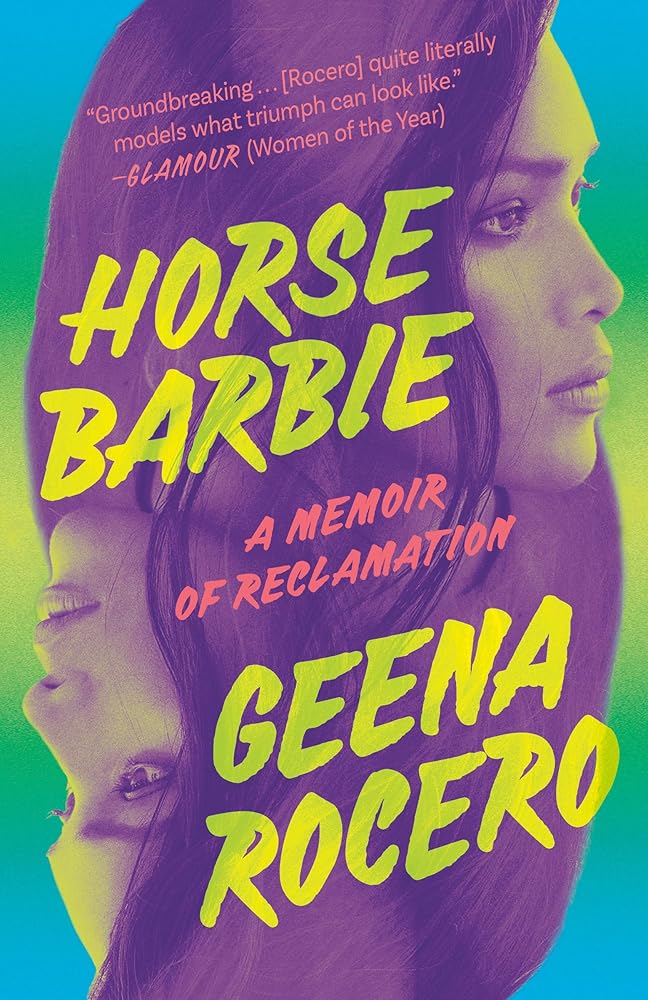
“A moving chronicle of trans resilience and joy” (Vogue) from one of Out100’s Most Impactful and Influential LGBTQ+ Storytellers
“Groundbreaking . . . [Rocero] quite literally models what triumph can look like.”—Glamour (Women of the Year)
WINNER OF THEM’S AWARD FOR LITERATURE • A BEST BOOK OF THE YEAR: Book Riot, Elle, Esquire
As a young femme in 1990s Manila, Geena Rocero heard, “Bakla, bakla!,” a taunt aimed at her feminine sway, whenever she left the tiny universe of her eskinita. Eventually, she found her place in trans pageants, the Philippines’ informal national sport. When her competitors mocked her as a “horse Barbie” due to her statuesque physique, tumbling hair, long neck, and dark skin, she leaned into the epithet. By seventeen, she was the Philippines’ highest-earning trans pageant queen.
A year later, Geena moved to the United States where she could change her name and gender marker on her documents. But legal recognition didn’t mean safety. In order to survive, Geena went stealth and hid her trans identity, gaining one type of freedom at the expense of another. For a while, it worked. She became an in-demand model. But as her star rose, her sense of self eroded. She craved acceptance as her authentic self yet had to remain vigilant in order to protect her dream career. The high-stakes double life finally forced Geena to decide herself if she wanted to reclaim the power of Horse Barbie once and for all: radiant, head held high, and unabashedly herself.
A dazzling testimony from an icon who sits at the center of transgender history and activism, Horse Barbie is a celebratory and universal story of survival, love, and pure joy.


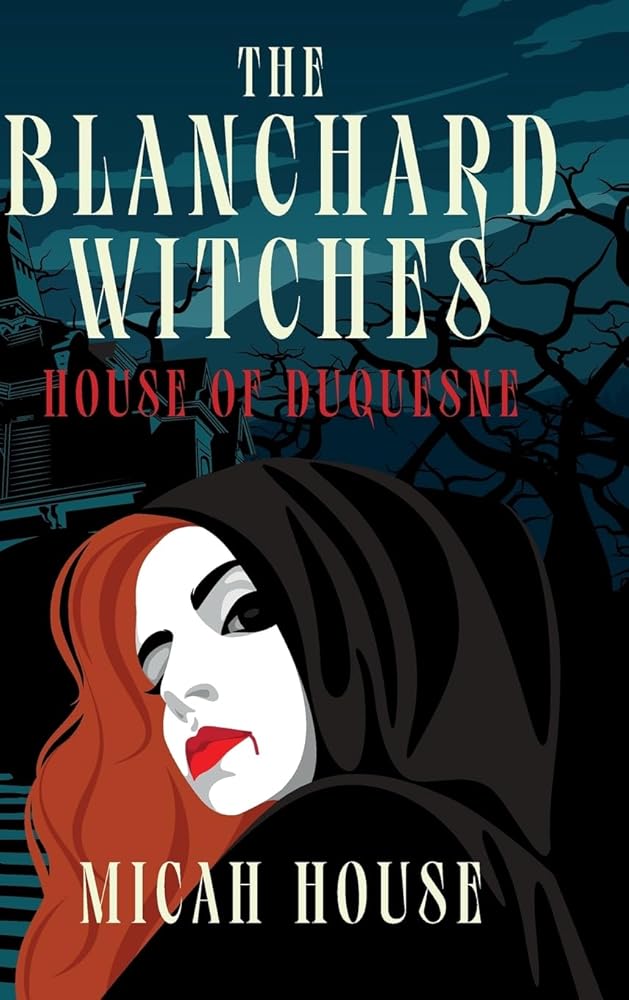
The Blanchard Witches: House of Duquesne is the mesmerizing fourth installment in the Blanchard Witches series, weaving intrigue, suspense, and supernatural combat into an unforgettable contemporary fantasy. At its heart lies a chilling revelation about the enigmatic D'Angelo family and their centuries-old malevolence.
As the Blanchards recover from the startling events of the previous novel, another tragic loss will prolong their grief.Meanwhile, their world is more upended when Tess, Trix, and Echo, the triplets newly integrated into the Blanchard family, encounter their estranged uncle Thaddeuss D'Angelo. A shadowy and sinister figure, Thaddeuss harbors secrets tied to the mysterious House of Duquesne, a place of dark power that threatens to entangle the triplets and their newfound family.
Blackie D'Angelo, the triplets' mother, must confront her haunting past and strained ties to the D'Angelos as Thaddeuss begins sowing discord, hinting at long buried secrets she does not want her children to know. Amidst this, Seth struggles to find solace following the loss of his wife, Yasmine, while Artemis shoulders the responsibility of leading the Blanchard coven, navigating the delicate balance between unity and the looming threat of Thaddeuss' real agenda.
As alliances are tested and old wounds reopened, the Blanchards must unravel the truths behind the House of Duquesne to protect themselves and the world itself from what lies behind its sinister walls. Culminating in an epic battle unlike any they've fought before, the Blanchards will stake not only their own lives on the outcome, but the safety of the world itself. And it will be fought on enemy territory. Not everyone will survive The House of Duquesne.
Why This Book Will Resonate with Readers
The Blanchard Witches: House of Duquesne combines the charm of Southern Gothic settings with the layered dynamics of a sprawling supernatural family saga. Fans of The Rules of Magic and The Once and Future Witches will be enthralled by the story's blend of rich world-building, nuanced characters, high-stakes drama, and vivid battle scenes.
Micah House's storytelling shines in this installment, skillfully balancing humor, heartache, and suspense. With its exploration of family secrets, intergenerational resilience, and the perils of power, House of Duquesne will leave readers spellbound and eager for more.
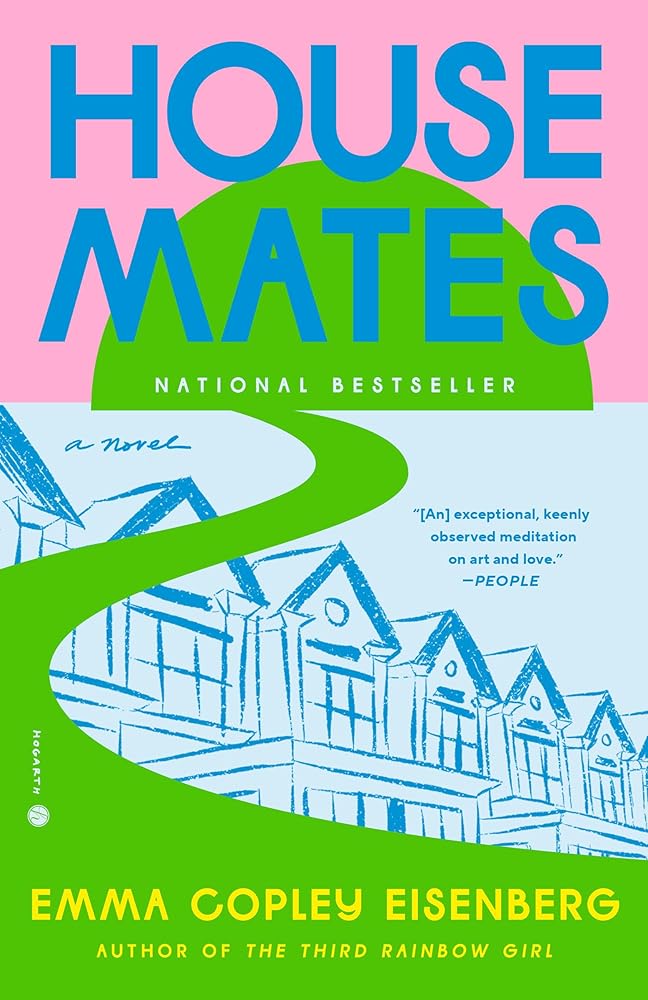
NATIONAL BESTSELLER - Two young housemates embark on a road trip to discover themselves in this "exceptional, keenly observed meditation on art and love" (People) in a fractured America, by the award-winning author of The Third Rainbow Girl
"Tender, nuanced, and hilarious."--Oprah Daily
15 LGBTQ+ Books to Read for Pride--Time
A BEST BOOK OF THE YEAR: People, The Boston Globe, NBC, Them, Autostraddle, Electric Lit, Kirkus Reviews
This Random House Book Club edition includes a Q&A with Torrey Peters and a discussion guide.
What does it feel like, standing in the moments that will mark your life?
When Bernie replies to Leah's ad for a new housemate in Philadelphia, the two begin an intense and defiantly uncategorizable friendship based on a mutual belief in their art, and one another. Both aspire to capture the world around them: Leah through her writing; Bernie through her photography.
After Bernie's former photography professor, the renowned yet tarnished Daniel Dunn, dies and leaves her a complicated inheritance, Leah volunteers to accompany Bernie to his home in rural Pennsylvania, turning the jaunt into a road trip with an ambitious mission: to document America through words and photographs.
What ensues is a journey into the heart of the nation, bringing the housemates into conversation with people from all walks of life--"the absurd dreamers and failures of this wide, wide country"--as they try to make sense of the times they are living in. Along the way, Leah and Bernie discover what it means to chase their own ideas and dreams, and to embrace what they are capable of both romantically and artistically.
Warm and insightful, Housemates is a story of youth and freedom--a glorious celebration of queer life, and how art and love might save us all.

A fascinating tour of creatures from the surface to the deepest ocean floor: this "miraculous, transcendental book" invites us to envision wilder, grander, and more abundant possibilities for the way we live (Ed Yong, author of An Immense World).
A queer, mixed race writer working in a largely white, male field, science and conservation journalist Sabrina Imbler has always been drawn to the mystery of life in the sea, and particularly to creatures living in hostile or remote environments. Each essay in their debut collection profiles one such creature, including:
·the mother octopus who starves herself while watching over her eggs,
·the Chinese sturgeon whose migration route has been decimated by pollution and dams,
·the bizarre, predatory Bobbitt worm (named after Lorena),
·the common goldfish that flourishes in the wild,
·and more.
Imbler discovers that some of the most radical models of family, community, and care can be found in the sea, from gelatinous chains that are both individual organisms and colonies of clones to deep-sea crabs that have no need for the sun, nourished instead by the chemicals and heat throbbing from the core of the Earth. Exploring themes of adaptation, survival, sexuality, and care, and weaving the wonders of marine biology with stories of their own family, relationships, and coming of age, How Far the Light Reaches is a shimmering, otherworldly debut that attunes us to new visions of our world and its miracles.
WINNER OF THE LOS ANGELES TIMES BOOK PRIZE in SCIENCE & TECHNOLOGY
Finalist for the Lambda Literary Award One of TIME’s 10 Best Nonfiction Books of the Year • A PEOPLE Best New Book • A Barnes & Noble and SHELF AWARENESS Best Book of 2022 • An Indie Next Pick • One of Winter’s Most Eagerly Anticipated Books: VANITY FAIR, VULTURE, BOOKRIOT

“No single book is as relevant to the present moment.”—Claudia Rankine, author of Citizen
“One of the defining books of the decade.”—Elizabeth Hinton, author of From the War on Poverty to the War on Crime
NEW YORK TIMES BOOK REVIEW EDITORS’ CHOICE • With a new preface • Fascist politics are running rampant in America today—and spreading around the world. A Yale philosopher identifies the ten pillars of fascist politics, and charts their horrifying rise and deep history.
As the child of refugees of World War II Europe and a renowned philosopher and scholar of propaganda, Jason Stanley has a deep understanding of how democratic societies can be vulnerable to fascism: Nations don’t have to be fascist to suffer from fascist politics. In fact, fascism’s roots have been present in the United States for more than a century. Alarmed by the pervasive rise of fascist tactics both at home and around the globe, Stanley focuses here on the structures that unite them, laying out and analyzing the ten pillars of fascist politics—the language and beliefs that separate people into an “us” and a “them.” He knits together reflections on history, philosophy, sociology, and critical race theory with stories from contemporary Hungary, Poland, India, Myanmar, and the United States, among other nations. He makes clear the immense danger of underestimating the cumulative power of these tactics, which include exploiting a mythic version of a nation’s past; propaganda that twists the language of democratic ideals against themselves; anti-intellectualism directed against universities and experts; law and order politics predicated on the assumption that members of minority groups are criminals; and fierce attacks on labor groups and welfare. These mechanisms all build on one another, creating and reinforcing divisions and shaping a society vulnerable to the appeals of authoritarian leadership.
By uncovering disturbing patterns that are as prevalent today as ever, Stanley reveals that the stuff of politics—charged by rhetoric and myth—can quickly become policy and reality. Only by recognizing fascists politics, he argues, may we resist its most harmful effects and return to democratic ideals.
“With unsettling insight and disturbing clarity, How Fascism Works is an essential guidebook to our current national dilemma of democracy vs. authoritarianism.”—William Jelani Cobb, author of The Substance of Hope

“How It All Ends is hilarious, inventive, smart, and silly, and perfectly captures the overwhelming confusion, anxiety, and joy of a young gay crush.” —Alice Oseman, bestselling author of Heartstopper
“Emma Hunsinger’s sharp wit and eclectic humor shines in this fantastic story about making new friends and surviving school. I simply adore her work as a writer and an artist.” —Dan Santat, National Book Award winner for A First Time for Everything
“Imaginative and hysterical, and with the sort of rare, clear-seeing honesty that will make any reader feel less alone in the world. I loved it.” —Eliot Schrefer, two-time National Book Award finalist and New York Times bestselling author
“Emma Hunsinger is a master at revealing human emotion through comedy and absurdism. How It All Ends is a hilarious, surreal, and deeply sincere story about finding yourself in a situation that you don't feel ready to face and making your way through it anyway.” —Sarah Sax, author of Picture Day
“How It All Ends felt like Emma Hunsinger's inner child asking my own inner child, 'Hey, you want to sit together?' I've never felt so healed by a book. I can't wait to give it to everyone I know.” —Adib Khorram, award-winning author of Darius the Great Is Not Okay
A funny, vulnerable, and disarming debut graphic novel from Emma Hunsinger, the creator of the popular “How to Draw a Horse.” How It All Ends is a book about being overwhelmed by who you are and who you might be—and all the possibilities in between. For fans of Snapdragon, The Magic Fish, Heartstopper, and New Kid.
Thirteen-year-old Tara lives inside the nonstop adventure of her imagination. It’s far more entertaining than dull, everyday life. But when she’s bumped from seventh grade directly to high school, she gets a dramatic jolt to reality.
Now Tara is part of a future she doesn’t feel at all ready for. She's not ready to watch the racy shows the high school kids like, or to listen to the angsty music, or to stop playing make-believe with her younger brother. She’s not ready to change for PE in front of everyone, or for the chaos of the hallways, or for the anarchy of an English class that’s overrun with fourteen-year-old boys.
But then there’s Libby.
Tara doesn’t know whether she’s ready for Libby. She can’t even explain who Libby is to her because she doesn’t know yet. She just knows that everything’s more fun when she and her new classmate are together. But what will happen next? How will it all end?
This debut graphic novel is a clever and candid portrait of a young girl grappling with the pressures of fitting in, finding your people, and sorting through confusing feelings. Emma Hunsinger has a pitch-perfect ear for the awkward yet endearing moments that accompany growing up, and her illustrations are downright hilarious. She brilliantly captures the humor and the horror of self-discovery and the first blushes of having a crush. How It All Ends deftly explores how unbearable—but exciting!—it is to grow up.

by A.J. West: Hardcover; 336 pages / English
[Oneworld Publications] The remarkable tale of how queer bookshops built communities, nourished minds, redefined literature – and changed the world For over a century, LGBTQ+ bookshops have been the unsung heroes of queer liberation Home not only to books but chaotic community noticeboards, vicious rescue cats and countless meet cutes, queer bookshops have always been more than just bookshops, offering friendship, solidarity and sanctuary. Travelling the world – Shakespeare and Company in Paris, Gay’s the Word in London, the Oscar Wilde Bookshop in New York – A. J. West explores the remarkable history of these bookstores. Tracing their evolution from under-the-counter operations to beloved out-and-proud institutions, West reveals how the queer bookshop stood at the vanguard of LGBTQ+ rights, offering support and vital information through the AIDS crisis and bringing the fight to Section 28 and book bans. A powerful testament not only to bookshops but to the courage of queer booksellers, from Sylvia Beach hiding books from the Nazis in laundry baskets to Craig Rodwell facing off against the police at the Stonewall riots, A. J. West celebrates the shops and booksellers that brought queer literature and lives into the mainstream. Bookshops covered include: The Highlander & Dove, The Librarie Parisienne, Shakespeare and Company, City Lights Bookstore, The London Underground, Adonis Bookstore, The Oscar Wilde Memorial Bookshop, Glad Day, Lambda Rising, Giovanni’s Room, A Different Light, Amazon Bookstore Cooperative, A Woman’s Place Bookstore, Womanbooks, Sisterwrite, Modern Books, Housmans Bookshop, Prinz Eisenherz, Gay’s The Word, Lavender Menace & West and Wilde, Vrolijk, Silver Moon, London, The Bookshop Darlinghurst, Paperxclips, Gay-on-Wye, Gayberystwyth Books.

A timely picture book that tackles masculinity in an engaging and humorous way, from the author of My Shadow is Pink! Scott Stuart encourages boys to embrace who they truly are in this empowering and funny story, smashing age-old assumption about what it means to be a man.
Encompassing boys and men from different backgrounds, and told in irresistible rhyme, How to be a Real Man is a must-have picture book for all young readers tacking themes of gender identity, self-acceptance, equality, and diversity in a fun and engaging way.
Men should be STRONG with helping hands. Men should FIGHT for what is right. Men should be BRAVE and show how they feel.