
Sort by:
81 of 1795 products
81 of 1795 products
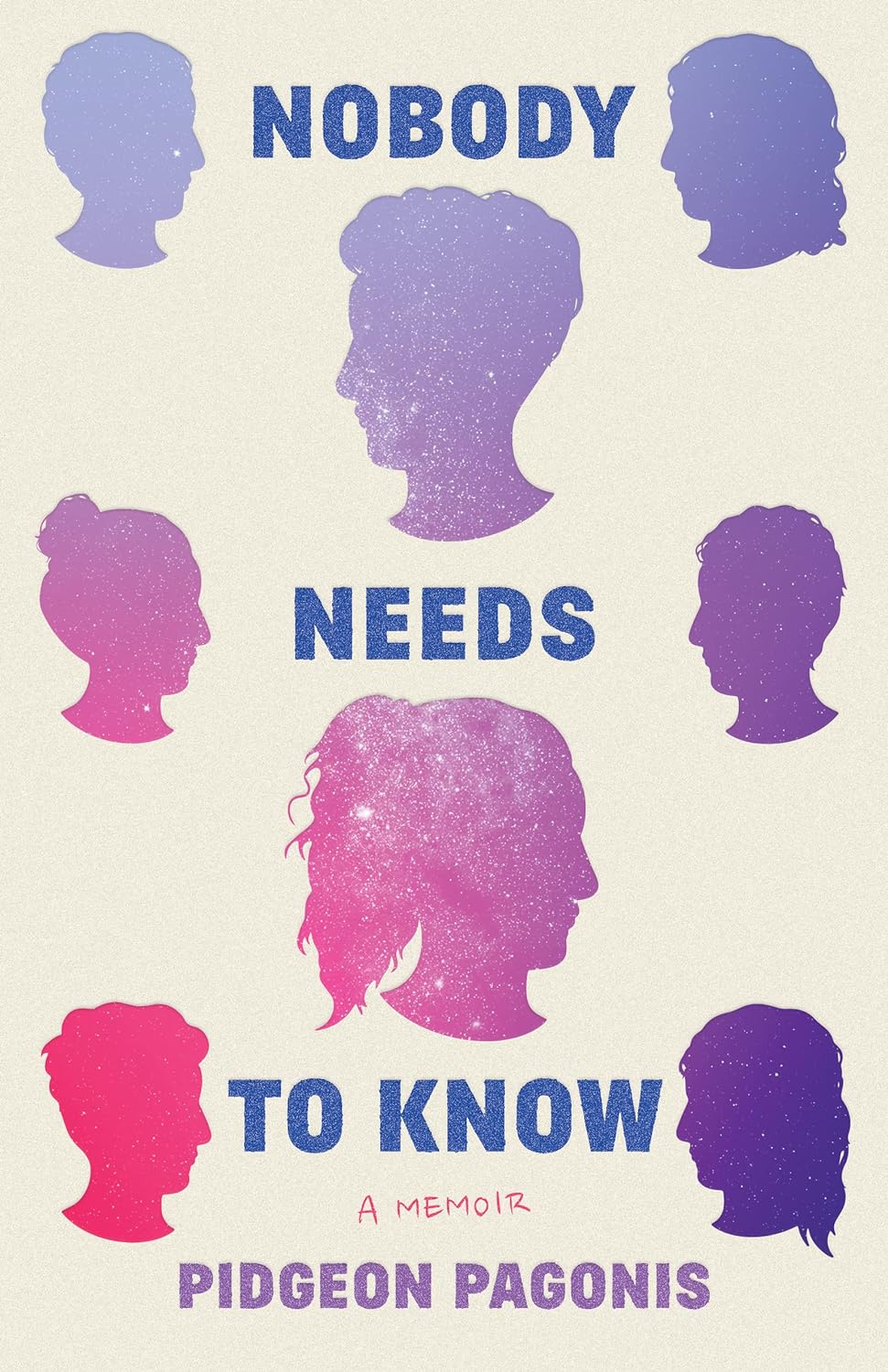
By: Pidgeon Pagonis (Author), Joey Soloway (Introduction), 2023, Paperback
From intersex activist Pidgeon Pagonis comes a candid and life-affirming true story of identity, lies, family secrets, and the healing power of truth.
Pidgeon Pagonis always felt like their life was a constant attempt to fit in with other girls―a feeling that was only exacerbated when puberty failed to hit. They never understood why…until they uncovered the secret that had haunted their childhood.
Bouncing between their Chicago home and the city’s children’s hospital, Pidgeon weathered a series of traumatic surgeries, fabrications, and misdirections. It wasn’t until college that Pidgeon pieced together the puzzle of their identity: they’d been born intersex but raised as a girl, their life shaped by lies that left them physically and mentally scarred. But for Pidgeon, what began as a shameful and traumatic discovery transforms into a painful yet joyous journey of self-love, truth, and healing.
Pidgeon’s inspiring memoir is for everyone whose body and spirit defy expectations, a fierce challenge to a system hell-bent on enforcing binary definitions. Ultimately, it’s a celebration of the freedom and empowerment that come from learning the truth about who you are―and living it.
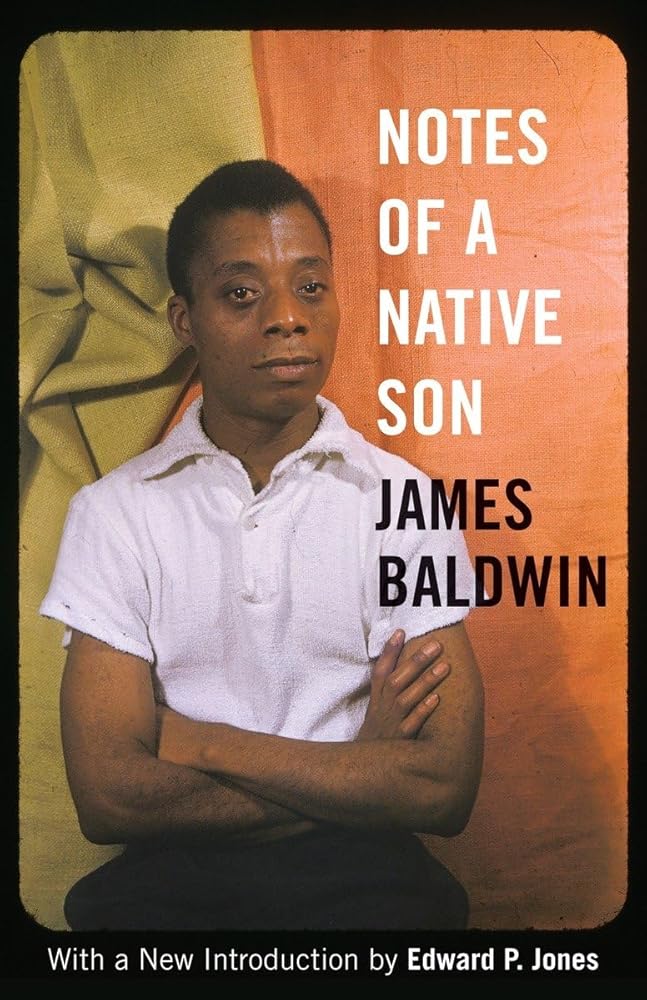
#26 on The Guardian's list of 100 best nonfiction books of all time, the essays explore what it means to be Black in America
In an age of Black Lives Matter, James Baldwin's essays on life in Harlem, the protest novel, movies, and African Americans abroad are as powerful today as when they were first written. With films like I Am Not Your Negro and the forthcoming If Beale Street Could Talk bringing renewed interest to Baldwin's life and work, Notes of a Native Son serves as a valuable introduction.
Written during the 1940s and early 1950s, when Baldwin was only in his twenties, the essays collected in Notes of a Native Son capture a view of black life and black thought at the dawn of the civil rights movement and as the movement slowly gained strength through the words of one of the most captivating essayists and foremost intellectuals of that era. Writing as an artist, activist, and social critic, Baldwin probes the complex condition of being black in America. With a keen eye, he examines everything from the significance of the protest novel to the motives and circumstances of the many black expatriates of the time, from his home in “The Harlem Ghetto” to a sobering “Journey to Atlanta.”
Notes of a Native Son inaugurated Baldwin as one of the leading interpreters of the dramatic social changes erupting in the United States in the twentieth century, and many of his observations have proven almost prophetic. His criticism on topics such as the paternalism of white progressives or on his own friend Richard Wright’s work is pointed and unabashed. He was also one of the few writing on race at the time who addressed the issue with a powerful mixture of outrage at the gross physical and political violence against black citizens and measured understanding of their oppressors, which helped awaken a white audience to the injustices under their noses. Naturally, this combination of brazen criticism and unconventional empathy for white readers won Baldwin as much condemnation as praise.
Notes is the book that established Baldwin’s voice as a social critic, and it remains one of his most admired works. The essays collected here create a cohesive sketch of black America and reveal an intimate portrait of Baldwin’s own search for identity as an artist, as a black man, and as an American.

One of the Must-Read Books of 2019 According to O: The Oprah Magazine * Time * Bustle * Electric Literature * Publishers Weekly * The Millions * The Week * Good Housekeeping
“There is more life packed on each page of Ordinary Girls than some lives hold in a lifetime.” —Julia Alvarez
In this searing memoir, Jaquira Díaz writes fiercely and eloquently of her challenging girlhood and triumphant coming of age.
While growing up in housing projects in Puerto Rico and Miami Beach, Díaz found herself caught between extremes. As her family split apart and her mother battled schizophrenia, she was supported by the love of her friends. As she longed for a family and home, her life was upended by violence. As she celebrated her Puerto Rican culture, she couldn’t find support for her burgeoning sexual identity. From her own struggles with depression and sexual assault to Puerto Rico’s history of colonialism, every page of Ordinary Girls vibrates with music and lyricism. Díaz writes with raw and refreshing honesty, triumphantly mapping a way out of despair toward love and hope to become her version of the girl she always wanted to be.
Reminiscent of Tara Westover’s Educated, Kiese Laymon’s Heavy, Mary Karr’s The Liars’ Club, and Terese Marie Mailhot’s Heart Berries, Jaquira Díaz’s memoir provides a vivid portrait of a life lived in (and beyond) the borders of Puerto Rico and its complicated history—and reads as electrically as a novel.
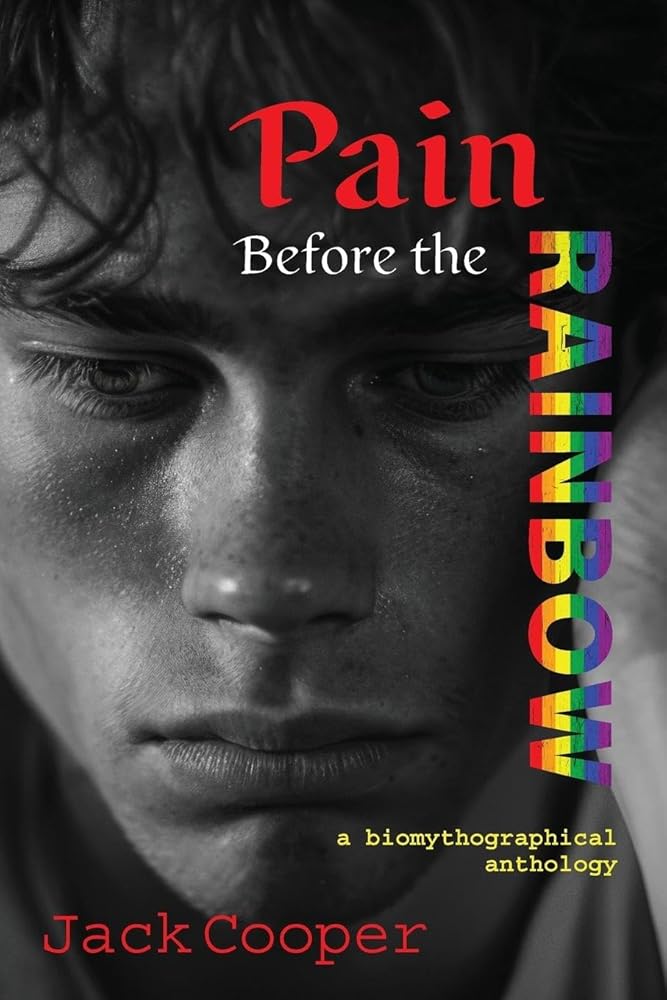
Pain Before the Rainbow: a biomythographical anthology/Anthony's Sin and Other Stories
$19.99
Unit price perPain Before the Rainbow: a biomythographical anthology/Anthony's Sin and Other Stories
$19.99
Unit price perPain Before the Rainbow: a biomythographical anthology by Jack Cooperis a collection of stories anchored by Anthony's Sin. The anthology includes poetry, essays, and eloquent explorations of life and love.
Cooper describes his work as Biomythography, which means weaving together myth, history, and biography in epic narrative form, a style of composition that represents all the ways in which we perceive the truth.
He says that Biomythography is not our truth told simply and in a mundane way, but a writing down of our meanings of identity, with the materials of our lives. He asserts that we are the culmination of it all; experiences are painted with imagery, perception, and mostly emotions. Details that become true in the telling.
This gripping book chronicles the life of a man who was acutely aware of being gay as a boy in an unaccepting world-a time before the rainbow. Cooper presents an eloquent narrative through a series of stories that engage the reader's mind and heart in this skillfully composed exploration of identity and compelling perspective through the lens of a man who lives and loves outside the lines of the oppressive heterosexual boxes that society and religion drew and that condition boys to think and act according to a preset definition of masculinity.
Cooper brilliantly navigates the shame and secrecy, tragedy, and trauma, as well as strength and courage, that grow out of living one's truth in a disapproving and often hurtful world.
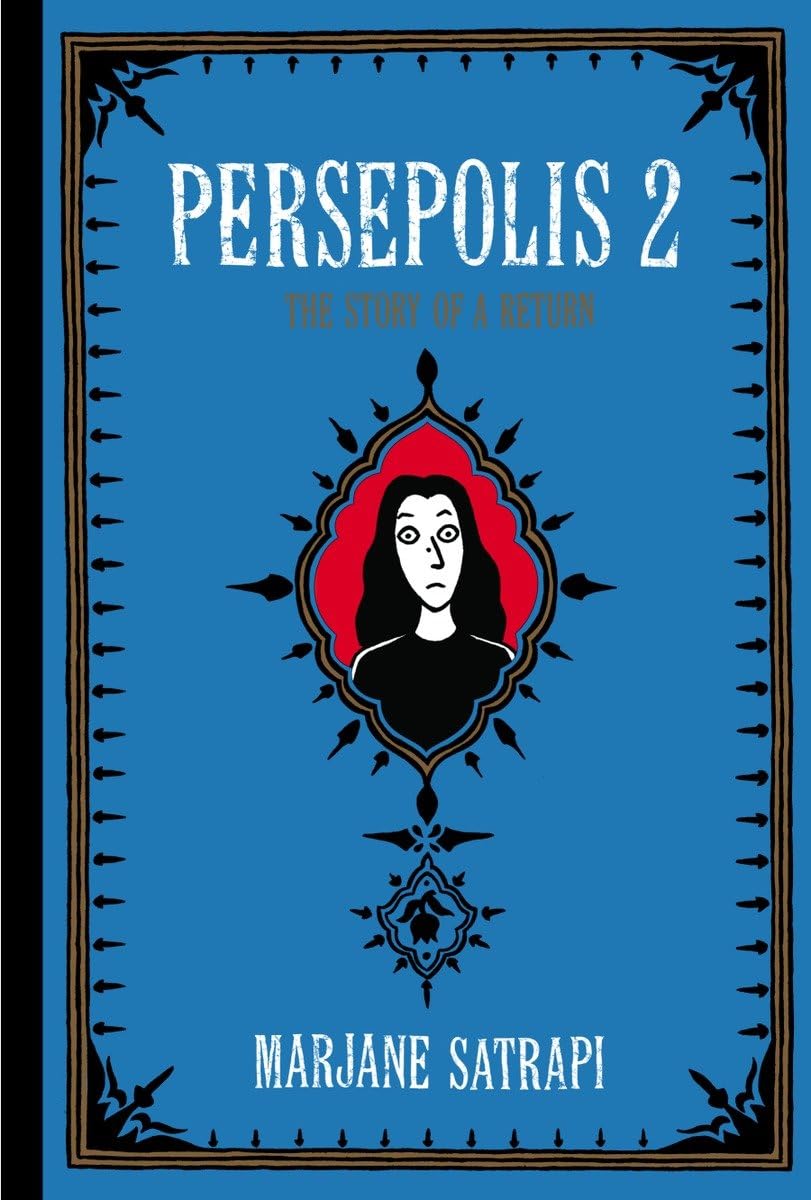
By: Marjane Satrapi (Author), 2004, Paperback

NEW YORK TIMES BESTSELLER • Wise, funny, and heartbreaking, Persepolis is Marjane Satrapi’s acclaimed graphic memoir of growing up in Iran during the Islamic Revolution.
“A wholly original achievement.... Satrapi evokes herself and her schoolmates coming of age in a world of protests and disappearances.... A stark, shocking impact.” —The New York Times: "The 50 Best Memoirs of the Past 50 Years"
One of the New York Times’s 100 Best Books of the 21st Century
In powerful black-and-white comic strip images, Satrapi tells the coming-of-age story of her life in Tehran from ages six to fourteen, years that saw the overthrow of the Shah’s regime, the triumph of the Islamic Revolution, and the devastating effects of war with Iraq. The intelligent and outspoken only child of committed Marxists and the great-granddaughter of one of Iran’s last emperors, Marjane bears witness to a childhood uniquely entwined with the history of her country.
Persepolis paints an unforgettable portrait of daily life in Iran and of the bewildering contradictions between home life and public life. Marjane’s child’s-eye view of dethroned emperors, state-sanctioned whippings, and heroes of the revolution allows us to learn as she does the history of this fascinating country and of her own extraordinary family. Intensely personal, profoundly political, and wholly original, Persepolis is at once a story of growing up and a reminder of the human cost of war and political repression. It shows how we carry on, with laughter and tears, in the face of absurdity. And, finally, it introduces us to an irresistible little girl with whom we cannot help but fall in love.
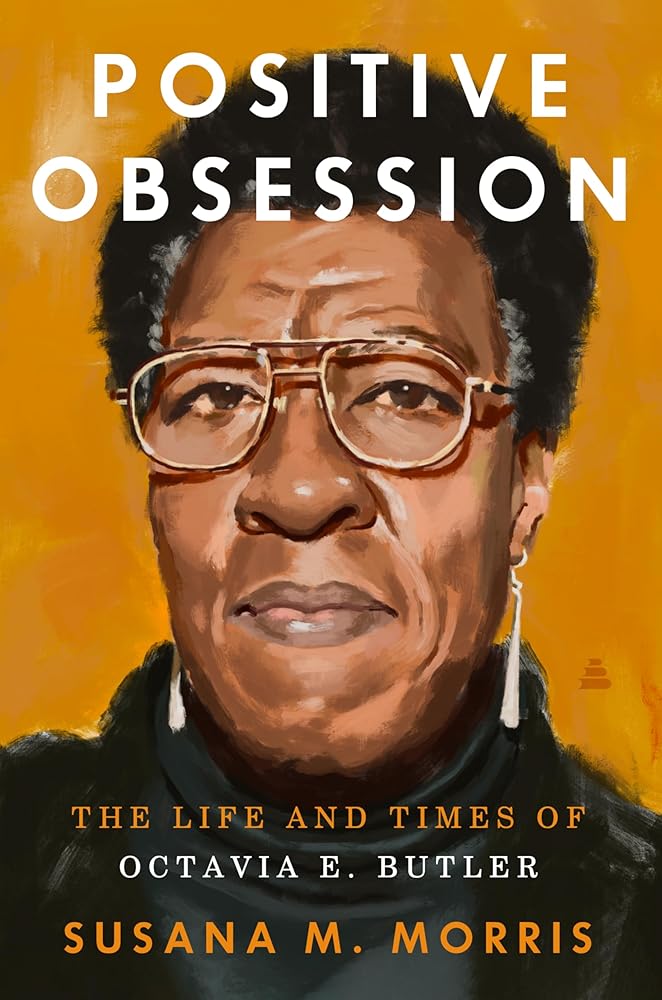
A magnificent cultural biography that charts the life of one of our greatest writers, situating her alongside the key historical and social moments that shaped her work.
As the first Black woman to consistently write and publish in the field of science fiction, Octavia Butler was a trailblazer. With her deft pen, she created stories speculating the devolution of the American empire, using it as an apt metaphor for the best and worst of humanity—our innovation and ingenuity, our naked greed and ambition, our propensity for violence and hierarchy. Her fiction charts the rise and fall of the American project—the nation’s transformation from a provincial backwater to a capitalist juggernaut—made possible by chattel slavery—to a bloated imperialist superpower on the verge of implosion.
In this outstanding work, Susana M. Morris places Butler’s story firmly within the cultural, social, and historical context that shaped her life: the Civil Rights Movement, Black Power, women’s liberation, queer rights, Reaganomics. Morris reveals how these influences profoundly impacted Butler’s personal and intellectual trajectory and shaped the ideas central to her writing. Her cautionary tales warn us about succumbing to fascism, gender-based violence, and climate chaos while offering alternate paradigms to religion, family, and understanding our relationships to ourselves. Butler envisioned futures with Black women at the center, raising our awareness of how those who are often dismissed have the knowledge to shift the landscape of our world. But her characters are no magical martyrs, they are tough, flawed, intelligent, and complicated, a reflection of Butler’s stories.
Morris explains what drove Butler: She wrote because she felt she must. “Who was I anyway? Why should anyone pay attention to what I had to say? Did I have anything to say? I was writing science fiction and fantasy, for God’s sake. At that time nearly all professional science-fiction writers were white men. As much as I loved science fiction and fantasy, what was I doing? Well, whatever it was, I couldn’t stop. Positive obsession is about not being able to stop just because you’re afraid and full of doubts. Positive obsession is dangerous. It’s about not being able to stop at all.”
By: Brian Broome (Author), 2022, Paperback
WINNER OF THE KIRKUS PRIZE • WINNER OF A LAMBDA LITERARY AWARD • NEW YORK TIMESNOTABLE BOOK • NEW YORK TIMES EDITORS' PICK • STONEWALL HONOR BOOK • NAMED A BEST BOOK OF THE YEAR BY PUBLISHERS WEEKLY, KIRKUS REVIEWS, LIBRARY JOURNAL, AMAZON AND APPLE BOOKS • TODAY SUMMER READING LIST PICK • ENTERTAINMENT WEEKLY BEST DEBUT OF SUMMER PICK • PEOPLE BEST BOOK OF SUMMER PICK
A raw, poetic, coming-of-age “masterwork” (The New York Times)
Punch Me Up to the Gods introduces a powerful new talent in Brian Broome, whose early years growing up in Ohio as a dark-skinned Black boy harboring crushes on other boys propel forward this gorgeous, aching, and unforgettable debut. Brian’s recounting of his experiences—in all their cringe-worthy, hilarious, and heartbreaking glory—reveal a perpetual outsider awkwardly squirming to find his way in. Indiscriminate sex and escalating drug use help to soothe his hurt, young psyche, usually to uproarious and devastating effect. A no-nonsense mother and broken father play crucial roles in our misfit’s origin story. But it is Brian’s voice in the retelling that shows the true depth of vulnerability for young Black boys that is often quietly near to bursting at the seams.
Cleverly framed around Gwendolyn Brooks’s poem “We Real Cool,” the iconic and loving ode to Black boyhood, Punch Me Up to the Gods is at once playful, poignant, and wholly original. Broome’s writing brims with swagger and sensitivity, bringing an exquisite and fresh voice to ongoing cultural conversations about Blackness in America.

Notable Quotations from Malcolm X
This pocketsized hardcover book contains nearly one hundred quotations from African-American Muslim minister and human rights activist, Malcolm X.
"It's freedom for everybody or freedom for nobody." --Malcolm X

"Duffy’s honesty and vulnerability resonate with emotional intensity" ―Kirkus Reviews
"A must-read for any woman facing the path of begin again" ―Marnie Woodrow, author of Heyday
Build the mantra you need right now.
When the author’s marriage breaks down after 16 years, she embarks on a journey of transformative learning. Sometimes heart-wrenching, sometimes celebratory but always ethereal, Mo’s testimony bears an examination of the emotional plane that everyone in a marriage should explore.
From the shock of discovery of deconstruction through to the easement of rehoming, Radiant White Light brings us through a divorce to the tenderness of vulnerability and displacement, under the waters of forgiveness and finally to a place where life will never be the same.
For those walking through the unknown of separation, this memoir offers clarity, courage, and the comfort of shared experience.
From the book:
i breathed deeply and threw the contents of my suitcase
on the floor in a grand gesture. suddenly there it was―
the journal i thought was lost.
my examination of divorce culture: the poetry,
the bright lights, the takeaways, the guideposts.
radiant.
white.
light.
the book’s pink cover glittered with golden stars.
daydreams. my words, the story, my testimony.
it had been with me all along.

“It’s all here: the grade school Walt Disney and Dr. Seuss; the adolescent acid trips; the fondness for Post-it notes and flying saucers; the long tails of Dubuffet and Burroughs; the encounters with Madonna, Warhol, and one game-changer of a subway Johnny Walker Red poster. Brad Gooch takes us deep into Keith Haring’s imagination while somehow managing to fix the aura and energy of the 1980s New York art scene to the page. A keen-eyed, beautifully written biography, atmospheric, exuberant, and as radiant as they come.”—Stacy Schiff, Pulitzer Prize winning author of The Revolutionary: Sam Adams
A stunning life of the iconic American artist, Keith Haring, by the acclaimed biographer Brad Gooch.
In the 1980s, the subways of New York City were covered with art. In the stations, black matte sheets were pasted over outdated ads, and unsigned chalk drawings often popped up on these blank spaces. These temporary chalk drawings numbered in the thousands and became synonymous with a city as diverse as it was at war with itself, beset with poverty and crime but alive with art and creative energy. And every single one of these drawings was done by Keith Haring.
Keith Haring was one of the most emblematic artists of the 1980s, a figure described by his contemporaries as “a prophet in his life, his person, and his work.” Part of an iconic cultural crowd that included Andy Warhol, Madonna, and Basquiat, Haring broke down the barriers between high art and popular culture, creating work that was accessible for all and using it as a means to provoke and inspire radical social change. Haring died of AIDS in 1990. To this day, his influence on our culture remains incontrovertible, and his glamorous, tragically short life has a unique aura of mystery and power.
Brad Gooch, noted biographer of Flannery O’Connor and Frank O’Hara, was granted access to Haring’s extensive archive. He has written a biography that will become the authoritative work on the artist. Based on interviews with those who knew Haring best and drawing from the rich archival history, Brad Gooch sets out to capture the magic of Keith Haring: a visionary and timeless icon.
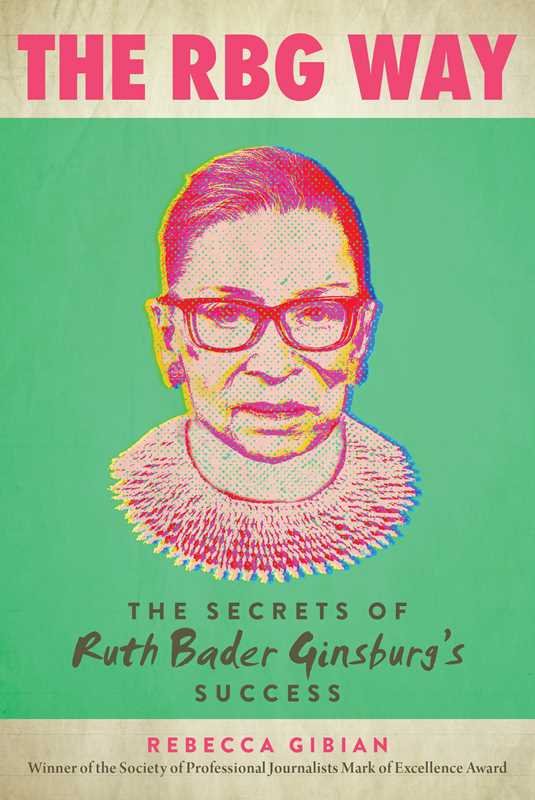

Understanding and Applying the Wisdom of Justice Ruth Bader Ginsburg! Given her incredible tenure as a Supreme Court justice as well as her monumental impact on the modern women’s rights movement, Ruth Bader Ginsburg has become one of the most prominent political leaders of today. To complement her judicial significance, she has also become one of the most culturally popular political figures in US history. Not only has her workout routine gone viral (and been detailed in a book by her trainer), but RBG's story has been featured in multiple critically acclaimed films. Organized into three parts and then broken down into more specific chapters within each part,The RBG Way offers wisdom from Justice Ginsburg, based on comments she has made on particular topics of importance. Insight is offered on subjects such as women's rights, creating lasting partnerships, overcoming hardship, how to be brave, and how to create lasting change. Rebecca Gibian offers her seasoned journalistic perspective to shed light on beliefs that RBG holds strongly, in a manner that is both comprehensive and accessible

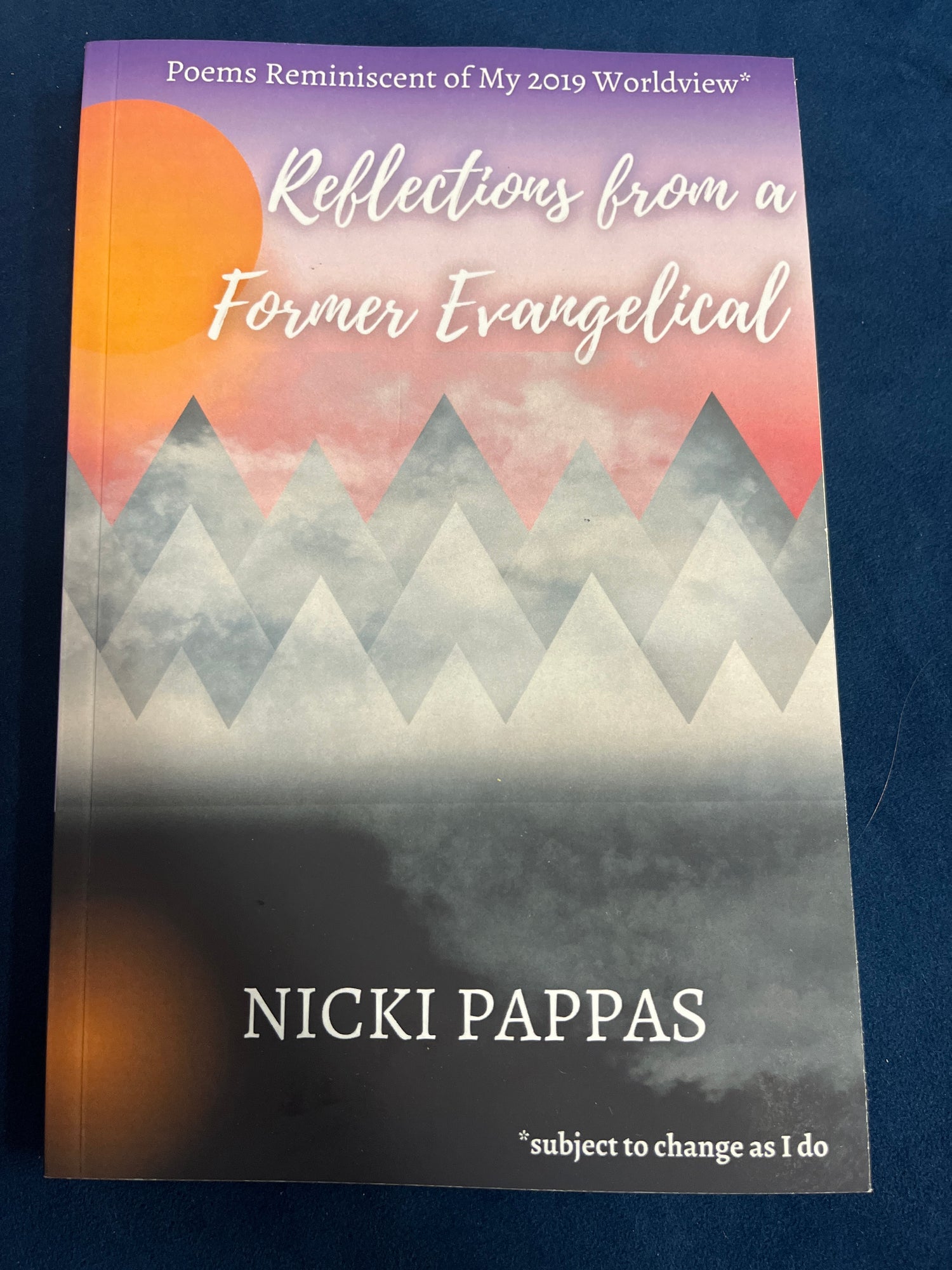
By Nicki Pappas, 2022, Paperback
signed, poetry