Sort by:
321 products
321 products

A revised and updated edition of Emily Nagoski’s game-changing New York Times bestseller Come As You Are, featuring new information and research on mindfulness, desire, and pleasure that will radically transform your sex life.
For much of the 20th and 21st centuries, women’s sexuality was an uncharted territory in science, studied far less frequently—and far less seriously—than its male counterpart.
That is, until Emily Nagoski’s Come As You Are, which used groundbreaking science and research to prove that the most important factor in creating and sustaining a sex life filled with confidence and joy is not what the parts are or how they’re organized but how you feel about them. In the years since the book’s initial publication, countless women have learned through Nagoski’s accessible and informative guide that things like stress, mood, trust, and body image are not peripheral factors in a woman’s sexual wellbeing; they are central to it—and that even if you don’t always feel like it, you are already sexually whole by just being yourself. This revised and updated edition continues that mission with new information and advanced research, demystifying and decoding the science of sex so that everyone can create a better sex life and discover more pleasure than you ever thought possible.
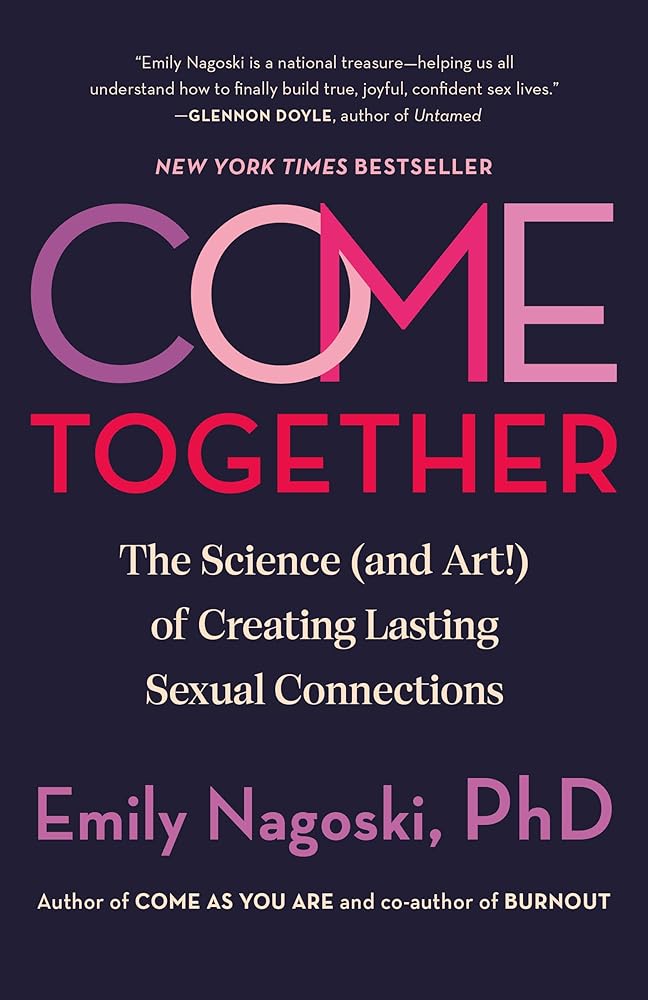
NEW YORK TIMES BESTSELLER • From the author of Come as You Are and co-author of Burnout comes an illuminating exploration of how to maintain a happy sex life in a long-term relationship.
“Emily Nagoski is a national treasure—helping us all understand how to finally build true, joyful, confident sex lives.”—Glennon Doyle, author of Untamed
In Come as You Are, Emily Nagoski, PhD, revolutionized the way we think about women’s sexuality. Now, in Come Together, Nagoski takes on a fundamentally misunderstood subject: sex in long-term relationships.
Most of us struggle at some point to maintain a sexual connection with our partner/s or spouse. And many of us are given not-very-good advice on what to do about it. In this book, Nagoski dispels the myths we’ve been taught about sex—for instance, the belief that sexual satisfaction and desire are highest at the beginning of a relationship and that they inevitably decline the longer that relationship lasts. Nagoski assures us that’s not true.
So, what is true? Come Together isn’t about how much we want sex, or how often we’re having it; it’s about whether we like the sex we’re having. Nagoski breaks down the obstacles that impede us from enjoying sex—from stress and body image to relationship difficulties and gendered beliefs about how sex “should” be—and presents the best ways to overcome them. You’ll learn:
• that “spontaneous desire” is not the kind of desire to strive for if you want to have great sex for decades
• vocabulary for talking with partners about ways to get in “the mood” and how to not take it personally when “the mood” is nowhere to be found
• how to understand your own and your partner’s “emotional floorplan,” so that you have a blueprint for how to get to a sexy state of mind
Written with scientific rigor, humor, and compassion, Nagoski shows us what great sex can look like, how to create it in our own lives, and what to do when struggles arise.
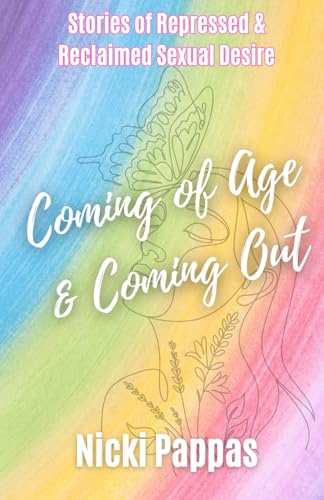
Coming of Age and Coming Out: Stories of Repressed and Reclaimed Sexual Desire
$18.00
Unit price perComing of Age and Coming Out: Stories of Repressed and Reclaimed Sexual Desire
$18.00
Unit price perNicki Pappas thought she was heterosexual when she married her evangelical sweetheart at the age of twenty. Coming of Age and Coming Out is her journey from repressed to reclaimed sexual desire.
Through a collection of stories, she authentically shares the raw truths about coming of age from childhood through adolescence and then coming out in her thirties as queer and non-monogamous.

Our hopes with Coming Out Together. Memoirs on the LGBTQ+ Experience, is that it helps make those who have gone through the experience of coming out, or are currently going through it, to know that they are not alone, that it can get better, or that it might just not be all that bad. Some coming out stories are hard, some ugly, and some good. All are important. By shining the light onto these experiences, we hope to contribute to the positive ripple effects of progress
-Shannon Ronan. Author and Founder of Open Air Press

“When truth teller and careful writer bell hooks offers a book, I like to be standing at the bookshop when it opens.” –Maya Angelou
Renowned visionary bell hooks explored the meaning of love in American culture with the critically acclaimed bestseller All About Love: New Visions. She continued her national dialogue with the bestselling Salvation: Black People and Love. Now hooks culminates her triumphant trilogy of love with Communion: The Female Search for Love.
Intimate, revealing, provocative, Communion challenges every woman to courageously claim the search for love as the heroic journey we must all choose to be truly free. In her trademark commanding and lucid language, hooks explores the ways ideas about women and love were changed by the feminist movement, by women's full participation in the workforce, and by the culture of self-help, and reveals how women of all ages can bring love into every aspect of their lives, for all the years of their lives.
Communion is the heart-to-heart talk every woman -- mother, daughter, friend, and lover -- needs to have.
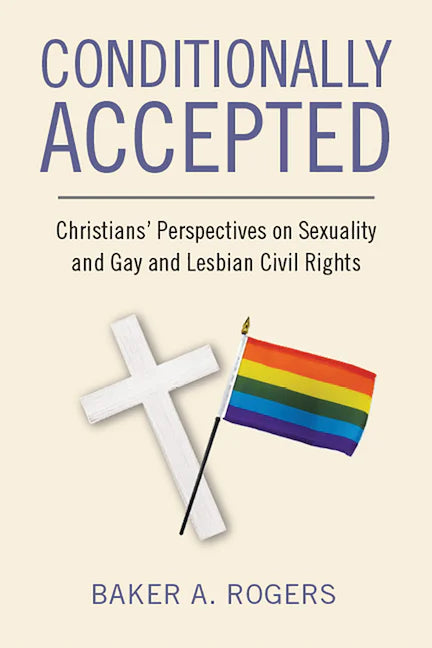
By Baker A. Rogers, 2019 Paperback
This book explores Mississippi Christians’ beliefs about homosexuality and gay and lesbian civil rights and whether having a gay or lesbian friend or family member influences those beliefs. Beliefs about homosexuality and gay and lesbian rights vary widely based on religious affiliation. Despite having gay or lesbian friends or family members, evangelical Protestants believe homosexuality is sinful and oppose gay and lesbian rights. Mainline Protestants are largely supportive of gay and lesbian rights and become more supportive after getting to know gay and lesbian people. Catholics describe a greater degree of uncertainty and a conditional acceptance of gay and lesbian rights; clear differences between conservative and liberal Catholics are evident. Overall, conservative Christians, both evangelical Protestants and conservative Catholics, hold a religious identity that overshadows their relationships with gay and lesbian friends or family. Conservative religion acts as a deterrent to the positive benefits of relationships with gay and lesbian people.

Crafting the Resistance: 35 Projects for Craftivists, Protestors, and Women Who Persist
$17.99
Unit price perCrafting the Resistance: 35 Projects for Craftivists, Protestors, and Women Who Persist
$17.99
Unit price perKnit, sew, and craft your way to self-empowerment.
Are you a Nasty Woman ready to smash the patriarchy with a needle and thread? Proudly proclaim your feminism with your very own DIY Bleeding Heart T-shirt? Or stage a protest with the rest of the girls, wearing knitted Pussyhats?
Be part of the revolution by reclaiming the "domestic" arts of knitting, sewing, and more—to channel your feminist rage. With pictures, step-by-step instructions, bonus patterns, and tips for crafters of all skill levels from beginner to advanced, Crafting the Resistance is the book for women’s rights activists on a DIY path to self-determination.
Put your homemaking and protesting skills to the test with thirty-five girl-powered, easy-to-make, kickass projects such as:
"Snowflake" knitted wristers
* "Bleeding Heart" T-shirt
* Clear vinyl protest tote bag to speed up security screenings
* The Pussyhat as knitted hats, holiday ornaments, throw pillows, and cat beds
* “Nasty Nag” zippered pouch
* Well read bookmarks
* And More!
Take politics into your own hands, literally, and craft your message out into the world. Including an essay and quotes on the history and importance of craftivism, Crafting the Resistance is the ultimate book for political crafters, DIY activists, empowered protestors, and any woman—or man—who is part of the resistance.

A frank, funny and informative guide to menopause and aging by beloved actress Naomi Watts, one of the leading voices in menopause awareness—with a foreword by Mary Claire Haver, MD, #1 New York Times bestselling author of The New Menopause
At thirty-six, Naomi Watts had just completed filming King Kong and was trying to start a family when she was told that she was on the brink of menopause. It is estimated that seventy-five million women in the United States are currently dealing with menopause symptoms (dry itchy skin, raging hormones, night sweats), and yet the very word “menopause” continues to be associated with stigma and confusion. With so little information, many women feel unprepared, ashamed, and deeply alone when the time comes.
This is the book Naomi Watts wishes she had when she first started experiencing symptoms. Like sitting down over coffee and having an intimate chat with your girlfriend, Dare I Say It blends funny and poignant stories from Naomi and her friends with advice from doctors, hormone experts, and nutritionists to take the secrecy and shame out of menopause and aging. Answering questions such as: What’s hormone therapy and should I be on it? Will I ever sleep again? Will I get myself back? What happened to my libido? Do I need eighteen serums for my aging skin? Whose body is this anyway? Who am I now? Naomi Watts shares the most up-to-date research on how to manage menopause symptoms and tackle the physical and emotional challenges we encounter as we age.
Irreverent, bold, and reassuring, Dare I Say It is the companion every woman needs to embrace the best version of herself as she moves into what can be the most powerful and satisfying period of her life.

The #1 New York Times bestseller. More than 2 million copies sold!
Look for Brené Brown’s new podcast, Dare to Lead, as well as her ongoing podcast Unlocking Us!
From thought leader Brené Brown, a transformative new vision for the way we lead, love, work, parent, and educate that teaches us the power of vulnerability.
“It is not the critic who counts; not the man who points out how the strong man stumbles, or where the doer of deeds could have done them better. The credit belongs to the man who is actually in the arena, whose face is marred by dust and sweat and blood; who strives valiantly; . . . who at the best knows in the end the triumph of high achievement, and who at worst, if he fails, at least fails while daring greatly.”—Theodore Roosevelt
Every day we experience the uncertainty, risks, and emotional exposure that define what it means to be vulnerable or to dare greatly. Based on twelve years of pioneering research, Brené Brown PhD, MSW, dispels the cultural myth that vulnerability is weakness and argues that it is, in truth, our most accurate measure of courage.
Brown explains how vulnerability is both the core of difficult emotions like fear, grief, and disappointment, and the birthplace of love, belonging, joy, empathy, innovation, and creativity. She writes: “When we shut ourselves off from vulnerability, we distance ourselves from the experiences that bring purpose and meaning to our lives.”
Daring Greatly is not about winning or losing. It’s about courage. In a world where “never enough” dominates and feeling afraid has become second nature, vulnerability is subversive. Uncomfortable. It’s even a little dangerous at times. And, without question, putting ourselves out there means there’s a far greater risk of getting criticized or feeling hurt. But when we step back and examine our lives, we will find that nothing is as uncomfortable, dangerous, and hurtful as standing on the outside of our lives looking in and wondering what it would be like if we had the courage to step into the arena—whether it’s a new relationship, an important meeting, the creative process, or a difficult family conversation. Daring Greatly is a practice and a powerful new vision for letting ourselves be seen.
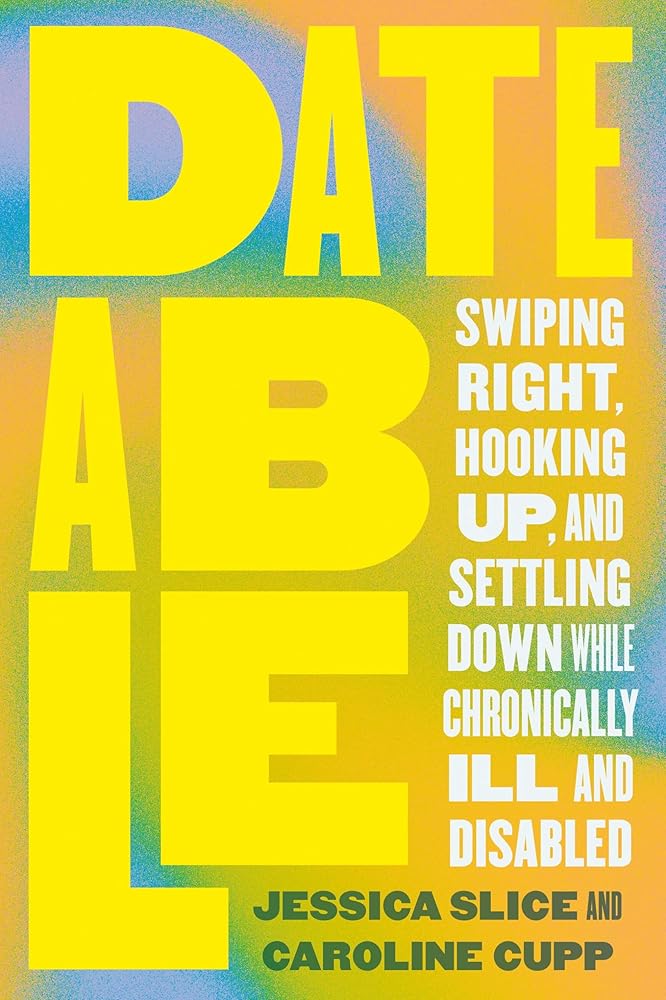
A much-needed guide for disabled and chronically ill people to dating - from apps to hooking up, sex, and more - from disabled essayist and author Jessica Slice and bioethicist Caroline Cupp.
Disabled people date, have casual sex, marry, and parent. Yet our romantic lives are conspicuously absent from the media and cultural conversation. Sexual education does not typically address the specific information needed by disabled students. Mainstream dating apps fail to include disability as an aspect of one’s identity alongside race, ethnicity, gender identity, and sexual orientation. The few underutilized disability-focused apps are paternalistic and unappealing. Bestselling dating books do not address disability, and the few relationship books marketed to disabled people focus on the mechanics of sex rather than the complex interactions that create the conditions for it.
In Dateable, disabled authors Jessica Slice Caroline Cupp team up to address the serious gap in the dating space. Dateable is the first book on disabled dating and relationships; it’s a dating guide made especially for disabled and chronically ill people, that also calls in nondisabled readers. Jessica and Caroline take on everything from rom-com representation and dating apps to sex and breakups with a strong narrative underpinning and down-to-earth advice. The book is as much a practical tool as it is an empowering guide.
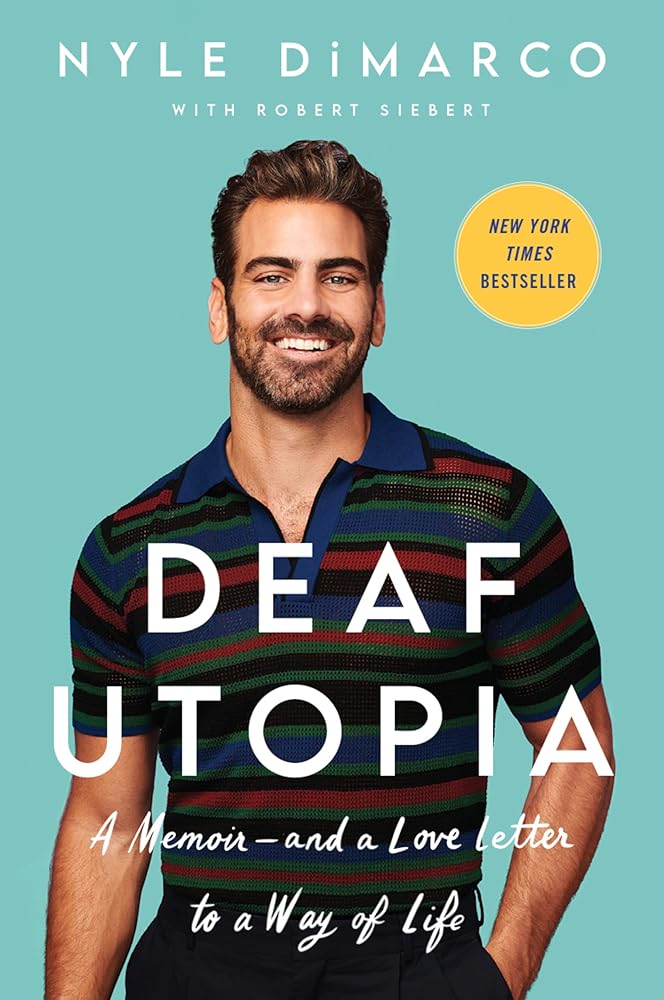
THE NEW YORK TIMES BESTSELLER FROM THE CO-DIRECTOR OF DEAF PRESIDENT NOW!
A heartfelt and inspiring memoir and celebration of Deaf culture by Nyle DiMarco. Actor, producer, two-time reality show winner, and now co-director of the acclaimed film Deaf President Now!, DiMarco both shares his own story and shines a light on the international Deaf community.
Before becoming the actor, producer, advocate, and model that people know today, Nyle DiMarco was half of a pair of Deaf twins born to a multi-generational Deaf family in Queens, New York. At the hospital one day after he was born, Nyle “failed” his first test—a hearing test—to the joy and excitement of his parents.
In this engrossing memoir, Nyle shares stories, both heartbreaking and humorous, of what it means to navigate a world built for hearing people. From growing up in a rough-and-tumble childhood in Queens with his big and loving Italian-American family to where he is now, Nyle has always been driven to explore beyond the boundaries given him. A college math major and athlete at Gallaudet—the famed university for the Deaf in Washington, DC—Nyle was drawn as a young man to acting, and dove headfirst into the reality show competitions America’s Next Top Model and Dancing with the Stars—ultimately winning both competitions.
Deaf Utopia is more than a memoir, it is a cultural anthem—a proud and defiant song of Deaf culture and a love letter to American Sign Language, Nyle’s primary language. Through his stories and those of his Deaf brothers, parents, and grandparents, Nyle opens many windows into the Deaf experience.
Deaf Utopia is intimate, suspenseful, hilarious, eye-opening, and smart—both a memoir and a celebration of what makes Deaf culture unique and beautiful.

An unapologetic guide for readers who are Black, masc, and bi—unlearning biphobia, coming out, combatting erasure, and embodying your whole self
Through cutting social analysis, personal stories, and need-to-know advice, Dear Bi Men reclaims bi+ visibility in a culture of erasure—and unapologetically centers Blackness in a practical and deeply researched guide to navigating life, work, and relationships as a Black bi+ man.
Popular representation of bi and pansexual men is growing, but we’re not there yet: It’s mostly white. It collapses bisexual identity into tired, hypersexualized tropes. And it fails to interrogate the deeply entrenched stereotypes that insist: You’re confused. You just don’t know you’re gay. You’re greedy. You must be great in bed.
Author, peer counselor, and creator of #bisexualmenspeak J.R. Yussuf pushes back against these stigmas and misconceptions, exploring how white supremacy reinforces biphobia and dictates what society thinks it means to “be a man.” He contextualizes discourse around queerness and bisexuality within a larger framework that honors readers’ intersecting identities. And he offers deeply practical advice, sharing how to:
* Unlearn internalized biphobia and homophobia
* Navigate an increasingly hostile digital landscape
* Think about coming out: who to tell, why to tell them, and how to do it
* Fight back against erasure and stigma
* Navigate sex, dating, partnerships, marriage, friendship, and work
* Understand your bi+ sexuality through a political lens
* Process Black bi+ representation
Rich with personal narratives, insightful analysis, and practical advice, this book is a powerful resource for Black bi+ men to reclaim their identity, counter biphobia, and get empowered—and an offering to all readers looking to fight back against the erasure and dehumanization wrought by patriarchy.

FEATURED ON THE COVER OF TIME MAGAZINE AS A 2021 NEXT GENERATION LEADER
“A once-in-a-generation voice.” – Vulture
“One of our greatest living writers.” – Shondaland
A full-throated and provocative memoir in letters from the New York Times bestselling author, “a dazzling literary talent whose works cut to the quick of the spiritual self” (Esquire)
In their critically acclaimed novels, Akwaeke Emezi has introduced readers to a landscape marked by familial tensions, Igbo belief systems, and a boundless search for what it means to be free. Now, in this extraordinary memoir, the bestselling author of The Death of Vivek Oji reveals the harrowing yet resolute truths of their own life. Through candid, intimate correspondence with friends, lovers, and family, Emezi traces the unfolding of a self and the unforgettable journey of a creative spirit stepping into power in the human world. Their story weaves through transformative decisions about their gender and body, their precipitous path to success as a writer, and the turmoil of relationships on an emotional, romantic, and spiritual plane, culminating in a book that is as tender as it is brutal.
Electrifying and inspiring, animated by the same voracious intelligence that distinguishes Emezi's fiction, Dear Senthuran is a revelatory account of storytelling, self, and survival.

2022 NATIONAL INDIE EXCELLENCE AWARDS WINNER — LGBTQIA NONFICTION
"The author offers an empowering perspective for people whose identities are often marginalized in the health and wellness industry." —Manhattan Book Review
Become the healthiest and happiest version of yourself using wellness tools designed specifically for BIPOC and LGBTQ folks.
The lack of BIPOC and LGBTQ representation in the fields of health and nutrition has led to repeated racist and unscientific biases that negatively impact the very people they purport to help. Many representatives of the increasingly popular body positivity movement actually add to the body image concerns of queer people of color by emphasizing cisgender, heteronormative, and Eurocentric standards of beauty. Few mainstream body positivity resources address the intersectional challenges of anti-Blackness, colorism, homophobia, transphobia, and generational trauma that are at the root of our struggles with wellness and self-care.
In Decolonizing Wellness: A QTBIPOC-Centered Guide to Escape the Diet Trap, Heal Your Self-Image, and Achieve Body Liberation, registered dietitian and nutritionist Dalia Kinsey will help readers to improve their health without restriction, eliminate stress around food and eating, and turn food into a source of pleasure instead of shame. A road map to body acceptance and self-care for queer people of color, Decolonizing Wellness is filled with practical eating practices, journal prompts, affirmations, and mindfulness tools. Ultimately, decolonizing nutrition is essential not only to our personal well-being but to our community’s well-being and to the possibility of greater social transformation.
This is a body positivity and food freedom book for marginalized folks. It’s a guide to throwing out food rules in exchange for internal cues and adopting a self-love-based approach to eating. It’s about learning to trust our bodies and turning mealtime into a time for celebration and healing.
It’s also a love letter to those of us who struggle with our bodies and a gentle plea for us to do the work it takes to accept, trust, and love ourselves.

The first-ever memoir of a child’s experience in detention on the US/Mexico border under President Trump’s infamous family separation policy.
D Esperanza was just thirteen years old when he lost his caregivers, his beloved grandmother and uncle. Since both of his parents were working and living in the United States, D was left on his own in a small town in Honduras. He quickly realized he simply could not make enough money to survive so he made the difficult decision to head north with his cousins and hopefully reunite with his parents in el norte.
Together, the boys struggled to survive a long and treacherous journey through Central America and Mexico. Along the way, D and his cousins formed a deep bond, only for the four to be brutally separated at the border of the United States. When he is captured and processed at a facility, neither D nor his family are given an update on when he will be released or where he’ll go next. Over the next five months, he kept a journal of his experience. The pages tell a story of pain, cruelty, friendship, and resilience, a living testament to the reality of the border. Amidst the senseless inhumanity and violence of US immigration policy, D found hope in the friendship he and his fellow companions forged, and mentorship from one intrepid advocate who fought on his behalf named Gerardo Iván Morales.
Timely, powerful, and unforgettable, Detained brings the border crisis to vivid life.