Sort by:
344 products
344 products

This book will ship on or after the release date of June 16, 2026
A new graphic novel memoir chronicling the recent horrific days in Palestine, from Mohammad Sabaaneh, the winner of the Palestine Book Award.
This powerful graphic novel sheds light on the reality of life in both the West Bank and Gaza during this terrifying time. Told from the perspective of the author's brother's experience in prison and that of those in Gaza struggling to survive displacement, starvation, and attack.
In October of 2023, Sabaaneh went on a tour in Europe to promote his book about life under occupation in Palestine. Whether a Palestinian is inside a detention center or in any city or village, they are all in a big prison. The book ends with one message: 'we will not leave.' Upon his return to Palestine, he was trapped within the walls of his home—unable to see his aging parents, or his brother, who was locked away in an Israeli detention center.
So begins this vital story of struggle and survival.
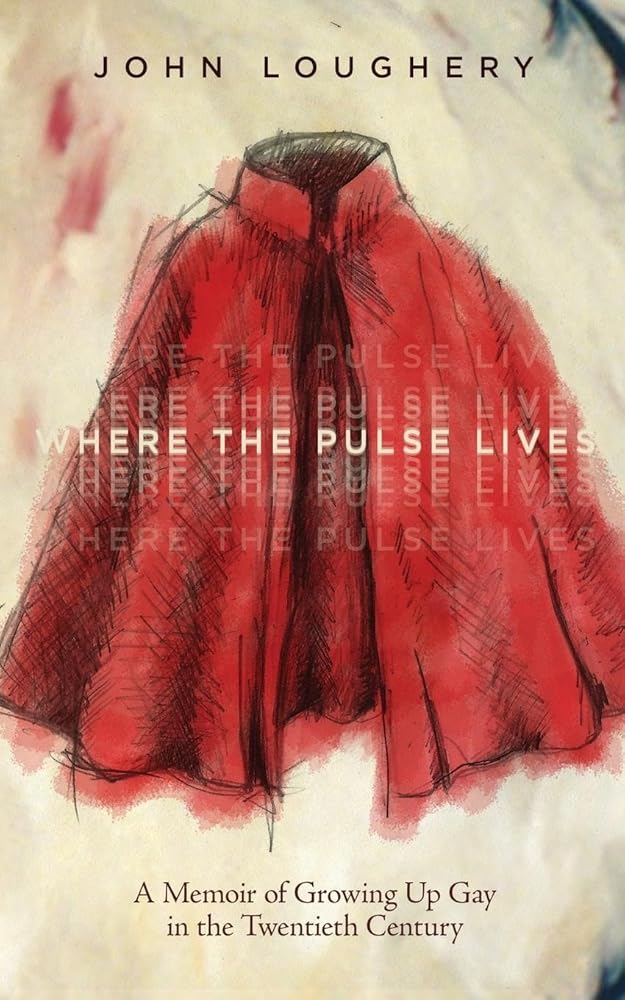
For a generation that has seen the legalization of gay marriage, increasing numbers of families with two mothers or two fathers, and the respected presidential candidacy of an openly gay man like Pete Buttigieg, the 1960s - 1990s can seem a time remote in every regard. Yet the present grows out of the past, and understanding the ways in which life was different in another era deepens our thinking about the present and the future.
Where the Pulse Lives is a personal memoir, the author's account of growing up in Connecticut at a time when gay desire represented an unspeakable shame, experiencing in New York City the highly sexual and politically charged climate of the 1970s, and coming to terms with what it meant to be a gay man in the years dominated by the tragedy of AIDS, the empowering activism of gay men and lesbians in ACT UP, and a growing interest in gay history. These were the years in which gay men no longer wanted to be defined by the values of the dominant culture. Self-definition proved more complicated than expected, however.
John Loughery is the author of six books, including Alias S.S. Van Dine (winner of an Edgar Award), John Sloan: Painter and Rebel (a finalist for the Pulitzer Prize in Biography), The Other Side of Silence: Men's Lives and Gay Identities, a Twentieth-Century History (winner of a Lambda Award), Dagger John: Archbishop John Hughes and the Making of Irish America (winner of the Lehman Prize from the New York Academy of History), Dorothy Day: Dissenting Voice of the American Century, and most recently a self-published account of his uncle's World War II experiences, An American at War: Surviving Bataan, Mukden, and the Trauma of Recovery. He lives in Berlin, CT.
National Bestseller. Named a Best Book of 2024 by NPR, Harper’s Bazaar, W, and Esquire.
“A profoundly urgent intervention.” ―Naomi Klein
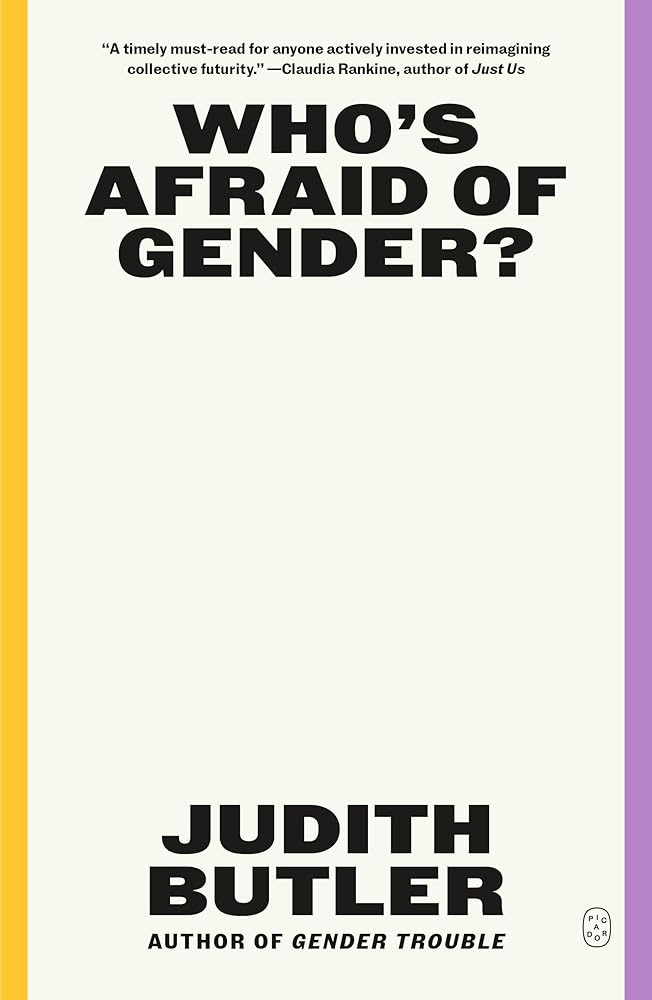
“A timely must-read for anyone actively invested in reimagining collective futurity.” ―Claudia Rankine
From a global icon, a bold, essential account of how a fear of gender is fueling reactionary politics around the world.
Judith Butler, the groundbreaking thinker whose iconic book Gender Trouble redefined how we think about gender and sexuality, confronts the attacks on “gender” that have become central to right-wing movements today. Global networks have formed “anti–gender ideology movements” that are dedicated to circulating a fantasy that gender is a dangerous, perhaps diabolical, threat to families, local cultures, civilization―and even “man” himself. Inflamed by the rhetoric of public figures, this movement has sought to nullify reproductive justice, undermine protections against sexual and gender violence, and strip trans and queer people of their rights to pursue a life without fear of violence.
The aim of Who’s Afraid of Gender? is not to offer a new theory of gender but to examine how “gender” has become a phantasm for emerging authoritarian regimes, fascist formations, and trans-exclusionary feminists. In their vital, courageous new book, Butler illuminates the concrete ways that this phantasm of “gender” collects and displaces anxieties and fears of destruction. Operating in tandem with deceptive accounts of “critical race theory” and xenophobic panics about migration, the anti-gender movement demonizes struggles for equality, fuels aggressive nationalism, and leaves millions of people vulnerable to subjugation.
An essential intervention into one of the most fraught issues of our moment, Who’s Afraid of Gender? is a bold call to refuse the alliance with authoritarian movements and to make a broad coalition with all those whose struggle for equality is linked with fighting injustice. Imagining new possibilities for both freedom and solidarity, Butler offers us a hopeful work of social and political analysis that is both timely and timeless―a book whose verve and rigor only they could deliver.

INSTANT NEW YORK TIMES BESTSELLER
After a decade abroad, the National Book Award– and Pulitzer Prize–winning writer Evan Osnos returns to three places he has lived in the United States―Greenwich, CT; Clarksburg, WV; and Chicago, IL―to illuminate the origins of America’s political fury.
Evan Osnos moved to Washington, D.C., in 2013 after a decade away from the United States, first reporting from the Middle East before becoming the Beijing bureau chief at the Chicago Tribune and then the China correspondent for The New Yorker. While abroad, he often found himself making a case for his home country, urging the citizens of Egypt, Iraq, or China to trust that even though America had made grave mistakes throughout its history, it aspired to some foundational moral commitments: the rule of law, the power of truth, the right of equal opportunity for all. But when he returned to the United States, he found each of these principles under assault.
In search of an explanation for the crisis that reached an unsettling crescendo in 2020―a year of pandemic, civil unrest, and political turmoil―he focused on three places he knew firsthand: Greenwich, Connecticut; Clarksburg, West Virginia; and Chicago, Illinois. Reported over the course of six years, Wildland follows ordinary individuals as they navigate the varied landscapes of twenty-first-century America. Through their powerful, often poignant stories, Osnos traces the sources of America’s political dissolution. He finds answers in the rightward shift of the financial elite in Greenwich, in the collapse of social infrastructure and possibility in Clarksburg, and in the compounded effects of segregation and violence in Chicago. The truth about the state of the nation may be found not in the slogans of political leaders but in the intricate details of individual lives, and in the hidden connections between them. As Wildland weaves in and out of these personal stories, events in Washington occasionally intrude, like flames licking up on the horizon.
A dramatic, prescient examination of seismic changes in American politics and culture, Wildland is the story of a crucible, a period bounded by two shocks to America’s psyche, two assaults on the country’s sense of itself: the attacks of September 11, 2001, and the storming of the U.S. Capitol on January 6, 2021. Following the lives of everyday Americans in three cities and across two decades, Osnos illuminates the country in a startling light, revealing how we lost the moral confidence to see ourselves as larger than the sum of our parts.
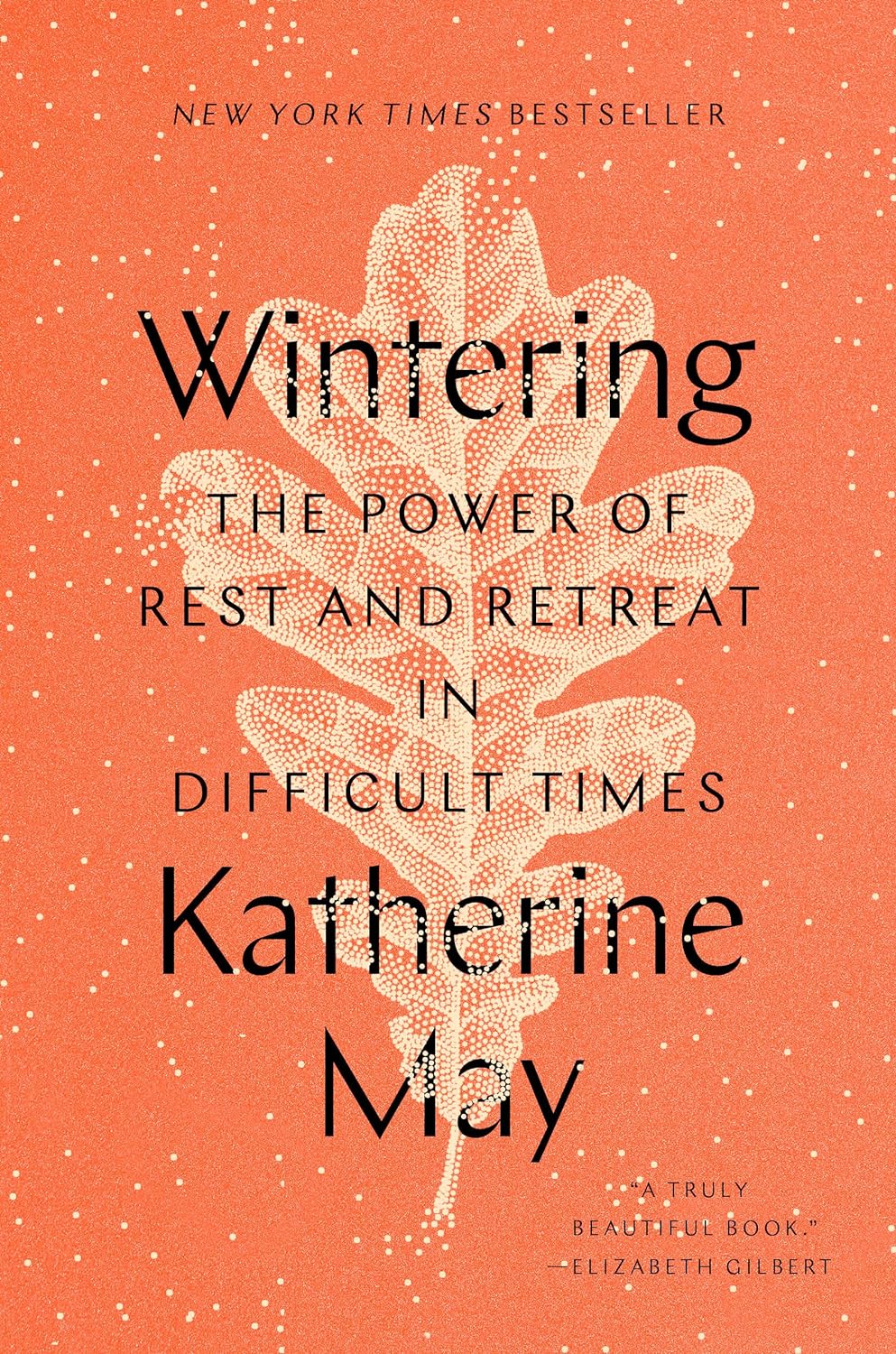
By: Katherine May (Author), Hardcover, 2020
THE RUNAWAY NEW YORK TIMES BESTSELLER
“Katherine May opens up exactly what I and so many need to hear but haven't known how to name.” —Krista Tippett, On Being
“Every bit as beautiful and healing as the season itself. . . . This is truly a beautiful book.” —Elizabeth Gilbert
"Proves that there is grace in letting go, stepping back and giving yourself time to repair in the dark...May is a clear-eyed observer and her language is steady, honest and accurate—capturing the sense, the beauty and the latent power of our resting landscapes." —Wall Street Journal
From the author of the New York Times bestseller Enchantment: Awakening Wonder in an Anxious Age, this is an intimate, revelatory exploration of the ways we can care for and repair ourselves when life knocks us down.
Sometimes you slip through the cracks: unforeseen circumstances like an abrupt illness, the death of a loved one, a break up, or a job loss can derail a life. These periods of dislocation can be lonely and unexpected. For May, her husband fell ill, her son stopped attending school, and her own medical issues led her to leave a demanding job. Wintering explores how she not only endured this painful time, but embraced the singular opportunities it offered.
A moving personal narrative shot through with lessons from literature, mythology, and the natural world, May's story offers instruction on the transformative power of rest and retreat. Illumination emerges from many sources: solstice celebrations and dormice hibernation, C.S. Lewis and Sylvia Plath, swimming in icy waters and sailing arctic seas.
Ultimately Wintering invites us to change how we relate to our own fallow times. May models an active acceptance of sadness and finds nourishment in deep retreat, joy in the hushed beauty of winter, and encouragement in understanding life as cyclical, not linear. A secular mystic, May forms a guiding philosophy for transforming the hardships that arise before the ushering in of a new season.
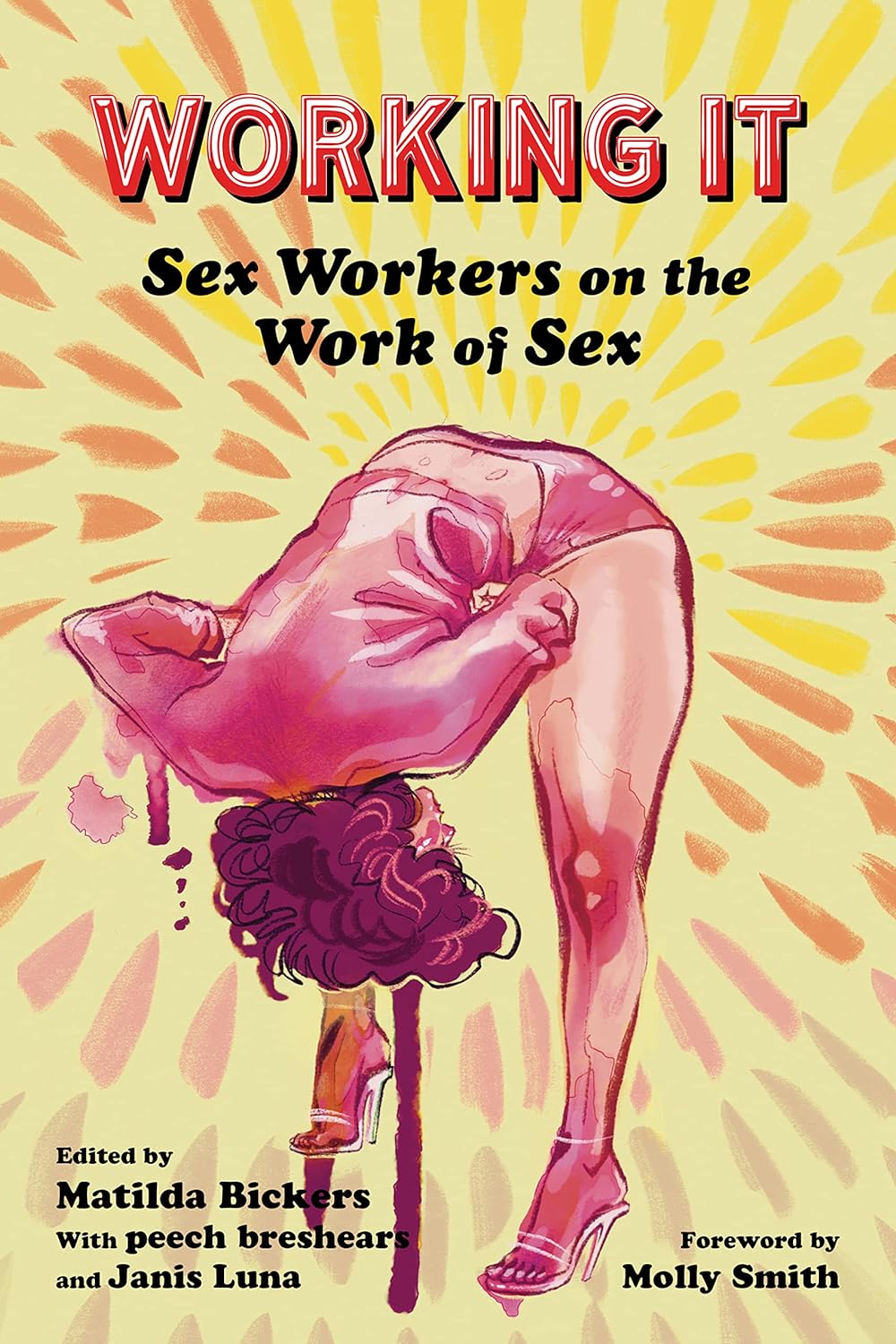
By: Matilda Bickers (Editor), peech breshears (Editor), Janice Luna (Editor), Molly Smith (Foreword), 2023, Paperback
Fiercely intelligent, fantastically transgressive, Working It is an intimate portrait of the lives of sex workers. A polyphonic story of triumph, survival, and solidarity this collection showcases the vastly different experiences and interests of those who have traded sex; among them a brothel worker in Australia, First Nation survivors of the Canadian child welfare system, and an afro-latina single parent raising a radicalized child. Packed with first-person essays, interviews, poetry, drawings, mixed-media collage, and photographs Working It honors the complexity of lived experience. Sometimes heartbreaking, sometimes hardboiled, these dazzling pieces will go straight to the heart.
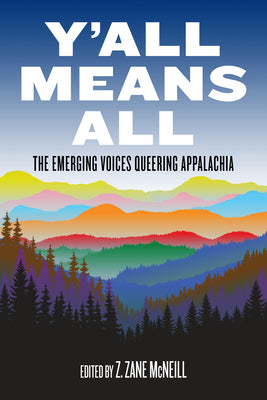
By: Z. Zane McNeill (Editor), 2022, Paperback
Y'all Means All is a celebration of the weird and wonderful aspects of a troubled region in all of their manifest glory! This collection is a thought-provoking hoot and a holler of "we’re queer and we’re here to stay, cause we’re every bit a piece of the landscape as the rocks and the trees" echoing through the hills of Appalachia and into the boardrooms of every media outlet and opportunistic author seeking to define Appalachia from the outside for their own political agendas. Multidisciplinary and multi-genre, Y’all necessarily incorporates elements of critical theory, such as critical race theory and queer theory, while dealing with a multitude of methodologies, from quantitative analysis, to oral history and autoethnography.
This collection eschews the contemporary trend of "reactive" or "responsive" writing in the genre of Appalachian studies, and alternatively, provides examples of how modern Appalachians are defining themselves on their own terms. As such, it also serves as a toolkit for other Appalachian readers to follow suit, and similarly challenge the labels, stereotypes and definitions often thrust upon them. While providing blunt commentary on the region's past and present, the book’s soul is sustained by the resilience, ingenuity, and spirit exhibited by the authors; values which have historically characterized the Appalachian region and are continuing to define its culture to the present.
This book demonstrates above all else that Appalachia and its people are filled with a vitality and passion for their region which will slowly but surely effect long-lasting and positive changes in the region. If historically Appalachia has been treated as a "mirror" of the country, this book breaks that trend by allowing modern Appalachians to examine their own reflections and to share their insights in an honest, unfiltered manner with the world.
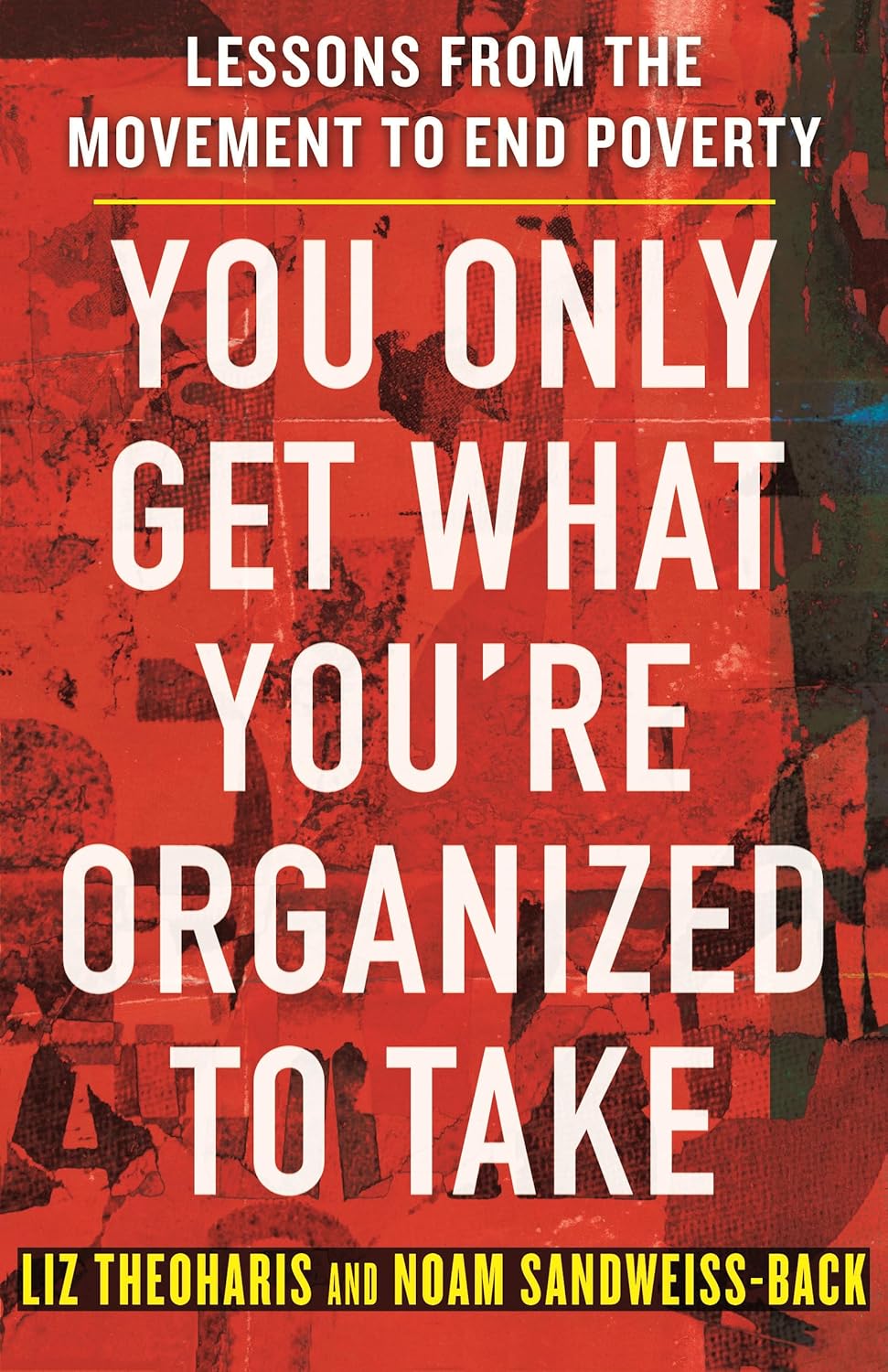
You Only Get What You're Organized to Take: Lessons from the Movement to End Poverty
$27.95
Unit price perYou Only Get What You're Organized to Take: Lessons from the Movement to End Poverty
$27.95
Unit price perBy: Liz Theoharis (Author), Noam Sandweiss-Back (Author), 2025, Hardcover
One of the nation’s leading anti-poverty organizers and moral voices shares the largely untold story of the movement to end poverty, open to all, and led by the poor themselves
As one of the nation’s leading anti-poverty organizers and moral voices, Rev. Dr. Liz Theoharis explores the largely untold history of poor people’s movements in the United States and traces her own journey through some of the most significant anti-poverty struggles of the past thirty years.
In this book, Theoharis introduces us to the people leading the movement to end poverty, including:
- multiracial groups of homeless people rising up from the streets and seizing empty, federally-owned homes;
- mothers on welfare shutting down entire city blocks and going toe-to-toe with some of the most powerful people in the country;
- farmworkers busting modern-day slave rings and winning living wages from multinational fast-food companies; and
- coal miners, veterans, unemployed workers, students, artists, and more joining together in unusual and creative alliances to fight, sing, and pray their way toward freedom.
Drawing from personal experience, history, religion, political strategy, and more, Theoharis argues that American poverty will not end because of the goodwill of the powerful or through the charitable actions of well-meaning people alone. It will happen through a mass movement to end poverty, open to all, and led by the poor.
Theoharis passionately reminds us that poor people are not condemned to be subjects of history, but have always been agents of transformative change, and can be once again. Indeed, to reorient our society around the needs of everyone and reinvigorate the promise of democracy, the poor can and must become the architects of a new America.
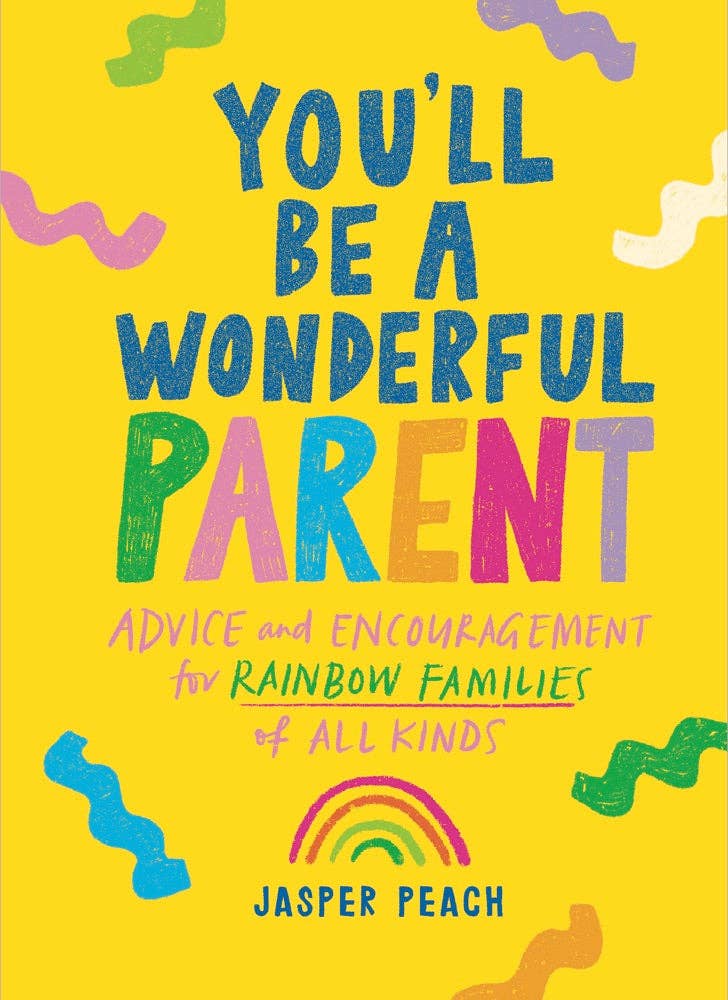
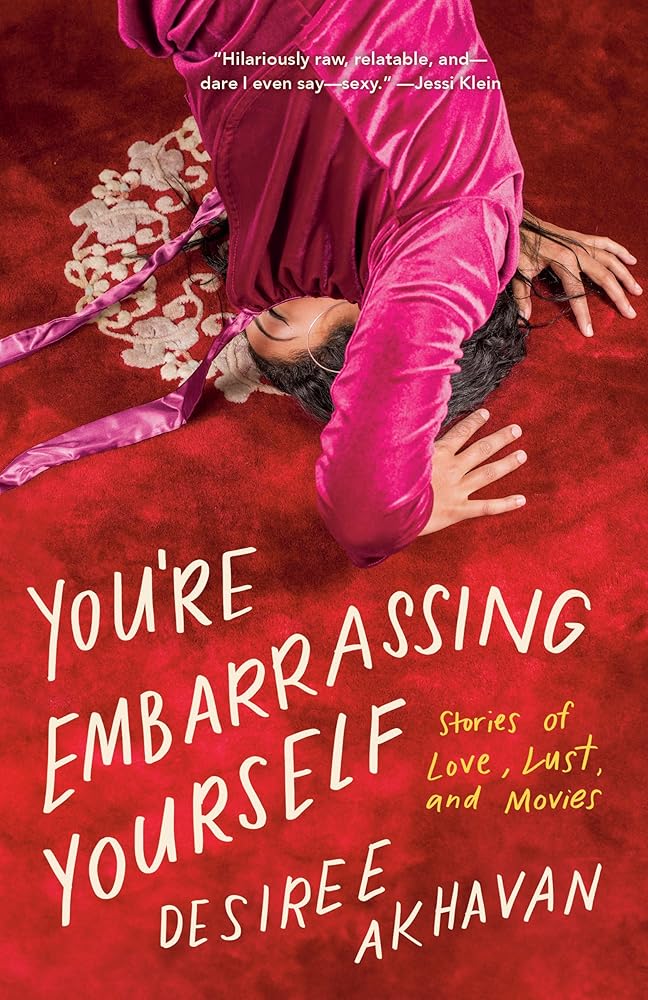
Writer, actor, and director Desiree Akhavan shares the stories she was told to shut up about—hilarious, horny, heartbreaking tales of a life in pursuit of art, love, and a better haircut.
“Hilariously raw, relatable, and—dare I even say—sexy.”—Jessi Klein
When it comes to shame, Desiree Akhavan knows what she’s talking about—whether it’s winning the title of the Ugliest Girl at her high school, acquiescing to the nose job she was lovingly forced into by her Iranian parents, or losing her virginity to a cokehead she met in a support group for cutters. In You’re Embarrassing Yourself, Akhavan goes to the rawest places—the lifelong struggle to be at peace in one’s body, the search for home as the child of immigrants, the anxious underbelly of artistic ambition—in pursuit of wisdom, catharsis, and lolz.
Equal parts funny and heartfelt, these seventeen essays chart an artist’s journey from outcast to overnight indie darling, to (somewhat) self-aware adult woman. The result is a collection that captures the pathetic lows and euphoric highs of our youth—and how to survive them.

A compassionate and comprehensive guide to parenting neurodivergent children.
Your Kid Belongs Here is a heartfelt, practical guide to parenting children in a world not designed for them―or their parents. Combining personal stories, research, and helpful strategies, Katie Rose Guest Pryal shares her journey as a neurodivergent mother raising neurodivergent children and offers a powerful narrative of advocacy, empathy, and resilience.
This book addresses the unique challenges faced by neurodiverse families while celebrating the strengths of neurodivergent children and parents alike. With a focus on building trust, fostering self-advocacy, and embracing neurodiversity, this guide:
• Provides advice on parenting children with developmental neurodivergences such as ADHD and autism; psychiatric disabilities such as anxiety and depression; and acquired neurodivergences such as post-concussion syndrome.
• Outlines strategies for supporting emotional regulation and managing children's meltdowns, anxiety, and other emotional challenges.
• Guides parents on navigating schools and advocating for their child's rights in educational settings, including securing accommodations like IEPs and 504 plans.
• Discusses the psychological impact of masking and how to create spaces where children can express their true selves.
• Offers balanced insights into medication use, addressing societal shame, and emphasizing informed, personalized choices.
• Encourages parents to support and engage with their children's special interests and passions as a pathway to growth and confidence.
• Highlights the importance of parents' self-care and well-being, with practical tips for managing stress and maintaining resilience.
An empowering, empathetic resource for parents, educators, and advocates, this guide invites readers to reimagine how inclusive and supportive parenting can contribute to a more compassionate world.
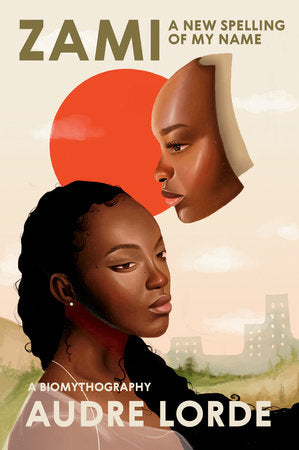
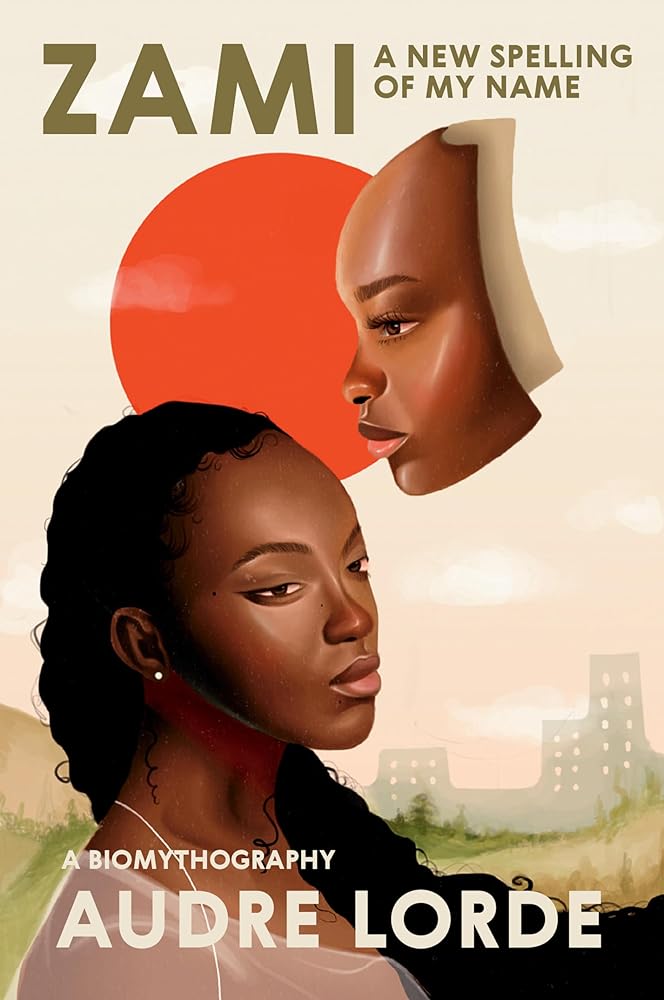
Zami: A New Spelling of My Name - A Biomythography (Crossing Press Feminist Series)
$17.99
Unit price perZami: A New Spelling of My Name - A Biomythography (Crossing Press Feminist Series)
$17.99
Unit price perZami: A Carriacou name for women who work together as friends and lovers
“Zami is a fast-moving chronicle. From the author’s vivid childhood memories in Harlem to her coming of age in the late 1950s, the nature of Audre Lorde’s work is cyclical. It especially relates the linkage of women who have shaped her . . . Lorde brings into play her craft of lush description and characterization. It keeps unfolding page after page.”—Off Our Backs
“Among the elements that make the book so good are its personal honesty and lack of pretentiousness, characteristics that shine through the writing bespeaking the evolution of a strong and remarkable character.”—The New York Times


Learn to create zines and books with this approachable guide featuring illustrated, step-by-step lessons on making many different book formats. The possibilities are endless!
Channel your passions into zines, create your own notebooks and calendars, and try your hand at impressive pop-up and accordion books. This illustrated guide will empower you to share your ideas with the world in personalized, handcrafted packages. Whether you want to create a poetry chapbook, an illustrated ode to the people on your commute, or a map of your dreams, this book will help you leap from an idea to a physical object. You’ll learn the lingo and where to find materials, but most importantly, you’ll be ready to experiment and have fun.
If you’re an artist seeking a new medium or are just beginning your creative journey, this book welcomes you to level up your DIY, join a community of makers and thinkers, and discover the power of zines and handbound books. Start now and watch your creative confidence grow and thrive.
ZINES ARE BACK: Join the zine renaissance! Discover how to bring your passion to life through this amazing DIY art form that offers endless possibilities for creating and sharing. All you need is paper, scissors, glue, and this handbook to set your creativity in motion.
STEP-BY-STEP INSTRUCTIONS: Educator and artist Lauren Simkin Berke walks you through each handmade book and zine format in straightforward tutorials. This book is perfect for all abilities and experience levels.
WIDE VARIETY OF FORMATS: From beautiful Coptic binding to zines made from a single sheet of printer paper, this book has all your needs covered. You'll soon have a flexible repertoire of skills to bring your ideas to life!
Perfect for:
* Zine makers
* Indie writers and artists
* Art students, DIY-ers, crafters, and other creatives
* Designers looking for exciting new ways to express themselves
* Fans and bands who want to share their message with the world
* Activists looking for a long-lasting form to share knowledge and build community
* Fans of origami and other paper crafts